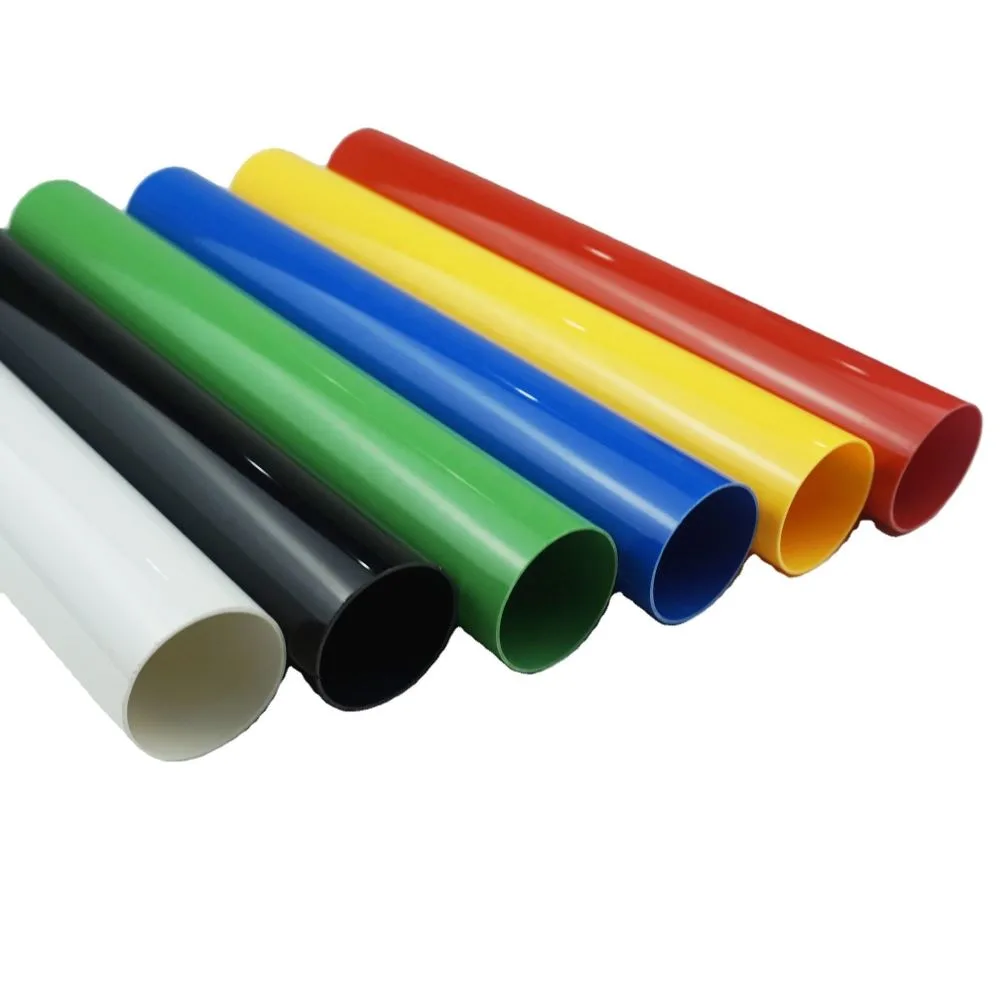




PMMA Extrusion Profiles are engineered plastic profiles manufactured by continuously extruding polymethyl methacrylate (PMMA) through a precision-designed die. They combine high optical clarity, weather resistance, dimensional stability, relatively low density, and good surface appearance, making them an important alternative to glass and other transparent engineering materials.
For industries that need both visual transparency and structural functionality, PMMA Extrusion Profiles can provide an attractive combination of optical performance and manufacturing flexibility. Depending on the design, PMMA can be extruded into rods, tubes, pipes, channels, strips, covers, bars, lenses, and other customized profiles.
SW has more than 20 years of experience in plastic extrusion manufacturing and provides customized extrusion products for customers in multiple industries and more than 50 countries and regions. Our product range includes plastic pipes, PVC pipes, ABS pipes, cable trunking, PVC skirting, PMMA rods, and other custom plastic extrusion products.
This guide explains the material characteristics, extrusion process, product categories, physical properties, applications, design considerations, quality control requirements, and customization possibilities of PMMA Extrusion Profiles.
1. What Are PMMA Extrusion Profiles?
PMMA Extrusion Profiles are continuous plastic products produced by heating PMMA resin until it reaches a suitable molten state and then forcing the material through a specially designed extrusion die.
The die determines the basic cross-sectional geometry of the finished product.
Unlike injection molding, which normally produces individual components, extrusion is particularly suitable for products with a continuous and repeatable cross-section.
Typical PMMA Extrusion Profiles include:
- PMMA rods
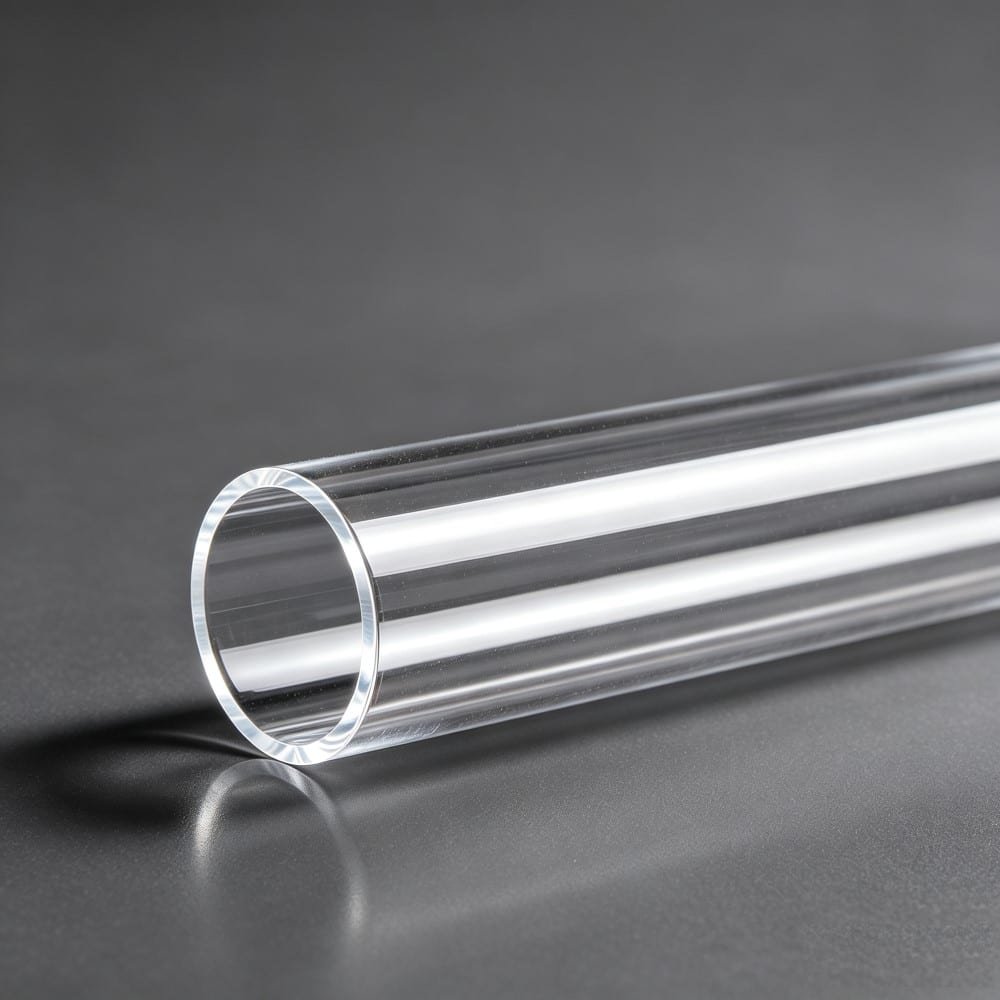
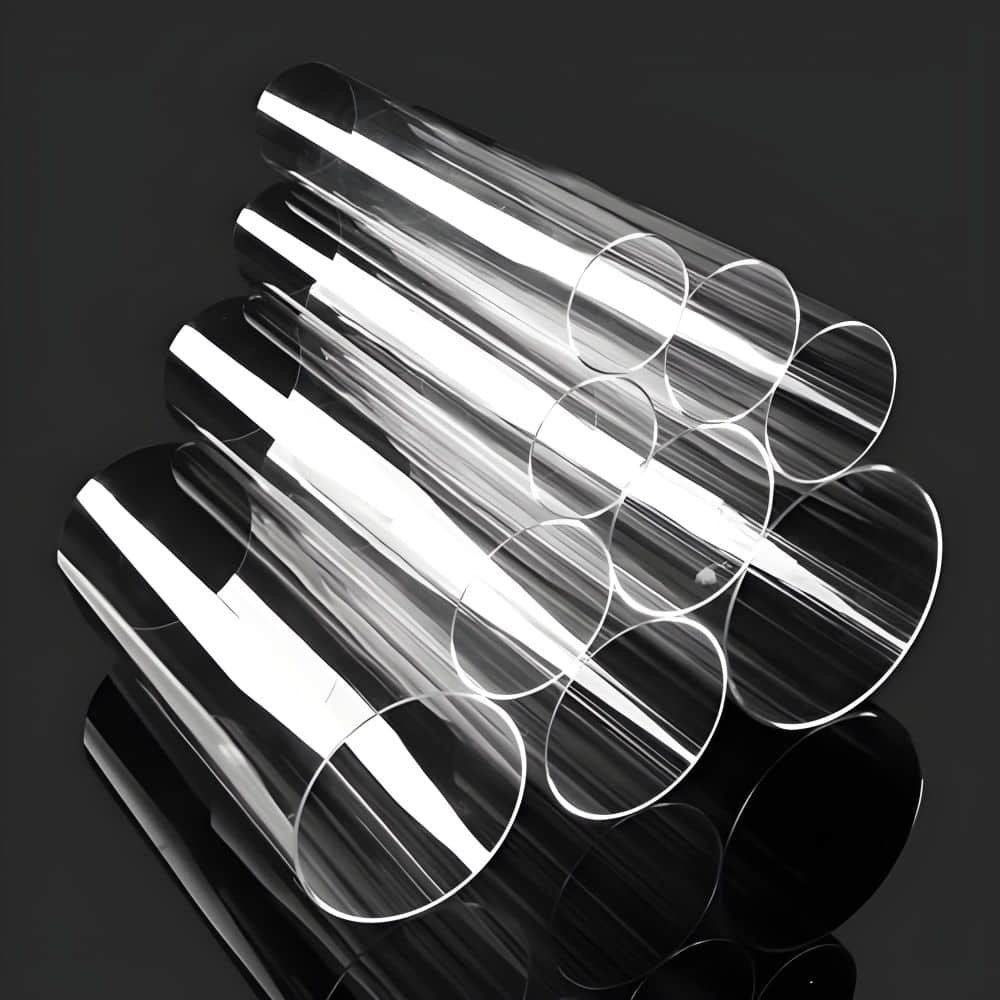
- PMMA tubes
- PMMA pipes
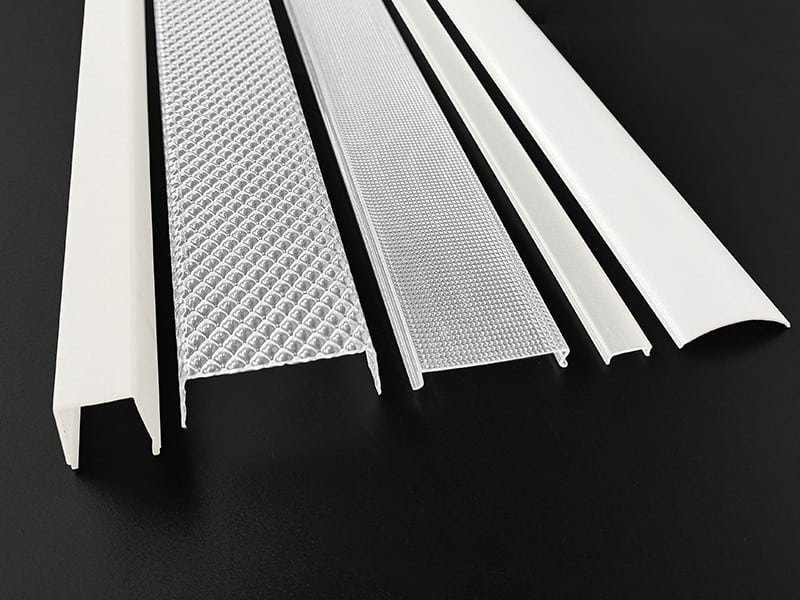
- Transparent strips
- Light-diffusing profiles
- Optical covers
- الأغطية الواقية
- U-shaped profiles
- L-shaped profiles
- Custom hollow profiles
- Special transparent structural profiles
The ability to continuously manufacture long products makes PMMA extrusion particularly useful for lighting, display, architectural, industrial, electrical, and decorative applications.
2. Why PMMA Is Used for Extrusion Profiles
The key advantage of PMMA is its combination of optical clarity and practical mechanical performance.
PMMA is widely known as acrylic and is often selected when designers need a transparent thermoplastic that offers substantially lower weight than glass while maintaining an attractive appearance.
Important characteristics include:
- High optical transparency
- Good surface gloss
- Good weather resistance
- Good UV resistance compared with many other transparent plastics
- Relatively high surface hardness
- Low density compared with glass
- ثبات أبعاد جيد
- عزل كهربائي جيد
- Easy customization through extrusion
These characteristics explain why a PMMA Extrusion Profiles factory can serve customers from very different industries with one material platform.
However, PMMA should not simply be considered a “plastic replacement for glass.” Its thermal, impact, chemical, and mechanical properties are different from glass and must be considered during product design.
3. PMMA Extrusion Profiles and Optical Clarity
Optical clarity is one of the most important reasons customers choose PMMA.
High-quality PMMA can provide excellent light transmission, making it suitable for applications where the material must allow light to pass through while maintaining a clean and attractive appearance.
This makes PMMA particularly valuable for:
- Lighting covers
- LED profiles
- Display systems
- Optical components
- Decorative illumination
- Signage
- Architectural lighting
However, transparency alone is not enough.
The final optical performance of a PMMA Extrusion Profile depends on several factors, including:
- Resin quality
- تركيبة المادة
- Die design
- Extrusion temperature
- Cooling conditions
- جودة السطح
- Internal stress
- Contamination
- Profile geometry
محترف مصنع قضبان PMMA therefore needs to control both the raw material and extrusion process.
4. PMMA Extrusion Profiles and Physical Properties
When designing a PMMA extrusion product, engineers should consider several physical and mechanical properties.
Typical considerations include:
ملكية | Engineering Significance |
كثافة | Determines product weight and material consumption |
Optical transmission | Important for lighting and transparent applications |
Tensile strength | Indicates resistance to tensile loading |
Flexural modulus | Indicates stiffness |
مقاومة الصدمات | Determines resistance to sudden loading |
Surface hardness | Influences scratch resistance |
Heat resistance | Determines usable temperature range |
UV resistance | Important for outdoor applications |
Chemical resistance | Important for industrial environments |
الثبات البُعدي | Important for precision assemblies |
Exact numerical values depend on the PMMA grade and supplier formulation, so customers should always use the selected resin manufacturer’s technical data sheet for final engineering calculations.
This distinction is important because “PMMA” describes a material family rather than one single universal formulation.
5. PMMA Extrusion Profiles vs. PMMA Injection-Molded Parts
PMMA can be processed through several manufacturing technologies.
The two commonly considered processes are extrusion and injection molding.
PMMA extrusion is particularly suitable when the product has a continuous cross-section.
ومن الأمثلة على ذلك:
- Rods
- Tubes
- Pipes
- Strips
- Channels
- Long covers
PMMA injection molding is more suitable for discrete components with complex three-dimensional geometry.
For example, if a customer needs a 2-meter transparent tube, extrusion is generally a logical manufacturing approach.
If the customer needs a complex transparent housing with ribs, bosses, and mounting structures, injection molding may be more appropriate.
Therefore, choosing PMMA Extrusion Profiles begins with understanding the geometry and production requirements.
6. PMMA Extrusion Profiles: Common Product Categories
محترف PMMA Extrusion Profiles factory can manufacture many different profile geometries.
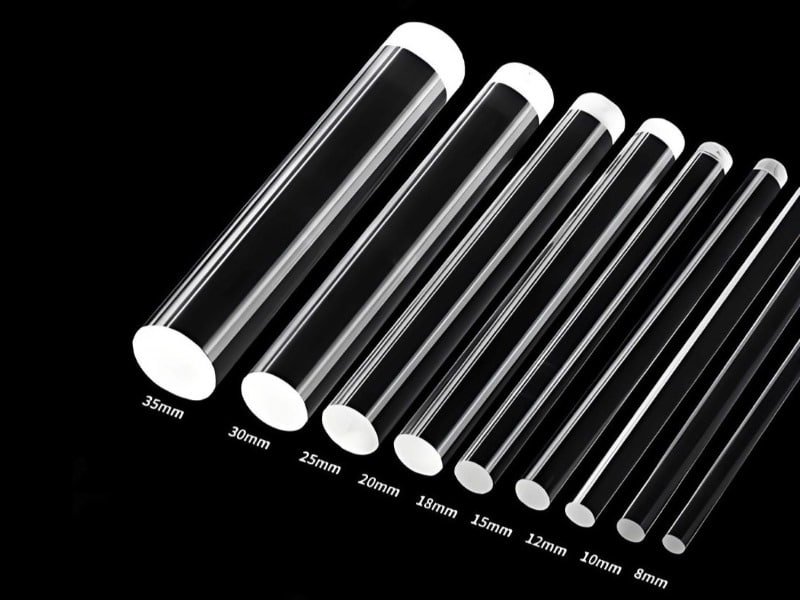
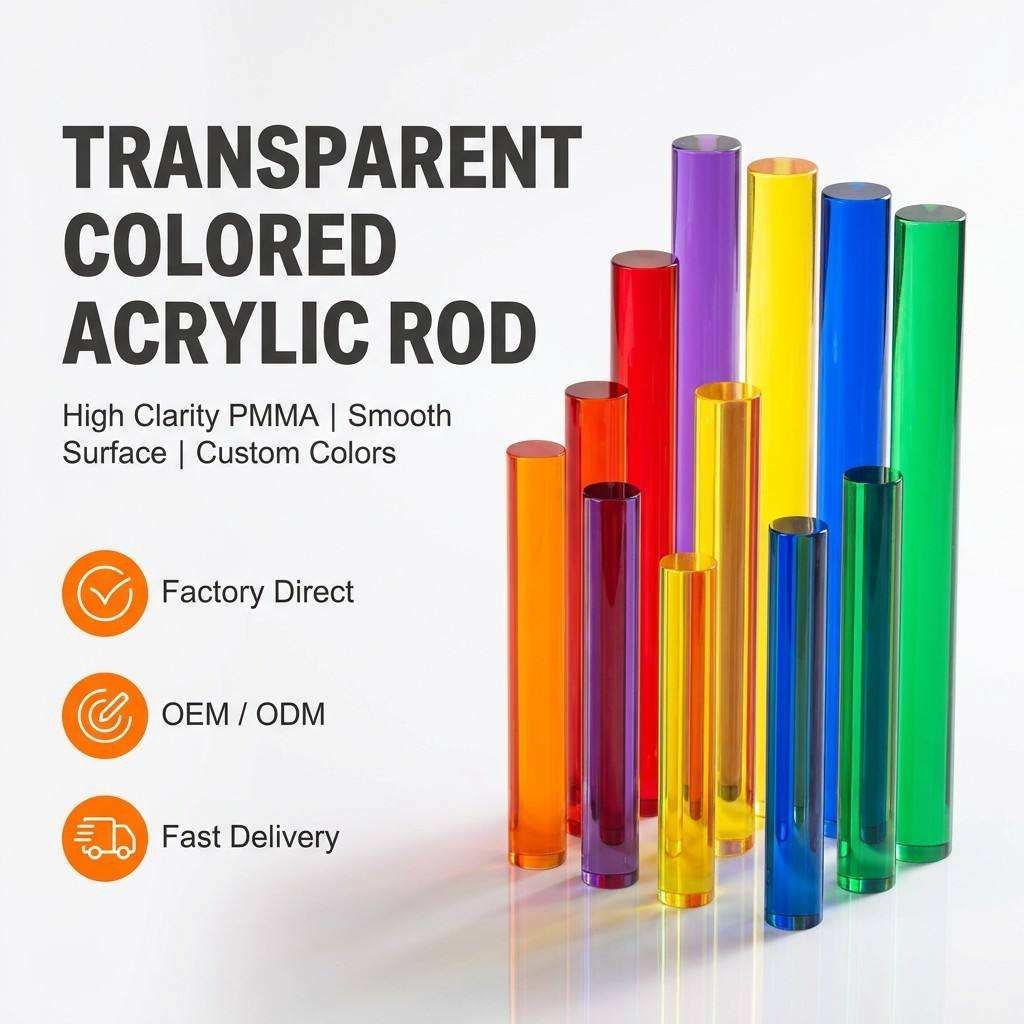
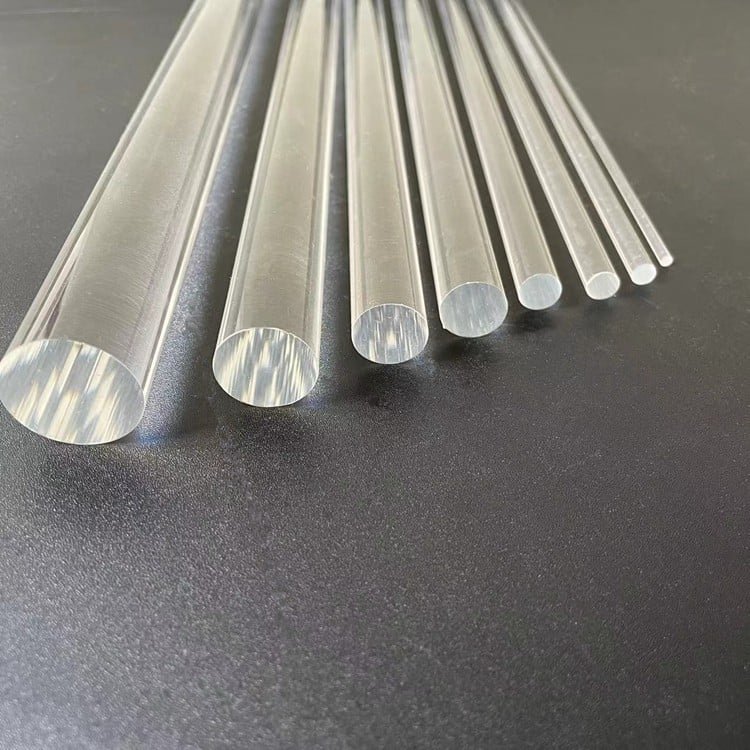
PMMA Rods
PMMA rods are solid cylindrical profiles.
They are commonly used for:
- Decorative lighting
- Optical effects
- Display products
- Light guides
- Industrial components
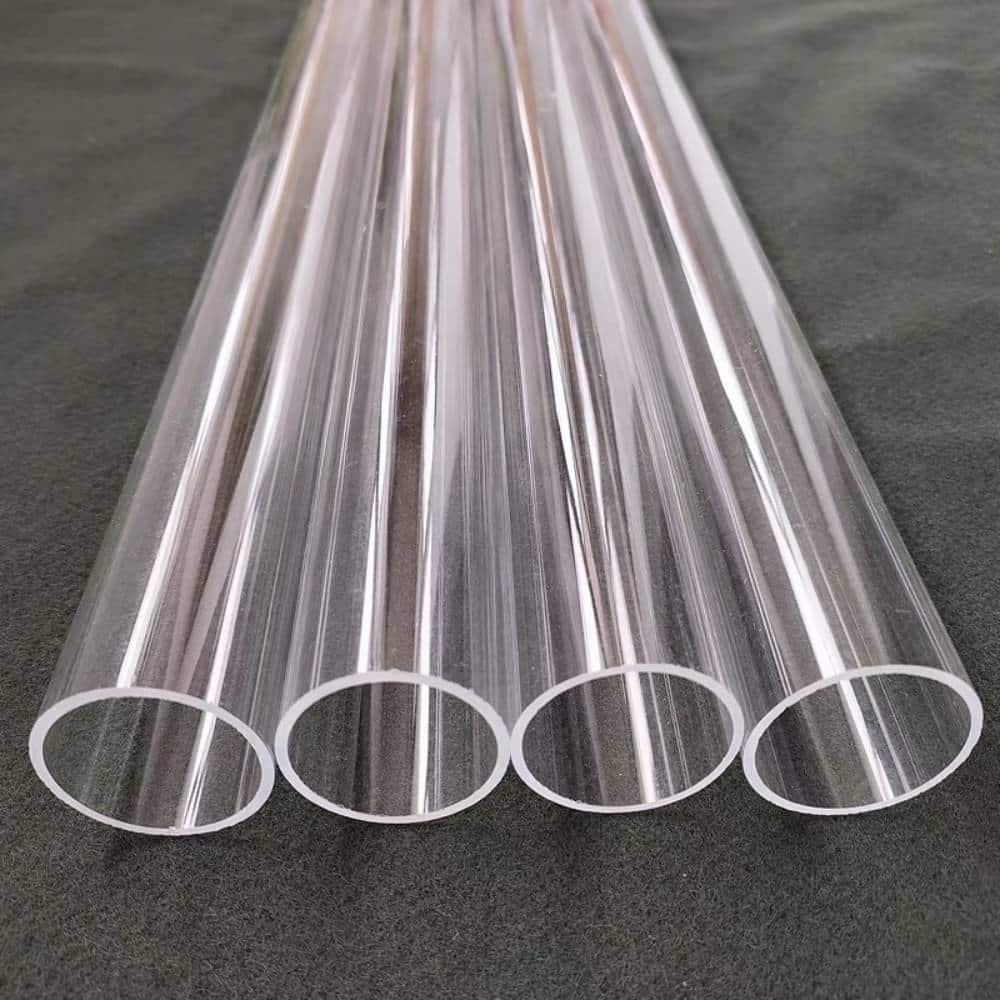
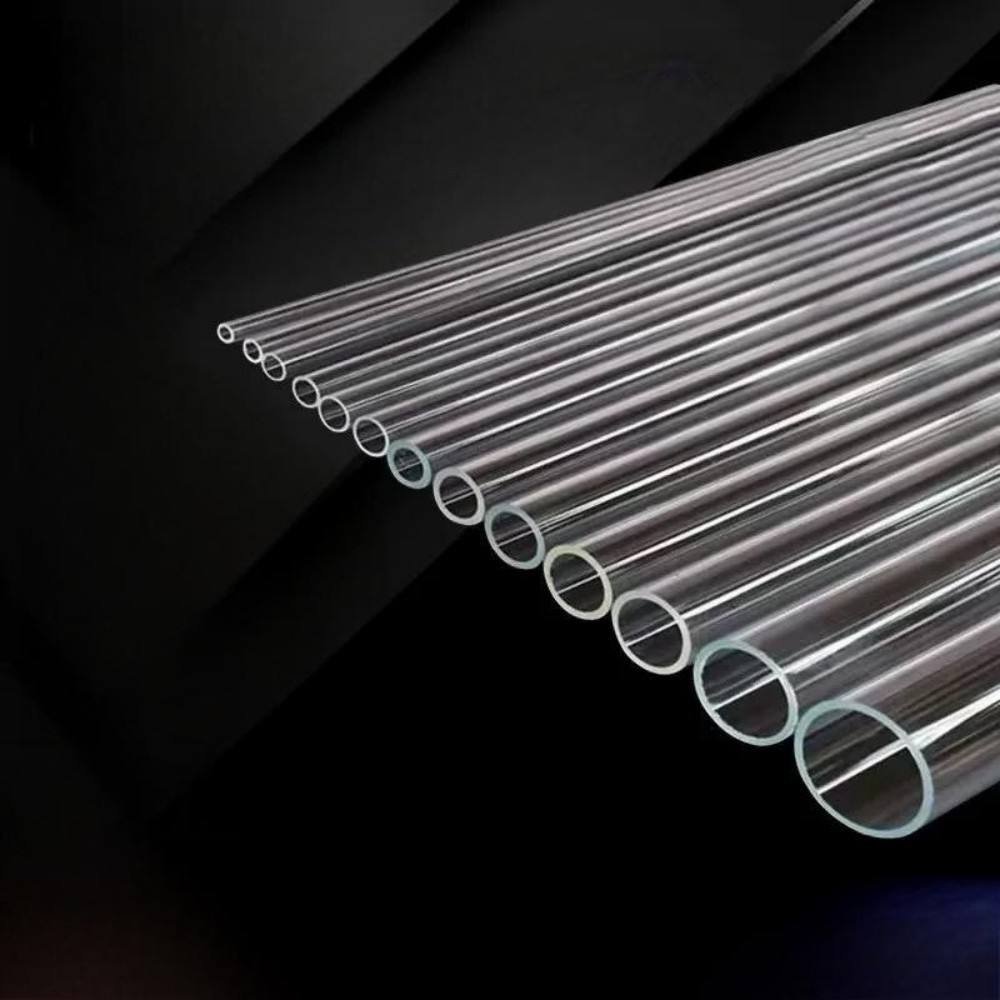
PMMA Tubes and Pipes
Hollow PMMA profiles can be manufactured with customized:
- Outside diameter
- Inside diameter
- سمك الجدار
- طول
- لون
- Transparency
PMMA Strips
Flat or rectangular PMMA strips can be used for:
- Displays
- Decorative applications
- Lighting
- Protective components
PMMA Channels
U-shaped, C-shaped, and other channel profiles can be customized for lighting and structural applications.
Custom PMMA Extrusion Profiles
Special cross-sections can be developed according to customer drawings, samples, or functional requirements.

7. PMMA Extrusion Profiles for Lighting Applications
Lighting is one of the most important application areas for PMMA extrusion.
Modern LED systems often require a transparent or diffusing profile to:
- Protect LEDs
- Distribute light
- Improve appearance
- Reduce direct glare
- Create a continuous visual effect
PMMA is particularly useful because optical characteristics can be engineered through material selection, geometry, surface texture, and formulation.
تشمل التطبيقات النموذجية ما يلي:
- LED strip covers
- Linear lighting profiles
- Architectural lighting
- Cabinet lighting
- Commercial lighting
- Decorative lighting
- Signage illumination
For lighting applications, a PMMA Extrusion Profiles manufacturer should understand both extrusion engineering and optical requirements.
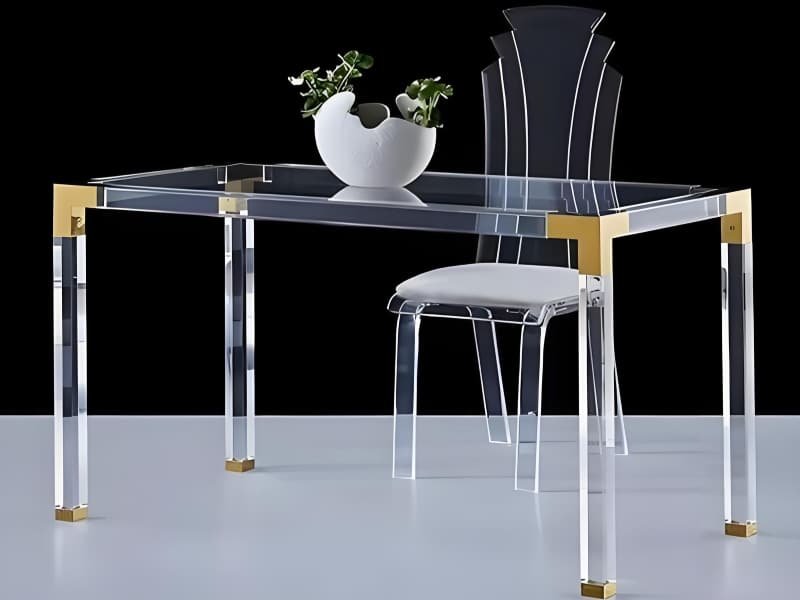
8. PMMA Extrusion Profiles in Architecture and Interior Design
Architectural designers increasingly use transparent and translucent plastics to create lightweight visual structures.
PMMA Extrusion Profiles can be used for:
- Decorative lighting channels
- Edge lighting
- Display structures
- Interior partitions
- الزخارف الزخرفية
- Transparent guards
- Architectural illumination
Compared with glass, PMMA can provide advantages in weight and processing flexibility.
The profile can also be customized to integrate mounting features, clips, channels, or mechanical interfaces.
This allows designers to combine optical and structural functions into one extruded component.
9. PMMA Extrusion Profiles for Displays and Signage
Retail displays and signage require materials that look attractive and maintain good optical performance.
PMMA is widely used in:
- Point-of-sale displays
- Product displays
- Signage
- Light boxes
- Advertising systems
- Exhibition equipment
- Brand displays
A custom PMMA Extrusion Profiles factory can manufacture profiles that fit directly into display structures.
For example, a transparent PMMA channel may be designed to hold an LED strip while also functioning as a protective cover.
This reduces the number of individual components required in the final assembly.
10. PMMA Extrusion Profiles for Industrial Applications
Although PMMA is strongly associated with appearance and transparency, it can also serve functional industrial purposes.
Possible applications include:
- Transparent protective covers
- Inspection windows
- Equipment guards
- Light guides
- Instrument components
- Machine indicators
- Transparent tubes
- Electrical insulation components
The specific application must be evaluated according to temperature, chemical exposure, mechanical loading, UV exposure, and impact requirements.
PMMA is not appropriate for every industrial environment. Where extreme impact resistance or high-temperature performance is required, another engineering plastic may be more appropriate.
This is why material selection should be based on application requirements rather than appearance alone.
11. PMMA Pipe Applications and Transparent Tubes
One important category is PMMA pipe application.
Transparent PMMA pipes and tubes can be used when the customer needs visibility through the pipe.
Typical requirements may include:
- Clear appearance
- Smooth internal surface
- Controlled wall thickness
- ثبات أبعاد جيد
- Custom diameter
- Custom length
Potential applications include:
- Display equipment
- Lighting equipment
- Fluid visualization systems
- Laboratory equipment
- Decorative structures
- Industrial inspection components
However, whether PMMA is appropriate for a fluid-handling application depends heavily on the fluid, temperature, pressure, chemical environment, and applicable standards.
A PMMA pipe manufacturer should therefore evaluate the complete operating environment before recommending a specific formulation.
12. PMMA Extrusion Profiles and Custom Colors
PMMA does not have to be completely transparent.
Depending on the application, PMMA Extrusion Profiles can be manufactured in:
- Clear
- Translucent
- Frosted
- White
- Colored
- Light-diffusing
- Custom optical appearances
Color and light transmission should be considered together.
For example, a lighting profile may require controlled diffusion rather than maximum transparency.
The correct formulation depends on whether the customer wants:
Maximum transparency
or
Controlled light diffusion
or
Decorative appearance
These are different engineering objectives.
13. PMMA Extrusion Profiles and UV Resistance
Outdoor applications introduce another important consideration: ultraviolet radiation.
PMMA is generally recognized for good weatherability compared with many other transparent plastics, which is one reason it is frequently used in outdoor signage and architectural applications.
However, outdoor performance depends on:
- PMMA grade
- المواد المضافة
- لون
- Exposure intensity
- Temperature
- Humidity
- Product geometry
A professional manufacturer should therefore confirm the material grade and expected service environment before mass production.
For outdoor PMMA Extrusion Profiles, long-term UV and weathering requirements should be included in the technical specification.
14. PMMA Extrusion Profiles: Design Considerations
Good PMMA extrusion design begins before the die is manufactured.
Important design parameters include:
Wall Thickness
Uniform wall thickness generally makes extrusion easier and can improve dimensional consistency.
Profile Geometry
Sharp corners, extreme thickness transitions, and complex hollow structures may require additional engineering.
Tolerances
Tolerances should be based on actual assembly requirements.
Overly tight tolerances can increase manufacturing costs.
طول
Long profiles require suitable cooling, haul-off, cutting, and packaging systems.
Optical Requirements
If the profile is used for lighting, optical performance must be considered during design.
Assembly Features
Clips, grooves, channels, and mounting interfaces can potentially be integrated into the extrusion.
15. How a PMMA Extrusion Profiles Factory Manufactures Custom Products
A typical custom PMMA extrusion project follows a structured workflow.
Step 1: Requirement Analysis
The customer provides:
- Drawing
- 3D file
- Sample
- Dimensions
- طلب
- Performance requirements
Step 2: Engineering Review
The factory evaluates extrusion feasibility.
Step 3: Material Selection
The appropriate PMMA grade is selected.
Step 4: Die Design
The extrusion die is designed according to the cross-section.
Step 5: Tooling Manufacturing
The die is manufactured and inspected.
Step 6: Trial Extrusion
Initial samples are produced.
Step 7: Dimensional and Appearance Inspection
The profile is measured and evaluated.
Step 8: Customer Approval
Samples are submitted for confirmation.
Step 9: Mass Production
The extrusion process is stabilized for repeatable production.
Step 10: Final Inspection and Packaging
Products are inspected and packed according to customer requirements.
This process allows a PMMA Extrusion Profiles factory to move from a concept to a repeatable production product.
16. PMMA Extrusion Profiles: Quality Control
Quality control is especially important for transparent products because defects are easy to see.
A quality-control system may inspect:
- Outside dimensions
- سمك الجدار
- Straightness
- طول
- Surface scratches
- Bubbles
- Black spots
- Contamination
- Optical appearance
- Color consistency
For transparent PMMA products, cleanliness is particularly important.
A small contamination particle that would be almost invisible in an opaque black profile may become highly visible in a clear PMMA product.
Therefore, production environment, material handling, tooling cleanliness, and packaging all influence final quality.
17. PMMA Extrusion Profiles: How to Choose a Manufacturer
عند اختيار مصنع قضبان PMMA or PMMA extrusion supplier, buyers should evaluate more than equipment.
Important questions include:
- How many years of extrusion experience does the manufacturer have?
- Can it manufacture custom tooling?
- Can it process transparent PMMA consistently?
- Can it control wall thickness?
- Can it provide custom colors?
- Can it manufacture prototypes?
- Can it support large-volume production?
- Can it provide inspection reports?
- Does it have international export experience?
- Can it customize packaging?
A strong supplier should combine:
Material knowledge + tooling capability + extrusion experience + quality control + customization.
18. Why Choose SW for Custom PMMA Extrusion Profiles?
SW has more than 20 years of experience in plastic extrusion manufacturing.
Our experience covers multiple thermoplastic extrusion products, including:
- PMMA rods
- PMMA tubes
- أنابيب بلاستيكية
- أنابيب PVC
- أنابيب ABS
- قنوات الكابلات
- PVC skirting
- Custom plastic profiles
This broad material and extrusion experience allows SW to approach PMMA projects from a manufacturing perspective rather than simply selling a standard product.
For customers requiring custom PMMA extrusion profiles, SW can support projects involving:
- Custom dimensions
- Custom cross-sections
- Custom lengths
- Clear PMMA
- Translucent PMMA
- Colored PMMA
- Custom tooling
- Prototype development
- إنتاج متسلسل
Our objective is to help customers balance:
Optical clarity + structural performance + dimensional accuracy + production efficiency + cost.
19. PMMA Extrusion Profiles: How to Reduce Cost Without Sacrificing Quality
A common misconception is that the only way to reduce the cost of transparent plastic profiles is to use cheaper resin.
In practice, better engineering can often provide greater savings.
Cost can be optimized through:
- Appropriate wall thickness
- Efficient profile geometry
- Proper tolerance specification
- Optimized extrusion speed
- Reduced scrap
- Appropriate packaging
- Efficient cutting
- Larger production batches
- Tooling optimization
For example, unnecessarily thick PMMA profiles consume more material without necessarily providing meaningful additional performance.
An experienced PMMA Extrusion Profiles manufacturer can review the design and identify opportunities to reduce material consumption while maintaining the required strength and appearance.
20. PMMA Extrusion Profiles Bridge Clarity and Structural Function
PMMA Extrusion Profiles occupy an important position between optical materials and engineering plastics.
Their key advantage is the ability to combine:
Transparency + Appearance + Weatherability + Dimensional Stability + Extrusion Flexibility.
From PMMA rods and transparent tubes to LED lighting covers, architectural profiles, display systems, industrial guards, and custom optical components, PMMA extrusion can support a wide range of applications.
The best result, however, depends on choosing the correct PMMA grade, profile geometry, wall thickness, extrusion tooling, processing parameters, tolerances, and quality-control system.
For customers developing a new product, working with an experienced PMMA Extrusion Profiles factory can significantly simplify the transition from concept to mass production.
With more than 20 years of plastic extrusion manufacturing experience, SW provides customized PMMA and other thermoplastic extrusion solutions for customers in more than 50 countries and regions.
Whether you need a مصنع قضبان PMMA, a supplier for a PMMA pipe application, or a partner for completely customized PMMA Extrusion Profiles, the most important consideration is not simply whether a factory can extrude plastic.
The real question is whether the manufacturer can consistently transform your design requirements into a stable, economical, high-quality production solution.
That is the role SW aims to play: not simply a plastic extrusion supplier, but a long-term custom extrusion manufacturing partner.
لدينا مصنع لأنابيب PVC يضم فريقاً من المهندسين المهرة على أتم الاستعداد لدعمكم في رحلة تطوير منتجاتكم، بدءاً من الفكرة والتصميم وصولاً إلى الإنتاج. يمكنكم التواصل معنا بحرية لأي استفسار أو فكرة تخص منتجكم، وسيقوم مهندسونا بالرد عليكم بعرض سعر في أسرع وقت ممكن. واتساب +86 188 2072 7151
من هو شووي؟
منذ عام 2006، تُعدّ شركة شووي مصنعًا متخصصًا في قطاعات البثق، مقرها في مقاطعة قوانغدونغ بالصين. يضم فريق العمل لدينا ما بين 51 و100 موظف. يلتزم مصنع شووي لبثق PVC بتصميم وإنتاج قطاعات البثق، مثل أنابيب PVC، وقنوات PE، وخطوط PVC الجانبية. منذ تأسيسها، حظيت الشركة بتقدير واسع في السوق وثقة عميقة من عملائها بفضل تصميمها المبتكر، وتقنياتها المتقنة، وسعيها الدؤوب نحو تحقيق أعلى معايير الجودة.
هل أنت مصنّع أم تاجر؟
نحن شركة صينية رائدة قطاعات بثق PVC نحن شركة مصنعة، ويقع مصنعنا في مدينة هويتشو. يمتد مصنعنا على مساحة 16,000 متر مربع، ويضم أكثر من 5 خطوط إنتاج آلية لقطاعات البثق، بطاقة إنتاجية سنوية تبلغ 30,000 طن، ونخدم أكثر من 500 عميل حول العالم. نرحب بزيارتكم لمصنعنا!
ما هي مجموعة منتجاتكم؟
نحن متخصصون في تصميم وإنتاج منتجات عالية الجودة ملامح البثق,مثل أنابيب PVC، ومقاطع ABS، وأغطية مصابيح PC، وخطوط PVC الجانبية، وقنوات PP، وقطاعات PE...
كم تستغرق عملية التطوير المخصصة؟
نحن ندعم منتجات البثق المخصصة. تتكون العملية المعتادة من 4 خطوات: تأكيد الطلب ← تصميم ثلاثي الأبعاد/إثبات ← شهادة اختبار ← الإنتاج بكميات كبيرة (دورة من 3 إلى 8 أسابيع).
هل لديك أي شهادات دولية؟
لقد حصلنا على شهادات ISO 9001 وCE وRoHS وSGS وغيرها، ونلتزم بالمعايير السائدة في أوروبا وأمريكا والشرق الأوسط وآسيا.