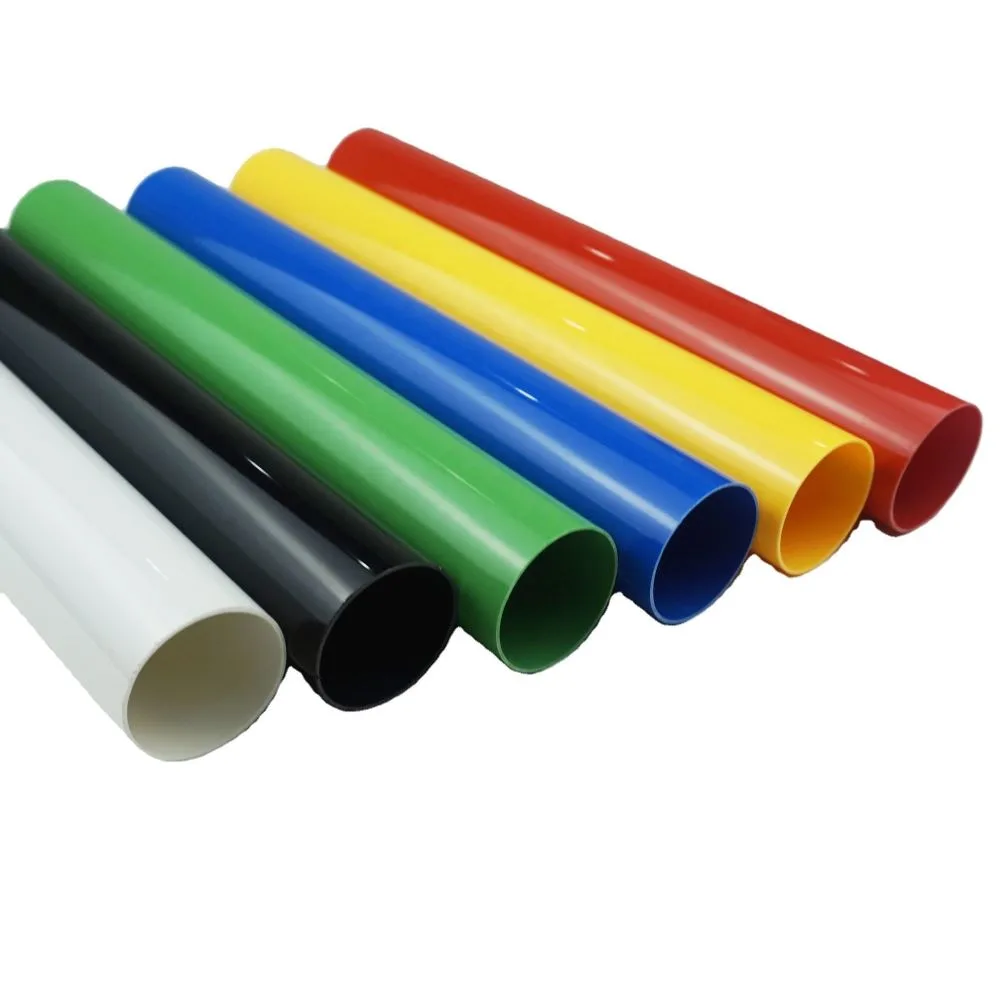




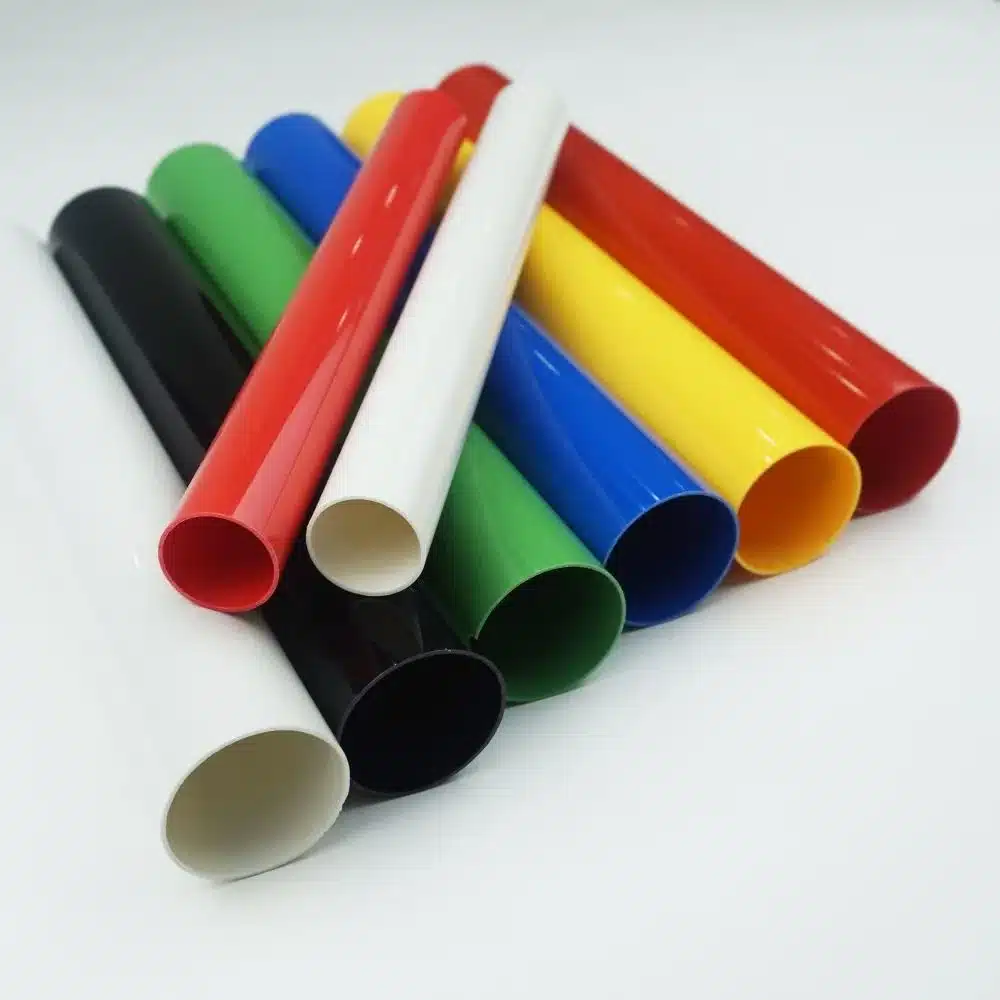
ABS-Rohre are rigid thermoplastic pipes manufactured from Acrylonitrile Butadiene Styrene (ABS), an engineering plastic known for its combination of impact resistance, rigidity, lightweight construction, and relatively easy processing.
Compared with many conventional plastic piping materials, ABS-Rohre offer a useful balance between mechanical strength and manufacturing flexibility. They are widely considered for drainage, ventilation, industrial fluid handling, equipment connections, and other applications where a lightweight and impact-resistant plastic pipe is required.
For buyers looking for a reliable Hersteller von ABS-Rohren, however, simply selecting “ABS” is not enough. The final performance of an ABS pipe depends on much more than the polymer name. Material formulation, extrusion temperature, die design, cooling conditions, wall thickness, dimensional tolerance, impact requirements, and quality control all influence the finished product.
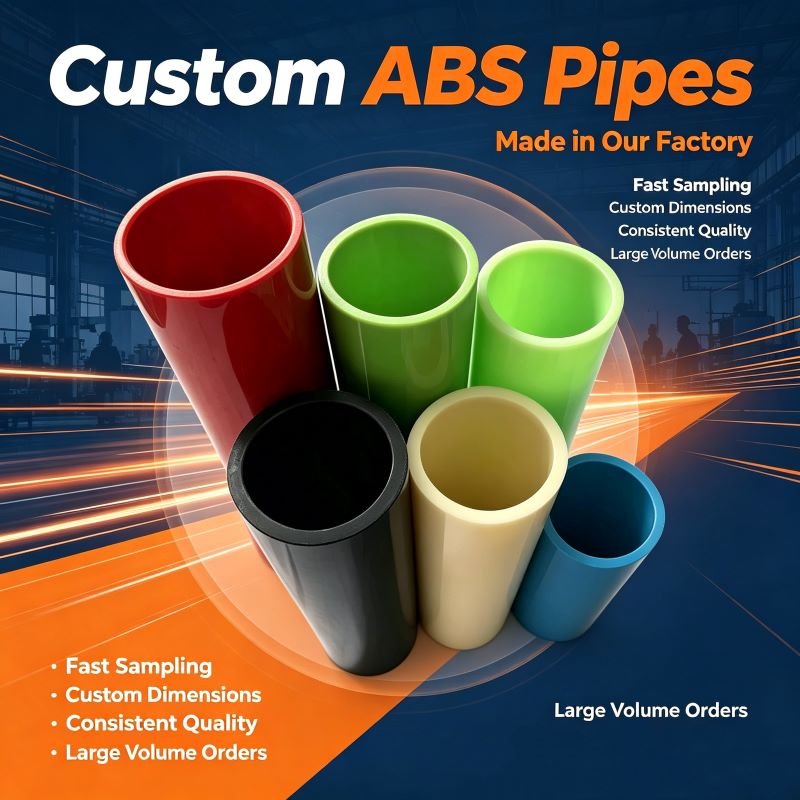
This is particularly important when standard catalog pipes do not exactly match the application’s requirements. A professional ABS-Rohrfabrik can customize the diameter, wall thickness, length, color, surface finish, material formulation, and other characteristics to create maßgefertigte ABS-Rohre for specific applications.
With more than 20 years of plastic extrusion manufacturing experience, SW specializes in designing and manufacturing customized plastic extrusion products, including ABS-Rohre. This article explains what ABS pipes are, how they are manufactured, where they are used, and what buyers should consider when developing maßgefertigte ABS-Rohre.
1. ABS Pipes Material: Understanding the Three Main Components
The name ABS comes from its three primary monomer components:
- Acrylnitril
- Butadien
- Styrol
Each component contributes different characteristics.
Acrylnitril
Acrylonitrile contributes:
- Chemische Beständigkeit
- Steifheit
- Thermische Stabilität
Butadien
Butadiene contributes:
- Schlagfestigkeit
- Zähigkeit
- Resistance to mechanical shock
Styrol
Styrene contributes:
- Processability
- Surface appearance
- Steifheit
The combination gives ABS a useful balance of properties.
This is one reason ABS-Rohre can be attractive when an application requires more impact resistance than some conventional rigid plastics can provide while maintaining relatively easy extrusion processing.
2. Why Choose ABS Pipes Instead of Other Plastic Pipes?
Different plastic materials are suitable for different applications.
Common pipe materials include:
- PVC
- ABS
- PE
- PP
- CPVC
- Various engineering plastics
There is no universally “best” plastic pipe material.
Instead, the correct material depends on:
- Temperature
- Pressure
- Chemical exposure
- Impact requirements
- Flexibilität
- Outdoor exposure
- Regulatory requirements
- Kosten
ABS-Rohre are particularly interesting where impact resistance, rigidity, dimensional stability, and relatively low weight are important.
Ein Profi Hersteller von ABS-Rohren should therefore evaluate the actual operating environment before recommending a formulation.
3. Key Advantages of ABS Pipes
High Impact Resistance
One of the major advantages of ABS is its toughness.
This makes ABS-Rohre suitable for applications where pipes may experience:
- Mechanical impacts
- Handling damage
- Installation stress
- Vibration
- Accidental knocks
This characteristic can be particularly useful for industrial equipment and transportation-related applications.
Lightweight Construction
ABS has a relatively low density compared with many metallic materials.
As a result, ABS-Rohre can reduce:
- Handling effort
- Installation labor
- Transportation weight
- Supporting structure requirements
For large projects, these advantages can contribute to lower total installation costs.
Good Dimensional Stability
Properly formulated ABS can provide stable dimensions after extrusion.
This is important for:
- Pipe connections
- Armaturen
- Equipment assemblies
- Modular systems
Ein Profi ABS-Rohrfabrik must carefully control cooling and shrinkage because dimensional stability is not achieved by material selection alone.
Good Processability
ABS is well suited to extrusion when the formulation and processing conditions are correctly controlled.
This allows manufacturers to produce:
- Straight pipes
- Thin-wall pipes
- Thick-wall pipes
- Large-diameter pipes
- Small-diameter tubes
- Custom profiles
4. ABS Pipes vs. PVC Pipes
A common purchasing question is:
Should I choose ABS pipes or PVC pipes?
The answer depends on the application.
PVC is widely used because of its:
- Cost efficiency
- Chemische Beständigkeit
- Steifheit
- Flame-performance options
- Broad availability
ABS is often considered when:
- Higher impact resistance is required
- Toughness is important
- A particular engineering specification calls for ABS
- The application requires a specific combination of stiffness and impact performance
A knowledgeable Hersteller von ABS-Rohren should compare the complete material-performance requirements rather than recommending ABS simply because it is an engineering plastic.
5. ABS Pipes vs. PE Pipes
PE pipes are known for:
- Flexibilität
- Zähigkeit
- Chemische Beständigkeit
- Excellent resistance to certain environmental stresses
ABS generally offers a different balance, with greater rigidity and a harder surface.
Therefore:
PE-Rohre may be more appropriate when flexibility is a primary requirement, while ABS-Rohre can be attractive when rigidity, dimensional stability, and impact resistance are important.
The final decision should be based on actual application requirements.
6. ABS Pipes Applications: Where Are ABS Pipes Used?
ABS pipes can be used across a wide range of applications.
Typical applications include:
Drainage Systems
ABS is used in certain drainage and waste systems where its impact resistance and lightweight construction are beneficial.
Ventilation
ABS pipes can be used in ventilation and air-handling applications where the operating conditions are compatible with ABS.
Industrial Equipment
Manufacturers may use ABS pipe or tubing for:
- Equipment connections
- Protective conduits
- Fluid-routing systems
- Machine components
Appliance Components
Customized ABS tubes can be incorporated into appliances and equipment.
Automotive and Transportation Applications
Custom plastic tubing and pipe-like components can be designed for selected transportation applications where the material and regulatory requirements are satisfied.
Laboratory and Technical Equipment
ABS can also be used for selected non-critical fluid or air-handling components.
The important point is that ABS-Rohre should always be matched to the specific operating environment.
7. Custom ABS Pipes: Why Standard Sizes Are Not Always Enough
Many projects begin with a standard pipe specification but eventually encounter a problem.
The standard pipe may have:
- The wrong outside diameter
- Excessive wall thickness
- Insufficient wall thickness
- Incorrect length
- The wrong color
- The wrong connection geometry
This is where maßgefertigte ABS-Rohre become valuable.
Ein Profi ABS-Rohrfabrik can customize the extrusion according to the customer’s engineering requirements.
Potential customization includes:
- Outside diameter
- Inside diameter
- Wall thickness
- Länge
- Farbe
- Surface finish
- Material formulation
- Dimensional tolerance
8. Custom ABS Pipes Diameter and Wall Thickness
Diameter and wall thickness are two of the most important parameters.
For example, a customer may require:
- 20 mm OD
- 30 mm OD
- 50 mm OD
- 100 mm OD
- 150 mm OD
The exact feasible range depends on:
- Extrusion equipment
- Die design
- Calibration system
- Material formulation
- Required tolerance
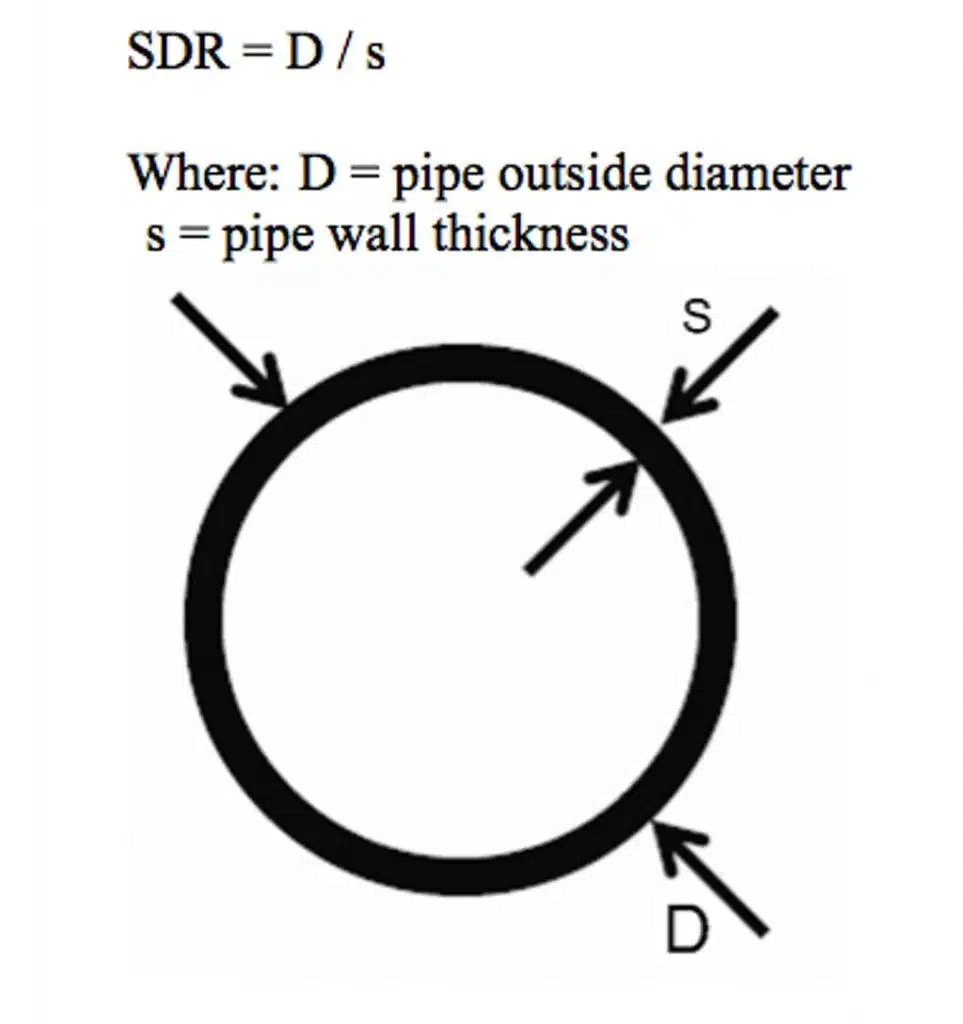
Wall thickness is equally important.
Increasing wall thickness generally increases:
- Weight
- Material consumption
- Kosten
Reducing wall thickness can reduce cost but may reduce:
- Steifheit
- Schlagfestigkeit
- Pressure capability
- Threading or connection strength
Therefore, the correct wall thickness should be engineered rather than selected simply according to the lowest material cost.
9. ABS Pipes Manufacturing: How Are ABS Pipes Extruded?
The basic ABS pipes extrusion process involves several controlled stages.
Step 1: Material Preparation
ABS resin and required additives are prepared according to the approved formulation.
Depending on the application, the formulation may be adjusted for:
- Schlagfestigkeit
- UV-Beständigkeit
- Farbe
- Processing stability
- Flame performance
- Specific regulatory requirements
Step 2: Extrusion
The ABS material enters the extrusion machine.
Inside the barrel, controlled heat and mechanical shear transform the material into a homogeneous melt.
The process must be carefully controlled.
Excessive temperature can degrade the material.
Insufficient temperature can cause:
- Poor fusion
- Unstable flow
- Surface defects
Step 3: Die Forming
The molten ABS passes through a specially designed pipe die.
The die determines the initial geometry.
For maßgefertigte ABS-Rohre, die design is especially important because non-standard dimensions require careful flow balancing.
Step 4: Calibration
After leaving the die, the pipe enters the calibration section.
The calibration system controls:
- Outside diameter
- Roundness
- Wall geometry
- Dimensionsstabilität
This is one of the most important stages for producing precision ABS-Rohre.
Step 5: Cooling
The pipe is cooled gradually.
Cooling must be uniform.
If one side cools faster than the other, the pipe may develop:
- Ovality
- Warpage
- Internal stress
- Dimensional variation
An experienced Hersteller von ABS-Rohren therefore pays close attention to cooling-water temperature, flow rate, vacuum conditions, and line speed.
Step 6: Haul-Off
The haul-off system pulls the pipe through the production line at a controlled speed.
Incorrect haul-off speed can influence:
- Wall thickness
- Diameter
- Surface finish
- Length accuracy
Step 7: Cutting
The continuous ABS pipe is cut into predetermined lengths.
Typical requirements may include:
- 1 meter
- 2 meters
- 3 meters
- 4 meters
- Custom lengths
Length tolerance should be defined before mass production.
Step 8: Inspection and Packaging
Finished ABS-Rohre are inspected for:
- Diameter
- Wall thickness
- Länge
- Roundness
- Surface appearance
- Color consistency
- Mechanical properties where required
The pipes are then packaged to prevent damage during transportation.
10. ABS Pipes Die Design: Why Tooling Matters
A high-quality ABS pipe cannot be produced simply by putting ABS resin into any extrusion die.
Pipe tooling must be designed according to:
- Material flow
- Diameter
- Wall thickness
- Production speed
- Cooling conditions
Poor die design can cause:
- Uneven wall thickness
- Melt instability
- Surface defects
- Dimensional variation
For maßgefertigte ABS-Rohre, tooling design is one of the most important stages of product development.
At SW, our engineering team evaluates the profile geometry before tooling production to reduce development risk.
11. ABS Pipes Dimensional Tolerance: Why Consistency Matters
For many buyers, dimensional consistency is more important than achieving an extremely tight single-point measurement.
Suppose the target outside diameter is:
50.00 mm
A manufacturer may specify:
50.00 ± 0.30 mm
The acceptable range would be:
49.70–50.30 mm
The appropriate tolerance depends on:
- Pipe size
- Anwendung
- Connection method
- Fitting requirements
- Production process
Ein Profi ABS-Rohrfabrik should agree on tolerances before tooling and mass production.
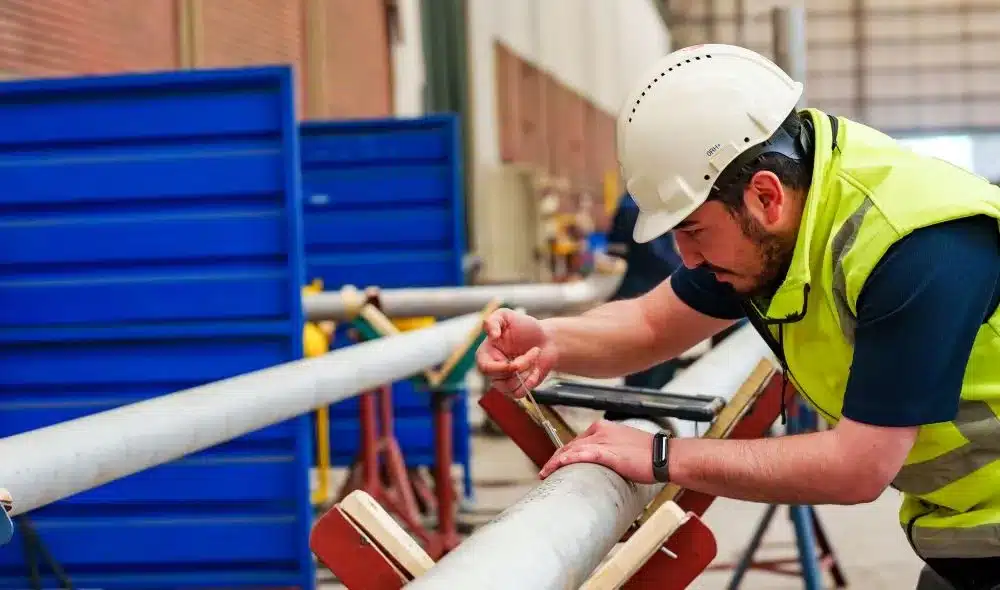
12. ABS Pipes Wall Thickness Consistency
Wall thickness must also be controlled.
Uneven wall thickness can result from:
- Incorrect die centering
- Unbalanced melt flow
- Cooling differences
- Material variation
- Excessive production speed
For pressure-sensitive or mechanically loaded applications, wall-thickness consistency becomes particularly important.
13. ABS Pipes Material Formulation: Virgin Material vs. Recycled Material
Material formulation can significantly affect ABS pipe performance.
For demanding applications, buyers should clarify whether the product is manufactured using:
- Virgin ABS
- Reprocessed ABS
- Recycled content
- A controlled blend
Recycled material is not automatically unacceptable.
However, uncontrolled recycled material can introduce variation in:
- Impact strength
- Melt flow
- Farbe
- Thermische Stabilität
- Dimensional consistency
For maßgefertigte ABS-Rohre, the material specification should therefore be documented clearly.
14. UV Resistance: An Important Consideration for ABS Pipes
Standard ABS is not automatically optimized for long-term outdoor exposure.
Ultraviolet radiation can contribute to:
- Color fading
- Surface degradation
- Loss of mechanical performance
For outdoor ABS-Rohre, the formulation may need suitable UV stabilization or another protective strategy.
The exact solution depends on:
- Geographic location
- UV-Strahlung
- Service life
- Farbe
- Temperature
Ein Profi Hersteller von ABS-Rohren should discuss these requirements before finalizing the formulation.
15. ABS Pipes for High-Temperature Applications
ABS has a defined operating temperature range.
It should not automatically be selected for high-temperature applications simply because it is an engineering plastic.
When the application involves:
- Hot water
- High-temperature air
- Industrial heat
- Continuous elevated temperatures
the manufacturer should evaluate the actual temperature profile and duration.
For applications beyond ABS’s suitable operating range, another material may be more appropriate.
16. ABS Pipes Chemical Resistance
ABS provides useful resistance to many common substances, but it is not universally resistant to every chemical.
Before selecting ABS-Rohre, buyers should evaluate:
- Chemical concentration
- Exposure duration
- Temperature
- Internal pressure
- Environmental stress
For aggressive chemical applications, laboratory compatibility testing may be appropriate.
17. ABS Pipes Impact Resistance: Why Testing Matters
Impact resistance is one of ABS’s key advantages.
However, impact performance depends on:
- Temperature
- Material formulation
- Wall thickness
- Verarbeitungsbedingungen
- Aging
A pipe that performs well at room temperature may behave differently under low-temperature conditions.
Therefore, application-specific testing is important when impact resistance is critical.

18. ABS Pipes Quality Control in a Professional Factory
Ein zuverlässiger ABS-Rohrfabrik should have a documented quality-control system.
Important checkpoints include:
Incoming Material Inspection
Verify:
- Material grade
- Supplier information
- Batch identification
In-Process Inspection
Monitor:
- Melt temperature
- Extrusionsgeschwindigkeit
- Vakuumkalibrierung
- Cooling conditions
Dimensional Inspection
Measure:
- OD
- ID
- Wall thickness
- Länge
- Roundness
Appearance Inspection
Check for:
- Scratches
- Bubbles
- Black spots
- Surface roughness
- Color variation
19. ABS Pipes Packaging and Transportation
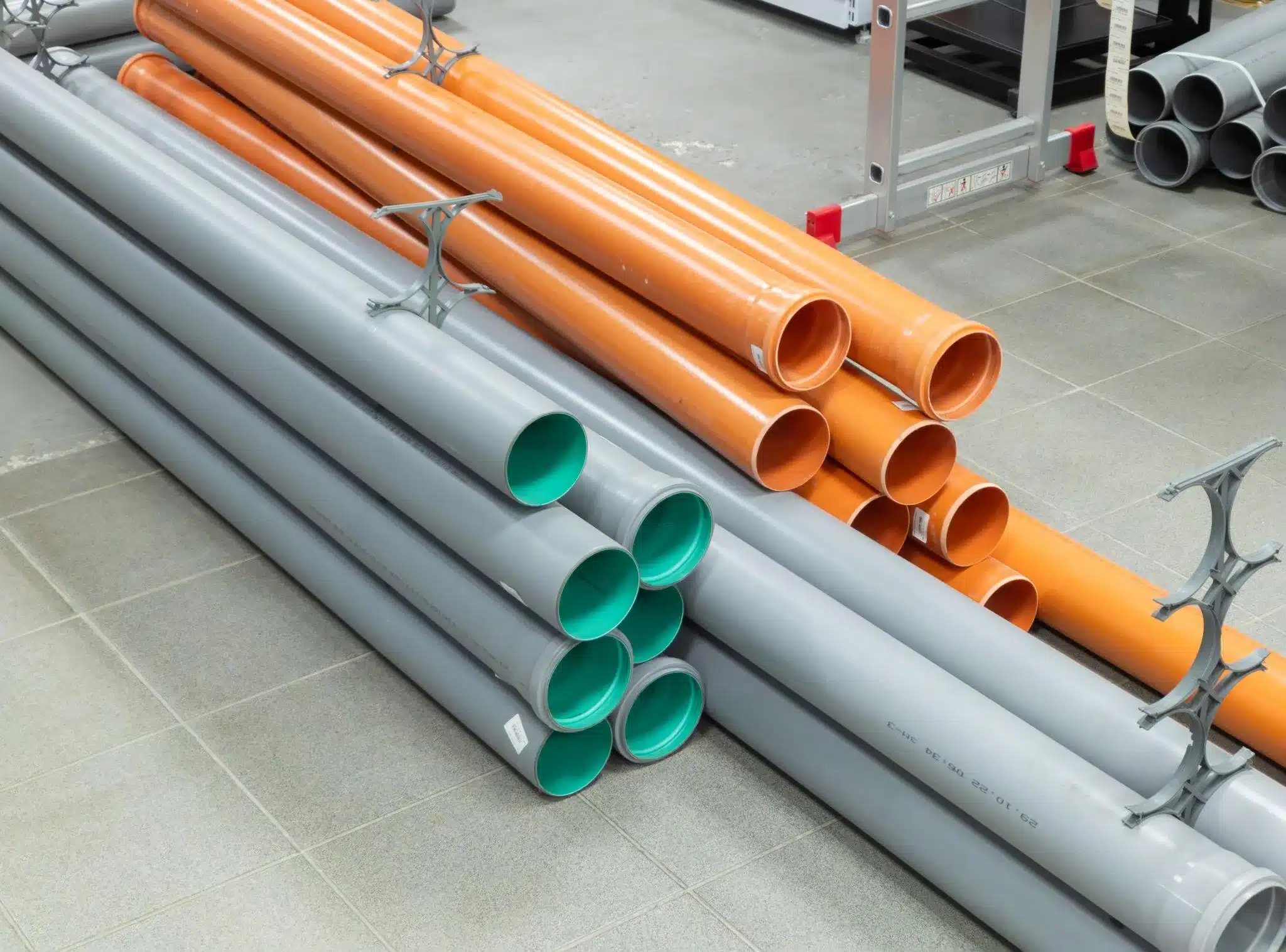
Even a perfectly manufactured pipe can be damaged during transportation.
Common risks include:
- Bending
- Scratching
- Crushing
- UV-Strahlung
- Excessive stacking
For long-distance international shipments, packaging should be designed according to:
- Pipe diameter
- Länge
- Wall thickness
- Container loading method
- Destination climate
An experienced Hersteller von ABS-Rohren can optimize packaging and loading to reduce transportation damage.
20. How SW Develops Custom ABS Pipes
SW has more than 20 years of plastic extrusion manufacturing experience.
Unser maßgefertigte ABS-Rohre development process typically includes:
1. Requirement Analysis
We review:
- Diameter
- Wall thickness
- Länge
- Anwendung
- Temperature
- Chemical environment
- Required tolerance
2. Material Selection
We select an appropriate ABS formulation according to performance requirements.
3. Profile and Die Design
Our engineering team develops the extrusion tooling.
4. Sampling
We produce prototypes for customer evaluation.
5. Dimensional Optimization
We adjust:
- Die dimensions
- Calibration
- Cooling
- Extrusionsgeschwindigkeit
6. Performance Verification
Where required, we evaluate:
- Schlagfestigkeit
- Dimensionsstabilität
- Oberflächenqualität
- Other application-specific properties
7. Mass Production
After approval, production parameters are standardized for repeatability.
21. How to Choose a Reliable ABS Pipes Manufacturer
When comparing suppliers, buyers should look beyond the quoted price.
Ask the Hersteller von ABS-Rohren:
- How many years of extrusion experience do you have?
- Can you produce non-standard dimensions?
- Can you develop custom tooling?
- How do you control wall thickness?
- How do you control diameter tolerance?
- Can you provide material specifications?
- Can you provide production samples?
- How do you manage batch-to-batch consistency?
- Can you customize colors?
- Can you support OEM and ODM projects?
The answers can reveal whether a supplier is genuinely capable of manufacturing maßgefertigte ABS-Rohre or is simply trading standard products.
22. Common Mistakes When Buying ABS Pipes
Mistake 1: Choosing Only by Price
A lower quotation may reflect:
- Lower wall thickness
- Different material formulation
- Lower-quality additives
- Less stringent quality control
Always compare equivalent specifications.
Mistake 2: Ignoring the Application Environment
Temperature, chemicals, UV exposure, and impact conditions all influence material selection.
Mistake 3: Not Defining Tolerances
If dimensional tolerances are not specified, different manufacturers may interpret the requirements differently.
Mistake 4: Approving Only a Short Sample
A short sample may look excellent while long production runs reveal dimensional instability.
For critical projects, evaluate production samples and batch consistency.
23. Custom ABS Pipes vs. Standard ABS Pipes
Standard ABS pipes are appropriate when:
- Dimensions are readily available
- The application matches existing specifications
- Large quantities are not highly customized
Custom ABS pipes become more attractive when:
- A special diameter is required
- Wall thickness must be optimized
- A special color is needed
- A specific connection design is required
- Weight needs to be reduced
- A proprietary profile is required
For OEM customers, custom extrusion can provide much greater design flexibility.

24. Cost Optimization for Custom ABS Pipes
The cheapest ABS pipe is not necessarily the most cost-effective pipe.
Total cost should include:
- Raw material
- Tooling
- Production
- Packaging
- Versand
- Installation
- Failure risk
For example, reducing wall thickness may reduce the unit price but increase breakage.
Conversely, unnecessarily thick walls increase both material and freight costs.
The best Hersteller von ABS-Rohren helps customers find the optimal performance-to-cost balance.
25. Why SW Is a Reliable ABS Pipes Factory
SW has more than 20 years of experience in plastic extrusion manufacturing and specializes in customized extrusion solutions.
Our capabilities include:
- Custom ABS pipes
- PVC-Rohre
- PE-Rohre
- Kunststoff-Extrusionsprofile
- Custom tooling
- Material formulation support
- Dimensional optimization
- OEM manufacturing
We serve customers in multiple countries and regions and understand that different markets have different technical, packaging, and compliance requirements.
Our objective is not simply to manufacture an ABS pipe.
Our objective is to develop a repeatable extrusion solution that matches the customer’s application.
26. ABS Pipes FAQ
What are ABS pipes made from?
ABS pipes are manufactured from Acrylonitrile Butadiene Styrene, a thermoplastic engineering polymer. The formulation may also contain stabilizers, pigments, processing aids, impact modifiers, and other additives depending on the application.
What are ABS pipes commonly used for?
ABS pipes can be used for selected drainage, ventilation, industrial equipment, protective, and fluid-routing applications where ABS’s mechanical and environmental properties are suitable.
Can ABS pipes be customized?
Yes. A professional Hersteller von ABS-Rohren can customize diameter, wall thickness, length, color, surface finish, and material formulation according to project requirements.
Are ABS pipes suitable for outdoor applications?
ABS can be used in selected outdoor applications, but UV exposure should be evaluated carefully. Additional UV stabilization or protective measures may be necessary for long-term outdoor service.
How does an ABS pipes factory control quality?
A professional factory controls material batches, extrusion temperature, die conditions, calibration, cooling, haul-off speed, dimensions, appearance, and application-specific performance requirements.
Are custom ABS pipes more expensive than standard pipes?
Custom ABS pipes may require tooling and development costs, but optimized dimensions and material consumption can sometimes reduce the long-term total cost, particularly for high-volume OEM projects.
Choosing the Right ABS Pipes for Your Application
ABS-Rohre offer an attractive combination of impact resistance, rigidity, lightweight construction, dimensional stability, and extrusion processability.
However, high-quality ABS pipe manufacturing requires much more than selecting ABS resin.
The final product depends on the complete manufacturing system:
- Material formulation
- Die design
- Extrusion temperature
- Melt flow
- Calibration
- Cooling
- Haul-off
- Dimensional control
- Quality inspection
For customers with non-standard requirements, maßgefertigte ABS-Rohre can provide a better solution than modifying a standard catalog product.
An experienced ABS-Rohrfabrik can optimize the pipe geometry, wall thickness, material formulation, and extrusion parameters to meet the actual application requirements.
With more than 20 years of plastic extrusion experience, SW provides customized ABS-Rohre and other plastic extrusion solutions for customers seeking reliable manufacturing, consistent dimensions, optimized costs, and flexible OEM production.
If your project requires a non-standard diameter, special wall thickness, custom color, specific performance characteristics, or high-volume production, working directly with an experienced Hersteller von ABS-Rohren can help turn the initial concept into a stable, repeatable extrusion product.
We have a ABS pipes factory of skilled engineers ready to support you in your product development journey from idea design to production.Any ideas about your product you can contact us freely,and our engineers will get back to you with a quote asap. WhatsApp +86 188 2072 7151
Wer ist S oder Wei?
Seit 2006 ist Shuowei ein professioneller Hersteller von Extrusionsprofilen mit Sitz in Guangdong, China. Unser Team besteht aus 51 bis 100 Mitarbeitern. Die Shuowei PVC-Extrusionsfabrik hat sich auf die Entwicklung und Produktion von Extrusionsprofilen wie PVC-Rohren, PE-Kabelkanälen und PVC-Sockelleisten spezialisiert. Seit unserer Gründung haben wir uns durch innovatives Design, ausgereifte Technologie und unser kompromissloses Qualitätsstreben die breite Anerkennung des Marktes und das tiefe Vertrauen unserer Kunden erworben.
Sind Sie ein Hersteller oder ein Händler?
Wir sind ein chinesisches Top-Unternehmen PVC-Extrusionsprofile Unser Werk befindet sich in Huizhou. Es verfügt über eine 16.000 m² große Produktionsfläche, mehr als fünf automatisierte Extrusionsprofil-Produktionslinien, eine jährliche Produktionskapazität von 30.000 Tonnen und beliefert über 500 Kunden weltweit. Besuchen Sie uns!
Welche Produkte bieten Sie an?
Wir sind spezialisiert auf die Entwicklung und Produktion von hochwertigen Produkten. Extrusionsprofile,wie beispielsweise PVC-Rohre, ABS-Profile, PC-Lampenschirme, PVC-Sockelleisten, PP-Kabelkanäle, PE-Profile…
Wie lange dauert der Prozess der kundenspezifischen Entwicklung?
Wir unterstützen kundenspezifische Extrusionsprodukte. Der übliche Prozess umfasst 4 Schritte: Bedarfsbestätigung → 3D-Design/Proofing → Testzertifizierung → Serienproduktion (Zyklus 3-8 Wochen).
Besitzen Sie internationale Zertifizierungen?
Wir haben die Zertifizierungen ISO 9001, CE, RoHS, SGS und weitere erhalten und erfüllen die gängigen Standards in Europa, Amerika, dem Nahen Osten und Asien.