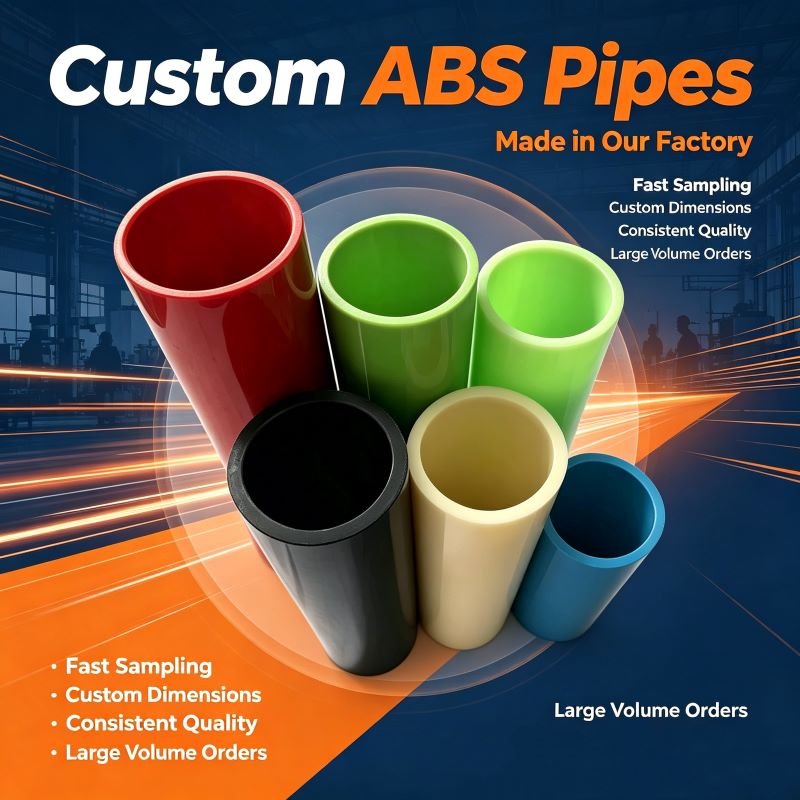




PVC-Rohre have become one of the most widely used piping materials in the world. From residential plumbing to large-scale industrial projects, they offer durability, corrosion resistance, and cost-effectiveness.
However, to ensure long service life and safe usage, users must follow important precautions when installing, handling, and operating PVC pipe systems.
In this article, we’ll explore:
General precautions for using PVC pipes
Installation and maintenance tips
How to eliminate or reduce static electricity in PVC pipes
Why sourcing from a professional PVC pipes factory like SW ensures safer, high-quality solutions

1. Understanding PVC Pipes
Before diving into precautions, it’s useful to know why PVC pipes behave the way they do.
Lightweight: Easy to transport and install compared to metal pipes.
Corrosion resistant: No rusting like steel or iron.
Chemical resistance: Excellent for chemicals, acids, and wastewater.
Non-conductive: Since PVC is an insulator, it cannot conduct electricity. However, this property leads to static charge buildup in certain conditions (more on this later).
Versatile: Available in Schedule 40, Schedule 80, pressure pipes, drainage pipes, and electrical conduits.
These properties make PVC pipes highly versatile but also mean they need specific handling and safety considerations. Learn more about PVC pipes <A Comprehensive Guide to PVC Pipes from a Factory’s Vision>
2. General Precautions When Using PVC Pipes
2.1 Storage and Handling
Store pipes on a flat surface away from direct sunlight (UV can degrade unprotected PVC).
Avoid dropping or dragging pipes to prevent cracks and scratches.
Stack pipes in layers, supported every 1–2 meters, to prevent warping.
2.2 Installation Precautions
Do not install PVC pipes near open flames or high heat sources.
Allow for thermal expansion and contraction by using expansion joints or flexible couplings.
Use only approved solvent cement and primer for joining. Incompatible adhesives can weaken joints.
Avoid over-tightening threaded connections — overtightening may crack the fittings.
2.3 Pressure and Flow Considerations
Select the right pressure class for the intended application.
For compressed air systems, avoid using standard PVC pipes unless specifically rated — risk of bursting exists.
Maintain proper slope (usually 1–2%) in drainage systems to avoid blockages.
3. Environmental and Safety Considerations
Chemical exposure: While PVC resists many chemicals, certain solvents and hydrocarbons may damage it. Always check chemical compatibility charts.
UV-Strahlung: For outdoor installation, either use UV-stabilized PVC or apply protective paint/coating.
Temperature limits: PVC softens at high temperatures (above 60°C / 140°F). Avoid hot water transport unless using CPVC (chlorinated PVC).
4. Maintenance and Long-Term Use
Inspect joints regularly for leaks.
Flush pipelines to prevent scaling or deposits.
Replace aged or brittle pipes after decades of service.
Avoid striking PVC with sharp tools or heavy objects.
5. Static Electricity in PVC Pipes
One of the lesser-known issues with PVC pipes is static electricity buildup. Since PVC is a non-conductive material, friction from fluids moving inside the pipe (especially powders, gases, or high-velocity liquids) can generate static charges.
5.1 Why Static Charge is a Problem
Shock hazard: Although usually low energy, static discharge can startle workers.
Ignition risk: In environments with flammable gases, vapors, or dust, static sparks can ignite explosions.
Attraction of dust: Static electricity attracts dust and debris, which may contaminate fluid systems.
6. How to Eliminate or Reduce Static Electricity in PVC Pipes
There are several methods to minimize static buildup in PVC piping systems:
6.1 Grounding and Conductive Layers
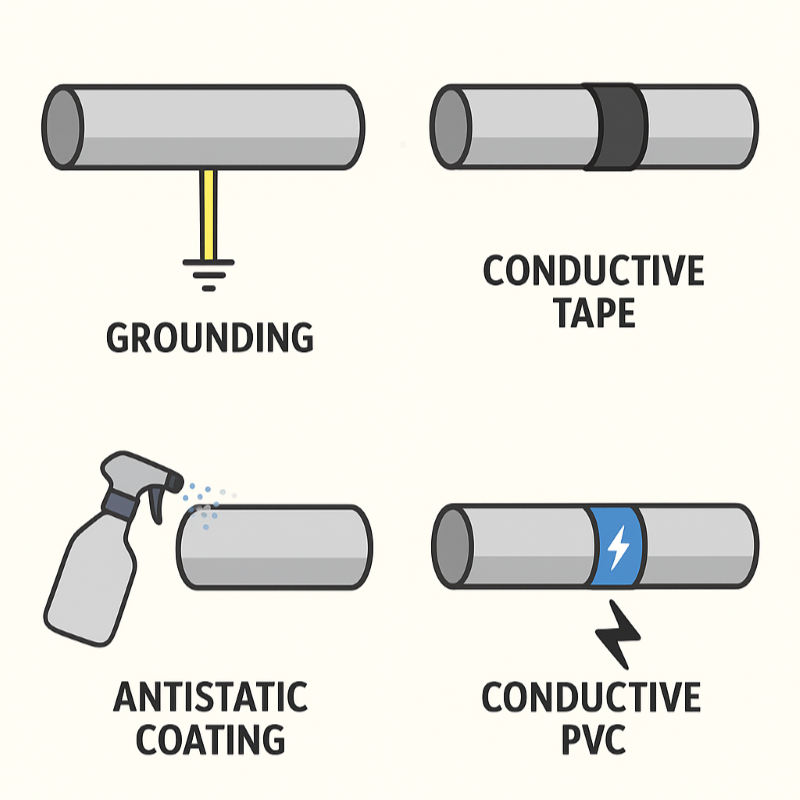
Use PVC pipes with conductive additives (carbon-loaded PVC). These allow static charges to dissipate.
Wrap the pipe in conductive tape connected to a grounding system.
In industrial settings, consider metallic grounding wires in contact with the pipe exterior.
6.2 Antistatic Coatings
Anwenden antistatic sprays or coatings on the outer surface of PVC pipes.
These coatings reduce charge accumulation by making the surface slightly conductive.
6.3 Humidity Control
Maintaining moderate humidity levels reduces static buildup, since moisture helps dissipate charges.
In dry climates, humidification systems can significantly reduce static problems.
6.4 Flow Rate and System Design
Avoid extremely high velocities for fluids inside PVC pipes, as friction increases static charge.
Use smooth bends and avoid sharp turns in design to reduce turbulence.
6.5 Alternative Materials for High-Risk Applications
For conveying flammable gases or explosive powders, PVC pipes may not be the safest option. Consider conductive piping alternatives, or special antistatic PVC manufactured by professional factories.
7. Application-Specific Precautions
7.1 Plumbing and Water Supply
Use food-grade, certified pipes for potable water.
Flush the system before first use to remove solvent residues.
7.2 Drainage and Sewage
Maintain slope for efficient flow.
Install access points for maintenance.
7.3 Irrigation
Protect exposed PVC pipes from sunlight with coverings.
Use proper filtration to prevent clogging from debris.
7.4 Industrial Systems
In chemical plants, double-check chemical compatibility.
In powder or gas transport, always consider static electricity precautions.
8. Why Work with a Professional PVC Pipes Factory
Choosing the right manufacturer is just as important as correct installation.
Ein zuverlässiger PVC pipes factory like SW gewährleistet:
Consistent quality with ISO-certified production
Pipes engineered for high pressure, drainage, and industrial use
Customized solutions such as UV-resistant PVC or antistatic PVC for special applications
Technical support to guide safe installation and operation
With 20+ years of expertise, SW provides pipes that not only meet industry standards but also ensure long-term safety and reliability.Learn more about SW PVC pipes factory.
PVC pipes safe use
PVC pipes are strong, durable, and versatile — but safe use requires proper handling, installation, and maintenance.
Key takeaways:
Store and install PVC pipes correctly to avoid damage.
Consider environmental factors such as temperature, UV, and chemical exposure.
Pay special attention to static electricity prevention in applications involving gas, powders, or high fluid velocity.
Work with a trusted PVC pipes factory like SW to access professional-grade solutions and expert guidance.
By following these precautions, you can maximize the safety, efficiency, and lifespan of PVC piping systems in any application.
Wir verfügen über ein Werk für PVC-Rohre mit erfahrenen Ingenieuren, die Sie bei der Produktentwicklung – von der ersten Idee bis zur Serienproduktion – unterstützen. Kontaktieren Sie uns gerne bei Fragen zu Ihrem Produkt. Unsere Ingenieure erstellen Ihnen umgehend ein Angebot. WhatsApp +86 188 2072 7151
Wer ist S oder Wei?
Seit 2006 ist Shuowei ein professioneller Hersteller von Extrusionsprofilen mit Sitz in Guangdong, China. Unser Team besteht aus 51 bis 100 Mitarbeitern. Die Shuowei PVC-Extrusionsfabrik hat sich auf die Entwicklung und Produktion von Extrusionsprofilen wie PVC-Rohren, PE-Kabelkanälen und PVC-Sockelleisten spezialisiert. Seit unserer Gründung haben wir uns durch innovatives Design, ausgereifte Technologie und unser kompromissloses Qualitätsstreben die breite Anerkennung des Marktes und das tiefe Vertrauen unserer Kunden erworben.
Sind Sie ein Hersteller oder ein Händler?
Wir sind ein chinesisches Top-Unternehmen PVC-Extrusionsprofile Unser Werk befindet sich in Huizhou. Es verfügt über eine 16.000 m² große Produktionsfläche, mehr als fünf automatisierte Extrusionsprofil-Produktionslinien, eine jährliche Produktionskapazität von 30.000 Tonnen und beliefert über 500 Kunden weltweit. Besuchen Sie uns!
Welche Produkte bieten Sie an?
Wir sind spezialisiert auf die Entwicklung und Produktion von hochwertigen Produkten. Extrusionsprofile,wie beispielsweise PVC-Rohre, ABS-Profile, PC-Lampenschirme, PVC-Sockelleisten, PP-Kabelkanäle, PE-Profile…
Wie lange dauert der Prozess der kundenspezifischen Entwicklung?
Wir unterstützen kundenspezifische Extrusionsprodukte. Der übliche Prozess umfasst 4 Schritte: Bedarfsbestätigung → 3D-Design/Proofing → Testzertifizierung → Serienproduktion (Zyklus 3-8 Wochen).
Besitzen Sie internationale Zertifizierungen?
Wir haben die Zertifizierungen ISO 9001, CE, RoHS, SGS und weitere erhalten und erfüllen die gängigen Standards in Europa, Amerika, dem Nahen Osten und Asien.