
In modern interior decoration, PVC skirting line has become an essential product that combines functionality, aesthetics, and durability. Whether used in homes, offices, hotels, or commercial buildings, PVC skirting line protects walls, hides wiring, and enhances the overall appearance of a room.
With over 20 years of experience in plastic extrusion manufacturing, SW ist ein Profi PVC skirting line factory, offering a wide range of standard and custom solutions for global clients. This blog will provide an in-depth look at how PVC skirting line is manufactured, the steps involved in customization, and the technical considerations customers should know.
If you are a builder, architect, distributor, or homeowner interested in quality skirting solutions, this guide will help you understand why PVC skirting line is the right choice and how customization works.
What is PVC Skirting Line?
PVC skirting line is a type of wall protection and decorative trim installed at the bottom of walls, where the wall meets the floor. It serves multiple purposes:
Protects walls from furniture damage and foot traffic.
Hides gaps and uneven floor finishes.
Provides a neat edge between flooring and walls.
Offers channels to conceal electrical wiring.
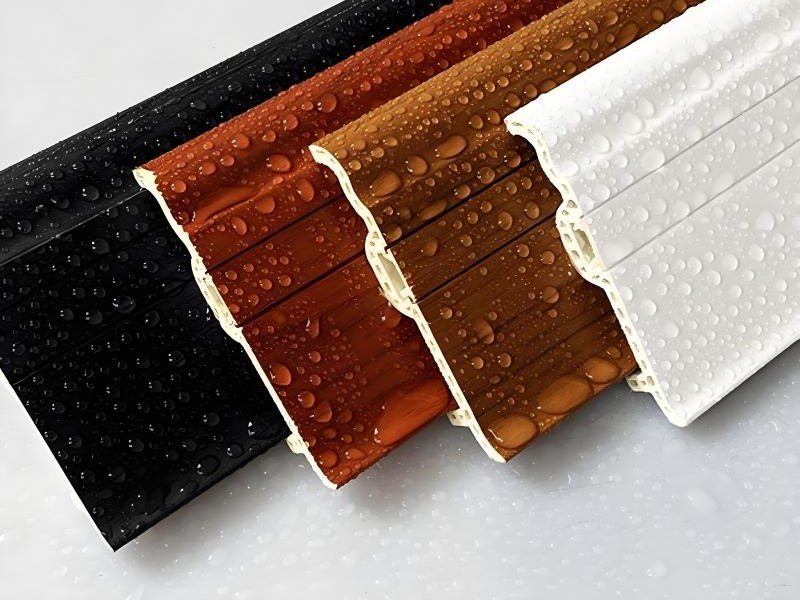
Enhances room aesthetics with various colors, textures, and finishes.
Because of its versatility, PVC skirting line is widely used in both residential and commercial spaces.
Why Choose PVC Skirting Line Over Other Materials?
Skirting boards can be made from wood, MDF, aluminum, or stone. However, PVC skirting line is increasingly popular due to:
Haltbarkeit – Resistant to moisture, termites, and impact.
Cost-effectiveness – More affordable compared to wood or aluminum.
Easy installation – Lightweight and designed for quick fitting.
Low maintenance – Easy to clean with water and mild detergents.
Customization options – Available in multiple colors, finishes (matte, glossy, wood grain), and sizes.


The Manufacturing Process of PVC Skirting Line
At SW, we use advanced extrusion technology to produce high-quality PVC skirting lines. Below is a step-by-step breakdown of the process:
1. Raw Material Selection
The first step is choosing high-quality PVC resin mixed with additives:
Stabilizers (for heat resistance)
Impact modifiers (for toughness)
Colorants (to achieve desired shade)
Processing aids (for extrusion stability)
2. Material Mixing and Compounding
The PVC resin and additives are mixed in a high-speed mixer to ensure consistency. The mixture is then cooled and transferred for processing.
3. Extrusion Process
The compound is fed into an extruder machine, where it is heated and melted. The molten PVC passes through a custom mold (die head) that shapes it into the required skirting profile.
4. Cooling and Calibration
The hot PVC profile is cooled in a water calibration tank, ensuring precise dimensions and smooth surface finish.
5. Surface Finishing
Depending on the client’s needs, different finishes can be applied:
Printing or laminating (wood grain, marble, metallic look)
Embossing (for texture)
UV coating (for extra durability)
6. Cutting and Sizing
The skirting line is cut into standard lengths (commonly 2.4m, 2.6m, or custom sizes).
7. Quality Inspection
Each piece is inspected for surface smoothness, dimension accuracy, and color consistency.
8. Packaging
Finally, the PVC skirting line is carefully packed to prevent damage during transport.

Customization of PVC Skirting Line
One of the biggest advantages of working with SW factory is the ability to produce custom PVC skirting line. Customization can be done in the following ways:
1. Size and Shape
Standard heights: 60mm, 80mm, 100mm, etc.
Custom heights or thickness depending on project needs.
Special profiles for modern or classic interiors.
2. Color Options
Pure white, black, grey, beige, or any RAL color.
Wood grain finishes (oak, walnut, maple, etc.).
Metallic or marble effects.
3. Surface Treatment
Matte, glossy, embossed, or laminated finishes.
UV-protected surfaces for high-traffic areas.
4. Functional Features
Cable management channels for hiding electrical wires.
Waterproof and fire-retardant options.
Applications of PVC Skirting Line
PVC skirting line is used in:
Residential spaces – Living rooms, bedrooms, kitchens, bathrooms.
Commercial spaces – Offices, hotels, restaurants, retail shops.
Public buildings – Schools, hospitals, airports, and libraries.
Industrial applications – Where durability and hygiene are important.

Quality Control in PVC Skirting Line Manufacturing
At SW, we follow strict ISO-certified quality standards. Key checks include:
Dimensional accuracy – Ensuring correct thickness and height.
Schlagfestigkeit – Testing toughness and durability.
Color consistency – Avoiding batch color variation.
Oberflächenqualität – Smooth, defect-free finish.
How Customers Can Order Custom PVC Skirting Line
If you’re looking for custom solutions, here’s the process:
Send us your design requirements – size, color, finish, and function.
Sample production – We make prototype samples for confirmation.
Bulk production – After approval, we start large-scale manufacturing.
Delivery – Products are carefully packaged and shipped worldwide.
Advantages of Choosing SW as Your PVC Skirting Line Factory
20 Jahre Erfahrung in extrusion manufacturing.
Advanced production lines with large output capacity.
Customization expertise for global brands.
Reliable quality with strict testing.
Competitive pricing for long-term partnerships.
SW is a leading PVC skirting line factory
PVC skirting line is more than just a decorative accessory—it’s an essential finishing element that combines protection, functionality, and design. By understanding the manufacturing process and customization options, customers can make informed decisions when choosing the right skirting for their projects.
Bei SW, we are proud to be a leading PVC skirting line factory with two decades of experience, serving clients worldwide with high-quality and custom-made solutions. Whether you need standard skirting profiles or fully tailored products, we are ready to support your needs.
If you are planning a new construction or renovation project, partner with SW factory for reliable, durable, and stylish PVC skirting line solutions.
Wir verfügen über ein Werk für PVC-Rohre mit erfahrenen Ingenieuren, die Sie bei der Produktentwicklung – von der ersten Idee bis zur Serienproduktion – unterstützen. Kontaktieren Sie uns gerne bei Fragen zu Ihrem Produkt. Unsere Ingenieure erstellen Ihnen umgehend ein Angebot. WhatsApp +86 188 2072 7151
Wer ist S oder Wei?
Seit 2006 ist Shuowei ein professioneller Hersteller von Extrusionsprofilen mit Sitz in Guangdong, China. Unser Team besteht aus 51 bis 100 Mitarbeitern. Die Shuowei PVC-Extrusionsfabrik hat sich auf die Entwicklung und Produktion von Extrusionsprofilen wie PVC-Rohren, PE-Kabelkanälen und PVC-Sockelleisten spezialisiert. Seit unserer Gründung haben wir uns durch innovatives Design, ausgereifte Technologie und unser kompromissloses Qualitätsstreben die breite Anerkennung des Marktes und das tiefe Vertrauen unserer Kunden erworben.
Sind Sie ein Hersteller oder ein Händler?
Wir sind ein chinesisches Top-Unternehmen PVC-Extrusionsprofile Unser Werk befindet sich in Huizhou. Es verfügt über eine 16.000 m² große Produktionsfläche, mehr als fünf automatisierte Extrusionsprofil-Produktionslinien, eine jährliche Produktionskapazität von 30.000 Tonnen und beliefert über 500 Kunden weltweit. Besuchen Sie uns!
Welche Produkte bieten Sie an?
Wir sind spezialisiert auf die Entwicklung und Produktion von hochwertigen Produkten. Extrusionsprofile,wie beispielsweise PVC-Rohre, ABS-Profile, PC-Lampenschirme, PVC-Sockelleisten, PP-Kabelkanäle, PE-Profile…
Wie lange dauert der Prozess der kundenspezifischen Entwicklung?
Wir unterstützen kundenspezifische Extrusionsprodukte. Der übliche Prozess umfasst 4 Schritte: Bedarfsbestätigung → 3D-Design/Proofing → Testzertifizierung → Serienproduktion (Zyklus 3-8 Wochen).
Besitzen Sie internationale Zertifizierungen?
Wir haben die Zertifizierungen ISO 9001, CE, RoHS, SGS und weitere erhalten und erfüllen die gängigen Standards in Europa, Amerika, dem Nahen Osten und Asien.