


In modern manufacturing, construction, and automotive engineering, sealing strips play a critical role in ensuring airtight, watertight, and dustproof performance. Whether installed in doors, windows, machinery, or vehicles, sealing strips are indispensable components that protect against environmental elements, vibration, and noise.
Bei SW, ein Profi plastic extrusion sealing strip factory mit über 20 years of manufacturing experience, we specialize in the production of PVC-Dichtungsstreifen and other customized sealing solutions. Understanding the differences between sealing strip materials is crucial for choosing the right product for your application — balancing performance, durability, and cost.
This comprehensive guide explores the most common sealing strip materials, their features, advantages, and ideal applications, helping you make informed decisions when sourcing or designing your next project.
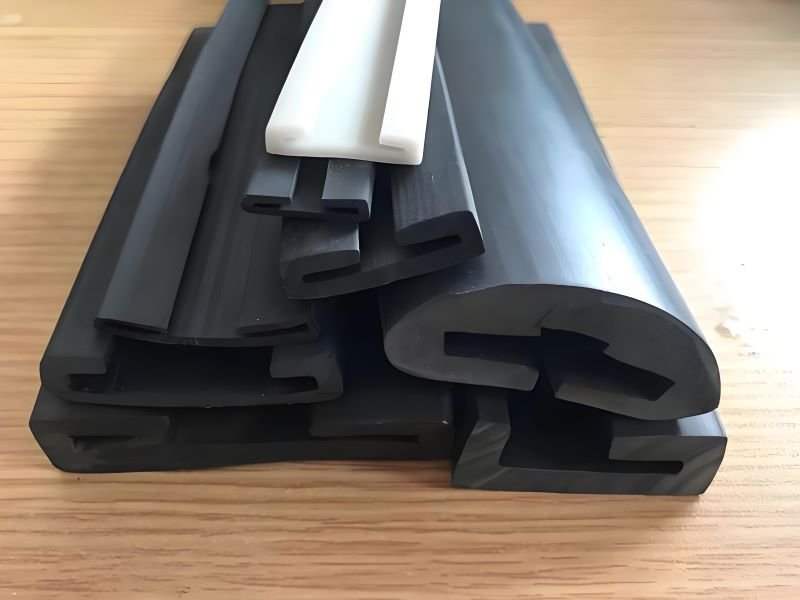
1. What Are Sealing Strips?
A sealing strip is a flexible material extruded into various shapes (such as U, T, P, or bulb profiles) and installed between two surfaces to prevent the passage of air, water, dust, and vibration.
These strips can be made from PVC, EPDM rubber, silicone, TPE, or polyurethane, among others, depending on the performance requirements of the application.
Primary Functions of Sealing Strips
Sealing: Prevents leaks and environmental ingress.
Insulation: Reduces sound and heat transmission.
Protection: Prevents damage caused by friction or impact.
Vibration Reduction: Absorbs mechanical shock and noise.
Aesthetic Enhancement: Provides clean, finished edges for structures and equipment.
Sealing strips are commonly used in automotive, construction, appliance, marine, and industrial applications.
2. Common Materials Used for Sealing Strips
Each sealing strip material has unique mechanical and chemical properties that make it suitable for specific uses. Below is a detailed comparison of the most widely used types.
2.1. PVC Sealing Strips
PVC-Dichtungsstreifen are among the most popular types due to their versatility, cost-effectiveness, and ease of extrusion. At SW, we have specialized in PVC sealing strip production for over 20 years, offering custom shapes, colors, and hardness levels.
Key Features
Excellent weather and UV resistance
Waterproof and moisture-resistant
Available in hard and soft formulations
Compatible with co-extrusion for multi-layer sealing performance
Economical compared to rubber and silicone alternatives
Anwendungen
Windows and doors
Automotive trims and edge seals
Industrial equipment
Refrigerators and home appliances
Marine hatches and boat edges
Vorteile
Highly customizable with color and hardness options
Excellent dimensional stability
Resistant to chemical corrosion
Low maintenance and long lifespan
PVC sealing strips are ideal for general-purpose applications where cost, flexibility, and performance are balanced.
2.2. EPDM Sealing Strips
EPDM rubber sealing strips are widely used for demanding outdoor environments. This synthetic rubber offers exceptional durability and elasticity.
Key Features
Outstanding UV, ozone, and weather resistance
Maintains flexibility from -40°C to +120°C
Excellent compression set resistance
Anwendungen
Car doors, trunks, and windows
Building façades and curtain walls
Industrial machinery and HVAC systems
Vorteile
Excellent long-term sealing performance
Resistant to aging and environmental exposure
Performs well under temperature extremes
Drawback: EPDM strips can be more expensive and heavier than PVC or TPE alternatives.
2.3. Silicone Sealing Strips
Silicone sealing strips are known for their superior temperature resistance and chemical stability, often used in high-temperature or food-grade environments.
Key Features
Temperature resistance: -60°C to +230°C
FDA-approved for food and medical applications
Excellent compression recovery
Anwendungen
Ovens, refrigerators, and kitchen appliances
Medical devices and laboratories
Electronics and lighting enclosures
Vorteile
Non-toxic and odorless
Excellent thermal and electrical insulation
Remains flexible at extreme temperatures
Drawback: Higher production cost compared to PVC or EPDM, making it less ideal for cost-sensitive projects.
2.4. TPE Sealing Strips
TPE sealing strips combine the flexibility of rubber with the processing benefits of plastic. They are recyclable and increasingly popular as an eco-friendly alternative.
Key Features
Excellent elasticity and rebound
Lightweight and flexible
Recyclable and non-toxic
Anwendungen
Automotive interiors
Electronic enclosures
Building joints and frames
Vorteile
Can be co-extruded with other plastics
Environmentally friendly (no halogens)
Resistant to weather and ozone
Drawback: Slightly less durable than EPDM in harsh environments.
2.5. PU Sealing Strips
PU sealing strips offer outstanding wear resistance and elasticity, making them suitable for industrial and mechanical uses.
Key Features
High abrasion and tear resistance
Excellent impact strength
Resistant to oil and solvents
Anwendungen
Conveyor systems
Industrial sealing and gaskets
Heavy machinery and equipment
Vorteile
Strong and durable under load
Long lifespan even in abrasive conditions
High mechanical strength
Drawback: More expensive and sensitive to humidity compared to PVC.
2.6. Neoprene (CR) Sealing Strips
Neoprene sealing strips combine weather, oil, and chemical resistance, making them suitable for specialized industrial environments.
Key Features
Good resistance to oil and grease
Moderate UV and ozone resistance
Temperature range: -40°C to +100°C
Anwendungen
Marine and aerospace industries
Industrial sealing applications
Electrical enclosures
Vorteile
Multi-purpose performance
Resistant to flame and corrosion
Excellent adhesion to metals
Drawback: Higher density and cost compared to PVC and EPDM.
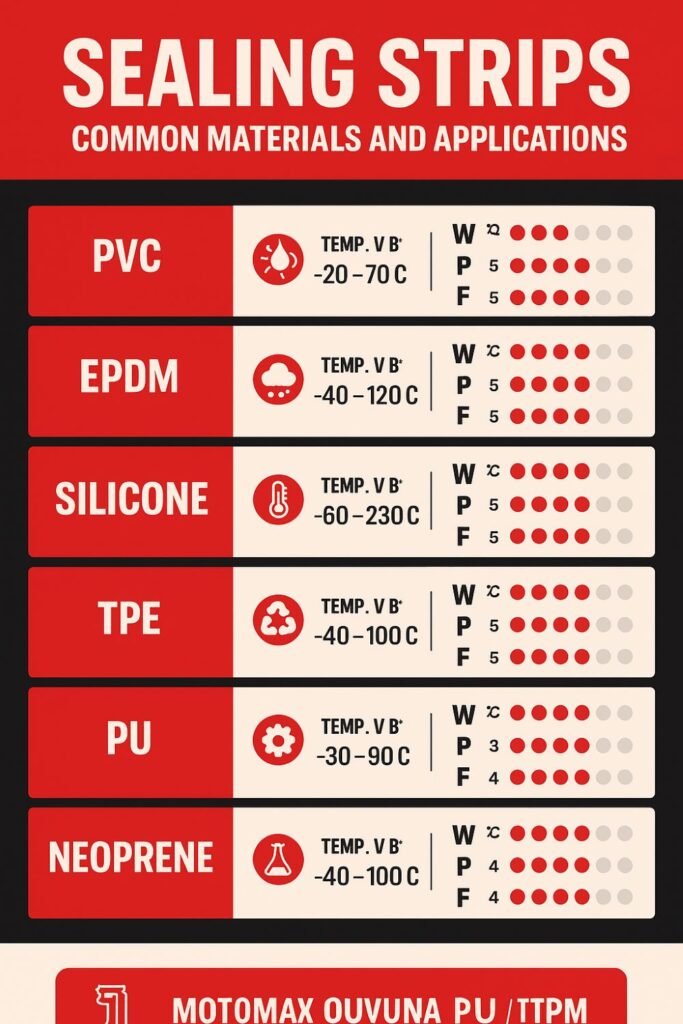
3. Comparison of Sealing Strip Materials
| Material | Temperaturbereich | Weather Resistance | Flexibilität | Kosten | Typical Use |
|---|---|---|---|---|---|
| PVC | -20°C to +70°C | Good | Excellent | Low | Windows, appliances, automotive |
| EPDM | -40°C to +120°C | Excellent | Excellent | Medium | Vehicles, outdoor seals |
| Silicone | -60°C to +230°C | Excellent | Excellent | High | Food, medical, high-temp |
| TPE | -40°C to +100°C | Good | Excellent | Medium | Electronics, eco projects |
| PU | -30°C to +90°C | Good | High | High | Industrial, mechanical |
| Neoprene | -40°C to +100°C | Excellent | Medium | Medium | Marine, aerospace |
From this table, PVC-Dichtungsstreifen stand out for their balance between cost, durability, and performance — particularly for construction, industrial, and automotive applications.
4. Choosing the Right Sealing Strip for Your Application
Selecting the best sealing strip depends on your application’s environmental conditions, performance expectations, and budget.
4.1. Consider Temperature
For high-temperature environments, choose silicone.
For general indoor/outdoor use, PVC oder EPDM performs well.
4.2. Consider Chemical Exposure
PU Und neoprene resist oil and solvents.
PVC provides general chemical resistance for most environments.
4.3. Consider Installation and Cost
PVC-Dichtungsstreifen are lightweight, affordable, and easy to install.
EPDM oder TPE are better for heavy-duty or eco-sensitive projects.
4.4. Consider Appearance
PVC offers the widest color range and aesthetic flexibility for decorative sealing.
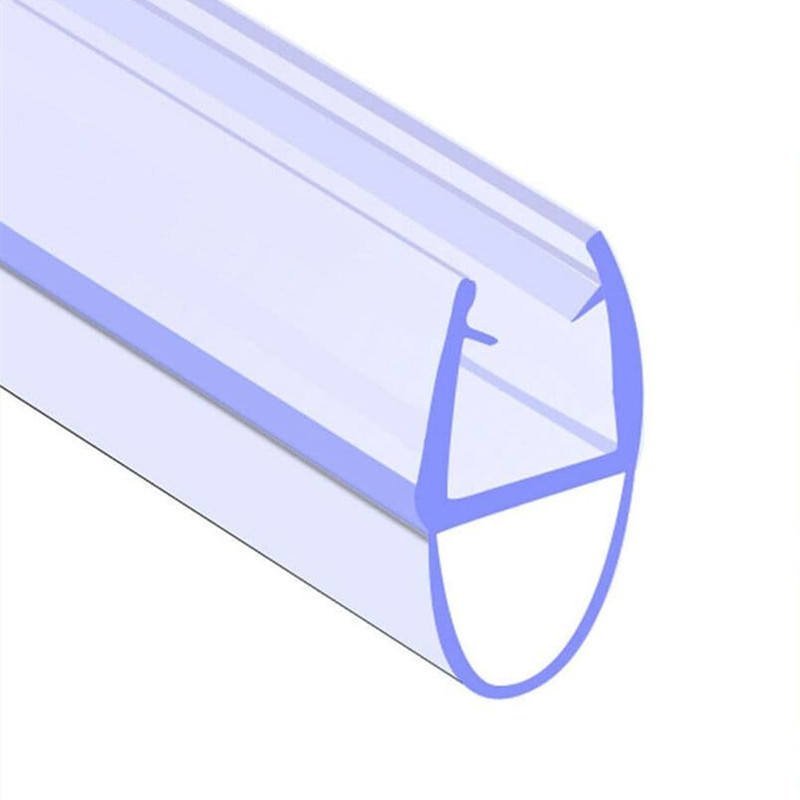
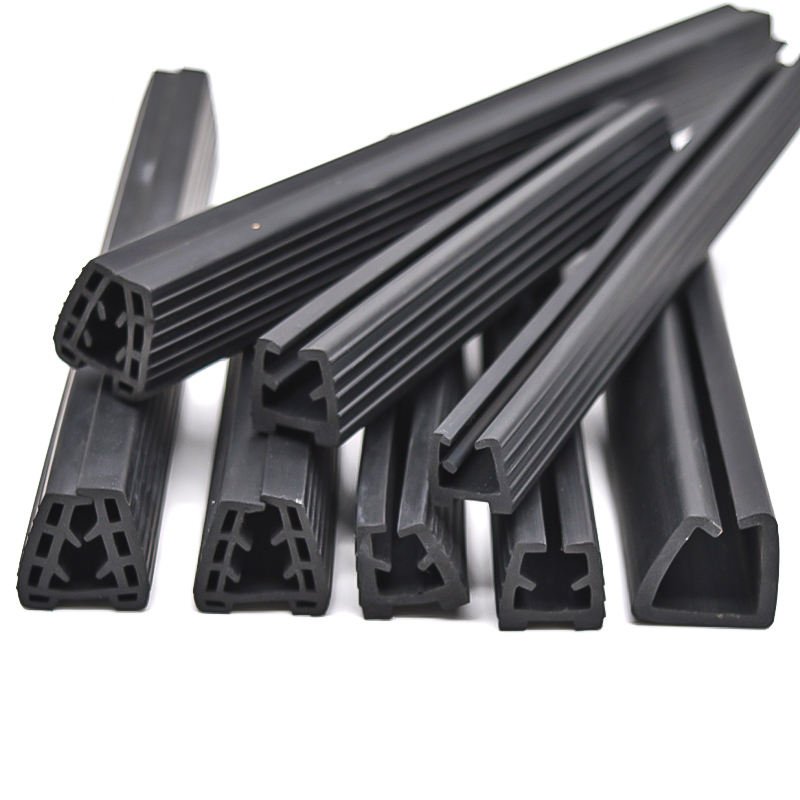
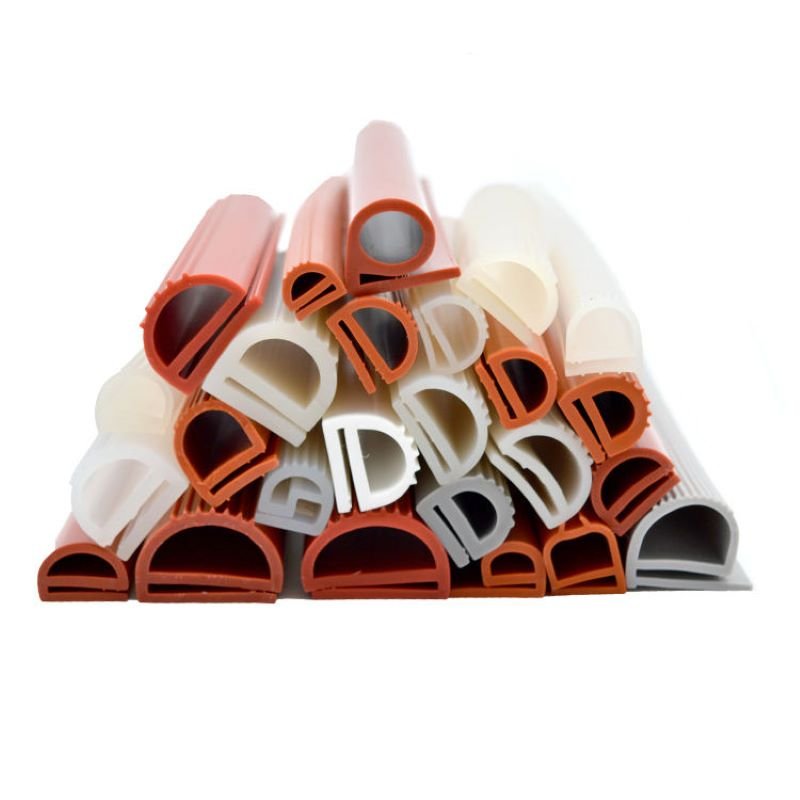
5. Customization Options for Sealing Strips
Bei SW, our sealing strips are fully customizable to suit different industries and design requirements.
Custom Options Include:
Profiles: U, P, T, D, bulb, flat, or bespoke cross-sections
Hardness: From 60A (soft) to 95A (rigid)
Colors: Black, white, gray, transparent, or custom colors
Materials: PVC, EPDM, TPE, PU, silicone
Co-extrusion: Combination of soft and hard materials for enhanced sealing
Our advanced extrusion lines enable high precision and consistent quality for every batch.
6. Real-World Applications
Case 1: Door and Window Manufacturer
A construction client switched from rubber to PVC-Dichtungsstreifen for cost savings and improved weather resistance, resulting in 15% lower production costs and easier installation.
Case 2: Automotive OEM
An automotive brand used co-extruded PVC-EPDM sealing strips for vehicle doors, achieving superior sound insulation and extended lifespan.
Case 3: Refrigeration Equipment
A leading appliance company used magnetic PVC sealing strips to improve refrigerator energy efficiency by 12%.
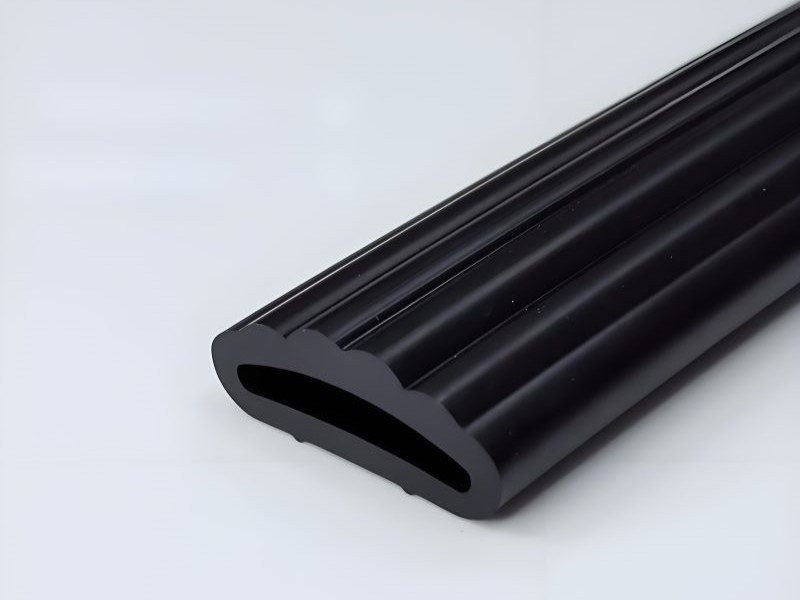
7. Why Choose SW as Your Sealing Strip Supplier
With two decades of experience, SW is one of the leading plastic extrusion sealing strip manufacturers in China, serving global customers in over 30 countries.
Our Strengths
20+ years of professional extrusion experience
OEM & ODM support
Custom design and tooling services
High precision and consistency
Competitive pricing with fast delivery
At SW, we focus not only on production but also on providing technical consultation to help customers select the most appropriate sealing material and profile for their specific application.
each sealing strip material offers unique benefits
From PVC and EPDM Zu silicone and TPE, each sealing strip material offers unique benefits. Choosing the right type depends on the application environment, required flexibility, and budget.
For most general-purpose sealing needs — from doors and windows to industrial machinery — PVC-Dichtungsstreifen remain the most cost-effective and versatile choice.
As a trusted sealing strip manufacturer mit 20 years of expertise, SW provides premium-quality PVC-Dichtungsstreifen and other extruded sealing solutions tailored to your project.
If you’re looking for a reliable sealing strips supplier, contact SW today for customized, high-performance sealing solutions built to last.
Wir verfügen über ein Werk für PVC-Rohre mit erfahrenen Ingenieuren, die Sie bei der Produktentwicklung – von der ersten Idee bis zur Serienproduktion – unterstützen. Kontaktieren Sie uns gerne bei Fragen zu Ihrem Produkt. Unsere Ingenieure erstellen Ihnen umgehend ein Angebot. WhatsApp +86 188 2072 7151
Wer ist S oder Wei?
Seit 2006 ist Shuowei ein professioneller Hersteller von Extrusionsprofilen mit Sitz in Guangdong, China. Unser Team besteht aus 51 bis 100 Mitarbeitern. Die Shuowei PVC-Extrusionsfabrik hat sich auf die Entwicklung und Produktion von Extrusionsprofilen wie PVC-Rohren, PE-Kabelkanälen und PVC-Sockelleisten spezialisiert. Seit unserer Gründung haben wir uns durch innovatives Design, ausgereifte Technologie und unser kompromissloses Qualitätsstreben die breite Anerkennung des Marktes und das tiefe Vertrauen unserer Kunden erworben.
Sind Sie ein Hersteller oder ein Händler?
Wir sind ein chinesisches Top-Unternehmen PVC-Extrusionsprofile Unser Werk befindet sich in Huizhou. Es verfügt über eine 16.000 m² große Produktionsfläche, mehr als fünf automatisierte Extrusionsprofil-Produktionslinien, eine jährliche Produktionskapazität von 30.000 Tonnen und beliefert über 500 Kunden weltweit. Besuchen Sie uns!
Welche Produkte bieten Sie an?
Wir sind spezialisiert auf die Entwicklung und Produktion von hochwertigen Produkten. Extrusionsprofile,wie beispielsweise PVC-Rohre, ABS-Profile, PC-Lampenschirme, PVC-Sockelleisten, PP-Kabelkanäle, PE-Profile…
Wie lange dauert der Prozess der kundenspezifischen Entwicklung?
Wir unterstützen kundenspezifische Extrusionsprodukte. Der übliche Prozess umfasst 4 Schritte: Bedarfsbestätigung → 3D-Design/Proofing → Testzertifizierung → Serienproduktion (Zyklus 3-8 Wochen).
Besitzen Sie internationale Zertifizierungen?
Wir haben die Zertifizierungen ISO 9001, CE, RoHS, SGS und weitere erhalten und erfüllen die gängigen Standards in Europa, Amerika, dem Nahen Osten und Asien.