



How SW engineered a fully customized medical-grade بثق البلاستيك solution for a global healthcare-equipment manufacturer.
1.Why Plastic Extrusion Matters in Modern Medical Equipment
The medical sector demands absolute precision, high material stability, and stringent regulatory compliance. From diagnostic devices to monitoring equipment and fluid-transfer systems, extruded plastic profiles form the backbone of countless medical assemblies.
بصفتي محترفًا مصنع بثق البلاستيك with 20+ years of experience, جنوب غرب has become a trusted partner for global medical-device brands. Our factory specializes in tight-tolerance extrusions, biocompatible materials, and clean-room compliant production, making us one of the most reliable extrusion suppliers in the medical sector.
This blog presents a detailed, real-world case study where SW was chosen by a leading medical-equipment company to design and mass-produce a customized medical-grade extruded tubing and structural profile solution used in high-precision hospital diagnostic equipment.
To help our customers understand the engineering depth behind this type of manufacturing, this article will cover:
Case background & technical challenges
Material selection
Design and engineering considerations
Tooling development
Extrusion manufacturing process
Quality control and compliance
Performance testing
Packaging and clean-handling
Logistics and supply-chain coordination
Key benefits of choosing SW as your medical plastic extrusion manufacturer
2. Project Background: Custom Extrusion for a Medical Device Manufacturer
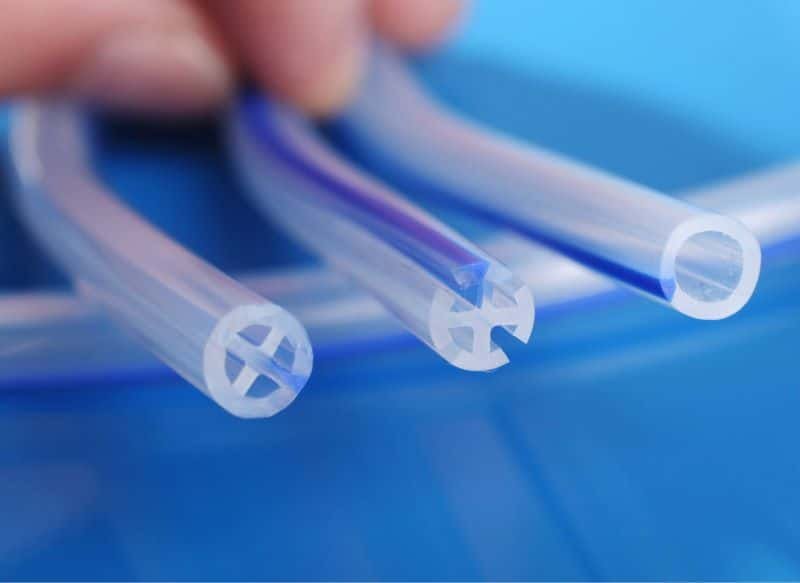
A well-known global medical-equipment company approached جنوب غرب with a requirement to develop precision extruded plastic tubing and sealing channels used in their new diagnostic instrument line.
Customer Requirements Included:
Full customization of dimensions and performance characteristics
Medical-grade materials (biocompatible, sterilization-compatible)
Ultra-smooth internal surface finish
High dimensional accuracy (±0.05 mm)
مقاومة عالية للصدمات
Transparency in certain components
Repeated sterilization resistance (steam, ethylene oxide, and gamma radiation)
Low particulate generation during fabrication and use
Compliance with ISO 10993 / USP Class VI
SW was selected because our مصنع بثق البلاستيك has deep experience producing medical-grade components for:
Diagnostic equipment
Monitoring devices
Surgical equipment
Pharmaceutical machinery
Lab fluid-handling systems
This particular medical device required both structural profiles و flexible tubing, each demanding its own engineering and extrusion approach.
3. Material Selection for Medical Plastic Extrusion
Choosing the right material is one of the most critical steps. SW provided the customer with a technical comparison of several materials:
Candidate Materials Considered
Medical-grade PVC (soft/hard)
TPU (Thermoplastic Polyurethane)
PEBA (Polyether block amide)
PC (Polycarbonate)
ABS (Medical grade)
PP (Polypropylene, medical grade)
After sampling and engineering validation, the final selection was:
Final Materials Used
1) Transparent Structural Parts: Polycarbonate (PC)
Selected for:
High clarity
مقاومة ممتازة للصدمات
Heat resistance for sterilization
الثبات البُعدي
2) Tubing Section: Medical-Grade TPU
Selected for:
المرونة
Kink resistance
Excellent chemical compatibility
Biocompatibility and certification availability
متانة طويلة الأمد
3) Sealing Channel: Soft PVC Medical Grade
Selected for:
High elasticity
Strong sealing characteristics
Low cost & easy extrusion
Compatibility with diagnostic equipment assemblies
SW maintains a full catalog of medical-grade extrusion materials, all supplied with certifications required by medical-equipment factories.
4. Engineering & Design Process
SW’s engineering team assisted the customer in developing the product from concept to manufacturable extrusion. Steps included:
1) Functional analysis
Internal fluid flow
Structural load requirements
Assembly interface with main equipment
Sterilization compatibility
Clear vs opaque materials
2) CAD design & tolerance simulation
We ran dimensional simulations to ensure:
Gap consistency
Pull-strength reliability
Internal diameter stability
3) Flow analysis (Melt-flow simulation)
Using extrusion-simulation software, we analyzed:
Melt pressure distribution
Cooling-phase shrinkage
Wall-thickness consistency
4) Prototyping using custom-built test tooling
SW produced 3 versions of prototype extrusions for testing:
Version A: Higher rigidity
Version B: Balanced flexibility
Version C: Softest grade
After evaluation, Version B was selected.
5. Tooling Development for Medical Extrusion
SW is known for its in-house extrusion tooling manufacturing, which accelerates development and reduces cost for medical customers.
Tooling Steps Included
Die design (flow channel, land length, pressure optimization)
Calibration plate design for tight tolerance control
Sizing sleeve manufacturing
Surface finish optimization for smooth internal surfaces
Cooling-channel design for warp-free shaping
Tooling precision is critical, especially because medical equipment requires tight tolerances and stable mechanical behavior.
SW’s tooling workshop uses:
CNC machining centers
EDM machining
Polishing equipment
Laser measurement devices
This ensures the tooling meets the 0.01–0.02 mm precision necessary for medical-grade extrusions.
6. Complete Manufacturing Workflow
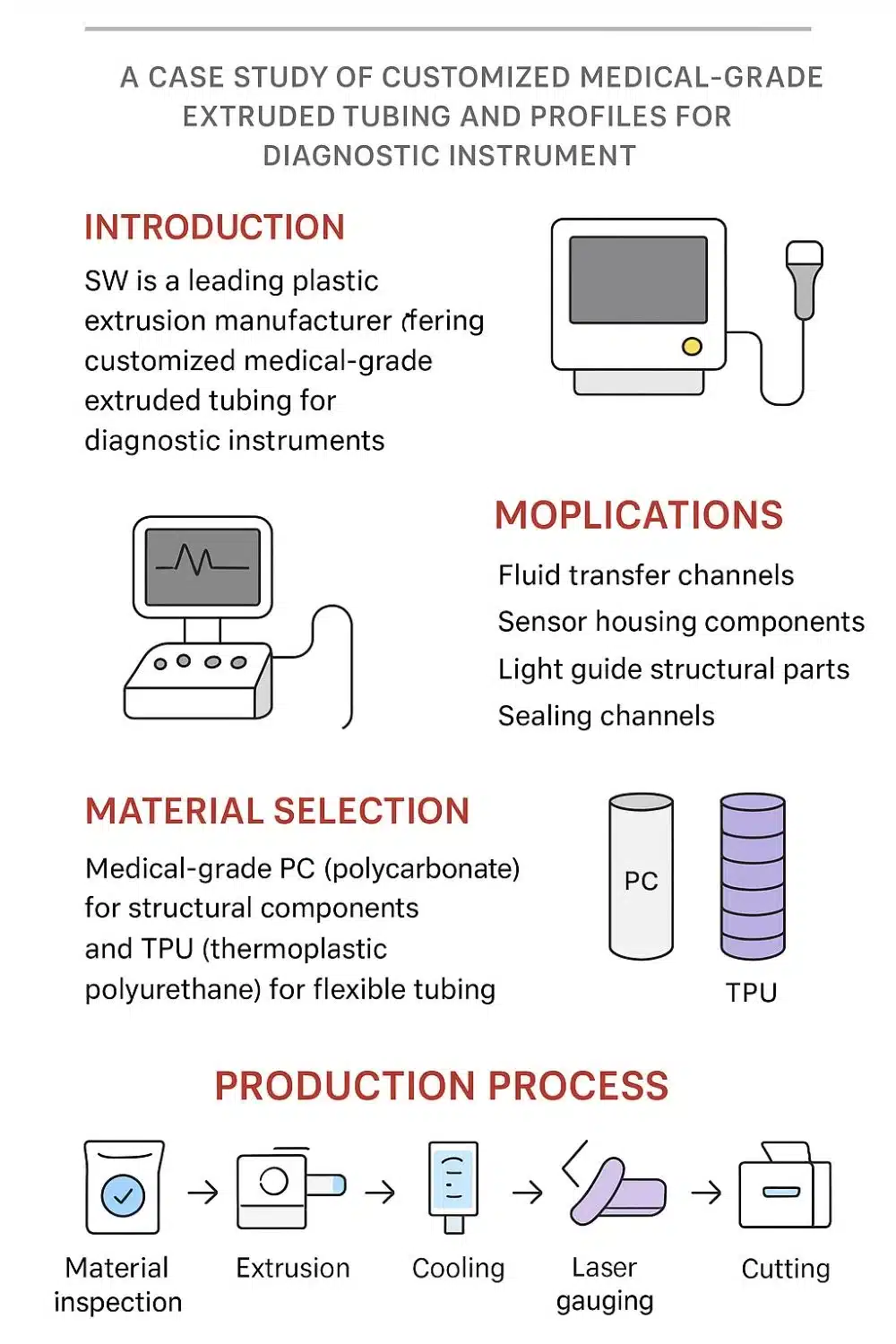
Below is the step-by-step medical plastic extrusion workflow used for this project:
Step 1: Material Incoming Inspection
All medical-grade materials undergo:
Certification verification
Moisture-content testing
Melt-flow index testing
Step 2: Pre-Drying & Material Preparation
Materials like PC and TPU require drying to prevent:
Bubbles
Black spots
Internal voids
SW uses:
Dehumidifying dryers
Hopper dryers
Nitrogen drying units
Step 3: Extrusion
Extrusion is carried out on SW’s medical-grade extrusion lines equipped with:
High-precision screws
Closed-loop temperature control
Automatic pressure monitoring
For each material:
PC requires high temperature and stable pressure
TPU requires moderate shear to prevent yellowing
Soft PVC requires careful plasticizer stability control
Step 4: Vacuum Calibration
Dimensions are controlled through:
Vacuum forming
Cooling baths with temperature regulation
Tolerance maintained: ±0.05 mm.
Step 5: Online Laser Gauging
Laser systems measure:
Outer diameter
سمك الجدار
Ovality
Real-time adjustments ensure consistent extrusions.
Step 6: Cooling & Aging
After extrusion, profiles enter a controlled cooling zone to stabilize molecular alignment.
Step 7: Cutting & End Forming
Includes:
Precision cutting
Knife finishing
Punching (if required)
Step 8: Surface Treatment (if needed)
Some parts required:
Anti-static coating
Hydrophilic coating
Optical polishing
Step 9: Cleanroom Packaging
Depending on the customer’s needs, components were packaged:
In Class 100,000 cleanroom
With dust-free wrapping
In vacuum-sealed or medical-grade PE bags
7. Applications in Medical Equipment
The extruded PC, TPU, and PVC profiles produced for this project were used in:
1) Diagnostic Equipment
Fluid transfer channels
Sensor housing components
Light-guide structural parts
2) Surgical & Clinical Instruments
Sealing channels
Protection covers
Transparent monitoring windows
3) Hospital Machinery
Pump systems
Monitoring devices
Sample-handling assemblies
4) Lab & Pharmaceutical Devices
Chemical-resistant fluid tubing
Structural rail extrusions
Safety-enclosure seals
بثق البلاستيك plays a critical role in modern healthcare-device manufacturing, and SW specializes in supporting these high-demand sectors.

8. How to Choose the Right Medical Plastic Extrusion
Customers looking for medical extrusions should consider:
1) Biocompatibility
Must meet ISO 10993 or USP Class VI.
2) Sterilization Resistance
Determine compatibility with:
Steam
EO
Gamma
Plasma
UV
3) Dimensional Precision
Critical for sealing, structural support, or assembly.
4) Optical Requirements
Clarity, gloss, and transparency for diagnostic devices.
5) Mechanical Strength
Flexibility, stiffness, impact resistance.
6) Chemical Compatibility
Depends on exposure: alcohol, disinfectants, saline, acids.
7) Cleanroom Manufacturing Capability
Essential for medical tubing and sealing components.
8) Factory Certifications
SW supports:
ISO 9001
ISO 14001
ISO 13485 (upon request via partner facility)
9. Usage Precautions & Best Practices
To ensure proper performance, customers must understand:
Avoid:
الانحناء المفرط
Overheating
Chemical exposure outside specifications
Incorrect solvent bonding
Ensure:
Correct sterilization procedures
Proper storage temperature and humidity
Labelling for traceability
SW provides full technical datasheets and usage guidelines with every shipment.
10. Common Failure Modes & Preventive Measures
1) Surface cracking
→ Avoid aggressive chemicals.
2) Yellowing (TPU/PC)
→ Prevent overheating during sterilization.
3) Dimensional deformation
→ Store in low-temperature, humidity-controlled environment.
4) Premature aging
→ Avoid UV exposure.
SW helps customers design parts that avoid these issues through proper material and engineering selection.
11. Why SW Is the Preferred Medical Plastic Extrusion Manufacturer
SW provides three major advantages:
1) 20+ Years of Plastic Extrusion Expertise
Specializing in:
جهاز كمبيوتر
مادة PVC
TPU
PP
PE
أب
Medical-grade custom compounds
2) Advanced Equipment & Tooling
Precision extrusion lines
Laser measurement systems
In-house toolmaking
Cleanroom packaging
3) Customized Engineering Service
From concept → design → tooling → production → packaging.
We also support:
Rapid prototyping
Small-batch production
Large-scale annual supply contracts
SW is a premium medical plastic extrusion factory خدمة العملاء في جميع أنحاء العالم.
SW-medical plastic extrusion manufacturer
This case demonstrates how جنوب غرب, with 20 years of extrusion experience, supports global medical-equipment companies through:
Professional engineering
High-purity materials
Strict quality control
ISO-compliant manufacturing
Tight-tolerance extrusion
Cleanroom handling
Reliable long-term supply
Medical equipment manufacturers need partners who understand both engineering complexity و regulatory compliance. SW is proud to be one of the leading medical plastic extrusion manufacturers in Asia, serving global customers with professional, reliable, and scalable production capability.
لدينا مصنع لأنابيب PVC يضم فريقاً من المهندسين المهرة على أتم الاستعداد لدعمكم في رحلة تطوير منتجاتكم، بدءاً من الفكرة والتصميم وصولاً إلى الإنتاج. يمكنكم التواصل معنا بحرية لأي استفسار أو فكرة تخص منتجكم، وسيقوم مهندسونا بالرد عليكم بعرض سعر في أسرع وقت ممكن. واتساب +86 188 2072 7151
من هو شووي؟
منذ عام 2006، تُعدّ شركة شووي مصنعًا متخصصًا في قطاعات البثق، مقرها في مقاطعة قوانغدونغ بالصين. يضم فريق العمل لدينا ما بين 51 و100 موظف. يلتزم مصنع شووي لبثق PVC بتصميم وإنتاج قطاعات البثق، مثل أنابيب PVC، وقنوات PE، وخطوط PVC الجانبية. منذ تأسيسها، حظيت الشركة بتقدير واسع في السوق وثقة عميقة من عملائها بفضل تصميمها المبتكر، وتقنياتها المتقنة، وسعيها الدؤوب نحو تحقيق أعلى معايير الجودة.
هل أنت مصنّع أم تاجر؟
نحن شركة صينية رائدة قطاعات بثق PVC نحن شركة مصنعة، ويقع مصنعنا في مدينة هويتشو. يمتد مصنعنا على مساحة 16,000 متر مربع، ويضم أكثر من 5 خطوط إنتاج آلية لقطاعات البثق، بطاقة إنتاجية سنوية تبلغ 30,000 طن، ونخدم أكثر من 500 عميل حول العالم. نرحب بزيارتكم لمصنعنا!
ما هي مجموعة منتجاتكم؟
نحن متخصصون في تصميم وإنتاج منتجات عالية الجودة ملامح البثق,مثل أنابيب PVC، ومقاطع ABS، وأغطية مصابيح PC، وخطوط PVC الجانبية، وقنوات PP، وقطاعات PE...
كم تستغرق عملية التطوير المخصصة؟
نحن ندعم منتجات البثق المخصصة. تتكون العملية المعتادة من 4 خطوات: تأكيد الطلب ← تصميم ثلاثي الأبعاد/إثبات ← شهادة اختبار ← الإنتاج بكميات كبيرة (دورة من 3 إلى 8 أسابيع).
هل لديك أي شهادات دولية؟
لقد حصلنا على شهادات ISO 9001 وCE وRoHS وSGS وغيرها، ونلتزم بالمعايير السائدة في أوروبا وأمريكا والشرق الأوسط وآسيا.