



In the global market for PVC-Rohre, cost and performance are always in tension. Buyers, distributors, and project engineers constantly seek the optimal balance between price competitiveness and long-term durability.
One of the most important variables affecting both cost and performance in PVC-Rohrherstellung is the use of calcium carbonate (CaCO₃) filler.
Als professioneller Hersteller von PVC-Rohren with over 20 years of experience, SW understands that adding CaCO₃ can significantly reduce raw material costs—but excessive filler can compromise impact resistance, structural integrity, and service life.
This raises a critical question:
👉 How much CaCO₃ filler can PVC pipes contain before they lose long-term impact resistance?
This article provides a technical and practical guide to help buyers understand the trade-offs and make informed sourcing decisions.

What Is Calcium Carbonate Filler in PVC Pipes?
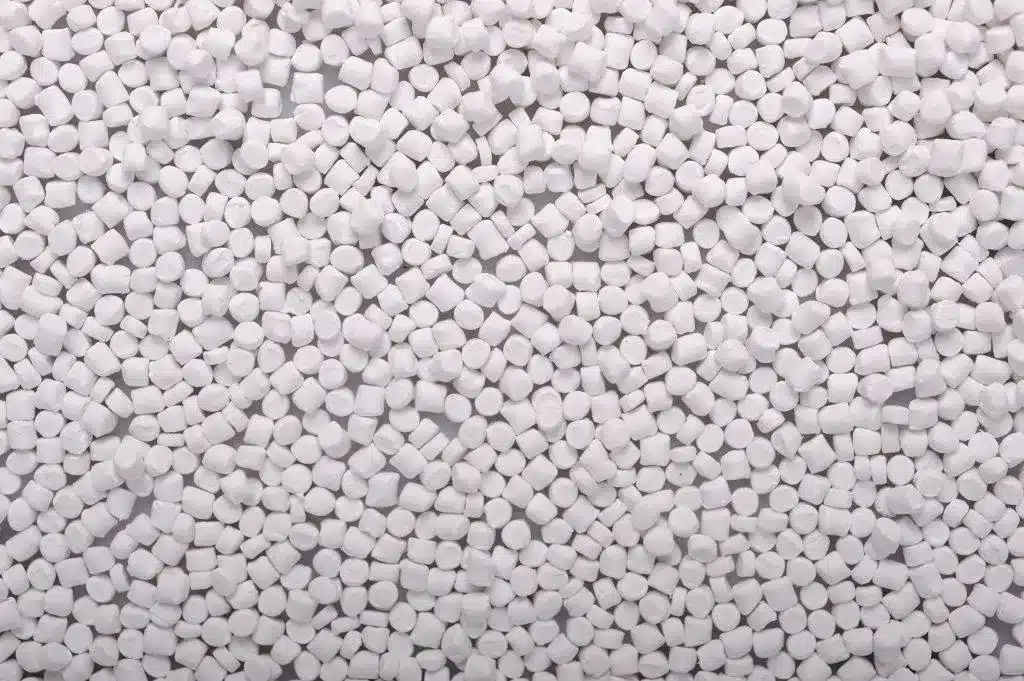
Calcium carbonate (CaCO₃) is a widely used inorganic filler in PVC pipes production.
Why PVC Pipes Manufacturers Use CaCO₃
Ein Profi PVC-Rohrfabrik incorporates CaCO₃ for several reasons:
- Reduces raw material cost
- Improves dimensional stability
- Enhances stiffness
- Improves extrusion processability
Because CaCO₃ is significantly cheaper than PVC resin, it is a key cost-control tool for any Hersteller von Kunststoffrohren.
Types of CaCO₃ Used in PVC Pipes
Not all fillers are equal. The performance of PVC-Rohre depends heavily on filler quality.
- Heavy calcium carbonate (ground CaCO₃)
- Light calcium carbonate (precipitated CaCO₃)
- Surface-treated CaCO₃
High-quality PVC pipes manufacturers use coated CaCO₃ to improve compatibility with PVC resin.
How CaCO₃ Affects PVC Pipes Properties
Understanding the impact of filler content is essential when evaluating PVC pipes material performance.
Positive Effects of CaCO₃ in PVC Pipes
At controlled levels, CaCO₃ improves:
1. Rigidity
Filler increases stiffness, making PVC-Rohre less prone to deformation.
2. Cost Efficiency
Lower resin usage reduces overall production cost for a PVC-Rohrfabrik.
3. Dimensional Stability
CaCO₃ helps maintain shape during cooling and long-term use.
Negative Effects of Excess CaCO₃ in PVC Pipes
When filler content becomes too high, the disadvantages outweigh the benefits.
1. Reduced Impact Resistance
Excess CaCO₃ creates weak points in the material structure.
2. Increased Brittleness
High filler content reduces ductility, making PVC-Rohre prone to cracking.
3. Poor Long-Term Performance
Over time, stress and environmental factors amplify weaknesses.
4. Processing Issues
Too much filler can cause:
- Poor fusion
- Surface defects
- Reduced extrusion stability
Critical Threshold: How Much CaCO₃ Is Too Much in PVC Pipes?
This is the most important question for buyers.
Typical CaCO₃ Content Ranges in PVC Pipes
Ein Profi Hersteller von PVC-Rohren generally follows these guidelines:
- 0–10% → High-performance pipes (pressure pipes)
- 10–20% → Balanced cost and performance
- 20–30% → Cost-driven applications
- 30%+ → High risk of brittleness
Impact Resistance Threshold
From industry experience, including SW’s production data:
👉 PVC pipes begin to lose long-term impact resistance significantly when CaCO₃ exceeds 20–25%.
Beyond this level:
- Micro-cracks form more easily
- Resistance to impact drops sharply
- Failure risk increases over time
Why High CaCO₃ Content Reduces Impact Resistance
Microstructure Explanation


In PVC pipes material, CaCO₃ particles act as rigid inclusions.
Stress Concentration
At high filler levels:
- Stress concentrates around particles
- Cracks initiate at weak interfaces
Poor Interfacial Bonding
If CaCO₃ is not well-coated:
- Weak bonding with PVC matrix
- Easy crack propagation
Reduced Energy Absorption
Virgin PVC can absorb impact energy through deformation.
High filler content reduces this ability, making PVC pipes brittle.
Application-Based Recommendations for PVC Pipes
Different applications require different filler strategies.
Pressure PVC Pipes
- Recommended CaCO₃: 0–10%
- Focus: strength and durability
Drainage PVC Pipes
- Recommended CaCO₃: 10–20%
- Balanced cost and performance
Cable Protection Pipes
- Recommended CaCO₃: up to 25%
- Lower mechanical requirements
Low-End Applications
- CaCO₃: 25–30%
- Risk of reduced lifespan
Ein Profi Hersteller von PVC-Rohren adjusts formulation based on application requirements.
How to Identify High CaCO₃ Content in PVC Pipes
Buyers can perform simple checks.
Visual Inspection
- Dull surface
- Chalky appearance
- Poor gloss
Aufpralltest
- Pipe cracks easily
- Low flexibility
Weight Comparison
- Higher filler → heavier pipe for same dimensions
Sound Test
- Brittle pipes produce sharp, high-pitched sound
Cost vs Performance: Finding the Optimal Balance
The goal is not to eliminate CaCO₃—but to optimize its use.
Cost Advantage
Higher filler reduces:
- Material cost
- Overall pipe price
Hidden Cost
However, excessive filler leads to:
- Shorter lifespan
- Higher maintenance cost
- Risk of failure
Optimal Strategy
Ein Profi PVC-Rohrfabrik targets:
👉 10–20% CaCO₃ for most applications
This range provides:
- Acceptable cost
- Reliable performance

How SW Optimizes PVC Pipes Formulation
Als erfahrener Hersteller von PVC-Rohren, SW uses a scientific approach.
Controlled Filler Ratio
We optimize CaCO₃ content based on:
- Anwendung
- Mechanical requirements
- Customer budget
High-Quality CaCO₃ Selection
- Fine particle size
- Surface-treated fillers
- Uniform dispersion
Advanced Compounding
- Proper mixing technology
- Stable extrusion process
Strict Quality Control
- Schlagfestigkeitsprüfung
- Long-term performance evaluation
Real Case Insight from a PVC Pipes Factory
A customer sourced low-cost PVC-Rohre with ~35% CaCO₃.
Issues observed:
- Frequent cracking during installation
- Poor impact resistance
SW solution:
- Reduced filler to ~18%
- Improved formulation
Result:
- 40% increase in impact strength
- Longer service life
- Better overall value
Future Trends in PVC Pipes Material Optimization
Der Hersteller von PVC-Rohren industry is evolving toward:
- Nano-calcium carbonate fillers
- Surface-treated additives
- High-performance composite materials
- Sustainable formulations
These innovations aim to improve both cost efficiency and performance.
Why SW Is a Trusted PVC Pipes Manufacturer
SW kombiniert:
- 20+ years of extrusion experience
- Advanced formulation expertise
- Global export capability
- Custom engineering solutions
We help customers achieve the best balance between cost and performance in PVC pipes.
How Much CaCO₃ Can PVC Pipes Handle?
The answer depends on application—but general guidance is clear:
- Below 20% CaCO₃ → safe for most applications
- 20–25% CaCO₃ → borderline for impact resistance
- Above 25% CaCO₃ → high risk of brittleness
The key is not minimizing cost alone—but optimizing total value.
Working with an experienced Hersteller von PVC-Rohren like SW ensures that your PVC-Rohre deliver both performance and cost efficiency.
Wir verfügen über ein Werk für PVC-Rohre mit erfahrenen Ingenieuren, die Sie bei der Produktentwicklung – von der ersten Idee bis zur Serienproduktion – unterstützen. Kontaktieren Sie uns gerne bei Fragen zu Ihrem Produkt. Unsere Ingenieure erstellen Ihnen umgehend ein Angebot. WhatsApp +86 188 2072 7151
Wer ist S oder Wei?
Seit 2006 ist Shuowei ein professioneller Hersteller von Extrusionsprofilen mit Sitz in Guangdong, China. Unser Team besteht aus 51 bis 100 Mitarbeitern. Die Shuowei PVC-Extrusionsfabrik hat sich auf die Entwicklung und Produktion von Extrusionsprofilen wie PVC-Rohren, PE-Kabelkanälen und PVC-Sockelleisten spezialisiert. Seit unserer Gründung haben wir uns durch innovatives Design, ausgereifte Technologie und unser kompromissloses Qualitätsstreben die breite Anerkennung des Marktes und das tiefe Vertrauen unserer Kunden erworben.
Sind Sie ein Hersteller oder ein Händler?
Wir sind ein chinesisches Top-Unternehmen PVC-Extrusionsprofile Unser Werk befindet sich in Huizhou. Es verfügt über eine 16.000 m² große Produktionsfläche, mehr als fünf automatisierte Extrusionsprofil-Produktionslinien, eine jährliche Produktionskapazität von 30.000 Tonnen und beliefert über 500 Kunden weltweit. Besuchen Sie uns!
Welche Produkte bieten Sie an?
Wir sind spezialisiert auf die Entwicklung und Produktion von hochwertigen Produkten. Extrusionsprofile,wie beispielsweise PVC-Rohre, ABS-Profile, PC-Lampenschirme, PVC-Sockelleisten, PP-Kabelkanäle, PE-Profile…
Wie lange dauert der Prozess der kundenspezifischen Entwicklung?
Wir unterstützen kundenspezifische Extrusionsprodukte. Der übliche Prozess umfasst 4 Schritte: Bedarfsbestätigung → 3D-Design/Proofing → Testzertifizierung → Serienproduktion (Zyklus 3-8 Wochen).
Besitzen Sie internationale Zertifizierungen?
Wir haben die Zertifizierungen ISO 9001, CE, RoHS, SGS und weitere erhalten und erfüllen die gängigen Standards in Europa, Amerika, dem Nahen Osten und Asien.