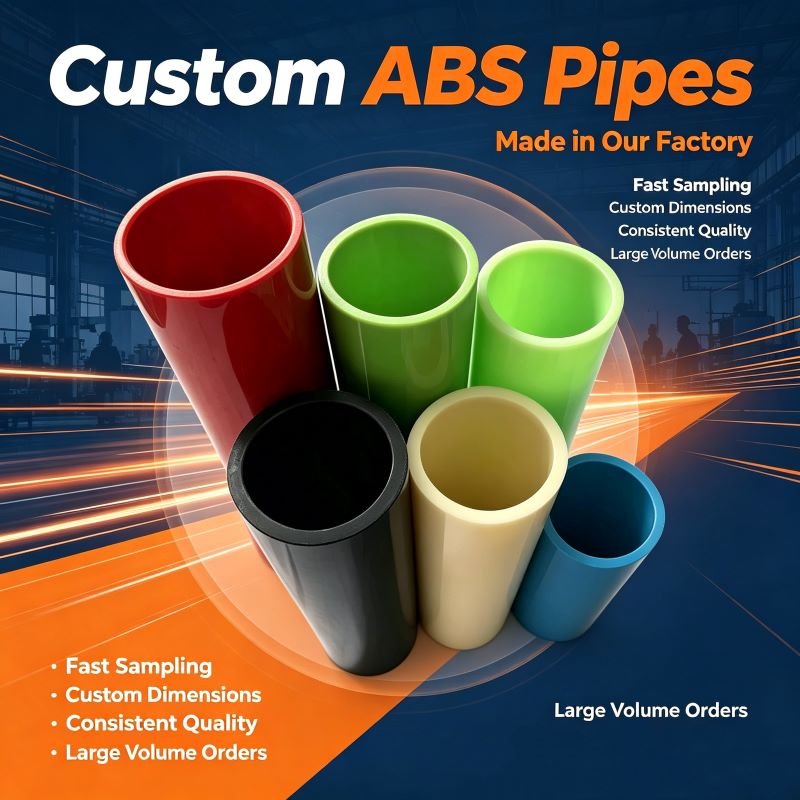




tuberías de PVC have become one of the most widely used piping materials in the world. From residential plumbing to large-scale industrial projects, they offer durability, corrosion resistance, and cost-effectiveness.
However, to ensure long service life and safe usage, users must follow important precautions when installing, handling, and operating PVC pipe systems.
In this article, we’ll explore:
General precautions for using PVC pipes
Installation and maintenance tips
How to eliminate or reduce static electricity in PVC pipes
Why sourcing from a professional fábrica de tuberías de PVC like SW ensures safer, high-quality solutions

1. Understanding PVC Pipes
Before diving into precautions, it’s useful to know why PVC pipes behave the way they do.
Lightweight: Easy to transport and install compared to metal pipes.
Corrosion resistant: No rusting like steel or iron.
Chemical resistance: Excellent for chemicals, acids, and wastewater.
Non-conductive: Since PVC is an insulator, it cannot conduct electricity. However, this property leads to static charge buildup in certain conditions (more on this later).
Versatile: Available in Schedule 40, Schedule 80, pressure pipes, drainage pipes, and electrical conduits.
These properties make PVC pipes highly versatile but also mean they need specific handling and safety considerations. Learn more about PVC pipes <A Comprehensive Guide to PVC Pipes from a Factory’s Vision>
2. General Precautions When Using PVC Pipes
2.1 Storage and Handling
Store pipes on a flat surface away from direct sunlight (UV can degrade unprotected PVC).
Avoid dropping or dragging pipes to prevent cracks and scratches.
Stack pipes in layers, supported every 1–2 meters, to prevent warping.
2.2 Installation Precautions
Do not install PVC pipes near open flames or high heat sources.
Allow for thermal expansion and contraction by using expansion joints or flexible couplings.
Use only approved solvent cement and primer for joining. Incompatible adhesives can weaken joints.
Avoid over-tightening threaded connections — overtightening may crack the fittings.
2.3 Pressure and Flow Considerations
Select the right pressure class for the intended application.
For compressed air systems, avoid using standard PVC pipes unless specifically rated — risk of bursting exists.
Maintain proper slope (usually 1–2%) in drainage systems to avoid blockages.
3. Environmental and Safety Considerations
Chemical exposure: While PVC resists many chemicals, certain solvents and hydrocarbons may damage it. Always check chemical compatibility charts.
UV exposure: For outdoor installation, either use UV-stabilized PVC or apply protective paint/coating.
Temperature limits: PVC softens at high temperatures (above 60°C / 140°F). Avoid hot water transport unless using CPVC (chlorinated PVC).
4. Maintenance and Long-Term Use
Inspect joints regularly for leaks.
Flush pipelines to prevent scaling or deposits.
Replace aged or brittle pipes after decades of service.
Avoid striking PVC with sharp tools or heavy objects.
5. Static Electricity in PVC Pipes
One of the lesser-known issues with PVC pipes is static electricity buildup. Since PVC is a non-conductive material, friction from fluids moving inside the pipe (especially powders, gases, or high-velocity liquids) can generate static charges.
5.1 Why Static Charge is a Problem
Shock hazard: Although usually low energy, static discharge can startle workers.
Ignition risk: In environments with flammable gases, vapors, or dust, static sparks can ignite explosions.
Attraction of dust: Static electricity attracts dust and debris, which may contaminate fluid systems.
6. How to Eliminate or Reduce Static Electricity in PVC Pipes
There are several methods to minimize static buildup in PVC piping systems:
6.1 Grounding and Conductive Layers
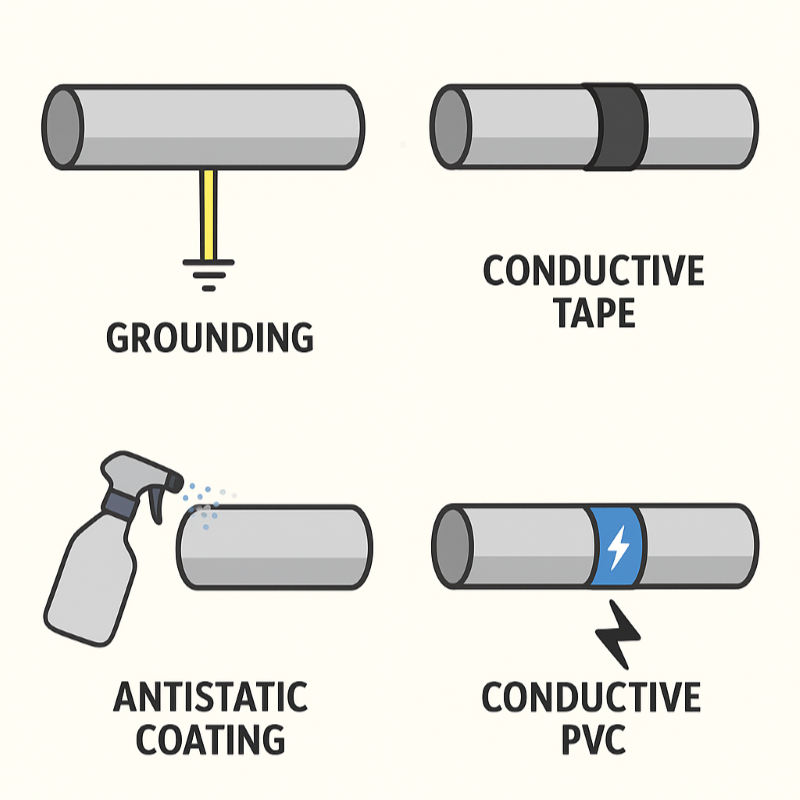
Use PVC pipes with conductive additives (carbon-loaded PVC). These allow static charges to dissipate.
Wrap the pipe in conductive tape connected to a grounding system.
In industrial settings, consider metallic grounding wires in contact with the pipe exterior.
6.2 Antistatic Coatings
Aplicar antistatic sprays or coatings on the outer surface of PVC pipes.
These coatings reduce charge accumulation by making the surface slightly conductive.
6.3 Humidity Control
Maintaining moderate humidity levels reduces static buildup, since moisture helps dissipate charges.
In dry climates, humidification systems can significantly reduce static problems.
6.4 Flow Rate and System Design
Avoid extremely high velocities for fluids inside PVC pipes, as friction increases static charge.
Use smooth bends and avoid sharp turns in design to reduce turbulence.
6.5 Alternative Materials for High-Risk Applications
For conveying flammable gases or explosive powders, PVC pipes may not be the safest option. Consider conductive piping alternatives, or special antistatic PVC manufactured by professional factories.
7. Application-Specific Precautions
7.1 Plumbing and Water Supply
Use food-grade, certified pipes for potable water.
Flush the system before first use to remove solvent residues.
7.2 Drainage and Sewage
Maintain slope for efficient flow.
Install access points for maintenance.
7.3 Irrigation
Protect exposed PVC pipes from sunlight with coverings.
Use proper filtration to prevent clogging from debris.
7.4 Industrial Systems
In chemical plants, double-check chemical compatibility.
In powder or gas transport, always consider static electricity precautions.
8. Why Work with a Professional PVC Pipes Factory
Choosing the right manufacturer is just as important as correct installation.
Un confiable fábrica de tuberías de PVC like SUDOESTE ensures:
Consistent quality with ISO-certified production
Pipes engineered for high pressure, drainage, and industrial use
Customized solutions such as UV-resistant PVC o antistatic PVC for special applications
Technical support to guide safe installation and operation
With 20+ years of expertise, SW provides pipes that not only meet industry standards but also ensure long-term safety and reliability.Learn more about SW PVC pipes factory.
PVC pipes safe use
PVC pipes are strong, durable, and versatile — but safe use requires proper handling, installation, and maintenance.
Key takeaways:
Store and install PVC pipes correctly to avoid damage.
Consider environmental factors such as temperature, UV, and chemical exposure.
Pay special attention to static electricity prevention in applications involving gas, powders, or high fluid velocity.
Work with a trusted fábrica de tuberías de PVC like SW to access professional-grade solutions and expert guidance.
By following these precautions, you can maximize the safety, efficiency, and lifespan of PVC piping systems in any application.
Contamos con una fábrica de tuberías de PVC y un equipo de ingenieros altamente cualificados, listos para apoyarle en el desarrollo de su producto, desde el diseño inicial hasta la producción. Si tiene alguna idea sobre su producto, no dude en contactarnos; nuestros ingenieros le enviarán un presupuesto lo antes posible. WhatsApp +86 188 2072 7151
¿Quién es Shuowei?
Desde 2006, Shuowei es una fábrica profesional de perfiles extruidos ubicada en Guangdong, China. Contamos con una plantilla de entre 51 y 100 personas. La fábrica de extrusión de PVC Shuowei se dedica al diseño y la producción de perfiles extruidos, como tuberías de PVC, canaletas de PE y zócalos de PVC. Desde sus inicios, nos hemos ganado el reconocimiento del mercado y la plena confianza de nuestros clientes gracias a nuestro ingenioso diseño, tecnología de vanguardia y la búsqueda constante de la calidad.
¿Es usted fabricante o comerciante?
Somos una empresa china de primera categoría. Perfiles de extrusión de PVC Somos fabricantes y nuestra fábrica está ubicada en Huizhou. Contamos con una planta de producción de 16 000 m², más de 5 líneas de producción automatizadas para perfiles de extrusión, una capacidad de producción anual de 30 000 toneladas y atendemos a más de 500 clientes en todo el mundo. ¡Le invitamos a visitar nuestra fábrica!
¿Cuál es su gama de productos?
Nos especializamos en el diseño y producción de alta calidad. perfiles de extrusión,tales como tuberías de PVC, extrusión de ABS, pantallas de lámparas de PC, zócalos de PVC, canaletas de PP, perfiles de PE…
¿Cuánto tiempo dura el proceso de desarrollo a medida?
Ofrecemos soporte para productos de extrusión personalizados. El proceso habitual consta de 4 pasos: confirmación de la demanda → diseño/prototipado 3D → certificación de pruebas → producción en masa (ciclo de 3 a 8 semanas).
¿Tienes alguna certificación internacional?
Hemos obtenido las certificaciones ISO 9001, CE, RoHS, SGS y otras, y cumplimos con los estándares principales de Europa, América, Oriente Medio y Asia.