



The 30% Discount Trap: An Expert Guide to Identifying Hidden Fillers in Cheap Tubos de PVC
In the complex world of industrial procurement, receiving a quote that is 30% lower than the market average usually triggers one of two reactions: excitement at a potential budget windfall, or deep suspicion. If you are currently looking at a quote for tuberías de PVC that seems too good to be true, your instincts are likely correct.
As a fabricante de tuberías de PVC with over 20 years of expertise in plastic extrusion, SW has seen the evolution of the global piping market. Operating from our 6,000-square-meter facility, we’ve served clients across dozens of countries who often come to us after a “cheap” alternative failed in the field.
The most common culprit behind a suspiciously low PVC pipes price is the excessive use of “Hidden Fillers”—specifically, Calcium Carbonate ($CaCO_3$). While a small amount of $CaCO_3$ is a standard functional additive, overloading the formula is a dangerous shortcut used by some factories to slash costs at the expense of safety and durability.
This masterclass is designed to help you, the buyer, peel back the layers of a quote and identify the hidden risks in low-cost tuberías de PVC.

1. The Economics of the PVC Pipes Price: Why a 30% Discount is Mathematically Impossible
To understand why a 30% discount is a red flag, we must look at the cost structure of a high-quality fábrica de tuberías de PVC.
PVC (Polyvinyl Chloride) resin is a globally traded commodity. Its price is dictated by the cost of ethylene and chlorine, which are linked to the petrochemical market. In a standard, high-quality PVC formulation:
Resina de PVC cruda accounts for roughly 70% to 80% of the manufacturing cost.
Stabilizers, Lubricants, and Processing Aids account for 10% to 15%.
Energy, Labor, and Factory Overhead make up the remainder.
The Math: If the raw resin alone is 70% of the cost, a 30% total price reduction would mean the manufacturer is either giving you the resin for free or, more likely, they have replaced a significant portion of that expensive resin with a cheap filler.
The Cost Comparison:
Virgin PVC Resin: Approx. $\$900 – \$1,200$ per ton.
Calcium Carbonate ($CaCO_3$): Approx. $$60 – $\$120$ per ton.
By replacing 40% of the PVC resin with $CaCO_3$, a fabricante de tuberías de PVC can drastically lower the price, but the resulting product is no longer a high-performance engineering plastic; it is essentially a “stone-plastic” hybrid with the structural integrity of a cracker.
2. What is Calcium Carbonate ($CaCO_3$) and Why is it Hidden?
In the extrusion process, $CaCO_3$ is known as a filler. When used in small quantities (usually 3 to 8 parts per hundred parts of resin), it serves functional purposes:
Stiffness: It increases the pipe’s ring stiffness.
Heat Resistance: It can slightly improve the heat deflection temperature.
Cost Stabilization: It helps keep the PVC pipes price stable against minor resin fluctuations.
However, “Hidden Fillers” refer to loading levels of 20%, 30%, or even 50%. At these levels, the $CaCO_3$ particles interfere with the molecular fusion of the PVC chains. During extrusion, the PVC molecules must “melt and knit” together. Excessive filler acts like sand in a snowball; it prevents the molecules from bonding, leading to a pipe that looks solid but is structurally compromised.
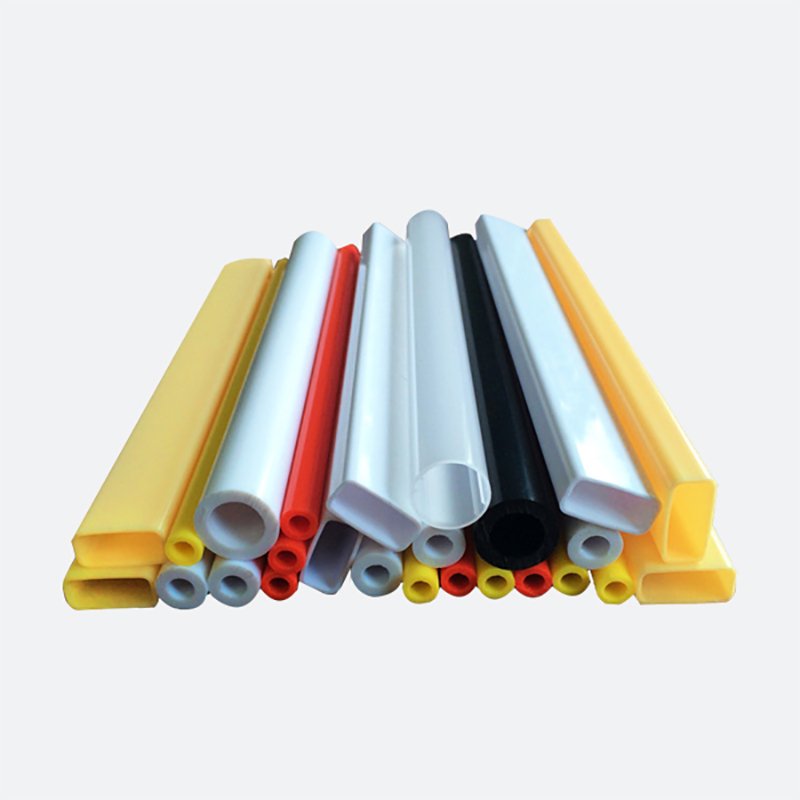
3. The Technical Giveaway: The Density Test
The most scientific and undeniable way to identify hidden fillers is by measuring the density (Specific Gravity) of the pipe. This is the “DNA test” of the tuberías de PVC world.
The Science of Density
Pure, rigid PVC compound has a very specific density range. Calcium Carbonate is significantly heavier than PVC resin.
Density of Rigid PVC Resin: $\approx 1.40\ g/cm^3$
Density of Calcium Carbonate ($CaCO_3$): $\approx 2.71\ g/cm^3$
As a fabricante de tuberías de PVC, we use the following principle: As the filler content increases, the density of the final pipe rises sharply.
Use this Reference Table to Audit Your Quote:
| Pipe Quality Grade | CaCO3 Content | Resulting Density | Impact on Performance |
| Premium (SW Standard) | $3\% – 8\%$ | $1.42 – 1.45\ g/cm^3$ | High impact strength, 50-year life. |
| Standard Grade | $10\% – 15\%$ | $1.48 – 1.52\ g/cm^3$ | Acceptable for low-pressure/non-critical. |
| Low-Quality (Cheap) | $20\% – 30\%$ | $1.55 – 1.65\ g/cm^3$ | Brittle, prone to “zipper” cracks. |
| Substandard (Scam) | $>40\%$ | $>1.70\ g/cm^3$ | High failure risk; fails impact tests. |
Expert Tip: Ask your fábrica de tuberías de PVC for the “Technical Data Sheet” and look specifically for the Density. If the density is over $1.55\ g/cm^3$, you are paying for stone, not plastic.
4. Identifying Hidden Fillers: The "Hammer Test" and Physical Signs
If you don’t have access to a laboratory, there are several “field tests” you can perform to see if a fabricante de tuberías de PVC has overloaded their formula.
A. The Impact (Hammer) Test
High-quality tuberías de PVC are remarkably resilient. If you hit a high-quality pipe with a hammer, it should bounce back or dent slightly.
The Red Flag: A pipe with too much $CaCO_3$ is brittle. If you hit it, it will shatter or “star-crack” like glass. This brittleness is the number one cause of failures during installation, especially in colder temperatures.
B. The “Whitening” Stress Test
Take a small strip or a thin section of the PVC pipe and try to bend it until it breaks.
High Quality: The pipe will stretch and show a “whitening” effect at the bend point long before it snaps. This shows the polymer chains are absorbing the energy.
High Filler: The pipe will snap cleanly with very little bending and no significant whitening. The break will look “chalky.”
C. Surface Texture and Gloss
Go to the fábrica de tuberías de PVC or look at a sample under a bright light.
Premium Pipes: Have a slight “sheen” or gloss. The surface is smooth and non-porous.
High Filler Pipes: Look “flat” or matte. If you rub your finger along the surface, it may feel slightly chalky. Over time, these pipes are more prone to chemical scaling because the surface is more porous.
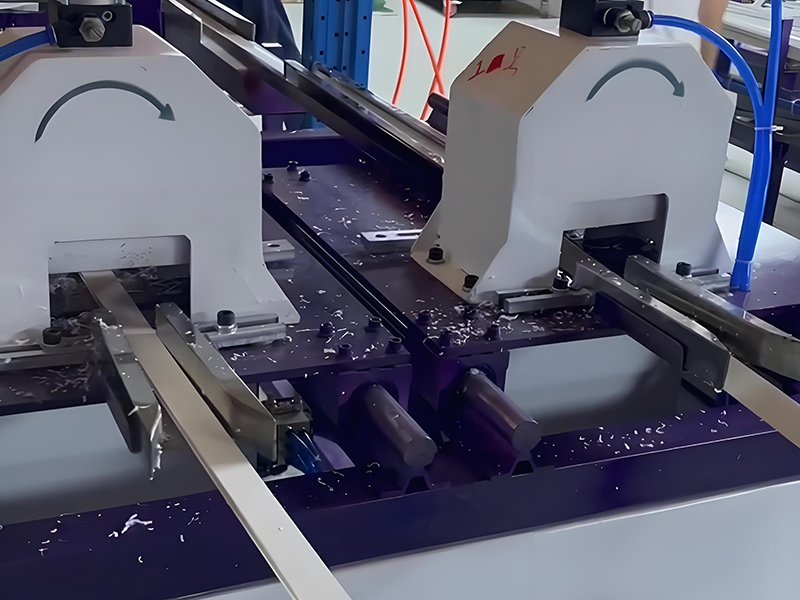
5. The Consequence of Low-Price PVC Pipes in the Long Run
Choosing a supplier based solely on a low PVC pipes price is a classic case of “penny wise, pound foolish.” The risks associated with high-filler pipes extend far beyond the initial purchase.
1. Structural Failure Under Loading
In underground applications, pipes must withstand the weight of the soil and traffic above (Ring Stiffness). While $CaCO_3$ makes a pipe “stiffer,” it also makes it “less ductile.” Under heavy loads, a high-filler pipe cannot deflect; it simply cracks.
2. The “Zipper” Effect
When a high-filler pipe fails under pressure, it doesn’t just leak; it “zippers.” A small crack can propagate instantly down the entire length of the pipe. This leads to catastrophic system failure and massive excavation costs.
3. Reduced Chemical Resistance
PVC is prized for its ability to handle acids and alkalis. However, Calcium Carbonate is a mineral that reacts with acids. Overloaded tuberías de PVC will literally dissolve or pit internally if exposed to acidic fluids, a problem that pure PVC would never face.
6. What a Reliable PVC Pipes Factory Does Differently
At SW, our 20 years of experience have taught us that a customer’s trust is worth more than the margin gained by using cheap fillers. As a leading fabricante de tuberías de PVC, we maintain quality through:
Automated Dosing: Nuestro 6,000sqm facility uses gravimetric feeders. This ensures that the ratio of resin to $CaCO_3$ is accurate to within $0.1\%$. There is no “human error” in the mixing process.
Virgin Resin Only: We never mix in uncontrolled “regrind” from outside sources, which is another way factories hide low-quality materials.
In-House Lab Testing: Every batch undergoes a Dichloromethane Test. We soak a section of pipe in a chemical bath; if it isn’t perfectly fused (meaning too much filler or bad processing), it will flake or dissolve, and the batch is rejected.

7. How to Negotiate a Fair PVC Pipes Price Without Sacrificing Safety
When you receive a quote that is 30% lower than SW’s or other reputable manufacturers’, use the following checklist to challenge the fábrica de tuberías de PVC:
Request a Sample and Weight It: Calculate the theoretical weight using the volume of the pipe. If the actual sample is significantly heavier than the theoretical weight of PVC ($1.4\ g/cm^3$), you have found the hidden $CaCO_3$.
Ask for the Ash Content Test Result: A professional lab can burn a piece of the pipe. The resin burns away, leaving the mineral filler behind.
$$\% \text{ Filler} = \frac{\text{Mass of Ash}}{\text{Total Mass}} \times 100$$If the ash content is above $10\%$, it’s a “budget” pipe. If it’s above $20\%$, it’s a dangerous pipe.
Demand a 50-Year Warranty: Most low-cost tuberías de PVC suppliers will vanish or refuse to sign a long-term performance warranty because they know the material will degrade.
Protect Your Infrastructure with SW
The PVC pipes price should always be viewed through the lens of Total Cost of Ownership. A 30% savings today can lead to a 300% loss tomorrow when you factor in repair costs, downtime, and legal liability.
As a fabricante de tuberías de PVC with two decades of integrity, SW is committed to providing our clients with the technical truth. We don’t just supply pipes; we supply engineering peace of mind. Our formulas are optimized for strength, not just for the lowest possible price point.
Are you concerned about a quote you’ve received? Would you like SW to perform a “Formula Audit” or provide a density comparison for your current project specifications? Let our 20 years of experience help you spot the hidden fillers before they become hidden failures.
Contamos con una fábrica de tuberías de PVC y un equipo de ingenieros altamente cualificados, listos para apoyarle en el desarrollo de su producto, desde el diseño inicial hasta la producción. Si tiene alguna idea sobre su producto, no dude en contactarnos; nuestros ingenieros le enviarán un presupuesto lo antes posible. WhatsApp +86 188 2072 7151
¿Quién es Shuowei?
Desde 2006, Shuowei es una fábrica profesional de perfiles extruidos ubicada en Guangdong, China. Contamos con una plantilla de entre 51 y 100 personas. La fábrica de extrusión de PVC Shuowei se dedica al diseño y la producción de perfiles extruidos, como tuberías de PVC, canaletas de PE y zócalos de PVC. Desde sus inicios, nos hemos ganado el reconocimiento del mercado y la plena confianza de nuestros clientes gracias a nuestro ingenioso diseño, tecnología de vanguardia y la búsqueda constante de la calidad.
¿Es usted fabricante o comerciante?
Somos una empresa china de primera categoría. Perfiles de extrusión de PVC Somos fabricantes y nuestra fábrica está ubicada en Huizhou. Contamos con una planta de producción de 16 000 m², más de 5 líneas de producción automatizadas para perfiles de extrusión, una capacidad de producción anual de 30 000 toneladas y atendemos a más de 500 clientes en todo el mundo. ¡Le invitamos a visitar nuestra fábrica!
¿Cuál es su gama de productos?
Nos especializamos en el diseño y producción de alta calidad. perfiles de extrusión,tales como tuberías de PVC, extrusión de ABS, pantallas de lámparas de PC, zócalos de PVC, canaletas de PP, perfiles de PE…
¿Cuánto tiempo dura el proceso de desarrollo a medida?
Ofrecemos soporte para productos de extrusión personalizados. El proceso habitual consta de 4 pasos: confirmación de la demanda → diseño/prototipado 3D → certificación de pruebas → producción en masa (ciclo de 3 a 8 semanas).
¿Tienes alguna certificación internacional?
Hemos obtenido las certificaciones ISO 9001, CE, RoHS, SGS y otras, y cumplimos con los estándares principales de Europa, América, Oriente Medio y Asia.