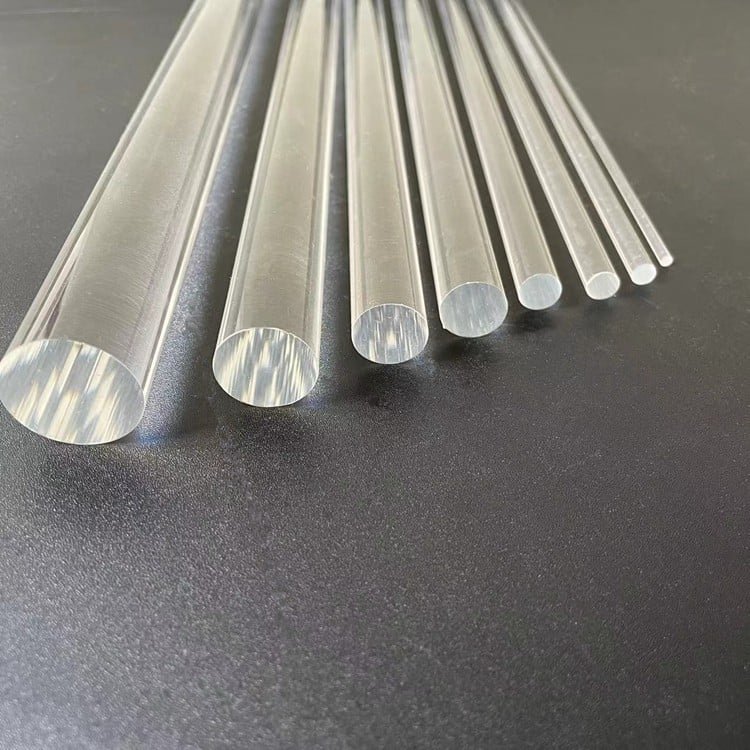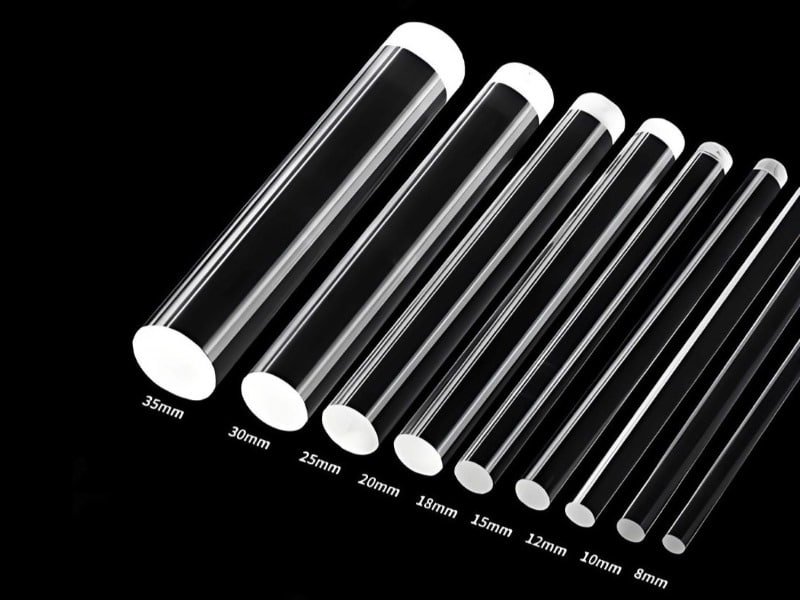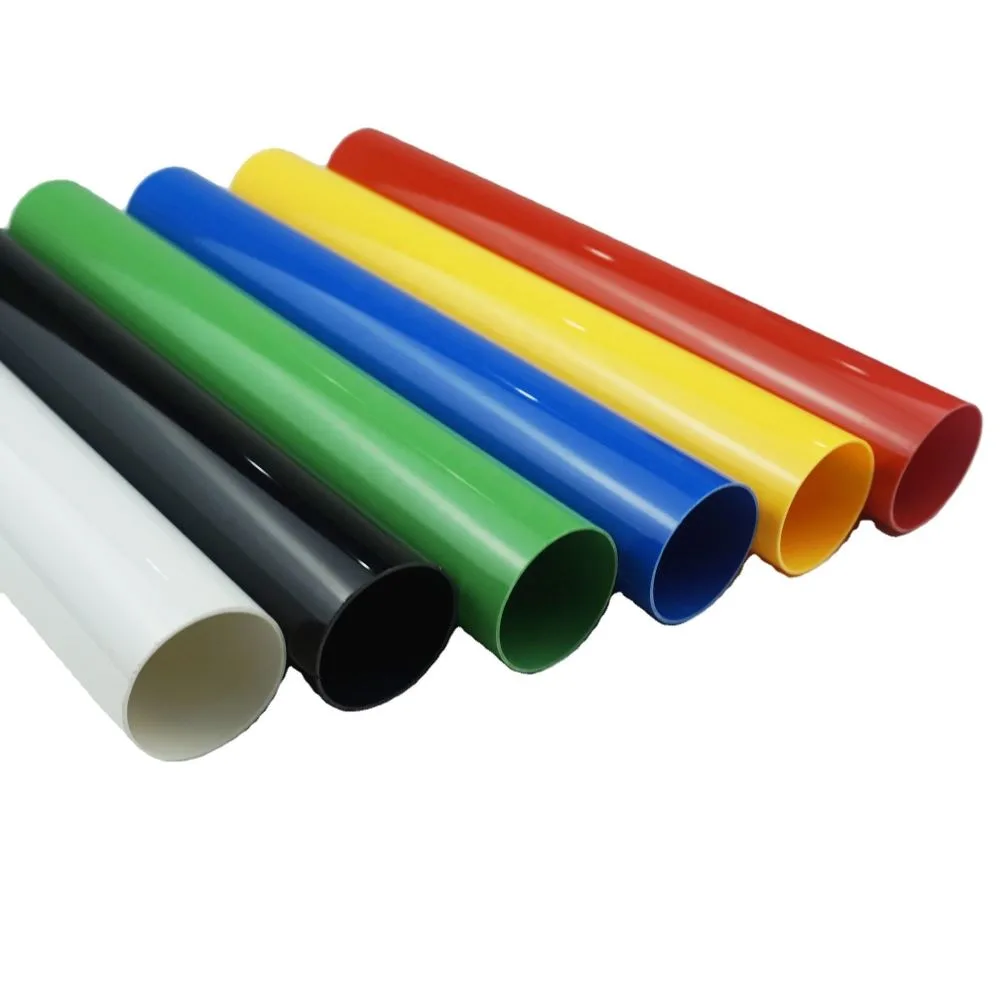




Custom PMMA pipes are widely used when a project requires a combination of optical transparency, weather resistance, surface hardness, dimensional stability, and attractive appearance. Compared with standard plastic tubing, custom PMMA pipes often have more demanding requirements for diameter, wall thickness, roundness, transparency, and surface quality.
However, manufacturing large-diameter PMMA pipes is considerably more challenging than producing small-diameter tubes. During extrusion, the material passes through a die in a molten state and then undergoes controlled cooling and sizing. As PMMA cools, thermal contraction occurs. If cooling is uneven or the sizing system is not properly matched to the extrusion process, the finished pipe may show diameter deviation, wall-thickness variation, ovality, warpage, or dimensional instability.
For engineers sourcing custom PMMA pipes, these problems are not simply cosmetic. Excessive dimensional deviation can make pipes difficult to assemble, reduce sealing performance, affect downstream machining, and create problems when transparent components must fit precisely into another structure.
This article explains why dimensional deviation and ovality occur in large-diameter PMMA pipe extrusion and how an experienced custom PMMA pipes manufacturer can control these challenges through material selection, die design, melt stability, sizing technology, cooling strategy, extrusion speed, and quality inspection.
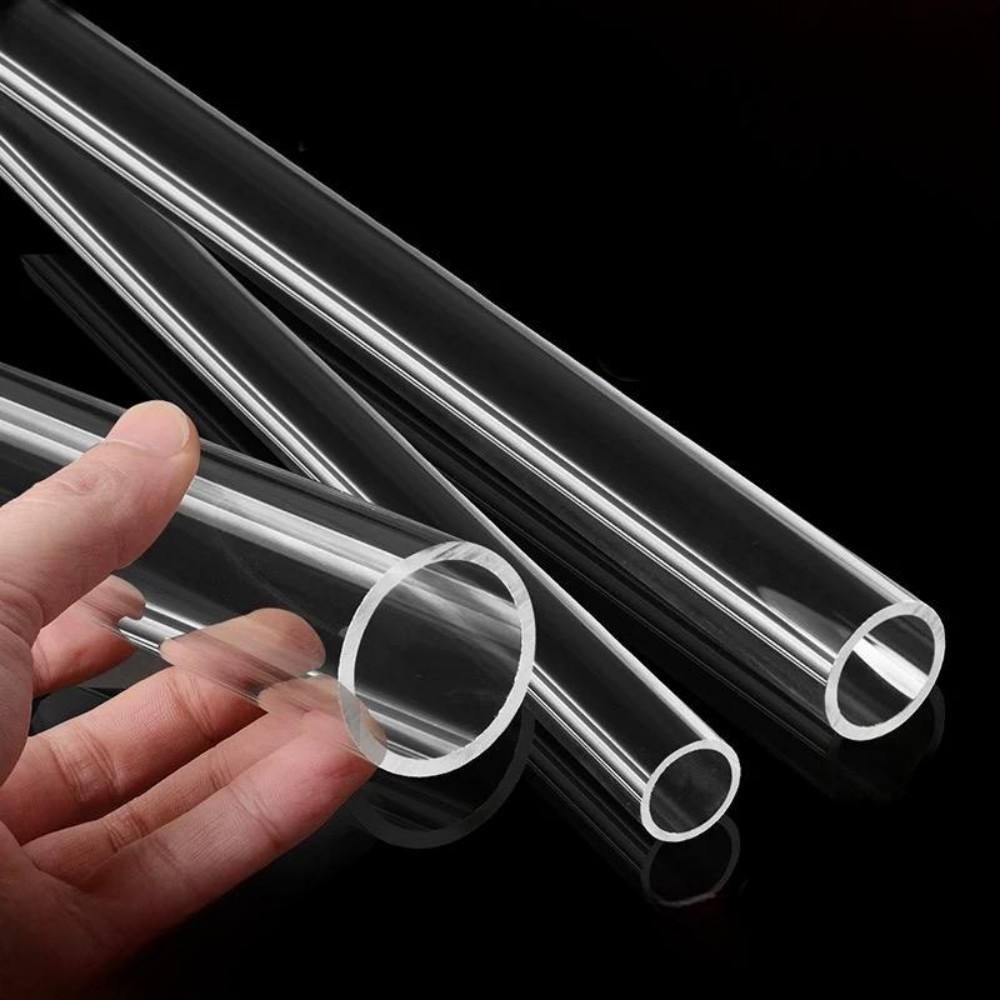
1. Custom PMMA Pipes: Why Large Diameters Are More Difficult
Producing a small PMMA tube is relatively straightforward because the cross-section is compact and cooling can be relatively uniform. Large-diameter custom PMMA pipes present a different engineering problem.
As pipe diameter increases, the cross-sectional area and wall volume increase significantly. More material must be cooled from the extrusion temperature to ambient temperature. The distance between the hot inner region and the cooled outer surface also becomes more important.
This creates a larger opportunity for thermal gradients.
If one region of the pipe cools faster than another, the material can shrink differently around the circumference. The result may be a pipe that is technically close to the target diameter but no longer perfectly circular.
For large-diameter PMMA pipes, controlling the entire thermal history is therefore just as important as controlling the extrusion die.
2. Custom PMMA Pipes and Thermal Shrinkage
Thermal shrinkage is one of the fundamental reasons why the dimensions of an extruded custom PMMA pipe are different from the dimensions of the extrusion die.
PMMA leaves the die at an elevated temperature. As the material cools, it contracts. The final diameter is therefore determined by the combined effects of die geometry, melt temperature, extrusion pressure, draw ratio, cooling conditions, sizing equipment, and material shrinkage.
A common mistake is to assume that the finished pipe diameter can be obtained simply by making the die diameter equal to the required product diameter.
In reality, extrusion tooling must compensate for process-related dimensional changes.
Deneyimli custom PMMA pipes factory therefore designs the die and sizing system based on the complete extrusion process rather than treating the die as an isolated component.
3. Custom PMMA Pipes: The Relationship Between Melt Temperature and Size
Melt temperature has a direct influence on the dimensional stability of custom PMMA pipes.
If the PMMA melt is processed at an excessively high temperature, the material may have lower viscosity and become more sensitive to deformation during extrusion and sizing. Higher thermal energy also means that more heat must be removed before the pipe reaches a dimensionally stable condition.
If the melt temperature is too low, on the other hand, the material may not flow uniformly through the die. This can create uneven wall thickness, melt pressure fluctuations, surface defects, or dimensional instability.
The objective is therefore not simply to use the lowest possible processing temperature.
Bir profesyonel PMMA pipe extrusion manufacturer establishes a stable processing window in which the material flows consistently, the die pressure remains controlled, and the cooling system can remove heat at an appropriate rate.
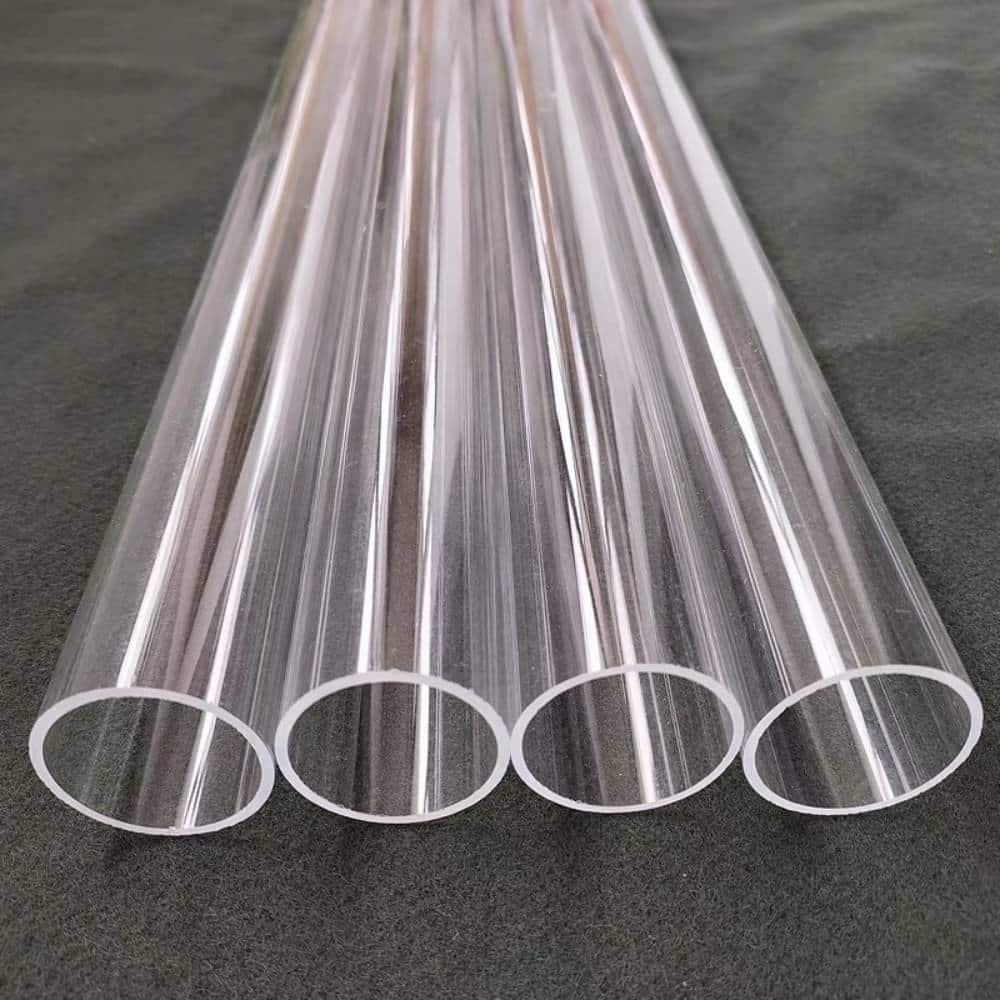
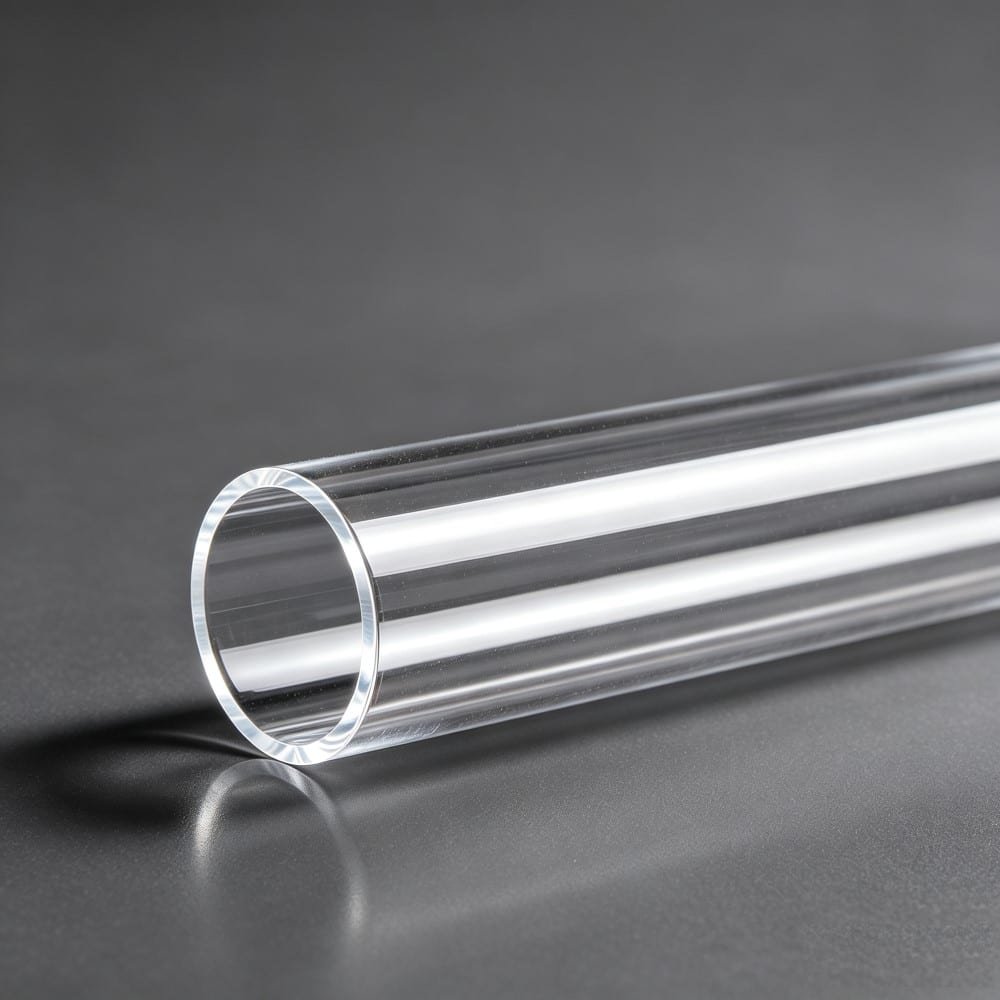
4. Custom PMMA Pipes: Die Design Controls Initial Geometry
The extrusion die determines the initial geometry of a custom PMMA pipe, but it does not determine the final geometry by itself.
For large-diameter pipes, die concentricity is particularly important. If the mandrel is not correctly aligned with the die, the wall thickness may vary around the circumference.
For example, one side of the pipe may be significantly thicker than the opposite side. During cooling, these different wall thicknesses can produce different thermal contraction rates.
This can contribute to ovality and dimensional deviation.
A high-quality custom PMMA pipes manufacturer therefore pays close attention to die centering, mandrel alignment, melt distribution, die gap uniformity, and tooling stability.
The die should produce a stable melt tube before the sizing system begins its work.
5. Custom PMMA Pipes and Die Swell
Another important phenomenon is die swell.
When molten PMMA exits the extrusion die, elastic recovery within the polymer melt can cause the extrudate to expand slightly compared with the die opening. The degree of die swell depends on material characteristics, melt temperature, shear rate, die geometry, and extrusion conditions.
For custom PMMA pipes, uncontrolled die swell can affect both the outside diameter and wall thickness.
The die must therefore be designed with appropriate compensation.
This is one reason experienced extrusion manufacturers rely on process data and trial production rather than simply copying nominal dimensions from a drawing.
A customized PMMA pipe often requires several rounds of tooling adjustment and process optimization before the final dimensional specification is stabilized.
6. Custom PMMA Pipes: Why Sizing Is Critical
Sizing is one of the most important stages in the production of large-diameter custom PMMA pipes.
After leaving the die, the hot pipe is still relatively soft. It must be brought to the required dimensions while cooling.
A properly designed sizing system establishes the outside diameter and helps maintain circularity. Depending on the pipe design and production line, vacuum sizing, calibration sleeves, cooling tanks, internal sizing methods, or combinations of these technologies may be used.
The sizing system must match the pipe diameter, wall thickness, extrusion speed, material temperature, and cooling requirements.
If sizing force is too high, the pipe may experience excessive deformation or surface stress. If sizing force is insufficient, thermal shrinkage may cause the final diameter to fall outside the specification.
Therefore, sizing is not merely a dimensional correction step. It is part of the fundamental geometry-forming process.
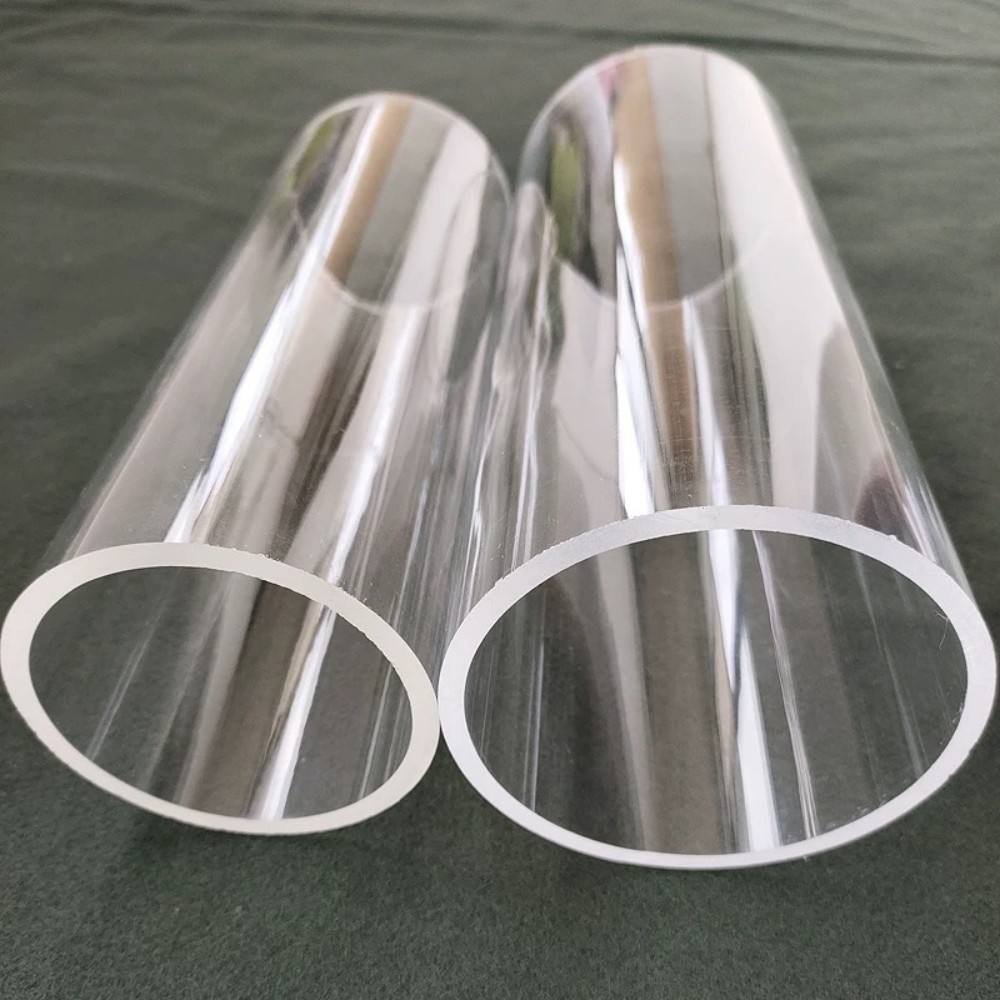
7. Custom PMMA Pipes: Controlling Ovality
Ovality, also called out-of-roundness, is one of the most common concerns in large-diameter custom PMMA pipes.
A perfectly round pipe has the same diameter in every direction. An oval pipe has a measurable difference between its maximum and minimum diameter.
Ovality can result from several factors:
- Uneven cooling around the circumference
- Non-uniform wall thickness
- Poor die centering
- Improper sizing pressure
- Inconsistent vacuum
- Pipe deformation during haul-off
- Excessive extrusion speed
- Inadequate support while the pipe is still hot
- Uneven thermal contraction
- Improper storage before complete cooling
For transparent PMMA pipes, ovality can sometimes be particularly visible because light reflection makes geometric distortion easier to detect.
Deneyimli custom PMMA pipes factory therefore needs to control circularity throughout the extrusion and cooling process rather than checking it only after production.
8. Custom PMMA Pipes: The Importance of Uniform Cooling
Cooling is perhaps the most important factor in controlling thermal shrinkage.
The outer surface of an extruded PMMA pipe comes into contact with the cooling environment first. The inner wall may remain hotter for longer, particularly when the pipe has a large diameter and thick wall.
If cooling is too aggressive on the outside, the outer layer can become dimensionally stable while the interior is still shrinking.
This creates internal thermal stress and can contribute to dimensional movement after the pipe leaves the production line.
A controlled cooling strategy should therefore consider:
Material temperature → sizing temperature → cooling rate → wall thickness → final dimensional stability.
For large custom PMMA pipes, gradual and uniform cooling is often more beneficial than simply maximizing cooling intensity.
9. Custom PMMA Pipes: Wall Thickness Affects Dimensional Accuracy
Wall thickness is closely connected to dimensional stability.
A thin-wall PMMA pipe generally releases heat faster than a thick-wall pipe. Thick-wall custom PMMA pipes contain more thermal energy and may require longer cooling distances or slower production speeds.
If the production line is designed for a relatively thin pipe but is suddenly used for a much thicker customized pipe, dimensional problems can occur.
Wall thickness also affects shrinkage distribution.
For example, if the wall thickness varies significantly around the circumference, one section will contain more material and more thermal energy than another. Different cooling rates can then contribute to deformation and ovality.
Therefore, wall thickness tolerance should be treated as an important part of pipe dimensional design rather than an independent specification.
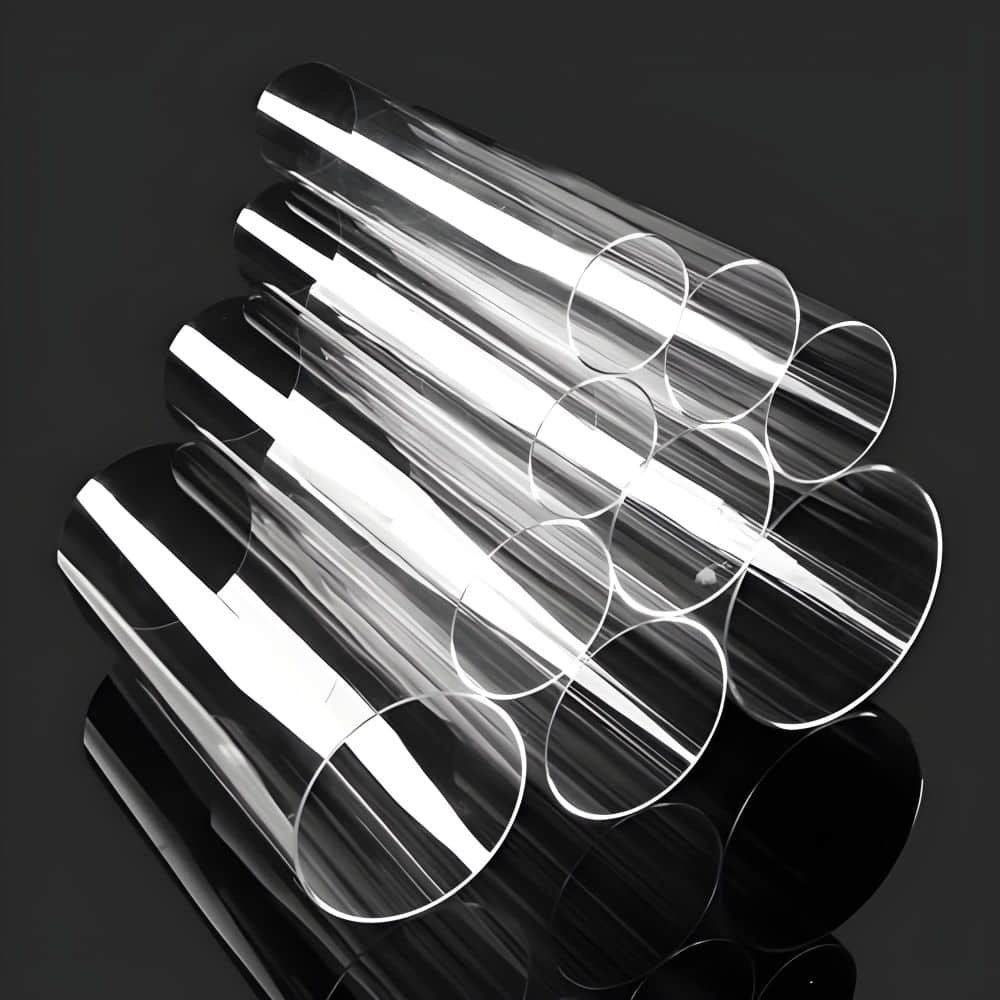
10. Custom PMMA Pipes: Extrusion Speed and Haul-Off Control
Extrusion speed directly affects thermal history.
When the line runs faster, the pipe spends less time in the sizing and cooling system. The material may therefore leave the cooling section before reaching sufficient dimensional stability.
If the haul-off speed is unstable, the pipe can also experience variations in stretching and diameter.
For custom PMMA pipes, the extrusion speed should be selected according to the pipe diameter, wall thickness, material grade, die design, and cooling capacity.
A slower extrusion speed is not automatically better. Extremely low speeds may introduce other process problems, such as excessive residence time or unstable thermal conditions.
The goal is a stable relationship between extrusion output, haul-off speed, sizing, and cooling.
11. Custom PMMA Pipes: Vacuum Sizing and Pressure Balance
For many large-diameter custom PMMA pipes, vacuum sizing can be an effective method for controlling external dimensions.
The principle is relatively straightforward: vacuum pressure helps draw the hot pipe against the sizing surface, establishing the required outside diameter while the material is being cooled.
However, excessive or uneven vacuum can create problems.
If vacuum distribution is inconsistent, different areas of the pipe may contact the sizing surface differently. This can affect circularity and surface quality.
The sizing sleeve, vacuum distribution, cooling water temperature, water flow, and pipe temperature must therefore be considered as a complete system.
Bir profesyonel custom PMMA pipes manufacturer will optimize these parameters together rather than adjusting vacuum pressure independently.
12. Custom PMMA Pipes: How to Reduce Dimensional Deviation
When a large-diameter PMMA pipe is consistently outside its target dimensions, engineers should investigate the process systematically.
A useful troubleshooting sequence is:
Step 1: Check raw material consistency.
Different PMMA grades can have different melt-flow and shrinkage characteristics.
Step 2: Check melt temperature and pressure.
Instability at the die can create dimensional variation.
Step 3: Check die centering.
Uneven wall thickness can directly contribute to ovality.
Step 4: Check sizing conditions.
Vacuum, calibration dimensions, and contact conditions must be stable.
Step 5: Check cooling uniformity.
Temperature differences around the circumference should be minimized.
Step 6: Check haul-off speed.
The extrusion output and haul-off speed must remain synchronized.
Step 7: Measure the pipe at multiple positions.
Checking only one cross-section can hide progressive shrinkage or deformation.
This process-based approach is much more effective than simply modifying the die diameter.
13. Custom PMMA Pipes: Quality Inspection After Extrusion
Dimensional inspection should cover more than outside diameter.
For demanding custom PMMA pipes, quality control may include:
| Inspection Item | Amaç |
|---|---|
| Outside diameter | Confirms dimensional specification |
| Inside diameter | Ensures assembly compatibility |
| Duvar kalınlığı | Controls structural and dimensional consistency |
| Ovalite | Measures circularity |
| Uzunluk | Confirms cutting accuracy |
| Surface quality | Detects scratches, die lines and defects |
| Şeffaflık | Evaluates optical appearance |
| Renk | Confirms batch consistency |
| Boyutsal kararlılık | Checks changes after cooling |
| Visual inspection | Identifies bubbles, cracks and contamination |
For large-diameter products, diameter should ideally be measured at multiple circumferential positions and multiple locations along the pipe.
This helps distinguish between a local dimensional defect and a systematic extrusion problem.
14. Custom PMMA Pipes Manufacturer: Why Experience Matters
Selecting a custom PMMA pipes manufacturer is particularly important when the pipe has a large diameter, thick wall, tight tolerance, unusual geometry, or demanding optical requirements.
An experienced manufacturer does more than operate an extrusion machine.
The manufacturer needs to understand the relationship between resin characteristics, tooling, melt flow, die swell, sizing, cooling, haul-off, thermal shrinkage, and final inspection.
SW has more than 20 years of experience in plastic extrusion manufacturing and serves customers from more than 50 countries and regions. Our customized extrusion capabilities cover PMMA rods, PMMA pipes, plastic pipes, PVC pipes, ABS pipes, cable trunking, PVC skirting, and other customized plastic extrusion products.
For a custom PMMA pipe project, SW can evaluate the product drawing, material requirements, diameter, wall thickness, tolerance, appearance, and intended application before determining the appropriate extrusion process.
This engineering-first approach is particularly valuable for large-diameter PMMA products where dimensional stability cannot be achieved simply by increasing production speed or changing the die size.
15. Custom PMMA Pipes: Final Engineering Recommendations
The production of custom PMMA pipes requires precise coordination between extrusion, tooling, sizing, cooling, and inspection.
For large-diameter PMMA pipes, the most common dimensional problems—outside-diameter deviation and ovality—are usually caused by a combination of factors rather than a single manufacturing parameter.
Thermal shrinkage must be anticipated from the beginning. The die must account for material behavior, the melt must remain stable, the wall thickness must be uniform, and the sizing system must establish the correct geometry while the material is still hot enough to be formed.
Cooling must also be controlled carefully. Faster cooling is not necessarily better. The objective is uniform cooling that allows the pipe to reach dimensional stability without creating excessive thermal gradients or deformation.
For buyers, the best custom PMMA pipes manufacturer is therefore not simply the supplier offering the lowest quotation. The right partner should be able to explain how it controls diameter, wall thickness, ovality, thermal shrinkage, and post-extrusion dimensional stability.
With more than 20 years of plastic extrusion manufacturing experience, SW provides customized extrusion solutions for customers requiring PMMA pipes and other engineered plastic profiles. By combining material knowledge, tooling expertise, controlled extrusion, sizing optimization, and systematic inspection, SW helps customers turn demanding PMMA pipe drawings into stable, repeatable production.
PVC boru üretim tesisimizde, fikir aşamasından üretime kadar ürün geliştirme yolculuğunuzda size destek olmaya hazır, yetenekli mühendislerden oluşan bir ekibimiz var. Ürününüzle ilgili her türlü fikriniz için bizimle iletişime geçebilirsiniz ve mühendislerimiz en kısa sürede size fiyat teklifiyle geri dönecektir. Whatsapp +86 188 2072 7151
Shuowei kimdir?
2006 yılından beri faaliyet gösteren Shuowei, Çin'in Guangdong eyaletinde bulunan profesyonel bir ekstrüzyon profil fabrikasıdır. Ofisimizde toplamda 51-100 kişi çalışmaktadır. Shuowei PVC ekstrüzyon fabrikası, PVC borular, PE kablo kanalları, PVC süpürgelikler gibi ekstrüzyon profillerinin tasarım ve üretimine odaklanmıştır. Kuruluşumuzdan bu yana, ustaca tasarımımız, üstün teknolojimiz ve kaliteye olan nihai bağlılığımızla pazarda geniş bir tanınırlık ve müşterilerimizin derin güvenini kazandık.
Üretici misiniz yoksa tüccar mı?
Biz Çin'in önde gelen şirketlerinden biriyiz. PVC ekstrüzyon profilleri Üreticiyiz ve fabrikamız Huizhou'da bulunmaktadır. Fabrikamız 16.000 m²'lik bir üretim alanına, 5'ten fazla otomatik ekstrüzyon profil üretim hattına, yıllık 30.000 ton üretim kapasitesine sahiptir ve dünya çapında 500'den fazla müşteriye hizmet vermektedir. Fabrikamızı ziyaret etmenizi bekliyoruz!
Ürün yelpazeniz nedir?
Yüksek kaliteli tasarım ve üretim konusunda uzmanlaşmış bir firmayız. ekstrüzyon profilleri,PVC boru, ABS ekstrüzyon, PC abajur, PVC süpürgelik, PP kablo kanalı, PE profiller gibi...
Özel yazılım geliştirme süreci ne kadar sürer?
Özel ekstrüzyon ürünleri üretiyoruz. Olağan süreç 4 adımdan oluşmaktadır: talep onayı → 3D tasarım/örnekleme → test sertifikasyonu → seri üretim (3-8 haftalık döngü).
Uluslararası sertifikalarınız var mı?
ISO 9001, CE, RoHS, SGS ve diğer sertifikaları aldık ve Avrupa, Amerika, Orta Doğu ve Asya'nın ana akım standartlarını karşılıyoruz.