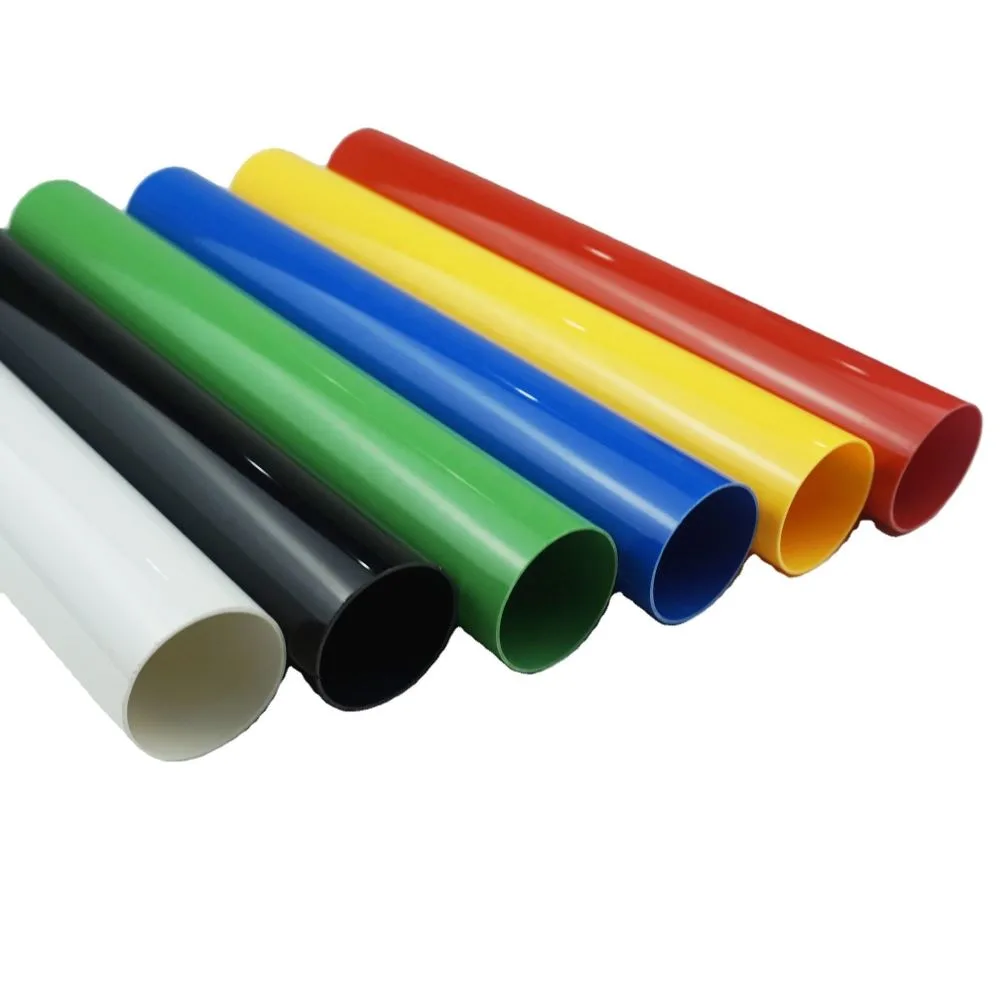




When engineers need transparent, dimensionally stable plastic rods for precision machining, PMMA çubuk is often one of the first materials considered. PMMA, also known as polymethyl methacrylate or acrylic, combines excellent optical clarity, weather resistance, relatively high surface hardness, and good dimensional stability. However, not all PMMA rods are manufactured in the same way.
The two most common manufacturing methods are extrusion and casting. An extruded PMMA rod is produced by melting PMMA resin and continuously forcing it through a precision die to create a rod with a controlled diameter. A cast acrylic rod is produced by polymerizing liquid MMA or acrylic syrup inside a mold. Although both products are chemically based on PMMA, their manufacturing histories can create meaningful differences in molecular orientation, internal stress, dimensional uniformity, optical behavior, and machining performance.
For applications involving CNC turning, drilling, milling, cutting, threading, polishing, or other precision machining operations, understanding these differences is critical. The best PMMA çubuk is not necessarily the product with the highest optical clarity or lowest initial price. The correct choice depends on the machining process, required tolerances, geometry, stress sensitivity, and final application.
This guide compares extruded PMMA rods and cast acrylic rods from a manufacturing and machining perspective and explains when each production method is more appropriate.
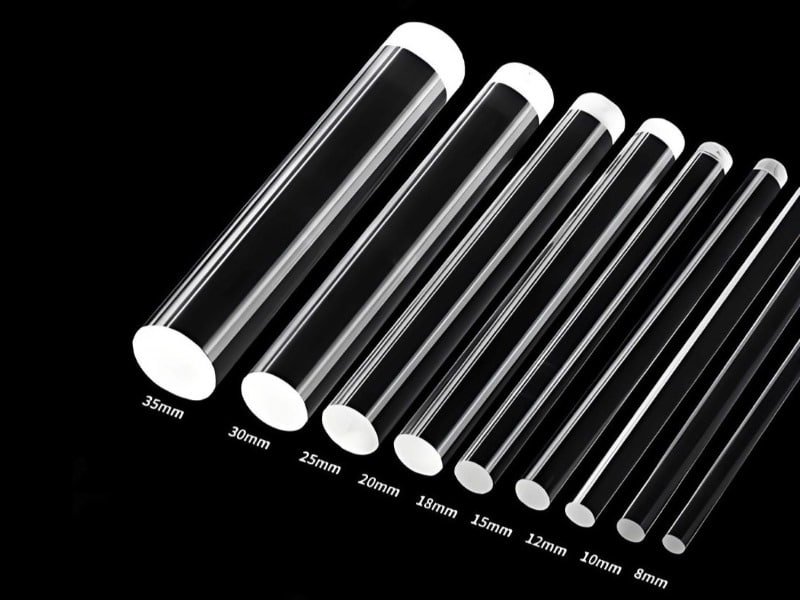
1. PMMA Rod Manufacturing Methods: Extrusion vs. Casting
The first major difference between an extruded PMMA çubuk and a cast acrylic rod is the manufacturing process itself.
In extrusion, PMMA pellets are fed into an extruder, heated to a controlled processing temperature, plasticized, homogenized, and pushed continuously through a circular die. The molten material then passes through a calibration and cooling system before being cut into specified lengths. Because the process is continuous, an experienced PMMA çubuk üreticisi can maintain consistent diameter, length, surface quality, and production output.
Casting follows a different principle. Liquid methyl methacrylate or partially polymerized acrylic material is introduced into a mold and polymerized. The polymerization reaction forms the solid PMMA product inside the mold. The final rod is then removed and subjected to finishing operations such as cutting, polishing, or surface treatment.
Therefore, extrusion creates a product through continuous thermoplastic flow, while casting creates a product through in-mold polymerization.
This fundamental difference influences the internal structure of the finished PMMA rod.
2. PMMA Rod Structural Differences: Molecular Orientation Matters
One of the most important differences between extruded and cast PMMA çubuk products is molecular orientation.
During extrusion, the molten PMMA flows through a relatively narrow die under pressure. Polymer chains can become partially oriented in the direction of extrusion. The degree of orientation depends on resin grade, melt temperature, extrusion speed, die design, cooling conditions, and other process parameters.
This does not mean that an extruded PMMA rod has a simple layered structure or that its molecular chains are perfectly aligned. Instead, extrusion can create a measurable processing direction within the material.
Cast acrylic is formed by polymerization while the material is relatively stationary inside a mold. It generally has less flow-induced molecular orientation than an extruded product.
For machining, this distinction can become important because different levels of orientation can influence how the material responds to cutting forces, heating, and stress relaxation.
3. PMMA Rod Internal Stress: Why Processing History Is Important
Internal stress is one of the most important factors when selecting a PMMA rod for precision machining.
Internal stress refers to residual mechanical stress that remains inside the material after manufacturing. It can result from uneven cooling, molecular orientation, thermal gradients, polymerization conditions, and mechanical processing.
Extrusion can generate residual stress because the PMMA melt is subjected to shear, pressure, stretching, and subsequent cooling. If the cooling process is too rapid or poorly controlled, the outer and inner regions of the rod may cool at different rates.
A high-quality PMMA çubuk fabrikası therefore needs to control extrusion temperature, die temperature, haul-off speed, cooling conditions, and dimensional calibration carefully.
Cast acrylic can also contain internal stress. Polymerization itself generates heat, and temperature differences during polymerization and cooling can create residual stresses. Poorly controlled casting conditions may therefore produce stress concentrations or non-uniformity.
The important point is that manufacturing method alone does not determine stress level. Process control, material grade, annealing, cooling rate, geometry, and post-processing all influence the final stress state.
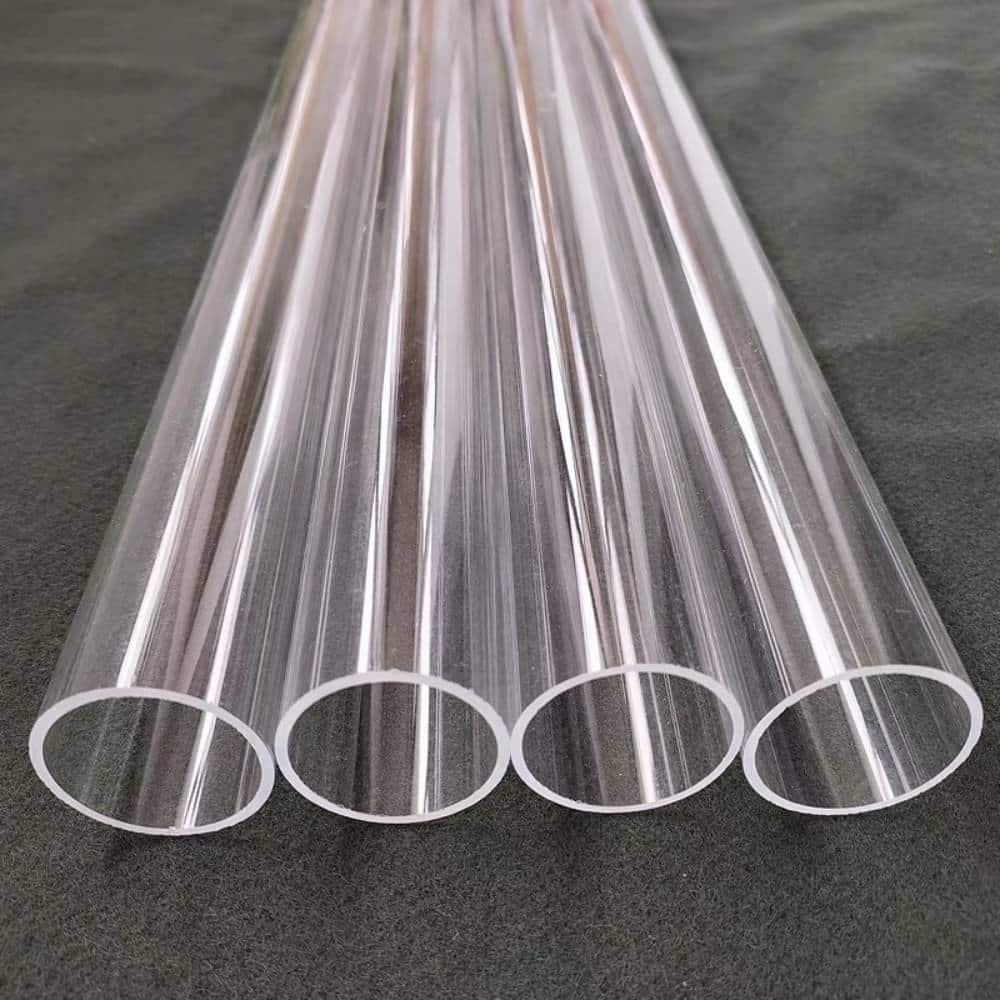
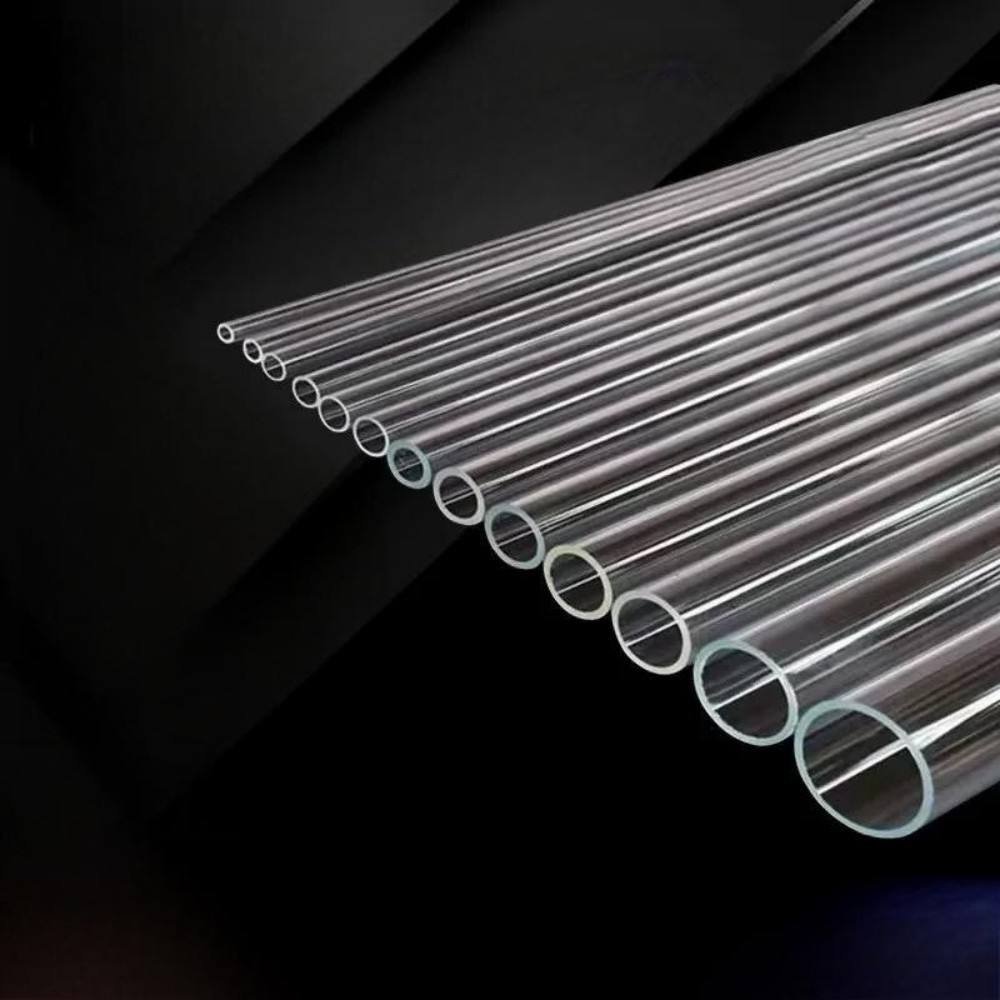
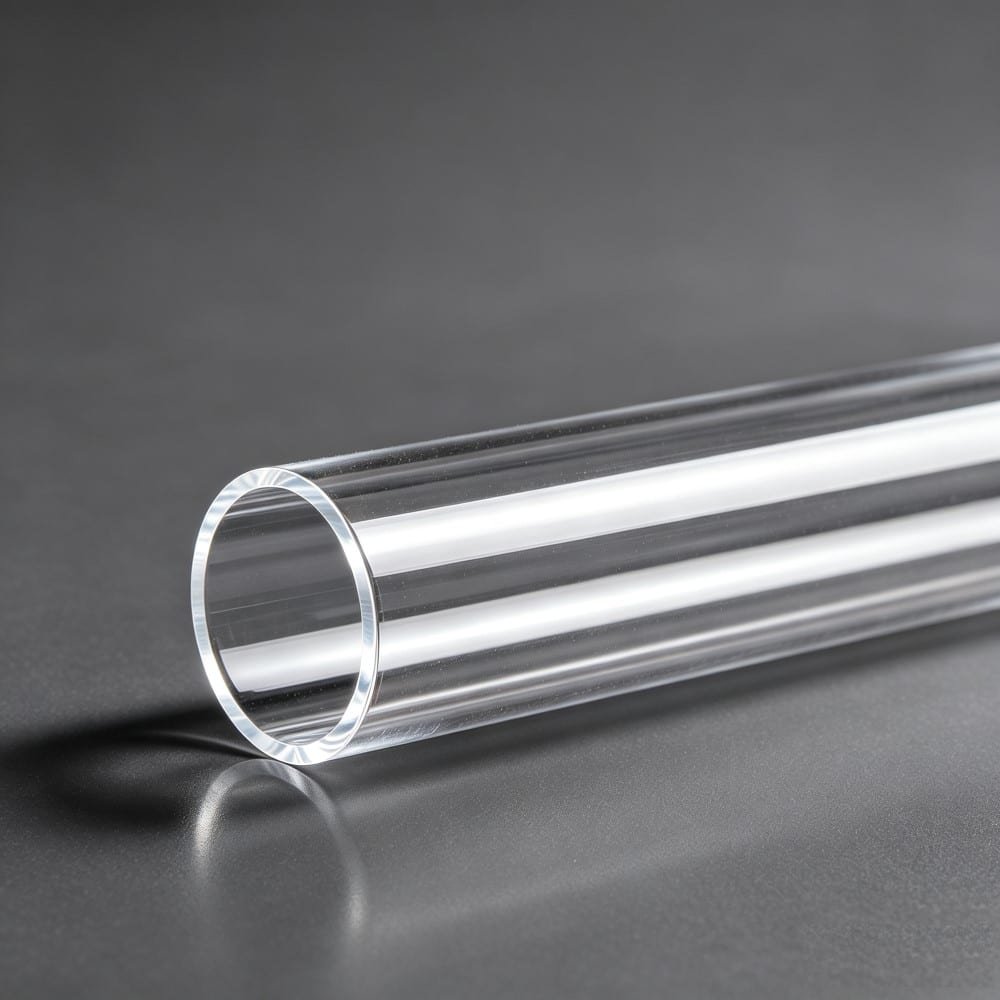
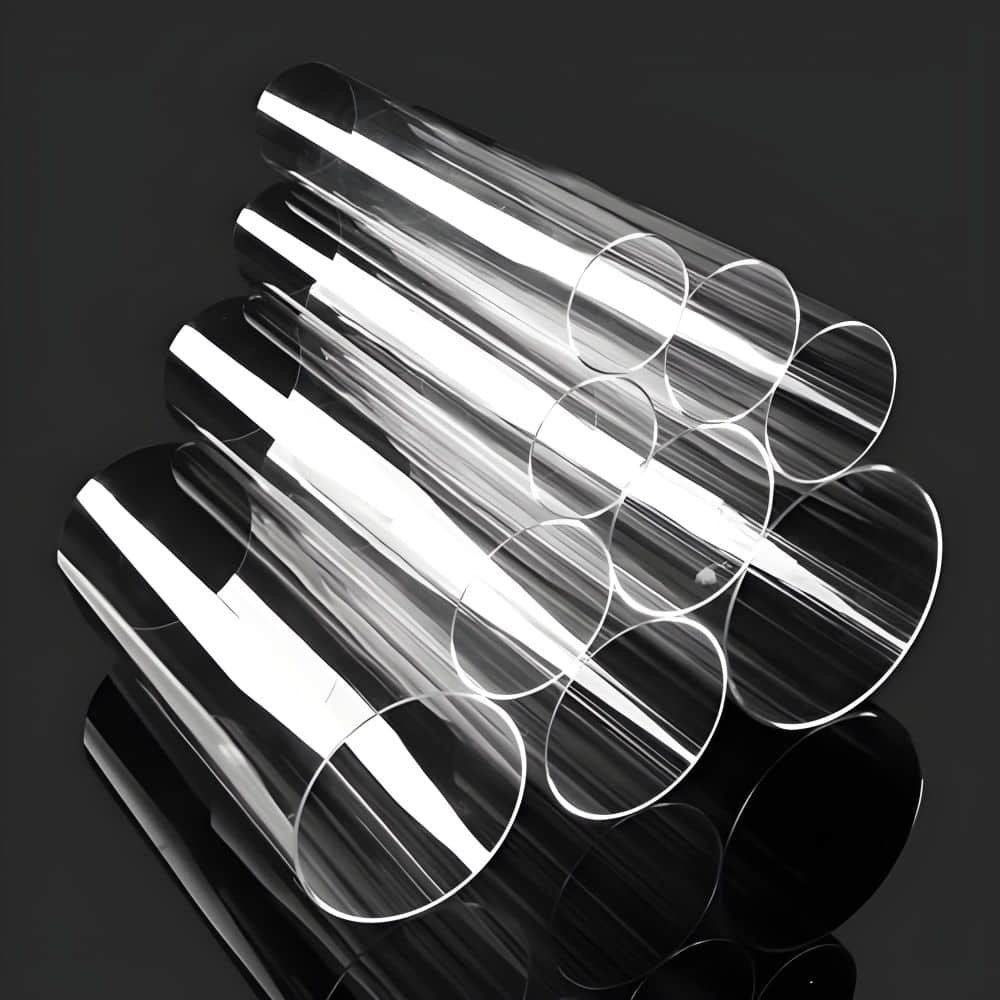
4. Extruded PMMA Rod vs. Cast Acrylic Rod: Stress Distribution
For precision machining, the distribution of residual stress may be more important than simply asking whether a material has “high” or “low” internal stress.
An extruded PMMA çubuk may exhibit directional stress associated with material flow. When a machined part is released from a large amount of material, these stresses can partially redistribute and cause dimensional movement.
For example, suppose a machinist turns a thick PMMA rod down to create a thin-walled component. If significant residual stress exists within the starting material, removing material from one side may disturb the previous stress balance. The component can experience slight deformation or dimensional change.
Cast acrylic may exhibit a different stress distribution because the material is polymerized in place rather than continuously forced through a die.
However, cast material is not automatically stress-free. In fact, thick cast sections can develop thermal gradients during polymerization and cooling.
For both manufacturing methods, stress-relief annealing can be valuable when extremely tight machining tolerances are required.
5. PMMA Rod Dimensional Uniformity and Diameter Control
Dimensional consistency is another major consideration when comparing an extruded PMMA çubuk with a cast acrylic rod.
Continuous extrusion is particularly suitable for producing long lengths of PMMA rod with controlled diameters. The extrusion die, calibration system, cooling system, and haul-off equipment work together to establish the final dimensions.
Bir PMMA çubuk üreticisi, maintaining stable melt pressure and temperature is essential. Variations in these parameters can affect diameter, roundness, surface quality, and internal structure.
Cast acrylic rods depend heavily on mold accuracy and polymerization shrinkage control. The casting process can produce excellent dimensional accuracy, but the mold and polymerization process must be carefully engineered.
For applications requiring large volumes of standardized rods, extrusion can provide an important production advantage because the process is continuous and highly repeatable.
6. PMMA Rod Machining Performance: Turning and CNC Processing
When machining PMMA, the material behaves differently from metals.
PMMA is relatively rigid but can be sensitive to heat, excessive cutting pressure, tool geometry, and poor chip evacuation. During CNC turning or milling, excessive friction can raise the local temperature and potentially cause melting, surface damage, cracking, or dimensional instability.
An extruded PMMA çubuk can perform very well in CNC machining when the material has been manufactured with controlled residual stress and appropriate extrusion parameters.
However, machinists should consider the direction of extrusion when developing machining parameters. Depending on the component geometry, stress distribution and material orientation can influence the final dimensional result.
Cast acrylic rods may offer advantages in certain stress-sensitive machining applications, particularly where the material has been properly polymerized and annealed.
Therefore, there is no universal rule that cast acrylic always machines better. The actual performance depends on material quality, stress condition, tool design, machining parameters, and component geometry.
7. PMMA Rod Drilling and Threading: Where Internal Stress Becomes Visible
Drilling and threading can expose differences between different grades and manufacturing methods of PMMA çubuk.
A drilled hole removes material and creates a new stress concentration. If the material contains significant residual stress, drilling can sometimes lead to microcracking or dimensional movement, particularly when the tool generates excessive heat.
Threading presents an additional challenge because the thread profile contains sharp geometric features and relatively thin sections.
For high-precision threaded components, a machinist may benefit from using a stress-relieved PMMA rod and controlling cutting speed, feed rate, tool sharpness, and cooling.
Deneyimli PMMA çubuk üreticisi should be able to discuss the intended machining process with the customer before selecting the material and manufacturing parameters.
This is one reason custom material consultation is often more valuable than simply purchasing a standard rod based on diameter and price.
8. PMMA Rod Optical Properties: Is Cast Acrylic Always Clearer?
Cast acrylic is often associated with excellent optical clarity, and cast PMMA products are widely used in applications where optical performance is important.
However, it would be misleading to assume that every cast acrylic rod is automatically optically superior to every extruded PMMA çubuk.
Optical performance depends on resin purity, molecular structure, processing conditions, surface quality, additives, colorants, cooling, and finishing.
Extruded PMMA rods can provide very good transparency and surface quality when produced using suitable optical-grade PMMA resin and carefully controlled extrusion conditions.
For industrial applications where the rod will eventually be machined, optical clarity may not even be the primary selection criterion. Dimensional stability, stress level, machinability, and chemical resistance may be more important.
The correct approach is to match the PMMA grade and manufacturing method to the actual application.
9. PMMA Rod Surface Quality and Machining Finish
Surface quality is another factor that influences the performance of a PMMA çubuk during precision machining.
Extrusion can produce a smooth cylindrical surface directly from the die and cooling system. Proper die design and process control are essential for preventing surface defects, die lines, scratches, bubbles, or dimensional irregularities.
Cast acrylic rods can also provide excellent surfaces, particularly when molds are highly polished.
However, machining performance ultimately depends on more than the initial surface finish. A precision-machined component may require subsequent polishing, flame polishing, buffing, or optical finishing.
If the finished product requires a high-gloss optical surface, engineers should consider the entire manufacturing chain rather than selecting a raw rod solely based on its initial appearance.
10. PMMA Rod Thermal Behavior During Precision Machining
PMMA is a thermoplastic, which means heat management is critical during machining.
Unlike metals, PMMA has relatively low thermal conductivity. Heat generated at the cutting edge may therefore remain concentrated near the machining zone.
If cutting parameters are too aggressive, the material can soften locally. This may lead to poor dimensional accuracy, rough surfaces, chips sticking to the tool, or localized deformation.
For both extruded and cast PMMA çubuk, sharp tools and appropriate cutting conditions are important.
The difference is that residual stress can interact with thermal effects. Heating a stressed acrylic component may allow some of that stress to relax, potentially changing its dimensions.
For precision components, machining parameters should therefore minimize both mechanical stress and thermal accumulation.
11. PMMA Rod Annealing: A Critical Step for Precision Parts
Annealing is an important technique for reducing residual stress in PMMA.
The basic principle is to heat the material under controlled conditions and then cool it gradually. This allows internal stresses to relax without creating new severe thermal gradients.
For precision-machined PMMA rod components, annealing may be considered before machining, after rough machining, or after machining depending on the geometry and dimensional requirements.
The exact annealing temperature and time must be determined according to the PMMA grade, part dimensions, wall thickness, and manufacturing requirements.
Bir profesyonel PMMA çubuk fabrikası should understand that annealing is not a universal “fix” for poor material processing. Good extrusion or casting control should come first. Annealing is a complementary stress-management process rather than a substitute for proper manufacturing.
12. PMMA Rod Selection for Precision Machining
So, which material should engineers choose?
A practical comparison can be summarized as follows:
| Faktör | Extruded PMMA Rod | Cast Acrylic Rod |
|---|---|---|
| Manufacturing principle | Continuous thermoplastic extrusion | In-mold polymerization |
| Molecular orientation | Some flow-induced orientation may occur | Generally lower flow orientation |
| Dimensional consistency | Excellent for continuous production | Strongly dependent on mold/process |
| Residual stress | Can result from flow and cooling | Can result from polymerization and cooling |
| Long-length production | Highly suitable | Less efficient |
| CNC machining | Good with controlled stress | Good, especially when stress-relieved |
| Optical applications | Very good with suitable grade | Excellent potential |
| Custom dimensions | Highly flexible through tooling | Mold-dependent |
| High-volume production | Strong advantage | More process-intensive |
| Precision machining | Suitable with stress control | Suitable with stress control |
The key conclusion is that neither manufacturing method universally wins. Extruded PMMA rods can be highly advantageous for consistent dimensions, continuous production, custom profiles, and high-volume manufacturing. Cast acrylic rods may be attractive for certain optical, dimensional, or stress-sensitive applications.
13. PMMA Rod Factory: What Should Buyers Ask?
When sourcing a PMMA çubuk üreticisi, buyers should ask more than “What diameter can you produce?”
Important technical questions include:
- What PMMA resin grade is used?
- Is the material virgin resin or recycled material?
- What diameter tolerance can be maintained?
- How is roundness controlled?
- What is the typical internal stress condition?
- Is annealing available?
- Can the manufacturer provide custom colors?
- Can the rod be produced to custom lengths?
- Can the supplier support CNC machining requirements?
- Can samples be provided for machining trials?
These questions help engineers evaluate whether the supplier understands the relationship between raw material, extrusion or casting, and final machining performance.
For demanding applications, it is also useful to test actual production samples rather than relying only on datasheets.
14. Why Choose SW as a PMMA Rod Manufacturer?
SW has more than 20 years of experience in plastic extrusion manufacturing and specializes in customized extruded plastic products for customers across different industries.
Our product capabilities include PMMA rods, plastic pipes, PVC pipes, ABS pipes, cable trunking, PVC skirting, and other customized plastic extrusion products. With long-term extrusion experience, SW can support customers from material selection and profile design through tooling, extrusion production, dimensional control, and final inspection.
For customers requiring a custom PMMA çubuk, the objective is not simply to produce a transparent cylindrical plastic bar. The manufacturing process must be matched to the required diameter, tolerance, surface quality, color, mechanical performance, and downstream machining process.
This is especially important when PMMA rods are used for CNC turning, drilling, milling, optical components, lighting components, display parts, industrial components, and other precision applications.
SW can work with customers to evaluate whether an extruded PMMA rod is appropriate for their application and help optimize the extrusion design according to production requirements.
15. PMMA Rod vs. Cast Acrylic Rod: Final Verdict
The question “PMMA rod vs. cast acrylic rod—which manufacturing method wins for precision machining?” does not have a single answer.
Extruded PMMA rod has major advantages in continuous production, dimensional consistency, custom tooling, repeatability, and high-volume manufacturing. Its main technical consideration is the potential influence of extrusion-induced molecular orientation and residual stress. With controlled processing and appropriate stress relief, extruded PMMA can be an excellent material for precision machining.
Cast acrylic rod can provide excellent optical and dimensional performance and may be advantageous for certain applications where low flow orientation or specific casting characteristics are desirable. However, casting does not automatically eliminate internal stress, and polymerization and cooling must also be carefully controlled.
For precision machining, the most important principle is therefore not simply extrusion vs. casting. The better question is:
Which PMMA manufacturing process provides the right combination of molecular structure, residual stress, dimensional stability, material grade, and machining performance for the final component?
For standard and customized high-volume applications, an experienced PMMA çubuk fabrikası with strong extrusion process control can provide an effective combination of consistency, scalability, customization, and cost efficiency.
With more than 20 years of plastic extrusion manufacturing experience, SW is positioned to support customers looking for customized PMMA çubuk solutions and other extruded plastic products. By evaluating the complete relationship between material, extrusion parameters, geometry, machining requirements, and final application, engineers can select a PMMA rod that delivers reliable performance rather than simply choosing the lowest-cost raw material.
In short: precision machining does not begin at the CNC machine. It begins with selecting and manufacturing the right PMMA rod.
PVC boru üretim tesisimizde, fikir aşamasından üretime kadar ürün geliştirme yolculuğunuzda size destek olmaya hazır, yetenekli mühendislerden oluşan bir ekibimiz var. Ürününüzle ilgili her türlü fikriniz için bizimle iletişime geçebilirsiniz ve mühendislerimiz en kısa sürede size fiyat teklifiyle geri dönecektir. Whatsapp +86 188 2072 7151
Shuowei kimdir?
2006 yılından beri faaliyet gösteren Shuowei, Çin'in Guangdong eyaletinde bulunan profesyonel bir ekstrüzyon profil fabrikasıdır. Ofisimizde toplamda 51-100 kişi çalışmaktadır. Shuowei PVC ekstrüzyon fabrikası, PVC borular, PE kablo kanalları, PVC süpürgelikler gibi ekstrüzyon profillerinin tasarım ve üretimine odaklanmıştır. Kuruluşumuzdan bu yana, ustaca tasarımımız, üstün teknolojimiz ve kaliteye olan nihai bağlılığımızla pazarda geniş bir tanınırlık ve müşterilerimizin derin güvenini kazandık.
Üretici misiniz yoksa tüccar mı?
Biz Çin'in önde gelen şirketlerinden biriyiz. PVC ekstrüzyon profilleri Üreticiyiz ve fabrikamız Huizhou'da bulunmaktadır. Fabrikamız 16.000 m²'lik bir üretim alanına, 5'ten fazla otomatik ekstrüzyon profil üretim hattına, yıllık 30.000 ton üretim kapasitesine sahiptir ve dünya çapında 500'den fazla müşteriye hizmet vermektedir. Fabrikamızı ziyaret etmenizi bekliyoruz!
Ürün yelpazeniz nedir?
Yüksek kaliteli tasarım ve üretim konusunda uzmanlaşmış bir firmayız. ekstrüzyon profilleri,PVC boru, ABS ekstrüzyon, PC abajur, PVC süpürgelik, PP kablo kanalı, PE profiller gibi...
Özel yazılım geliştirme süreci ne kadar sürer?
Özel ekstrüzyon ürünleri üretiyoruz. Olağan süreç 4 adımdan oluşmaktadır: talep onayı → 3D tasarım/örnekleme → test sertifikasyonu → seri üretim (3-8 haftalık döngü).
Uluslararası sertifikalarınız var mı?
ISO 9001, CE, RoHS, SGS ve diğer sertifikaları aldık ve Avrupa, Amerika, Orta Doğu ve Asya'nın ana akım standartlarını karşılıyoruz.