



In today’s construction, automotive, and industrial markets, sealing strips play an essential role in ensuring airtightness, waterproofing, sound insulation, and dust protection. Whether used on doors, windows, vehicles, machinery, or bathrooms, sealing strips help prevent leaks, block noise, and enhance energy efficiency.
As a professional PVC sealing strips manufacturer with 20 years of extrusion experience, SW Factory provides high-quality customized sealing solutions for different industries worldwide.
In this article, we’ll explore:
What sealing strips are and their key functions
The most common sealing strip materials (PVC, EPDM, Silicone, TPE, PU, and Neoprene)
Their performance comparisons
Application examples in different industries
How to select the right sealing strip for your project
1. What Are Sealing Strips?
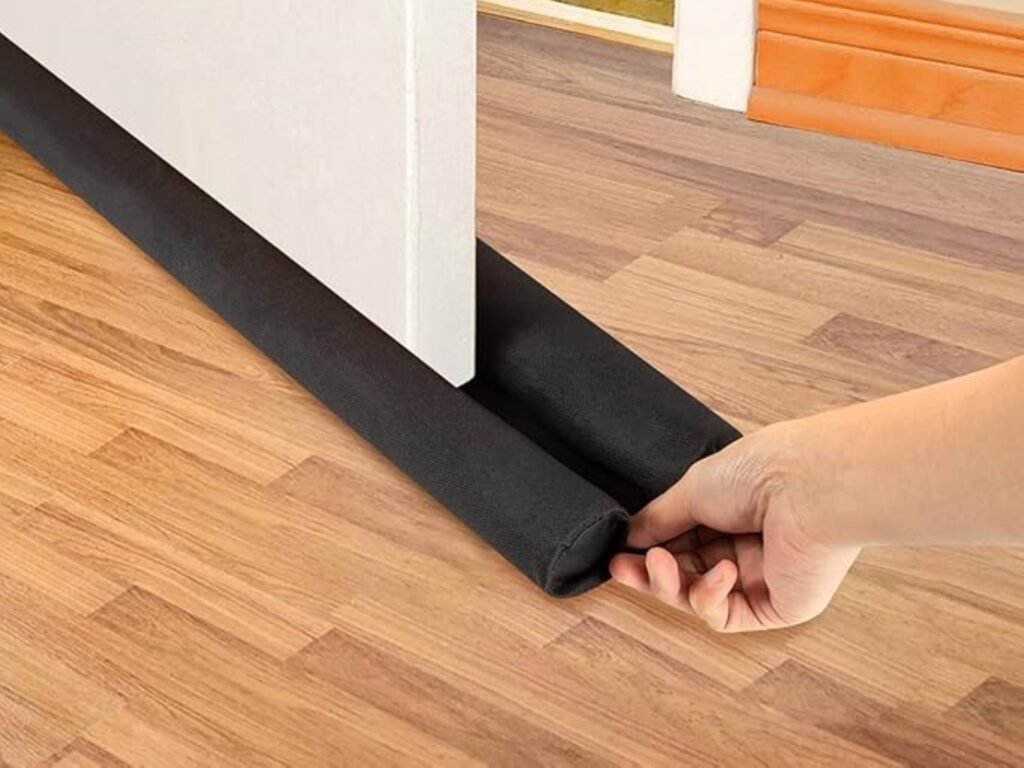
A sealing strip is a flexible profile — usually made of rubber or plastic — designed to fill gaps between surfaces, preventing air, water, dust, or vibration from passing through.
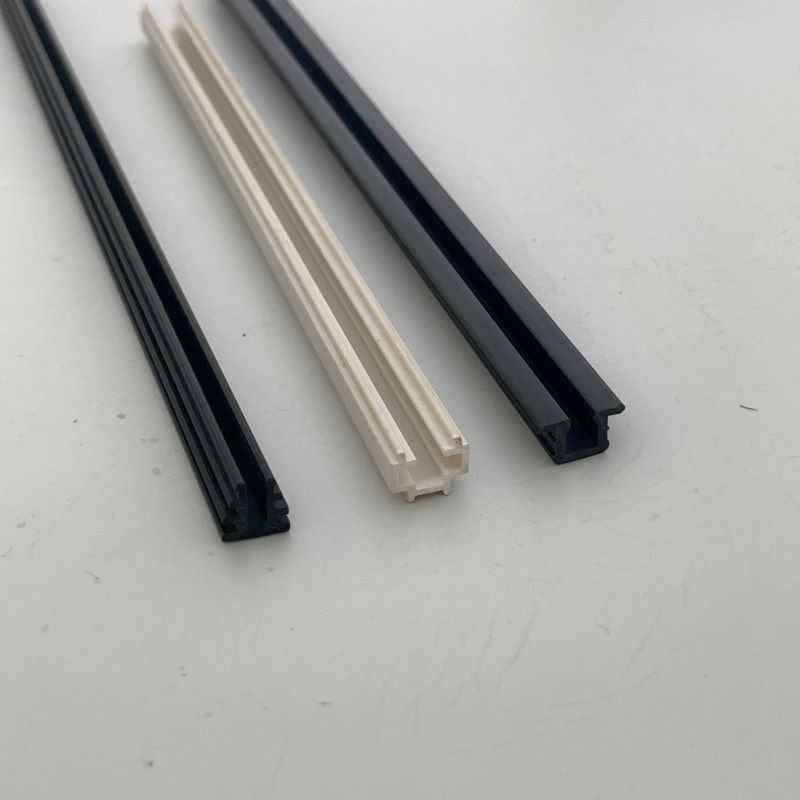
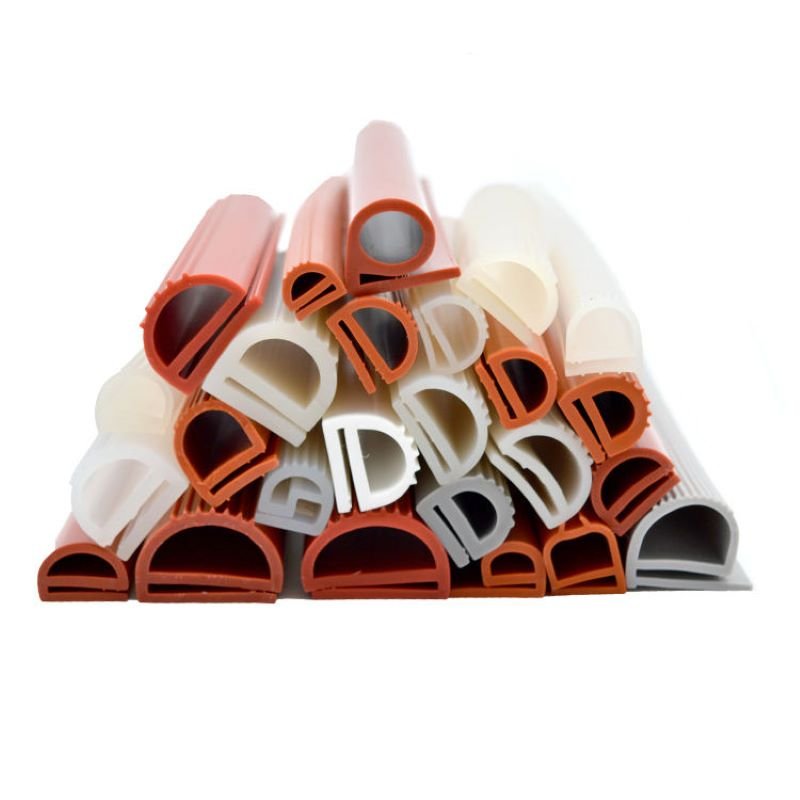
They are commonly extruded into shapes such as D-type, P-type, E-type, and U-type and used in:
Doors and windows (home, industrial, automotive)
Glass and aluminum frames
Machinery and HVAC systems
Refrigerators and cabinets
Bathrooms, kitchens, and waterproofing areas
Key Functions of Sealing Strips
Sealing: Preventing leaks of air, water, and sound.
Cushioning: Reducing vibration and noise.
Protection: Avoiding dust, corrosion, and impact.
Energy Efficiency: Enhancing insulation and reducing heat loss.
2. Common Sealing Strip Materials Overview
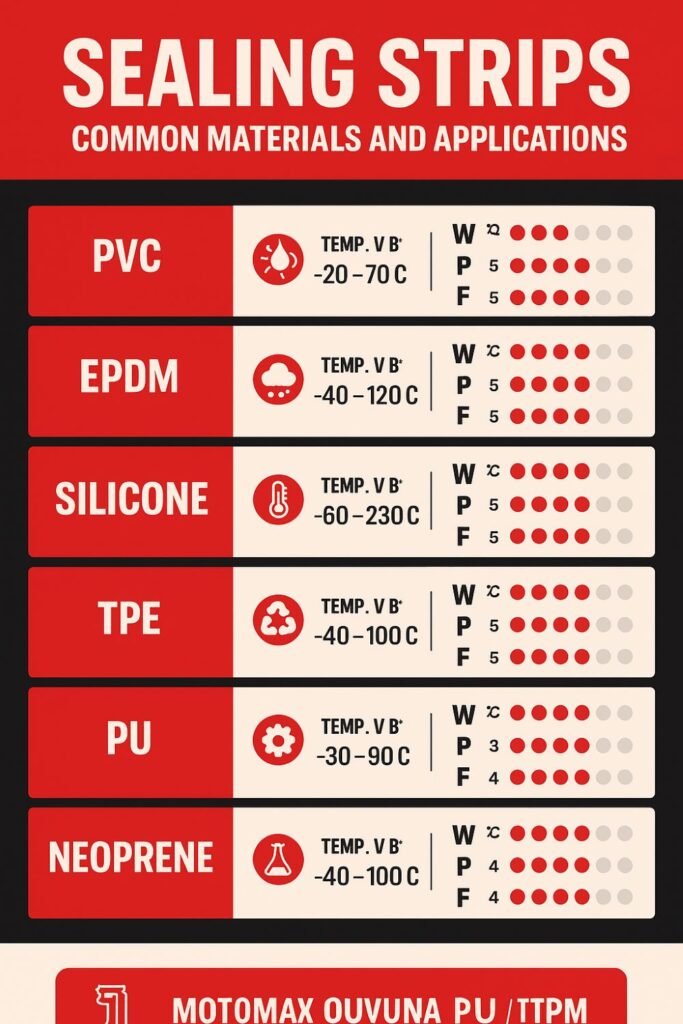
Let’s examine the six most widely used sealing strips materials and their technical properties.
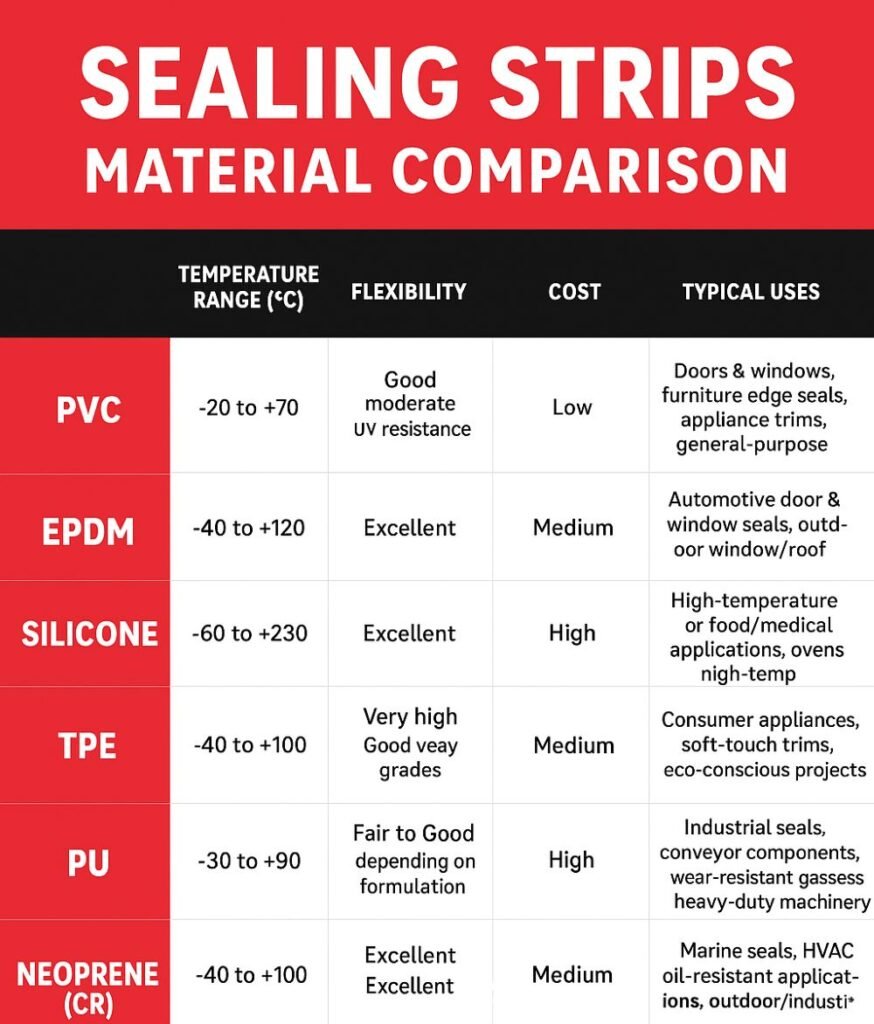
| Malzeme | Temperature Range | Esneklik | Weather Resistance | Cost | Key Applications |
|---|---|---|---|---|---|
| PVC | -20°C to 70°C | High | Moderate | ★★★ | General building, furniture, indoor sealing |
| EPDM | -40°C to 120°C | Excellent | Excellent | ★★★★ | Automotive, construction, industrial |
| Silicone | -60°C to 230°C | Excellent | Excellent | ★★★★★ | Medical, food, high-temperature |
| TPE | -40°C to 100°C | Very High | Good | ★★★ | Consumer products, household appliances |
| PU (Polyurethane) | -30°C to 90°C | Good | Fair | ★★ | Industrial, machinery seals |
| Neoprene | -40°C to 100°C | Good | Excellent | ★★★ | Marine, outdoor, weatherproof sealing |
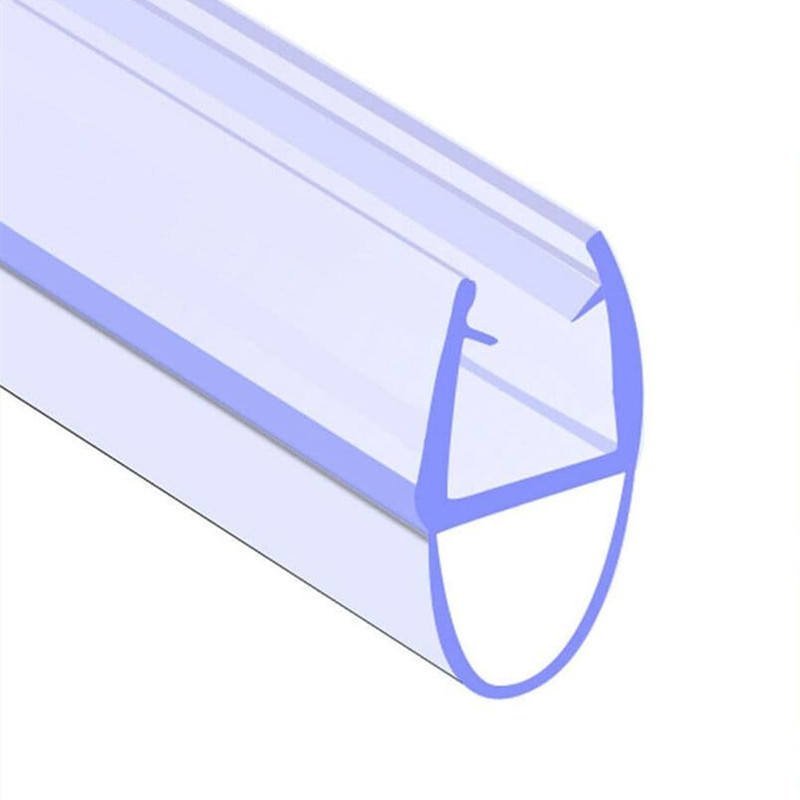
3. PVC Sealing Strips
PVC is one of the most versatile materials for sealing strips, widely used in doors, windows, furniture, and interior decoration.
Avantajlar
Cost-effective and easy to extrude
Excellent water resistance and chemical stability
Available in various hardness (from soft to rigid)
Suitable for large-volume manufacturing and customization
Uygulamalar
Doors and Windows: Tight sealing, dust protection, and insulation
Furniture & Cabinets: Decorative and sealing functions combined
Bathrooms: Water and mold resistance
Limitations
Not suitable for extreme cold or heat
Slightly less flexible than rubber materials
SW Factory specializes in custom PVC sealing strips, offering precise extrusion, co-extrusion (dual hardness), and color matching for OEM clients.
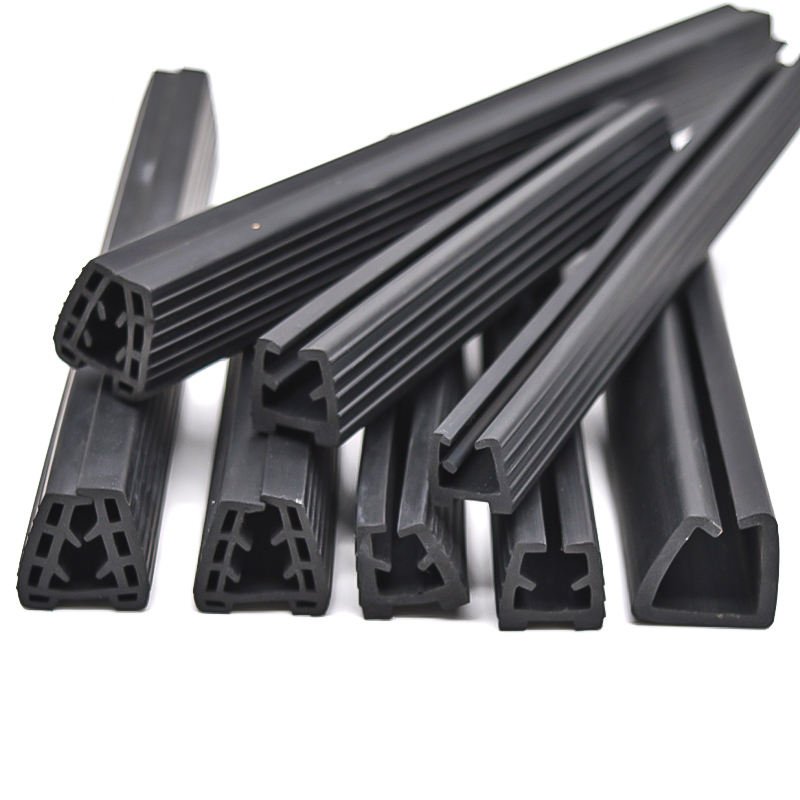
4. EPDM Sealing Strips
EPDM (Ethylene Propylene Diene Monomer) is a synthetic rubber known for its excellent weather, UV, and ozone resistance.
Avantajlar
Outstanding durability under sunlight and temperature changes
Excellent flexibility and elasticity
Great for outdoor and automotive applications
Uygulamalar
Automotive Door Seals: Reduces vibration and noise
Building Windows & Roofs: Weatherproof sealing
Industrial Machines: Long-term outdoor protection
Limitations
Slightly higher cost than PVC
Not ideal for food or medical-grade applications
Best choice for: Outdoor environments, construction, and automotive industries.
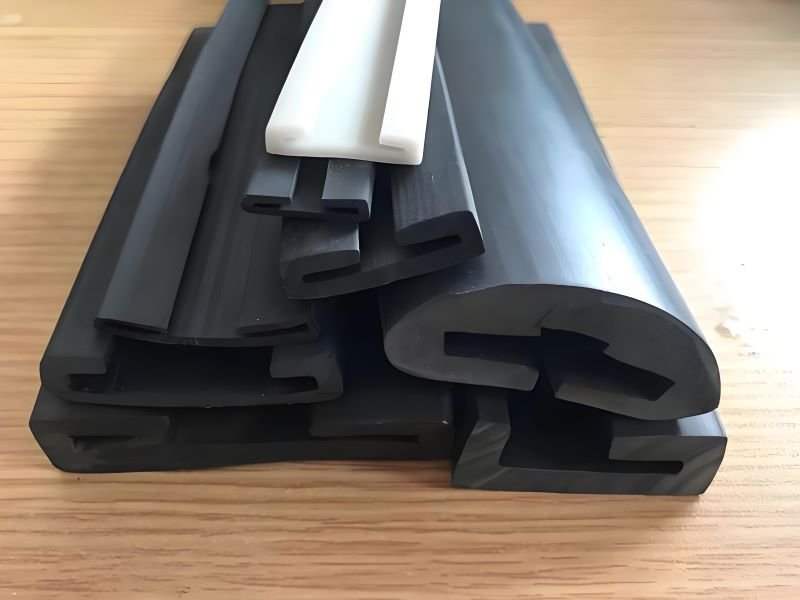
5. Silicone Sealing Strips
Silicone rubber stands out for extreme temperature resistance and non-toxicity, making it ideal for medical, food, and cleanroom environments.
Avantajlar
Temperature tolerance: -60°C to +230°C
Excellent flexibility and rebound
Non-toxic and odorless
High resistance to UV, ozone, and chemicals
Uygulamalar
Ovens and Food Equipment: High-temperature sealing
Medical Devices: Non-toxic sealing
Electronics: Heat-resistant gaskets
Limitations
Higher cost
Lower mechanical strength compared to EPDM
Best choice for: High-performance environments where cleanliness and heat resistance matter.
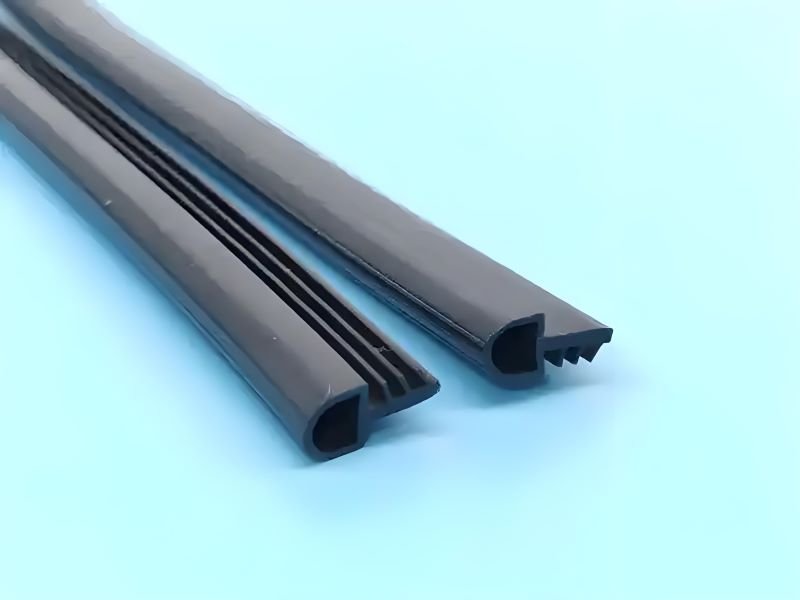
6. TPE Sealing Strips
TPE (Thermoplastic Elastomer) combines the properties of rubber and plastic — offering elasticity, reusability, and easy processing.
Avantajlar
100% recyclable
Soft touch and high elasticity
Easy to co-extrude with other plastics (like PVC)
Excellent for consumer products and interiors
Uygulamalar
Household appliances (refrigerators, washing machines)
Office equipment
Furniture and decorations
Limitations
Moderate resistance to weather and heat
Can deform under prolonged compression
Best choice for: Indoor and semi-protected environments needing flexibility and aesthetic appeal.
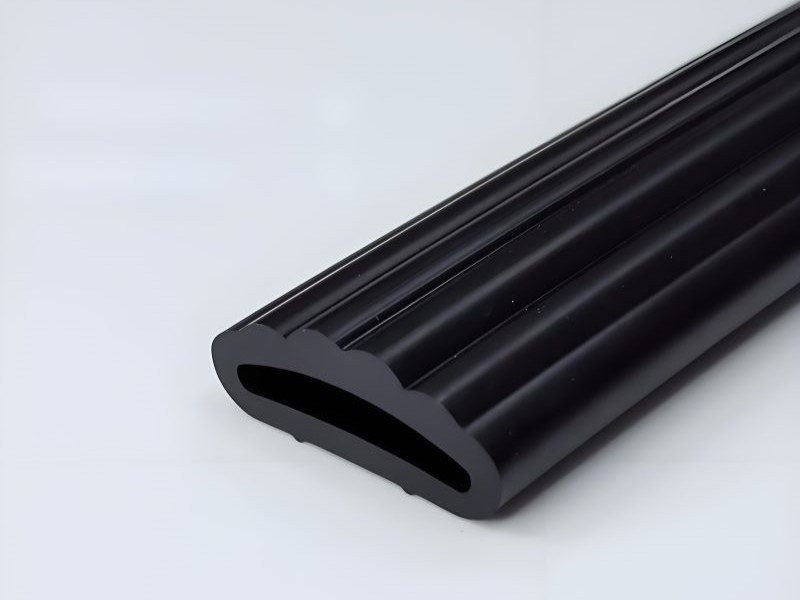
7. PU (Polyurethane) Sealing Strips
PU offers excellent abrasion resistance Ve mechanical strength, making it ideal for industrial sealing.
Avantajlar
High tensile and tear strength
Excellent resistance to oil and chemicals
Can be molded or extruded easily
Uygulamalar
Machinery & Equipment: Shock absorption and sealing
Automotive: Vibration-dampening components
Industrial Doors: Heavy-duty protection
Limitations
Sensitive to moisture and UV light
Shorter lifespan outdoors
Best choice for: Industrial and machinery seals requiring strength and durability.
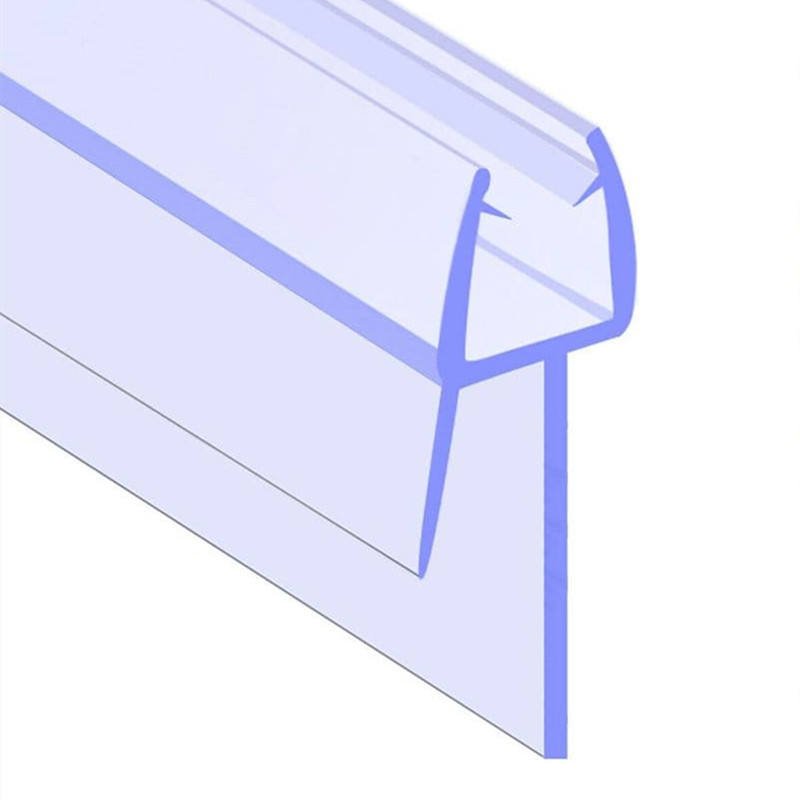
8. Neoprene Sealing Strips
Neoprene (Chloroprene Rubber) is well known for its resistance to oil, ozone, and weathering, widely used in marine and industrial environments.
Avantajlar
Good balance of flexibility, durability, and chemical resistance
Works well in outdoor, industrial, and marine settings
Flame retardant options available
Uygulamalar
Marine Equipment
Outdoor Construction
HVAC Systems
Limitations
Moderate flexibility
Slightly heavier and costlier than PVC
Best choice for: Environments exposed to oils, chemicals, or marine conditions.
9. Comparative Analysis: PVC vs. Rubber Sealing Strips
| Malzeme | Temperature range (°C) | Esneklik | Weather / UV resistance | Cost | Typical uses |
|---|---|---|---|---|---|
| PVC | -20 to +70 | High — good bendability for profiles | Good (moderate UV resistance; UV-stabilized grades recommended for long outdoor life) | Low | Doors & windows, furniture edge seals, appliance trims, general-purpose building seals |
| EPDM | -40 to +120 | Excellent — great rebound and compression recovery | Excellent (outstanding UV/ozone/weather resistance) | Medium | Automotive door & window seals, outdoor window/roof seals, long-life weather seals |
| Silicone | -60 to +230 | Excellent — remains flexible at extreme temps | Excellent (very high UV/ozone/weather resistance) | High | High-temperature or food/medical applications, ovens, high-temp gaskets, electronics |
| TPE (Thermoplastic Elastomer) | -40 to +100 | Very high — rubber-like feel, easy co-extrusion | Good (many grades with good weather resistance) | Medium | Consumer appliances, soft-touch trims, eco-conscious projects, co-extruded seals |
| PU (Polyurethane) | -30 to +90 | Good — strong and elastic under load | Fair to Good (depends on formulation; abrasion-resistant grades available) | High | Industrial seals, conveyor components, wear-resistant gaskets, heavy-duty machinery |
| Neoprene (CR) | -40 to +100 | Good — durable and resilient | Excellent (good weather, ozone and oil resistance) | Medium | Marine seals, HVAC, oil-resistant applications, outdoor/industrial environments |
From this table, PVC sızdırmazlık şeritleri remain the most cost-effective choice for indoor sealing needs, while EPDM and Silicone excel in outdoor and high-temperature applications.
10. Real-World Application Examples
Case 1: Residential Doors and Windows
Material Used: PVC sızdırmazlık şeritleri
Reason: Affordable, easy installation, aesthetic match
Result: Improved insulation and reduced noise leakage
Case 2: Automotive Door Gasket
Material Used: EPDM sealing strips
Reason: Superior weather and vibration resistance
Result: Enhanced durability and sound insulation
Case 3: Food Equipment Gasket
Material Used: Silicone sealing strips
Reason: Non-toxic, heat-resistant
Result: Safe and hygienic sealing performance
Case 4: Marine Hatch Seals
Material Used: Neoprene sealing strips
Reason: Saltwater and oil resistance
Result: Long-lasting outdoor performance
11. How to Choose the Right Sealing Strip Material
Here are the key selection factors when choosing sealing strips:
Operating Environment:
Indoor (PVC, TPE) vs. Outdoor (EPDM, Neoprene) vs. High-temp (Silicone).Temperature Range:
Choose material that stays flexible within your working range.Exposure Conditions:
Consider UV, ozone, oil, or chemical exposure.Hardness and Flexibility:
Match material hardness (Shore A scale) to application pressure and gap width.Installation and Maintenance:
PVC and TPE are easier to install and replace than some rubber materials.Cost and Lifespan:
PVC = economical; Silicone = premium performance.
12. Why Choose SW as Your PVC Sealing Strips Supplier
With 20 years of extrusion manufacturing experience, SW Factory provides:
Advanced co-extrusion and color-matching capabilities
Custom shapes and hardness levels (40A–90A)
OEM/ODM services for brands and project contractors
Strict quality control (ISO 9001 certified)
Fast global delivery and responsive support
We help customers in construction, furniture, automotive, and industrial sectors select or design the best PVC sealing strips for their needs.
PVC sealing strips remain the best choice
When selecting sealing strips, understanding the material differences is essential for achieving the right balance between performance, cost, and durability.
For indoor and decorative uses, PVC sızdırmazlık şeritleri remain the best choice for value and versatility. For outdoor, automotive, or industrial uses, EPDM, Silicone, or Neoprene may be more suitable.
No matter your project, choosing a reliable manufacturer like SW Factory ensures consistent quality, customized design, and professional support.
PVC boru üretim tesisimizde, fikir aşamasından üretime kadar ürün geliştirme yolculuğunuzda size destek olmaya hazır, yetenekli mühendislerden oluşan bir ekibimiz var. Ürününüzle ilgili her türlü fikriniz için bizimle iletişime geçebilirsiniz ve mühendislerimiz en kısa sürede size fiyat teklifiyle geri dönecektir. Whatsapp +86 188 2072 7151
Shuowei kimdir?
2006 yılından beri faaliyet gösteren Shuowei, Çin'in Guangdong eyaletinde bulunan profesyonel bir ekstrüzyon profil fabrikasıdır. Ofisimizde toplamda 51-100 kişi çalışmaktadır. Shuowei PVC ekstrüzyon fabrikası, PVC borular, PE kablo kanalları, PVC süpürgelikler gibi ekstrüzyon profillerinin tasarım ve üretimine odaklanmıştır. Kuruluşumuzdan bu yana, ustaca tasarımımız, üstün teknolojimiz ve kaliteye olan nihai bağlılığımızla pazarda geniş bir tanınırlık ve müşterilerimizin derin güvenini kazandık.
Üretici misiniz yoksa tüccar mı?
Biz Çin'in önde gelen şirketlerinden biriyiz. PVC ekstrüzyon profilleri Üreticiyiz ve fabrikamız Huizhou'da bulunmaktadır. Fabrikamız 16.000 m²'lik bir üretim alanına, 5'ten fazla otomatik ekstrüzyon profil üretim hattına, yıllık 30.000 ton üretim kapasitesine sahiptir ve dünya çapında 500'den fazla müşteriye hizmet vermektedir. Fabrikamızı ziyaret etmenizi bekliyoruz!
Ürün yelpazeniz nedir?
Yüksek kaliteli tasarım ve üretim konusunda uzmanlaşmış bir firmayız. ekstrüzyon profilleri,PVC boru, ABS ekstrüzyon, PC abajur, PVC süpürgelik, PP kablo kanalı, PE profiller gibi...
Özel yazılım geliştirme süreci ne kadar sürer?
Özel ekstrüzyon ürünleri üretiyoruz. Olağan süreç 4 adımdan oluşmaktadır: talep onayı → 3D tasarım/örnekleme → test sertifikasyonu → seri üretim (3-8 haftalık döngü).
Uluslararası sertifikalarınız var mı?
ISO 9001, CE, RoHS, SGS ve diğer sertifikaları aldık ve Avrupa, Amerika, Orta Doğu ve Asya'nın ana akım standartlarını karşılıyoruz.