

When designing or renovating a home or commercial space, the skirting board often plays a subtle but important role. Although it may not always catch immediate attention, the skirting board is an essential finishing element that combines style, functionality, and durability. For centuries, skirting boards have protected walls from damage, hidden unsightly gaps, and added a decorative element that enhances interior design.
Today, there are many types of skirting board materials available, each with its own advantages, challenges, and suitable applications. In this comprehensive blog, we will compare the most common skirting board materials, explore their pros and cons, and present practical application cases to help you make an informed choice. Learn more for the article What is the best material for skirting boards
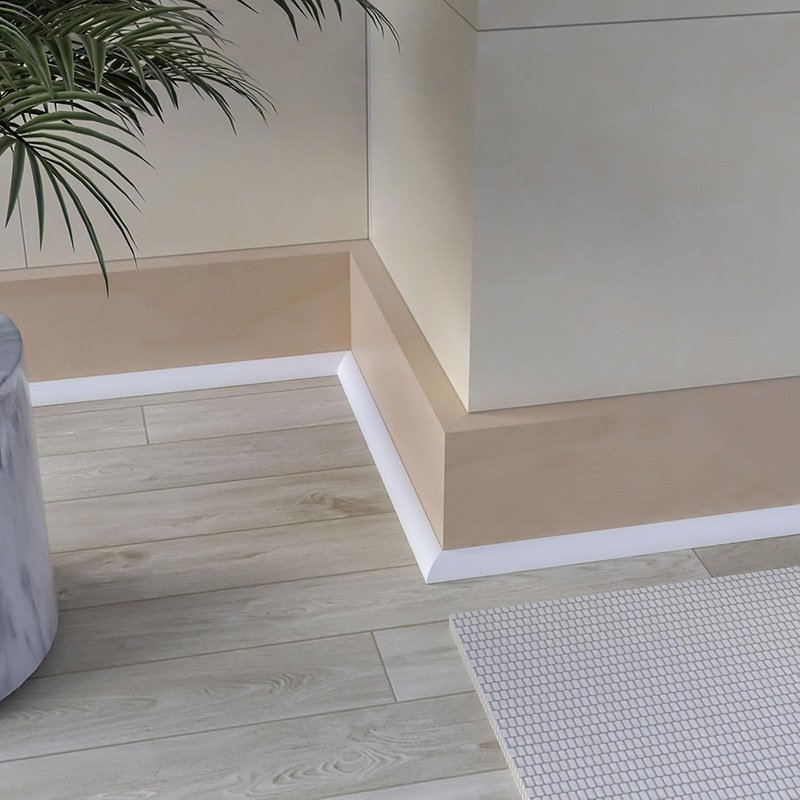
1. What Is a Skirting Board?
A skirting board, also known as baseboard or mopboard, is a strip of material installed at the junction of the wall and floor. Its main purposes are:
Protection: Preventing wall damage from furniture, vacuum cleaners, and daily wear.
Decoration: Adding elegance and a sense of completion to any interior.
Coverage: Hiding uneven edges or expansion gaps between wall and floor.
Although traditional skirting boards were made of wood, modern options include PVC, MDF, aluminum, and composite materials.


2. Types of Skirting Board Materials
Below, we break down the most common skirting board materials, highlighting their properties and best-use scenarios.
2.1 Wooden Skirting Board
Overview:
Wood has been the most traditional choice for skirting boards. Available in hardwoods (oak, walnut, teak) and softwoods (pine, spruce), wooden skirting boards add natural warmth and timeless style.
Advantages:
Elegant, natural appearance
Can be stained, varnished, or painted
Durable if maintained properly
Challenges:
Sensitive to moisture and temperature changes
Higher cost compared to synthetic materials
Requires regular maintenance
Application Case:
Luxury homes, boutique hotels, and heritage projects often prefer wooden skirting boards for their authenticity and prestige appeal.
2.2 MDF Skirting Board
Overview:
Medium-Density Fiberboard (MDF) skirting board is a budget-friendly and versatile option, often pre-primed for easy painting.
Advantages:
Affordable and widely available
Smooth surface ideal for painting
Consistent material with no knots or grain
Challenges:
Not water-resistant; can swell in damp conditions
Less durable than hardwood or PVC
May not last as long in high-traffic areas
Application Case:
MDF skirting boards are popular in rental properties, offices, and modern homes where budget and style balance is needed.
2.3 PVC Skirting Board
Overview:
PVC (Polyvinyl Chloride) skirting board has become increasingly popular due to its durability, water resistance, and low maintenance. At SW, we specialize in extruding high-quality PVC skirting boards, backed by 20 years of manufacturing expertise.
Advantages:
100% waterproof and moisture-resistant
Easy to clean and maintain
Resistant to termites and insects
Lightweight yet strong
Cost-effective and available in many finishes (wood grain, marble effect, plain colors)
Challenges:
Less luxurious compared to real wood
Not suitable for high-temperature areas (near fireplaces)
Application Case:
Perfect for bathrooms, kitchens, basements, and commercial areas where durability and hygiene are essential. Many modern homeowners also prefer PVC skirting board for its contemporary look and low upkeep.
2.4 Aluminum Skirting Board
Overview:
Aluminum skirting boards bring a sleek, industrial, and modern feel to interiors.
Advantages:
Very durable and resistant to corrosion
Minimalist aesthetic for modern spaces
Fire-resistant and eco-friendly
Challenges:
Higher price compared to MDF or PVC
Limited design variations
Cold, metallic feel may not suit every style
Application Case:
Widely used in high-end offices, showrooms, and contemporary residential projects.
2.5 Composite Skirting Board
Overview:
Composite skirting boards combine materials such as wood fibers and plastic polymers, aiming to deliver both natural aesthetics and improved durability.
Advantages:
Better water resistance than MDF
Wood-like appearance with added strength
Available in various finishes
Challenges:
Can be more expensive
Quality depends heavily on manufacturer
Limited recycling options
Application Case:
Best suited for semi-outdoor areas like verandas or transitional spaces that require durability and style.
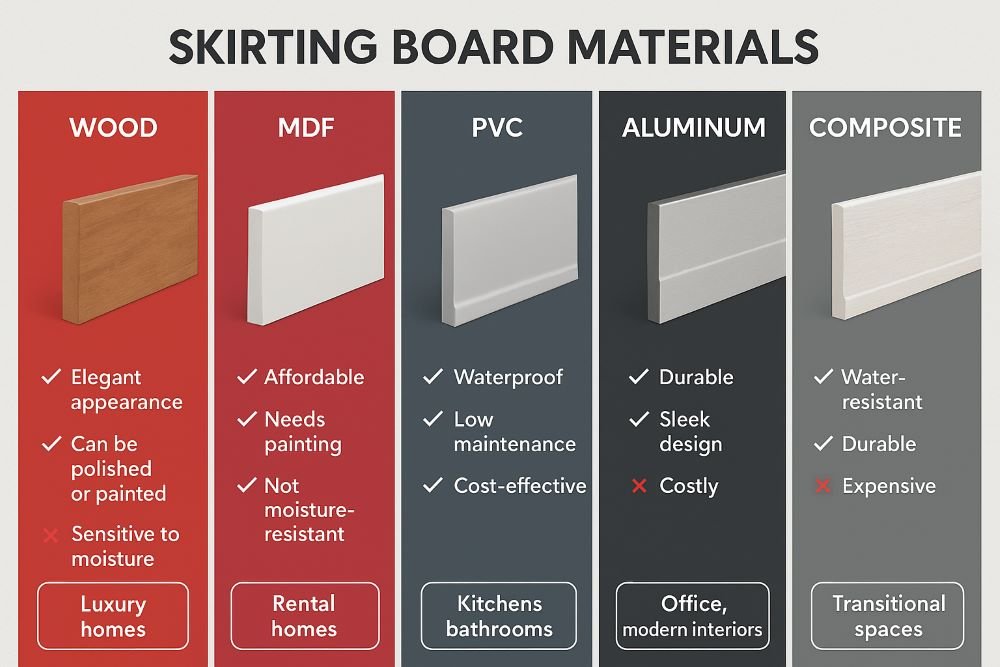
3. Comparison of Skirting Board Materials
Here is a simplified comparison to help you evaluate different options:
| Malzeme | Durability | Water Resistance | Cost | Maintenance | Best Use Cases |
|---|---|---|---|---|---|
| Wood | High | Low | High | Medium | Luxury homes, hotels |
| MDF | Medium | Low | Low | Medium | Rental homes, offices |
| PVC | High | High | Low | Low | Kitchens, bathrooms, commercial |
| Aluminum | Very High | High | High | Low | Offices, modern interiors |
| Composite | High | Medium-High | Medium | Low | Transitional or semi-outdoor |
4. Application Scenarios: Choosing the Right Skirting Board
Moisture-prone areas (bathrooms, kitchens, basements): PVC or aluminum skirting board is ideal.
Luxury interiors (heritage homes, hotels): Wooden skirting boards for elegance.
Budget projects (rental apartments, offices): MDF skirting boards offer affordability.
Contemporary commercial spaces: Aluminum or PVC for modern and clean lines.
Mixed-use spaces: Composite skirting boards balance durability and aesthetics.
5. Why Choose SW as Your Skirting Board Partner?
With 20 years of professional manufacturing experience, SW is a trusted skirting board factory specializing in PVC skirting boards. We provide:
Advanced extrusion technology ensuring precision and consistency
Wide range of designs, finishes, and customizable options
Strict quality control and eco-friendly production practices
Reliable export service and global partnerships
Our products are not only durable and practical but also stylish, making them the perfect choice for both residential and commercial projects.
How to choose
The skirting board you choose can transform the look, feel, and longevity of your interior spaces. Each material—wood, MDF, PVC, aluminum, or composite—comes with its strengths and limitations. By understanding these differences and learning from real-world applications, you can make a decision that matches your design goals, budget, and performance needs.What is the best material for skirting boards? SW factory expert guide
If you are looking for a trusted partner for high-quality PVC skirting boards, SW is here to support your projects with expertise, innovation, and excellence.
PVC boru üretim tesisimizde, fikir aşamasından üretime kadar ürün geliştirme yolculuğunuzda size destek olmaya hazır, yetenekli mühendislerden oluşan bir ekibimiz var. Ürününüzle ilgili her türlü fikriniz için bizimle iletişime geçebilirsiniz ve mühendislerimiz en kısa sürede size fiyat teklifiyle geri dönecektir. Whatsapp +86 188 2072 7151
Shuowei kimdir?
2006 yılından beri faaliyet gösteren Shuowei, Çin'in Guangdong eyaletinde bulunan profesyonel bir ekstrüzyon profil fabrikasıdır. Ofisimizde toplamda 51-100 kişi çalışmaktadır. Shuowei PVC ekstrüzyon fabrikası, PVC borular, PE kablo kanalları, PVC süpürgelikler gibi ekstrüzyon profillerinin tasarım ve üretimine odaklanmıştır. Kuruluşumuzdan bu yana, ustaca tasarımımız, üstün teknolojimiz ve kaliteye olan nihai bağlılığımızla pazarda geniş bir tanınırlık ve müşterilerimizin derin güvenini kazandık.
Üretici misiniz yoksa tüccar mı?
Biz Çin'in önde gelen şirketlerinden biriyiz. PVC ekstrüzyon profilleri Üreticiyiz ve fabrikamız Huizhou'da bulunmaktadır. Fabrikamız 16.000 m²'lik bir üretim alanına, 5'ten fazla otomatik ekstrüzyon profil üretim hattına, yıllık 30.000 ton üretim kapasitesine sahiptir ve dünya çapında 500'den fazla müşteriye hizmet vermektedir. Fabrikamızı ziyaret etmenizi bekliyoruz!
Ürün yelpazeniz nedir?
Yüksek kaliteli tasarım ve üretim konusunda uzmanlaşmış bir firmayız. ekstrüzyon profilleri,PVC boru, ABS ekstrüzyon, PC abajur, PVC süpürgelik, PP kablo kanalı, PE profiller gibi...
Özel yazılım geliştirme süreci ne kadar sürer?
Özel ekstrüzyon ürünleri üretiyoruz. Olağan süreç 4 adımdan oluşmaktadır: talep onayı → 3D tasarım/örnekleme → test sertifikasyonu → seri üretim (3-8 haftalık döngü).
Uluslararası sertifikalarınız var mı?
ISO 9001, CE, RoHS, SGS ve diğer sertifikaları aldık ve Avrupa, Amerika, Orta Doğu ve Asya'nın ana akım standartlarını karşılıyoruz.