


1. Why EPDM Sealing Strips Are Critical in Modern Automotive Engineering
In today’s automotive sector, sealing performance is no longer a simple commodity—it is a technical requirement directly related to vehicle comfort, noise reduction, structural integrity, air-tightness, and long-term durability. Automotive brands such as BMW rely on sophisticated sealing systems that must withstand millions of cycles, extreme climates, vibration, UV exposure, and chemical attack.At SUDOESTE, a professional EPDM sealing strip factory with more than 20 years of extrusion experience, we have supported global automotive brands by designing and manufacturing highly engineered sealing profiles.
One of our most successful projects is the custom EPDM sealing strip solution developed for BMW vehicles—a program that demonstrates our material expertise, precision extrusion capabilities, and rigorous automotive quality control.
This blog presents a detailed case study covering:
What EPDM sealing strips are
Why EPDM is ideal for automotive weather sealing
BMW’s application requirements
Engineering design considerations
Extrusion and vulcanization processes
Tooling development
Quality and performance testing
Packaging and logistics
Installation and usage factors
Lessons learned from the project
Why global automotive clients choose SW
2. What Is an EPDM Sealing Strip? Material Composition and Key Properties
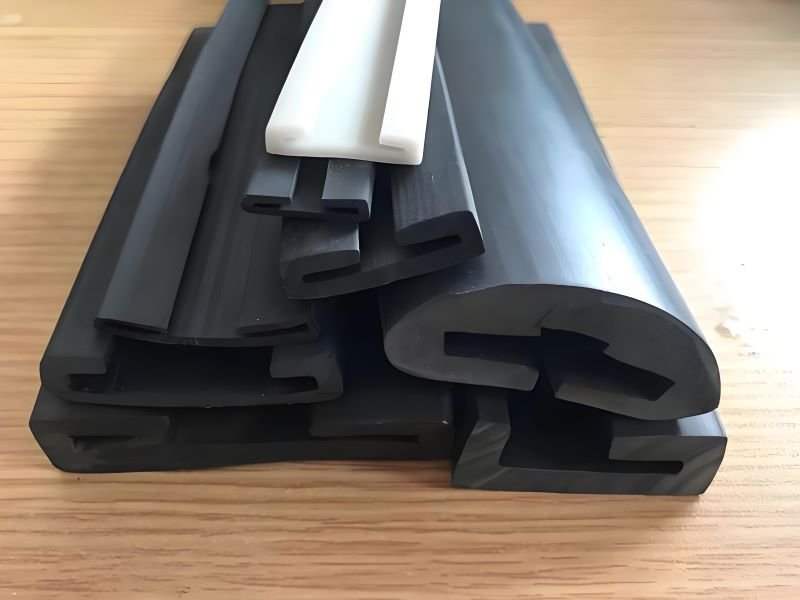
Un EPDM sealing strip is an extruded profile made from Ethylene Propylene Diene Monomer rubber, chosen for exceptional resistance to:
UV and ozone
Extreme temperatures (-50°C to +150°C)
Weather and moisture
Compression set (rebound performance)
Chemicals and automotive fluids
A high-quality EPDM sealing strip typically contains:
EPDM polymer base
Carbon black reinforcement
Vulcanizing agents
Processing oils
Accelerators and stabilizers
Optional metal or textile reinforcement cores
The material’s molecular structure gives it excellent elasticity, aging resistance, y sealing endurance, making it the global standard for automotive weatherstrips.
3. Why BMW Selected EPDM for This Project
BMW required a sealing material that could:
Last 10–15 years under continuous outdoor exposure
Maintain elasticity in European winter conditions
Withstand vehicle body torsion and door/frame movement
Reduce interior wind noise and vibration
Resist chemicals such as car wash detergents and lubricants
Remain stable in high-temperature environments
The only material meeting all these criteria with proven long-term performance was EPDM.
SW, as an experienced EPDM sealing strip manufacturer, provided BMW with a complete assessment of material grades and recommended a formulation that balances durability, flexibility, and cost efficiency.
4. Project Background: BMW’s Requirements for a Custom EPDM Sealing Strip
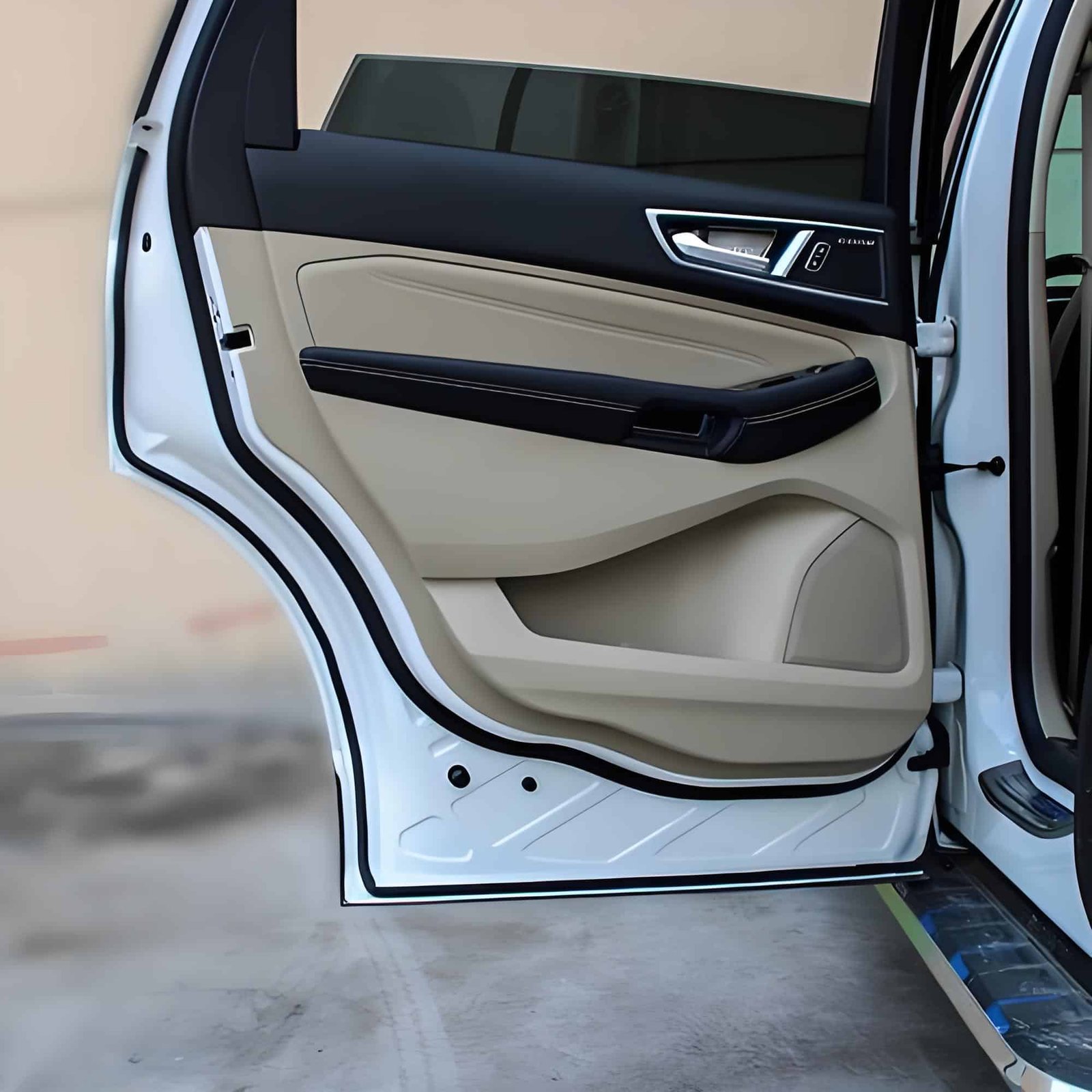
The BMW project required customized EPDM sealing strips for:
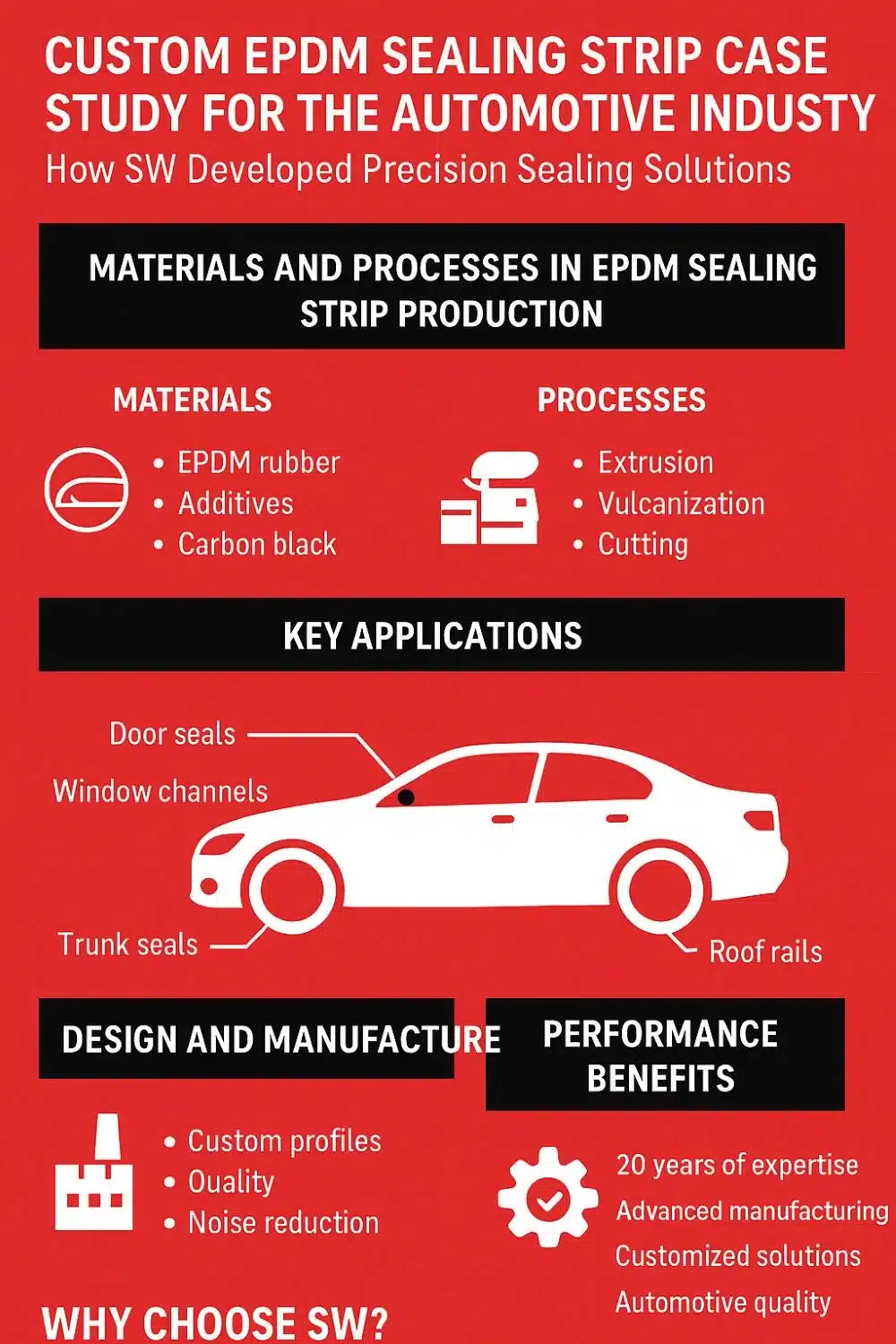
Door seals
Window channels
Roof rail interfaces
Trunk sealing profiles
Body-to-glass junctions
Their critical performance requirements included:
Technical Criteria
Compression set < 35%
Tensile strength ≥ 8 MPa
Density 1.1–1.2 g/cm³
Durometer hardness 55–70 Shore A
UV resistance ≥ 1,500 hours
Ozone resistance: No cracks at 50 pphm
Continuous temperature resistance: -40°C to +120°C
Tensile elongation ≥ 300%
Structural Requirements
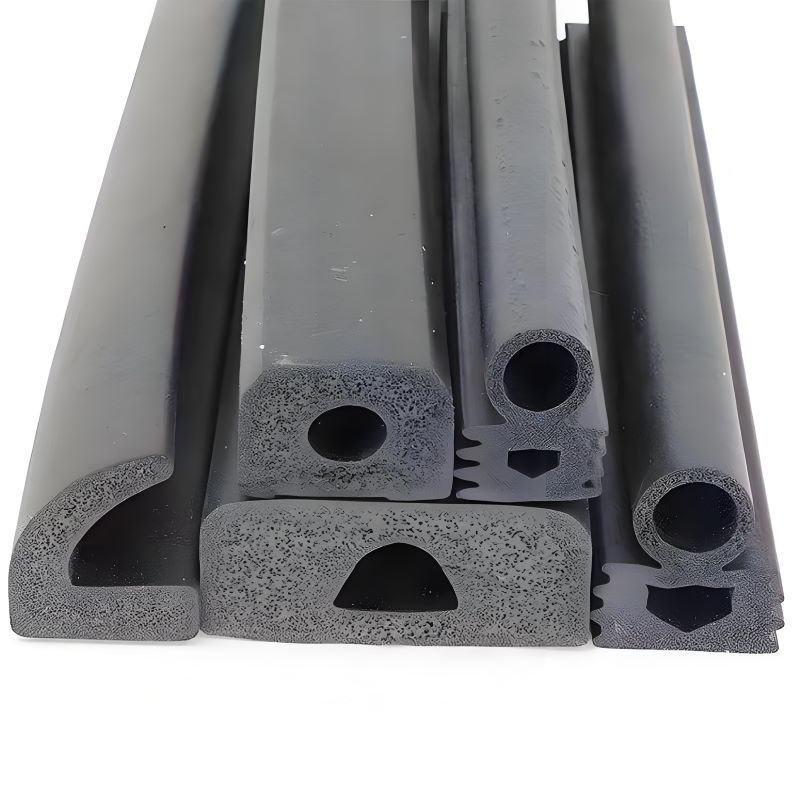
Multi-cavity hollow structure
Co-extruded soft/hard EPDM sections
Optional metal core reinforcement
Precision tolerances ±0.15 mm
Automotive Integration Requirements
Easy installation
No deformation during long-term compression
Stable fit during high-speed vibration
Consistent appearance standards
SW’s engineering team evaluated these requirements and proposed a complete EPDM sealing strip design and production plan.
5. Material Science Background: EPDM Formulation for Automotive Sealing
EPDM rubber’s performance strongly depends on its formulation. For BMW, SW developed a material recipe with optimized characteristics:
Polymer Base
High-ethylene-content EPDM for high strength
Diene component for increased crosslinking
Reinforcement Systems
Carbon black N550/N660 to improve weather resistance
Silane-treated fillers to enhance stability
Vulcanization Agents
Sulfur cure system for elasticity
Accelerators to control vulcanization speed
Additives
Anti-aging agents
Anti-ozone agents
Lubricant additives to improve extrusion stability
Color masterbatch (typically black for automotive profiles)
This formulation produced a high-performance EPDM sealing strip that complies with BMW’s internal technical standards.
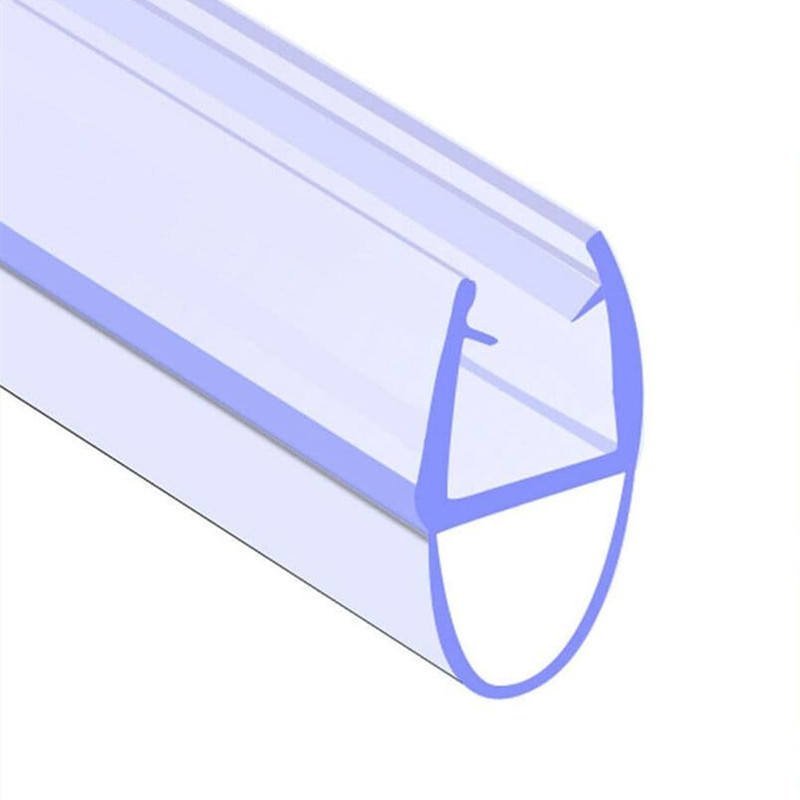
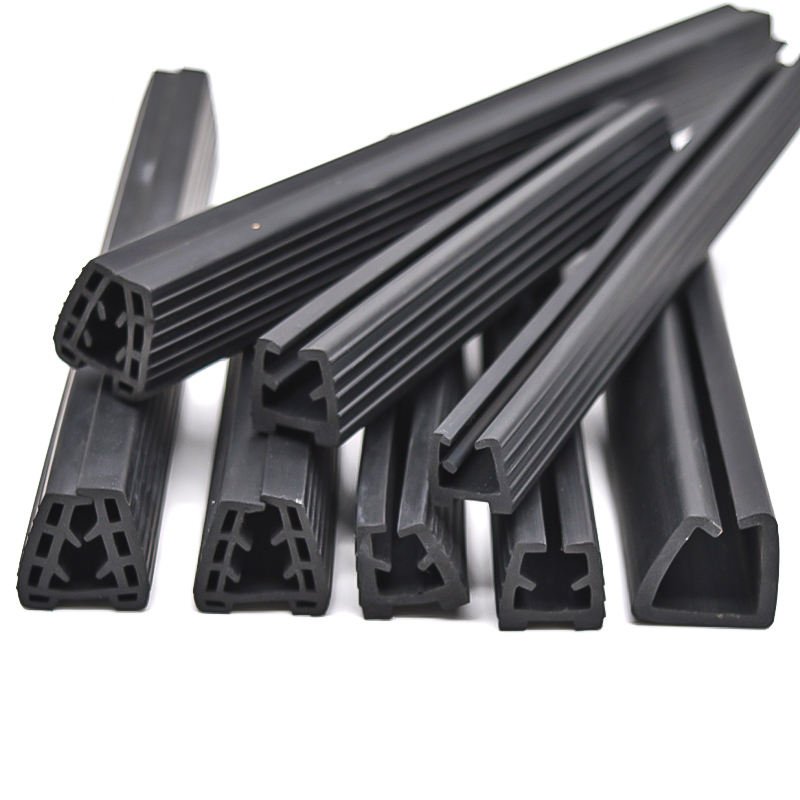
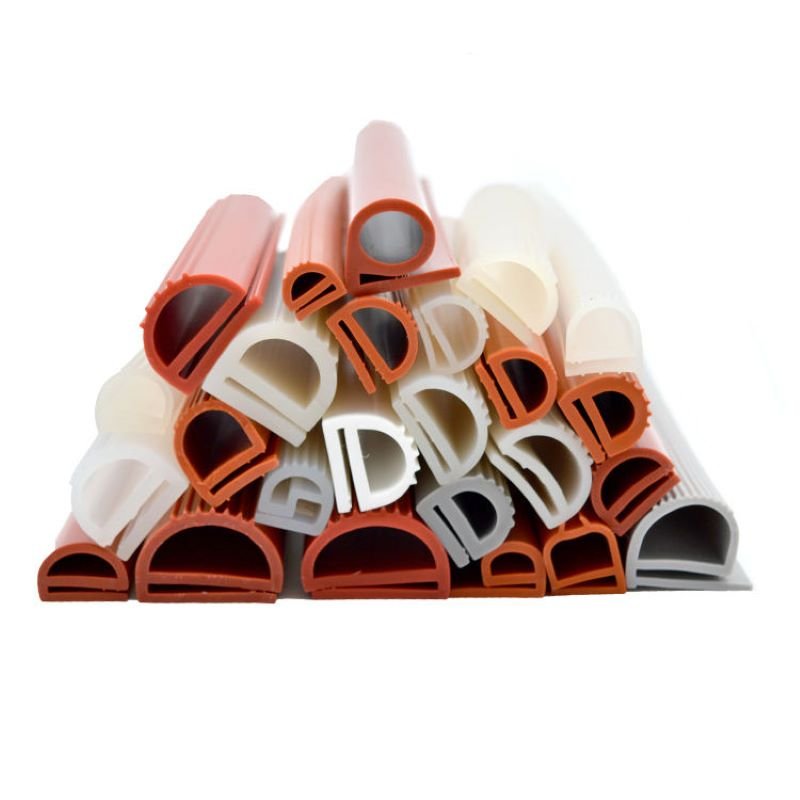
6. How SW Built the Custom EPDM Sealing Strip for BMW – Full Manufacturing Process
SW follows a strict automotive-grade extrusion process that ensures quality consistency. Below is the complete vertical workflow.
Step 1: Material Compounding
EPDM polymer mixed with carbon black and additives
Computer-controlled batch systems ensure consistency
Testing: Mooney viscosity, dispersion, specific gravity
Step 2: Pre-Forming and Feeding
Rubber compound cut into uniform strips
Loaded into the cold-feed extruder
Step 3: Extrusion Molding
Precision extruder with temperature-controlled zones
Calibrated die head designed by SW’s tooling engineers
Profile dimensions maintained within ±0.15 mm
Step 4: High-Temperature Vulcanization
Continuous hot-air or microwave vulcanization tunnels
Temperature 180°C–220°C
Ensures permanent elasticity and weather resistance
Step 5: Surface Treatment
Anti-friction coating application
Optional flocking for window channel sealing
Coloring or texturing if required
Step 6: Cooling and Shape Stabilization
Water cooling channels
Profile straightening and dimensional stabilization
Step 7: In-Line Quality Inspection
Dimensional measurement
Hardness and tensile sampling
Surface visual inspection
Adhesion testing for co-extruded parts
Step 8: Cutting and Packaging
Precision cutting to length (±2 mm tolerance)
Protective film and customized cartons
Palletized for international shipping
This complete system follows ISO/TS 16949 automotive standards.
7. Tooling Design for BMW’s EPDM Sealing Strip
The BMW project required complex tooling for:
Multi-chamber hollow structure
Reinforced metal core placement
Soft/hard EPDM co-extrusion
Anti-friction coating channels
SW developed a four-stage toolset including:
Pre-forming die
Extrusion die head
Calibration tooling
Surface coating system
Our internal mold workshop allowed rapid prototyping and improvements.
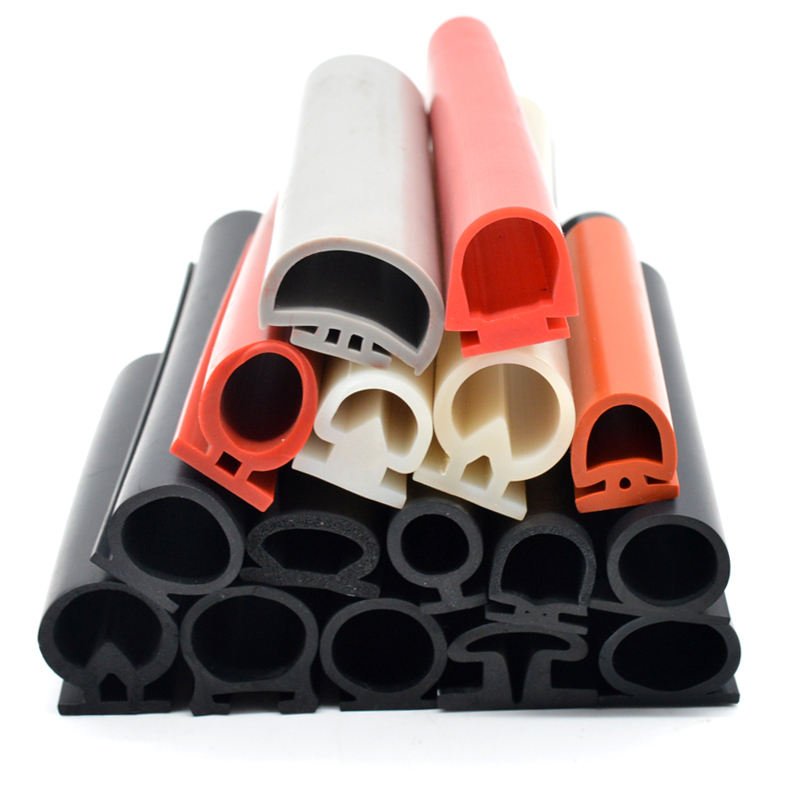
8. Performance Testing and Validation
BMW required rigorous qualification testing. SW completed:
Mechanical Tests
Hardness
Tensile strength
Elongation
Compression set
Densidad
Aging Tests
UV aging (≥1500h)
Thermal aging (≥168h at 120°C)
Ozone exposure
Environmental Tests
Cold resistance (–40°C)
Salt spray
Chemical fluid resistance
Application Tests
Door closing force
Noise reduction
Wind resistance at 140 km/h
Vibration durability testing
SW met or exceeded all automotive benchmarks.
9. Applications of the EPDM Sealing Strip in BMW Vehicles
The EPDM sealing strip we manufactured is used extensively in:
Door framework
Window channels
Trunk and tailgate interfaces
Sunroof perimeter
A-pillar and B-pillar transition zones
Engine compartment sealing
Interior NVH (Noise, Vibration, Harshness) cushioning
Each location demands specific hardness and softness characteristics. SW delivered multiple co-extruded EPDM sealing variants to meet the full system requirements.
10. Usage Precautions and Installation Guidelines
To ensure optimal performance, BMW’s assembly plants follow these guidelines:
Installation Tips
Avoid over-stretching the EPDM sealing strip
Keep surfaces clean during installation
Maintain proper alignment along the frame
Apply steady pressure to ensure full seating
Usage Precautions
Avoid sharp-edge contact during assembly
Store sealing strips away from petroleum-based solvents
Protect from long-term compression before installation
Keep profile temperature between 15–30°C before mounting
Maintenance Recommendations
Clean with mild soap
Avoid harsh chemicals
Inspect compression areas routinely
Proper handling extends service life significantly.
11. Common Failure Modes and Prevention
BMW identified several potential risks, all addressed by SW’s engineering:
1. Compression Set Failure
Caused by poor rubber formulation
SW uses optimized EPDM blends
2. Poor Adhesion in Co-Extruded Sections
Prevented with calibrated material bonding
3. Weathering Cracks
Avoided with premium anti-ozone agents
4. Deformation Under Vibration
Mitigated by adequate reinforcement
5. Noise Leakage
Controlled using multi-chamber profile design
SW’s EPDM sealing strips have near-zero defect rate in field performance.
12. Comparison: EPDM vs TPE vs PVC in Automotive Sealing
| Material | Ventajas | Limitations | Best Applications |
|---|---|---|---|
| EPDM sealing strip | Best weather resistance, elasticity, temperature resistance, long lifespan | Higher cost | Automotive doors, windows, trunks |
| TPE | Recyclable, cost-effective, lightweight | Weaker UV resistance | Interior seals, decorative sealing |
| CLORURO DE POLIVINILO | Low cost, high hardness | Poor low-temperature flexibility | Non-structural seals, trims |
EPDM remains the global automotive standard for exterior sealing.
13. Why BMW Selected SW for Their EPDM Sealing Strip Program
BMW chose SW because we provide:
1. 20+ Years of EPDM Extrusion Experience
Deep expertise in automotive sealing systems.
2. Advanced Extrusion and Vulcanization Lines
High precision, stable quality, large production capacity.
3. Full Mold Design & Engineering Support
Complex custom profiles handled in-house.
4. ISO/TS 16949 Automotive Quality Management
Guaranteed consistency and traceability.
5. High-Precision Tolerances
Perfect fit for automotive body structures.
6. Strong R&D and Testing Capabilities
Durability, aging resistance, environmental testing.
7. Flexible Customization
Multiple material hardness, colors, shapes, and coatings.
8. Strong Global Supply Capability
Fast delivery for Europe, USA, and Asia.
SW is recognized as a reliable EPDM sealing strip manufacturer for global automotive OEMs.
14. EPDM Sealing Strip Solutions Define Automotive Comfort and Durability
This BMW project proves that EPDM sealing strips are indispensable components in modern automotive engineering. Their performance affects:
Cabin comfort
Noise levels
Safety
Energy efficiency
Overall vehicle quality
SW is proud to be the EPDM sealing strip factory behind such high-level automotive sealing systems. With 20 years of extrusion expertise, advanced tooling ability, and strict quality control, we continue to support global OEMs with durable, high-performance sealing solutions.
If your company requires a custom EPDM sealing strip, SW can provide:
Engineering design
Material formulation
Mold development
Precision production
Full testing and validation
Contact SW today and get professional EPDM sealing solutions tailored to your automotive project.
Contamos con una fábrica de tuberías de PVC y un equipo de ingenieros altamente cualificados, listos para apoyarle en el desarrollo de su producto, desde el diseño inicial hasta la producción. Si tiene alguna idea sobre su producto, no dude en contactarnos; nuestros ingenieros le enviarán un presupuesto lo antes posible. WhatsApp +86 188 2072 7151
¿Quién es Shuowei?
Desde 2006, Shuowei es una fábrica profesional de perfiles extruidos ubicada en Guangdong, China. Contamos con una plantilla de entre 51 y 100 personas. La fábrica de extrusión de PVC Shuowei se dedica al diseño y la producción de perfiles extruidos, como tuberías de PVC, canaletas de PE y zócalos de PVC. Desde sus inicios, nos hemos ganado el reconocimiento del mercado y la plena confianza de nuestros clientes gracias a nuestro ingenioso diseño, tecnología de vanguardia y la búsqueda constante de la calidad.
¿Es usted fabricante o comerciante?
Somos una empresa china de primera categoría. Perfiles de extrusión de PVC Somos fabricantes y nuestra fábrica está ubicada en Huizhou. Contamos con una planta de producción de 16 000 m², más de 5 líneas de producción automatizadas para perfiles de extrusión, una capacidad de producción anual de 30 000 toneladas y atendemos a más de 500 clientes en todo el mundo. ¡Le invitamos a visitar nuestra fábrica!
¿Cuál es su gama de productos?
Nos especializamos en el diseño y producción de alta calidad. perfiles de extrusión,tales como tuberías de PVC, extrusión de ABS, pantallas de lámparas de PC, zócalos de PVC, canaletas de PP, perfiles de PE…
¿Cuánto tiempo dura el proceso de desarrollo a medida?
Ofrecemos soporte para productos de extrusión personalizados. El proceso habitual consta de 4 pasos: confirmación de la demanda → diseño/prototipado 3D → certificación de pruebas → producción en masa (ciclo de 3 a 8 semanas).
¿Tienes alguna certificación internacional?
Hemos obtenido las certificaciones ISO 9001, CE, RoHS, SGS y otras, y cumplimos con los estándares principales de Europa, América, Oriente Medio y Asia.