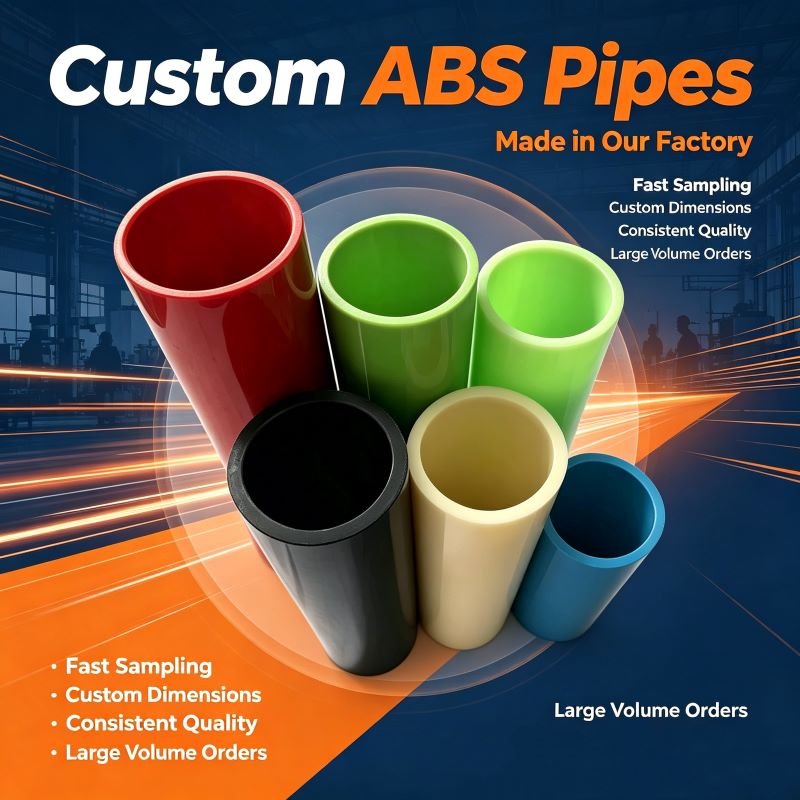




In the world of custom engineering, “non-standard” is a term that often strikes fear into the hearts of procurement managers. It usually signals two things: a massive invoice for tooling and a project timeline that just extended by a month. If you are looking to source plastic pipes with unique dimensions—perhaps a specific wall thickness for a high-pressure industrial application or a non-standard diameter for a proprietary filtration system—you’ve likely encountered the “4-week lead time” wall.
At SW, we’ve spent over 20 años in the trenches of the plastic extrusion industry. From our 6,000-square-meter plastic pipes factory, we have seen thousands of custom projects. We’ve watched clients struggle with the high plastic pipes price associated with new moulds, and we’ve helped them navigate the complexities of non-standard profiles.
This guide is designed to pull back the curtain on the extrusion die process. We will explain why these costs and delays exist and, more importantly, provide you with the expert strategies to bypass them. As a veteran fabricante de tuberías de PVC and custom extruder, our goal is to help you get your project moving faster and cheaper without sacrificing a single millimeter of precision.
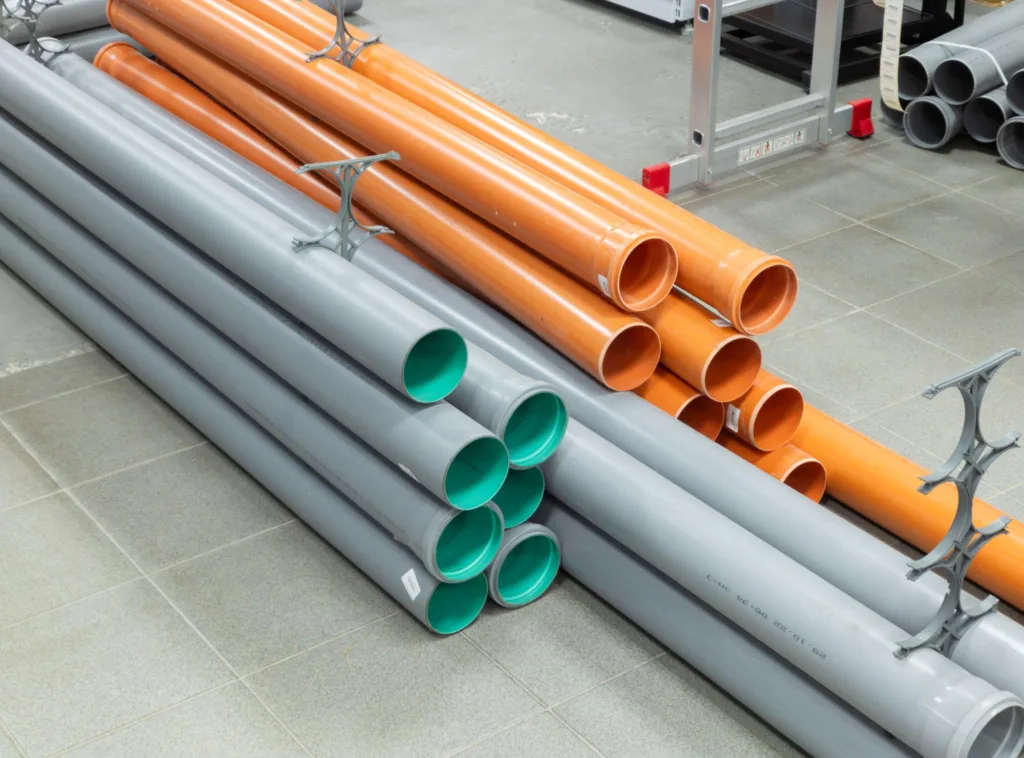
1. Understanding the "Mould Trap": Why Custom Plastic Pipes Cost So Much Upfront
To avoid high costs, you must first understand what you are paying for. In the extrusion of plastic pipes, the “mould” (more accurately called the “die set”) is not a single piece of metal. It is a highly engineered system designed to manage molten polymer under immense pressure.
The Components of a Custom Pipe Tooling Set:
The Die Head: This shapes the molten plastic into a hollow tube.
The Mandrel: The internal “pin” that creates the inside diameter ($ID$) of the plastic pipes.
The Sizing Sleeve (Calibration Sleeve): This is the most expensive part. It uses vacuum pressure to pull the hot plastic against a cooled surface to lock in the outside diameter ($OD$).
Cooling Spacers: Specifically machined rings to support the pipe as it enters the water tanks.
When you ask a plastic pipes manufacturer for a non-standard dimension, they can’t just “adjust” a standard tool. They often have to machine an entirely new set from high-grade, hardened tool steel (like 3Cr13 or 4Cr13 stainless steel) to prevent corrosion from the hydrochloric acid gas released during PVC extrusion. This process is labor-intensive and requires high-precision CNC machining, which is why the initial plastic pipes price for a custom project seems so high.
2. The Anatomy of a 4-Week Delay: Why it Takes So Long
Why can’t a fábrica de tuberías de plástico finish a mould in three days? The timeline is generally dictated by physics and metallurgy:
Week 1: Engineering & Design: Our engineers must calculate the “drawdown” ratio. Plastic shrinks as it cools. If you want a 110mm pipe, the die might actually be 115mm.
Week 2: Rough Machining & Heat Treatment: The steel is cut and then heat-treated to reach the necessary hardness. If this step is rushed, the die will warp under the heat of the extrusion process.
Week 3: Fine Machining & Wire Cutting: High-precision EDM (Electrical Discharge Machining) is used to create the perfect circular profile.
Week 4: Polishing & Trial Run: The internal surfaces must be polished to a mirror finish to ensure the plastic pipes have a smooth bore. Then, we run a “trial” on the production line. If the dimensions are off by $0.1\text{mm}$, the tool goes back for adjustment.
This is the standard industry bottleneck. However, as an experienced plastic pipes manufacturer, we have developed “shortcuts” that maintain quality while slashing these timelines.
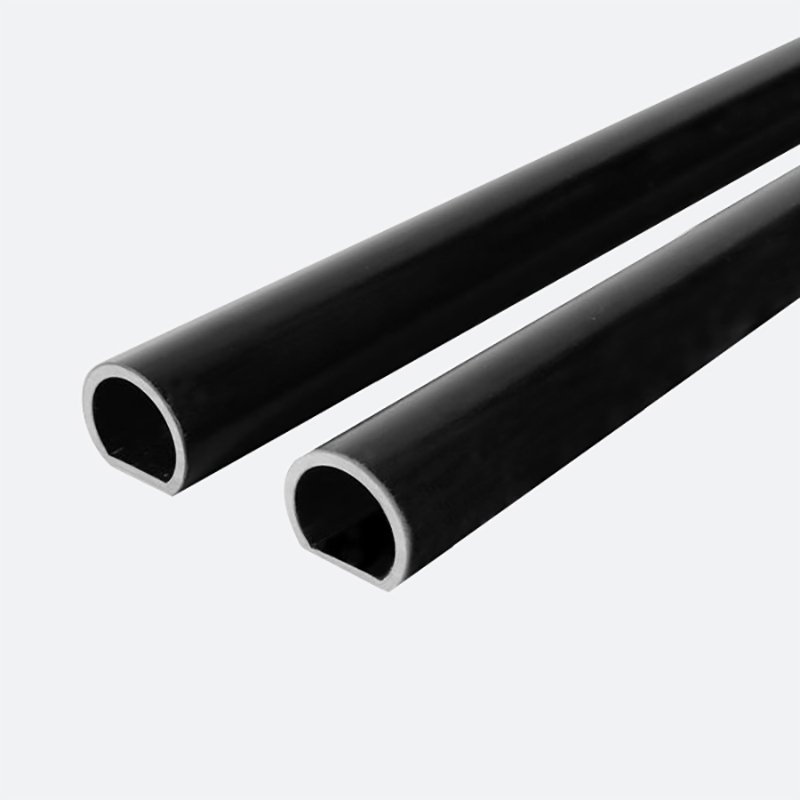
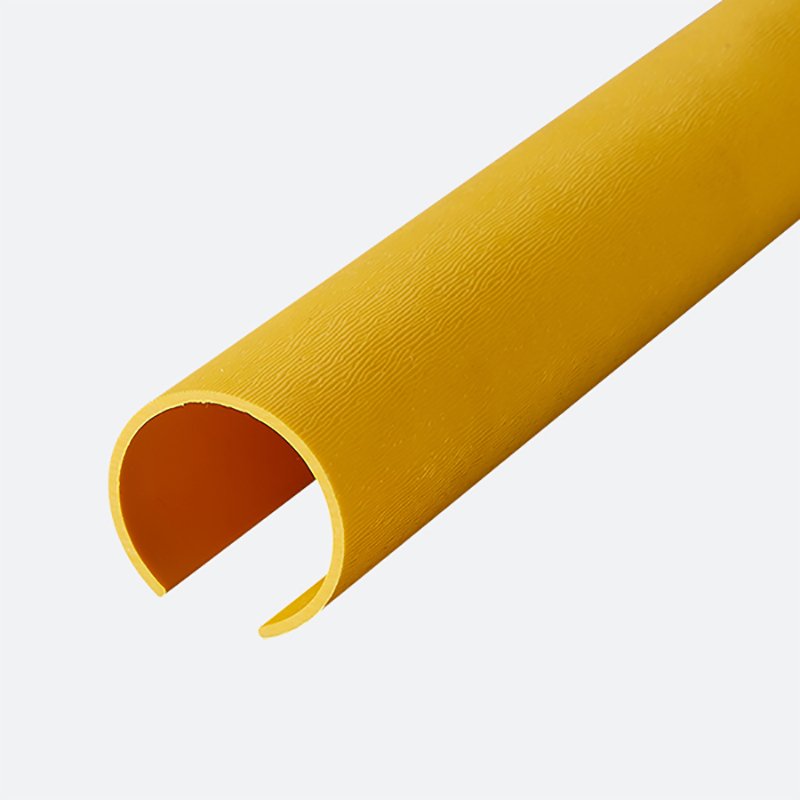
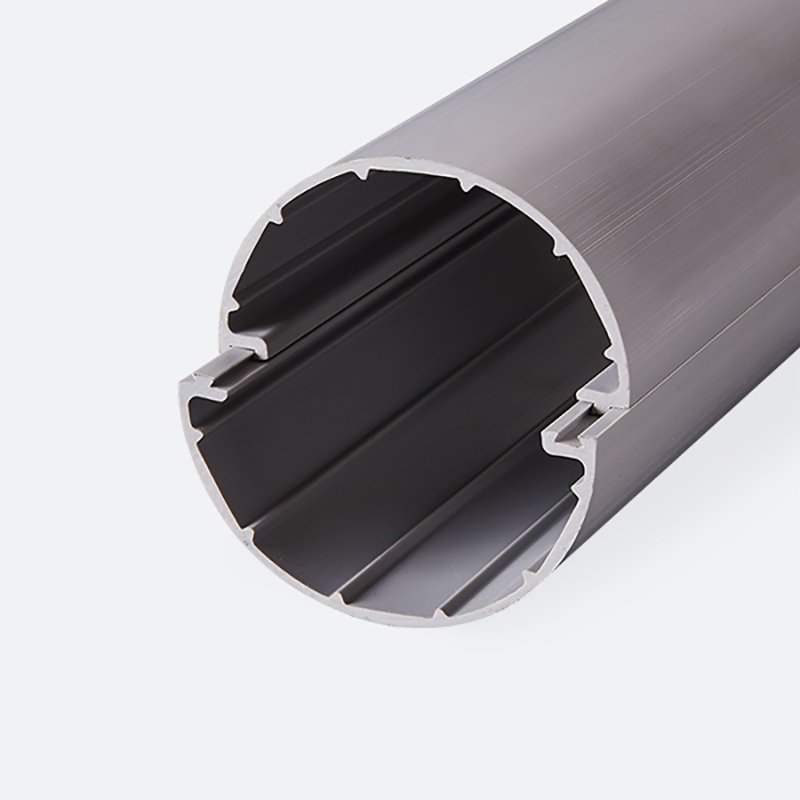
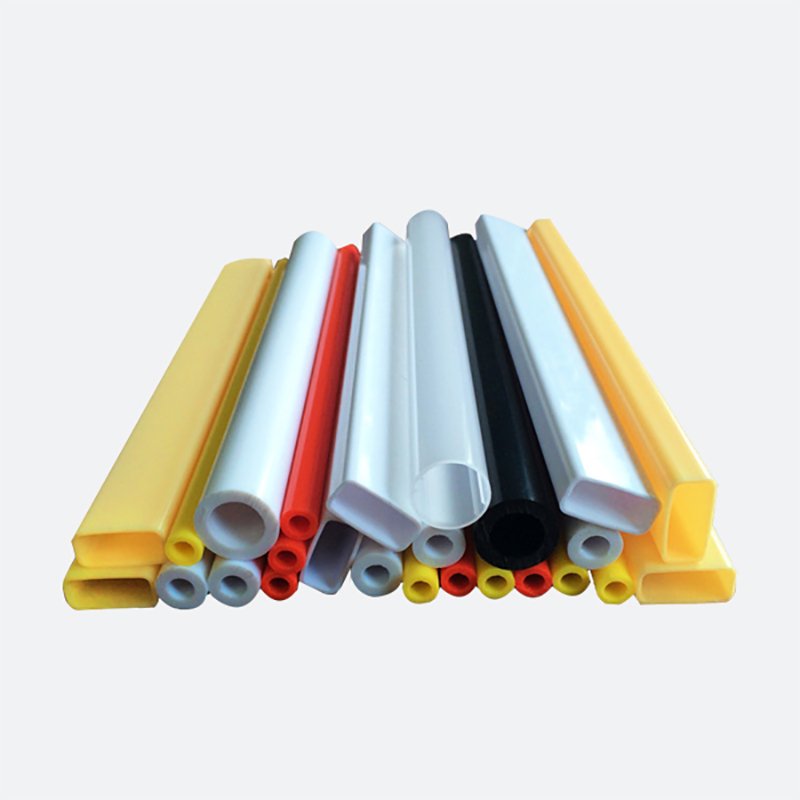
3. Strategy #1: The "Modular Tooling" Approach
The most effective way to avoid high mould costs is to not build a “whole” mould. At SW, we utilize a modular die system in our fábrica de tuberías de plástico.
Instead of machining a complete die head, we often use a standard “Die Body” and only machine a custom Die Plate y Mandrel Tip.
The Benefit: You only pay for 30% of the steel and 40% of the machining time.
The Result: Your tooling cost drops by half, and the lead time can often be reduced from 4 weeks to 10-14 days.
When talking to a fabricante de tuberías de PVC, always ask: “Do you have a modular die base that can accommodate custom inserts for my specific OD/ID?”
4. Strategy #2: Dimension Optimization (The SDR Hack)
Many procurement managers think they need a custom $OD$ (Outside Diameter), when what they actually need is a custom $ID$ (Inside Diameter) or a specific pressure rating.
In the world of plastic pipes, we use the Standard Dimension Ratio (SDR) to define the relationship between the wall thickness and the diameter:
Where:
$D_n$ is the nominal outside diameter.
$s_n$ is the nominal wall thickness.
The Expert Advice: Most plastic pipes manufacturers have sizing sleeves for standard $OD$s (e.g., 20, 25, 32, 40, 50, 63, 75, 90, 110mm). If you can adapt your design to use a standard $OD$ sizing sleeve, we can simply adjust the extrusion speed and the internal mandrel to give you a custom wall thickness ($s_n$).
By using a standard $OD$ tool and only customizing the “internal” flow, you can often eliminate the mould cost entirely. This is the fastest way to get custom plastic pipes without the 4-week wait.
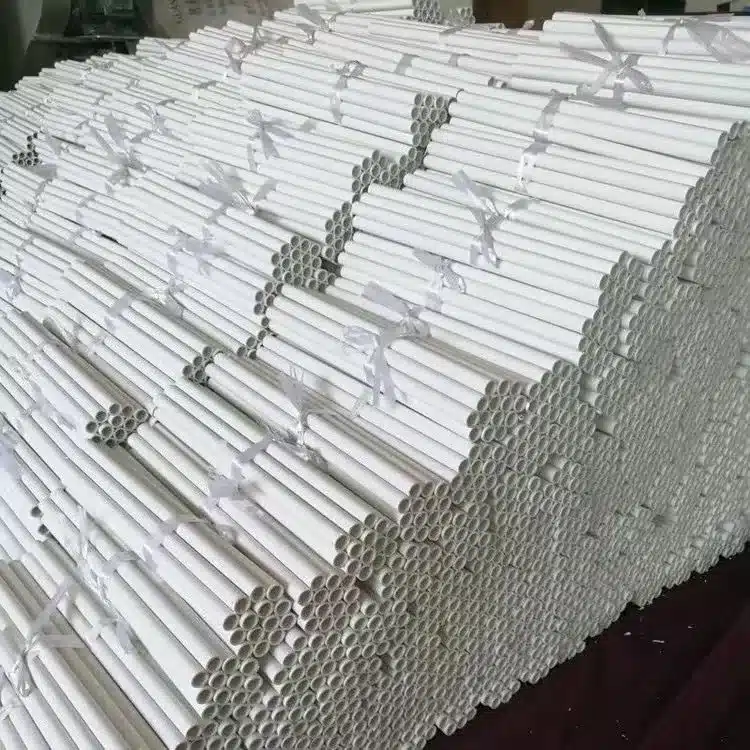
5. Strategy #3: Leveraging the "Mould Library"
Experience matters. After 20 años as a plastic pipes manufacturer, SW has an inventory of over 1,500 existing mould sets in our 6,000sqm facility.
When a client comes to us with a “non-standard” dimension, the first thing we do is check our library. Frequently, we find that a tool we built for a mining project in Australia in 2018 or a chemical plant in Germany in 2021 is a $99\%$ match for the new request.
How to use this: When you send an inquiry to a fábrica de tuberías de plástico, don’t just say “I need this size.” Say: “These are my target dimensions. Do you have any existing tooling that is within $\pm 0.5\text{mm}$ of this?” Often, a slight adjustment to your design to match an existing tool can save you thousands in the total plastic pipes price.
6. Strategy #4: Material Selection and Shrinkage Rates
The choice of material (PVC vs. HDPE vs. ABS) directly impacts mould design. Each material has a different shrinkage rate ($\alpha$).
PVC: Low shrinkage, easier to calibrate.
PE (Polyethylene): High shrinkage ($1.5\% – 3\%$), requires very specific sizing sleeves.
ABS: Moderate shrinkage, requires excellent thermal control.
If you are flexible on the material, an experienced fabricante de tuberías de PVC might suggest a material that works with their existing “sizing sleeves” for other polymers. For example, if we have an HDPE sizing sleeve, we might be able to run a specialized PP blend through it with minor adjustments, saving you a new mould for a one-off project.
7. The Mathematical Reality: Amortizing the Plastic Pipes Price
If a new mould is absolutely unavoidable, the best way to “avoid” the cost is through Amortization.
Most professional plastic pipes factories will offer a “Mould Fee Refund” policy. For example: “The mould cost is $\$3,000$, but if your total order exceeds 10,000 meters, we will credit the $\$3,000$ back to your final invoice.”
When calculating your total plastic pipes price, look at the long-term volume. If you are ordering 50,000 meters, the mould cost becomes a negligible “rounding error” in the per-meter price. However, if you only need 500 meters, you must use Strategy #1 or #2 mentioned above.
8. Avoiding the "Trial and Error" Delay: The Role of Engineering
The biggest cause of the 4-week delay isn’t the machining—it’s the failed trial.
If an inexperienced fábrica de tuberías de plástico builds a mould and the pipe comes out oval or with uneven walls, they have to re-machine the tool. This adds another week.
At SW, our engineers use Flow Simulation Software. Before we cut a single piece of steel, we simulate the flow of the PVC or PE through the die. We calculate the head pressure ($P$) required:
By simulating the stress ($\sigma$) and flow behavior, we ensure that the mould works the first time. This is how we consistently beat the 4-week industry average lead time.
9. Visualizing the Savings: A Comparison Table
| Strategy | Estimated Cost Saving | Estimated Time Saving | Best For |
| New Custom Mould | 0% (Full Price) | 0% (4-6 Weeks) | High-volume, high-precision unique profiles. |
| Modular Tooling | 40% – 60% | 50% (2 Weeks) | Medium-volume custom sizes. |
| SDR Adjustment | 90% – 100% | 100% (Immediate) | Projects where only wall thickness is custom. |
| Library Sourcing | 100% | 100$ (Immediate) | Flexible designs that can match existing tools. |

10. Logistics: Managing the Wait Time
If you must wait 4 weeks for a new tool, don’t let that time go to waste. A smart plastic pipes manufacturer will help you manage the supply chain simultaneously:
Raw Material Pre-order: We order the custom resin or color masterbatch while the mould is being cut.
Nesting Plan: We design the container loading plan (nesting smaller pipes inside larger ones) to reduce your shipping cost.
Certification Prep: We prepare the ISO or ASTM compliance documentation so that once the first pipe rolls off the line, it is ready for immediate export.
By overlapping these tasks, the 4-week “mould delay” doesn’t actually delay the “shipping date” as much as you might think.
Partnering with a Veteran Plastic Pipes Factory
Avoiding high mould costs and long delays isn’t about cutting corners; it’s about Engineering Intelligence. After 20 years, SW has learned that the best way to serve our clients is to provide them with the technical data they need to make smart design choices.
Whether it’s through modular tooling, leveraging our massive mould library, or optimizing your SDR to fit standard sizing sleeves, there is almost always a way to reduce the plastic pipes price and the lead time.
Are you stuck with a quote for an expensive mould and a 4-week wait? Contact the engineering team at SW today. Send us your technical drawings, and let us show you how we can use our 20 years of experience to find a faster, more cost-effective solution for your plastic pipes project.
Contamos con una fábrica de tuberías de PVC y un equipo de ingenieros altamente cualificados, listos para apoyarle en el desarrollo de su producto, desde el diseño inicial hasta la producción. Si tiene alguna idea sobre su producto, no dude en contactarnos; nuestros ingenieros le enviarán un presupuesto lo antes posible. WhatsApp +86 188 2072 7151
¿Quién es Shuowei?
Desde 2006, Shuowei es una fábrica profesional de perfiles extruidos ubicada en Guangdong, China. Contamos con una plantilla de entre 51 y 100 personas. La fábrica de extrusión de PVC Shuowei se dedica al diseño y la producción de perfiles extruidos, como tuberías de PVC, canaletas de PE y zócalos de PVC. Desde sus inicios, nos hemos ganado el reconocimiento del mercado y la plena confianza de nuestros clientes gracias a nuestro ingenioso diseño, tecnología de vanguardia y la búsqueda constante de la calidad.
¿Es usted fabricante o comerciante?
Somos una empresa china de primera categoría. Perfiles de extrusión de PVC Somos fabricantes y nuestra fábrica está ubicada en Huizhou. Contamos con una planta de producción de 16 000 m², más de 5 líneas de producción automatizadas para perfiles de extrusión, una capacidad de producción anual de 30 000 toneladas y atendemos a más de 500 clientes en todo el mundo. ¡Le invitamos a visitar nuestra fábrica!
¿Cuál es su gama de productos?
Nos especializamos en el diseño y producción de alta calidad. perfiles de extrusión,tales como tuberías de PVC, extrusión de ABS, pantallas de lámparas de PC, zócalos de PVC, canaletas de PP, perfiles de PE…
¿Cuánto tiempo dura el proceso de desarrollo a medida?
Ofrecemos soporte para productos de extrusión personalizados. El proceso habitual consta de 4 pasos: confirmación de la demanda → diseño/prototipado 3D → certificación de pruebas → producción en masa (ciclo de 3 a 8 semanas).
¿Tienes alguna certificación internacional?
Hemos obtenido las certificaciones ISO 9001, CE, RoHS, SGS y otras, y cumplimos con los estándares principales de Europa, América, Oriente Medio y Asia.