



When it comes to flooring safety, Tira antideslizante de PVC plays an essential role in reducing the risk of accidents in residential, commercial, and industrial environments. These strips are designed to provide additional grip on stairs, ramps, walkways, and other potentially hazardous surfaces. Whether you are a homeowner aiming to make your staircase safer, or a facility manager implementing occupational safety standards, knowing how to install and maintain PVC anti-slip strips is crucial.
En SUDOESTE, with over 20 years of expertise in manufacturing Tiras antideslizantes de PVC, we provide not only high-quality products but also technical guidance to ensure customers can use them correctly and effectively. This blog explores installation techniques, usage precautions, and best practices for maintaining PVC anti-slip strips.
Why Choose PVC Anti-Slip Strip?
Before diving into installation, it is important to understand why PVC is one of the most popular materials for anti-slip applications:
Durabilidad: PVC anti-slip strips are resistant to moisture, corrosion, and chemical exposure.
Flexibilidad: Unlike metal strips, PVC anti-slip strips are easy to cut and fit into customized spaces.
Cost-Effectiveness: They are more affordable compared to aluminum or stainless steel strips.
Comfort: PVC strips provide softer contact underfoot, making them ideal for homes and workplaces.
Aesthetic Options: Available in a variety of colors and finishes, PVC anti-slip strips can blend with different flooring styles.
Tools and Materials Needed
Before you start installation, prepare the following tools and materials:
PVC anti-slip strips (cut to required length)
Measuring tape and marker
Utility knife or PVC cutter
Adhesive (PVC-compatible glue or double-sided industrial tape)
Screws and drill (if mechanical fastening is needed)
Cleaning supplies (mild detergent, cloth, and brush)
Personal protective equipment (gloves, goggles, mask)

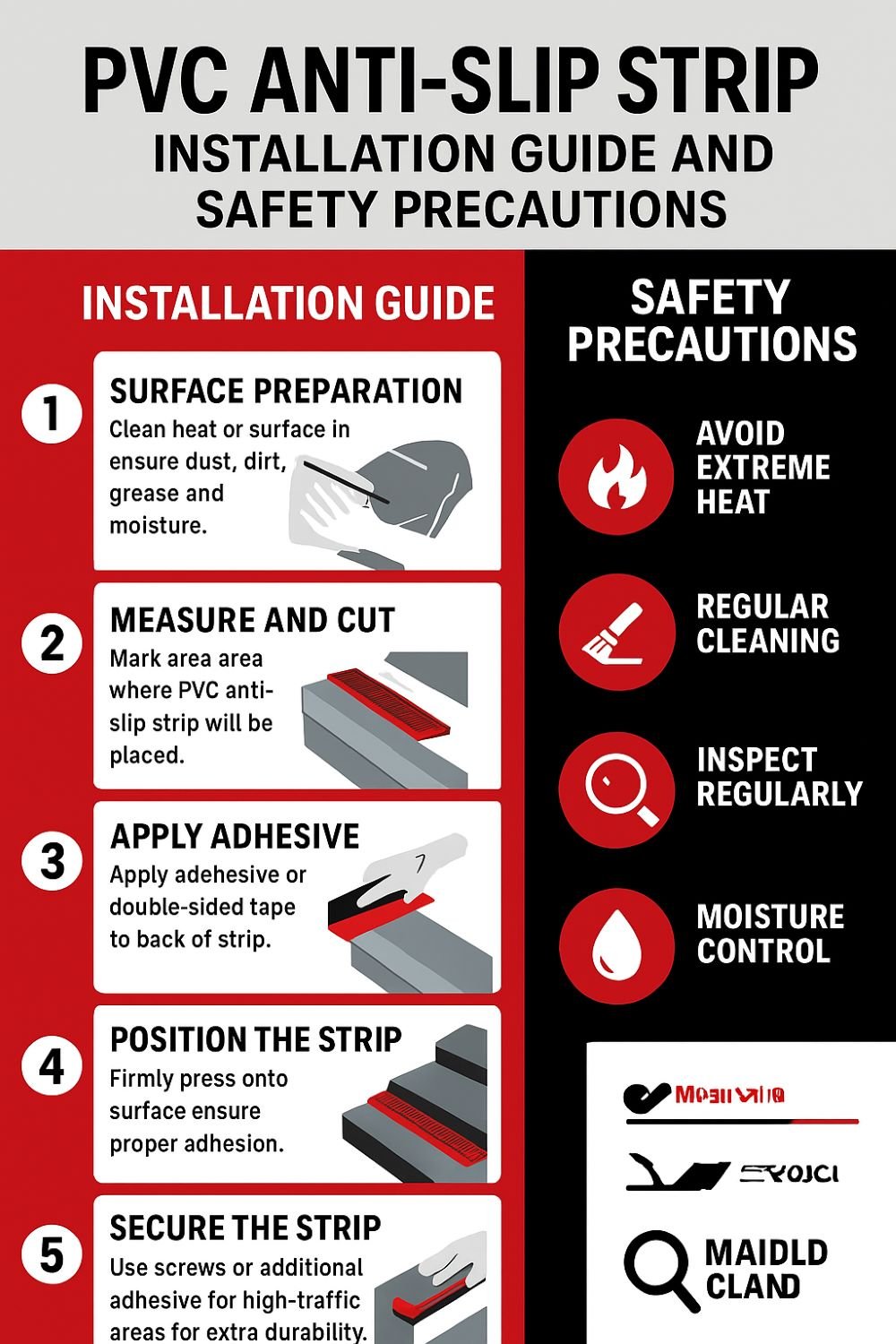
Step-by-Step PVC anti-slip strip Installation Process
Step 1: Surface Preparation
Ensure the installation surface is clean, dry, and free of dust, grease, or oil.
Uneven flooring should be leveled before applying the Tira antideslizante de PVC.
Use a mild detergent and let the surface dry completely.
Step 2: Measurement and Cutting
Measure the area where the PVC anti-slip strip will be installed.
Mark the measurements on the strip using a marker.
Use a PVC cutter or a sharp utility knife to cut the strip to size.
For corners or angled staircases, cut at a 45° angle for a neat finish.
Step 3: Adhesive Application
Aplicar PVC-compatible adhesive evenly on the back of the strip.
Alternatively, use industrial-grade double-sided tape for lighter applications.
For high-traffic areas, mechanical fastening with screws is recommended.
Step 4: Fixing the Strip
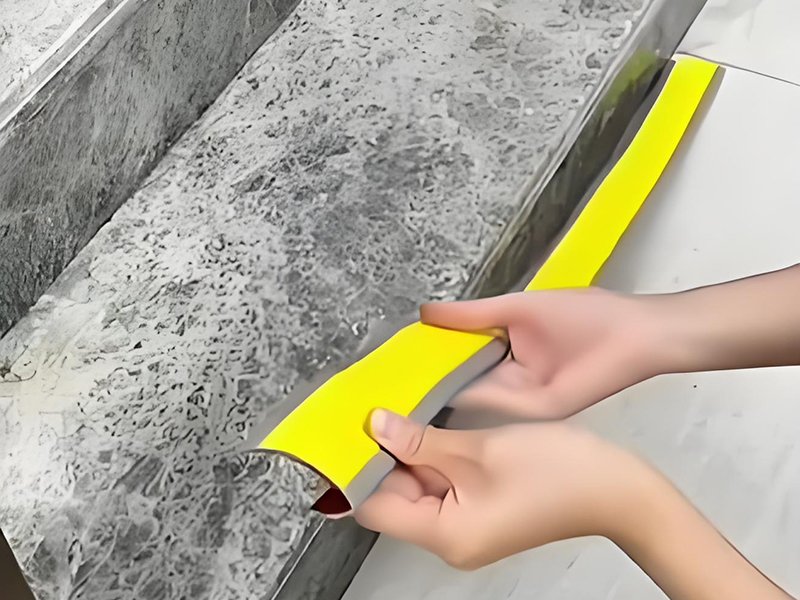
Carefully align the PVC anti-slip strip with the marked position.
Press firmly along the entire length to ensure proper adhesion.
If using screws, drill pilot holes and secure the strip at regular intervals.
Step 5: Final Inspection
Check for air bubbles or loose edges.
Press down again on weak spots to ensure strong adhesion.
Clean any adhesive residue with a damp cloth.
Usage Precautions
To maximize the safety and durability of your Tira antideslizante de PVC, keep these considerations in mind:
Avoid Extreme Heat Exposure
PVC can warp or lose adhesion when exposed to direct heat sources. Do not install strips near open flames, heaters, or hot machinery.
Regular Cleaning
Clean with mild soap and water.
Avoid abrasive cleaners, harsh chemicals, or steel brushes which may damage the surface.
Periodic Inspection
Check strips regularly for signs of loosening, wear, or damage.
Replace damaged strips promptly to maintain safety.
Moisture Control
While PVC is resistant to water, ensure proper drainage in wet areas to prevent mold and mildew around the edges.
Proper Adhesive Selection
Always use adhesives specifically designed for PVC. Incompatible adhesives can cause strip peeling.
Application Areas of PVC Anti-Slip Strip
Residential:
Staircases, bathroom floors, kitchens, and balconies.
Commercial:
Office buildings, shopping malls, schools, and hospitals.
Industrial:
Factories, warehouses, ramps, and loading areas.
Public Spaces:
Train stations, bus terminals, gyms, and swimming pools.


Common Mistakes to Avoid
Incorrect Surface Preparation: Installing PVC anti-slip strips on dirty or oily surfaces reduces adhesion.
Skipping Edge Sealing: Exposed edges can lift over time; sealing with adhesive prevents this.
Using the Wrong Tools: Poorly cut strips may result in uneven surfaces and safety hazards.
Ignoring Load Requirements: For heavy-duty applications, always reinforce strips with screws.
Maintenance Best Practices
Weekly Cleaning: Mop or wipe the strips to remove dust and debris.
Monthly Inspection: Check adhesion and surface texture for signs of wear.
Annual Replacement: In high-traffic areas, consider replacing strips annually for maximum effectiveness.
Why Partner with SW for PVC Anti-Slip Strip?
Como profesional Fabricante de tiras antideslizantes de PVC with 20 years of industry experience, SUDOESTE ensures:
High-quality, durable products.
Custom extrusion solutions for different applications.
OEM & ODM services tailored to client requirements.
Strict quality control and international standards compliance.
Our expertise not only lies in manufacturing but also in helping clients choose, install, and maintain their anti-slip safety solutions.
Installing and maintaining PVC anti-slip strip
Installing and maintaining Tira antideslizante de PVC is an effective way to enhance safety and reduce accidents in both residential and commercial environments. By following proper installation techniques and usage precautions, you can extend the lifespan of your strips and ensure maximum protection.
For businesses and homeowners alike, partnering with an experienced Fábrica de tiras antideslizantes de PVC like SW guarantees long-term value, safety, and professional support.
Contamos con una fábrica de tuberías de PVC y un equipo de ingenieros altamente cualificados, listos para apoyarle en el desarrollo de su producto, desde el diseño inicial hasta la producción. Si tiene alguna idea sobre su producto, no dude en contactarnos; nuestros ingenieros le enviarán un presupuesto lo antes posible. WhatsApp +86 188 2072 7151
¿Quién es Shuowei?
Desde 2006, Shuowei es una fábrica profesional de perfiles extruidos ubicada en Guangdong, China. Contamos con una plantilla de entre 51 y 100 personas. La fábrica de extrusión de PVC Shuowei se dedica al diseño y la producción de perfiles extruidos, como tuberías de PVC, canaletas de PE y zócalos de PVC. Desde sus inicios, nos hemos ganado el reconocimiento del mercado y la plena confianza de nuestros clientes gracias a nuestro ingenioso diseño, tecnología de vanguardia y la búsqueda constante de la calidad.
¿Es usted fabricante o comerciante?
Somos una empresa china de primera categoría. Perfiles de extrusión de PVC Somos fabricantes y nuestra fábrica está ubicada en Huizhou. Contamos con una planta de producción de 16 000 m², más de 5 líneas de producción automatizadas para perfiles de extrusión, una capacidad de producción anual de 30 000 toneladas y atendemos a más de 500 clientes en todo el mundo. ¡Le invitamos a visitar nuestra fábrica!
¿Cuál es su gama de productos?
Nos especializamos en el diseño y producción de alta calidad. perfiles de extrusión,tales como tuberías de PVC, extrusión de ABS, pantallas de lámparas de PC, zócalos de PVC, canaletas de PP, perfiles de PE…
¿Cuánto tiempo dura el proceso de desarrollo a medida?
Ofrecemos soporte para productos de extrusión personalizados. El proceso habitual consta de 4 pasos: confirmación de la demanda → diseño/prototipado 3D → certificación de pruebas → producción en masa (ciclo de 3 a 8 semanas).
¿Tienes alguna certificación internacional?
Hemos obtenido las certificaciones ISO 9001, CE, RoHS, SGS y otras, y cumplimos con los estándares principales de Europa, América, Oriente Medio y Asia.