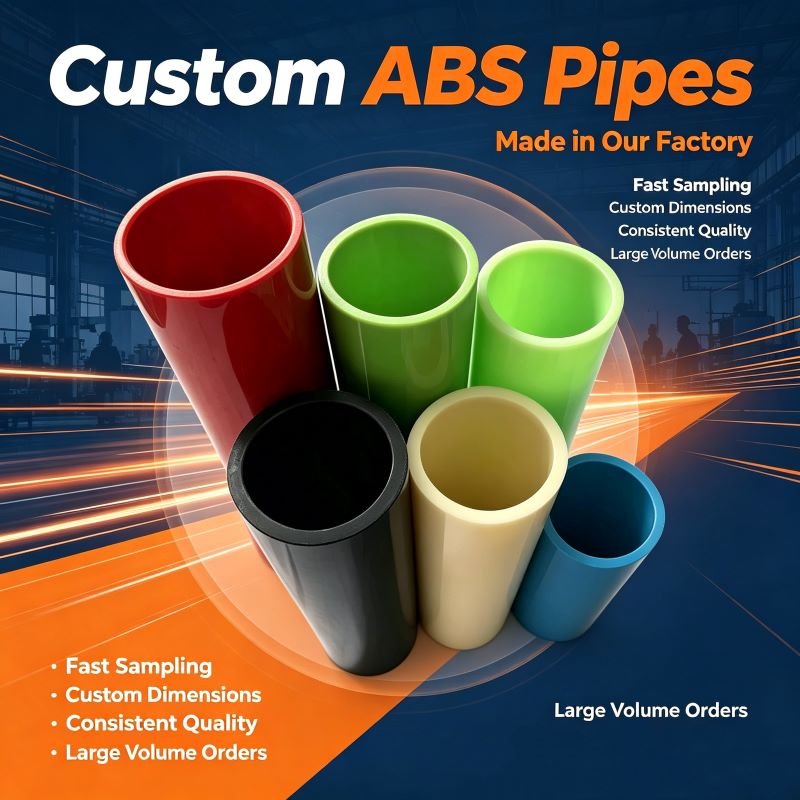




1.Why PPO Pipe Matters in Modern Engineering
In today’s industrial world, the demand for high-performance thermoplastic piping materials continues to rise — especially for systems that require excellent mechanical stability, high heat resistance, and superior dimensional precision. Among the range of engineering-grade polymers used in advanced piping, PPO pipe (Polyphenylene Oxide pipe) stands out for its combination of rigidity, heat tolerance, and electrical insulation.
En SUDOESTE, a professional PPO pipe factory with 20 years of extrusion experience, we have been perfecting the art of manufacturing precision-engineered PPO pipes for a wide range of industries — from electronics and chemical processing to automotive cooling and HVAC systems. This blog provides a complete technical overview of PPO pipe — its composition, properties, applications, production, and best practices for installation and maintenance.
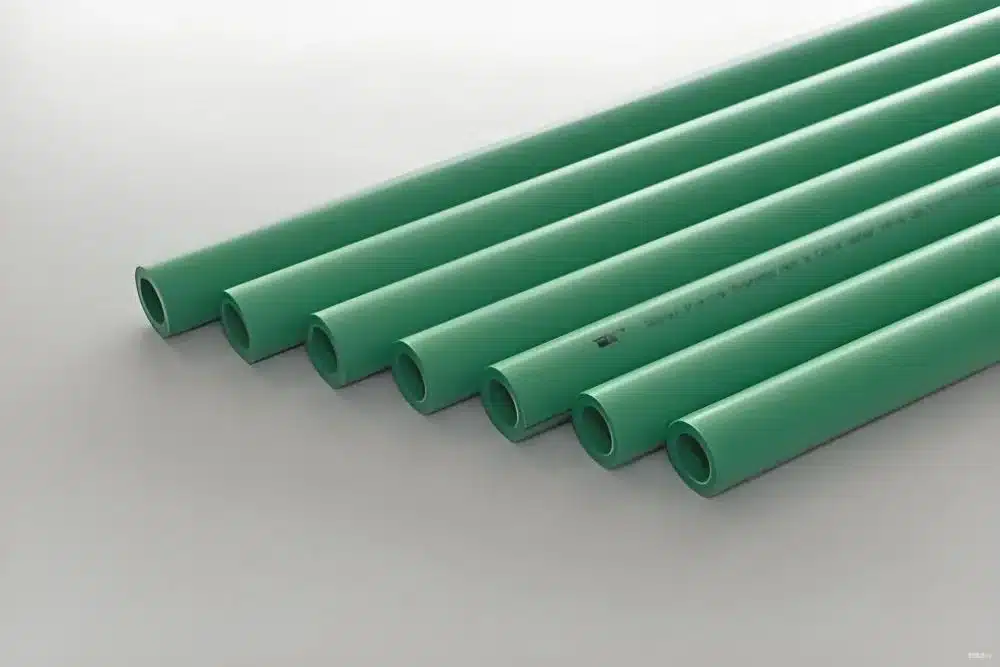
2. What Is PPO Pipe? Composition and Material Structure
PPO (Polyphenylene Oxide) is a high-performance engineering thermoplastic derived from the oxidative polymerization of phenylene oxide monomers. In most applications, PPO is blended with polystyrene (PS) to form modified PPO, which combines the base resin’s thermal and mechanical strengths with improved processability.
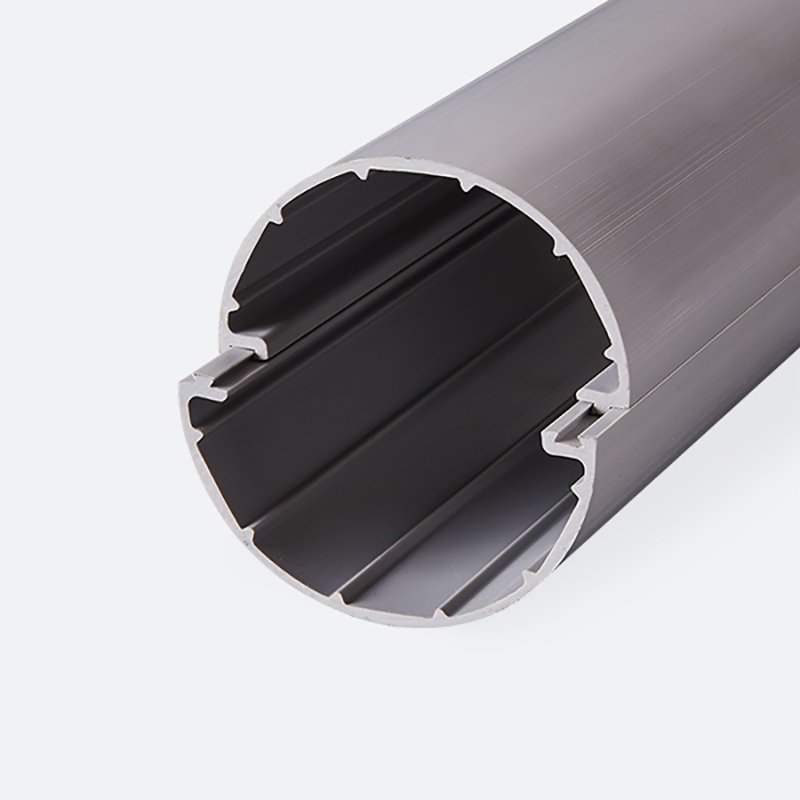
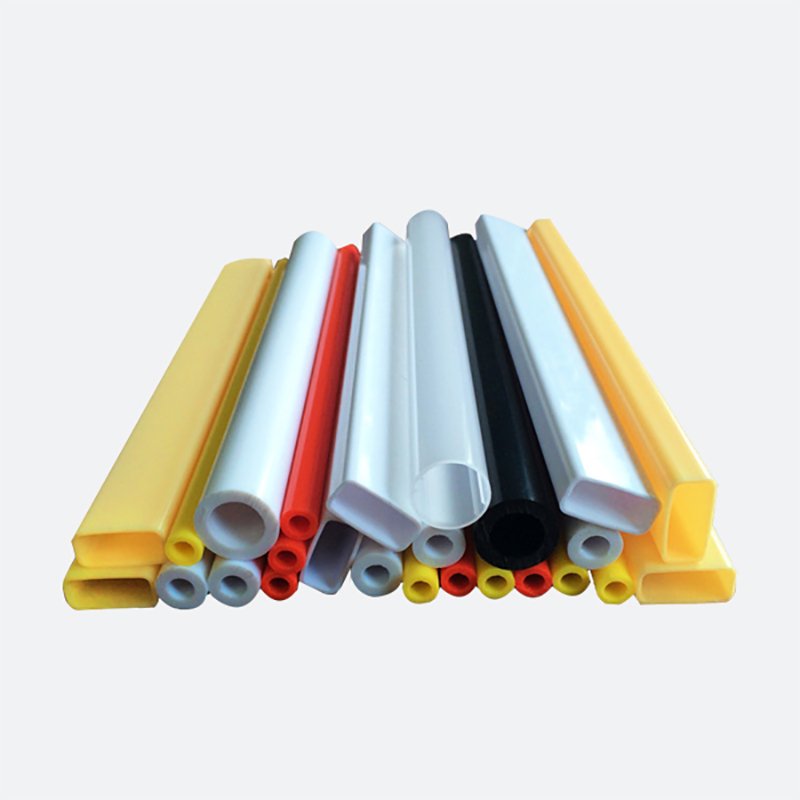
A PPO pipe is produced through precision extrusion, where PPO resin pellets are melted and shaped into tubes or conduits using high-precision dies and calibrators.
Material Composition of PPO Pipe
Base Polymer: Polyphenylene Oxide (PPO)
Modifiers: Polystyrene, impact modifiers, stabilizers
Additives: UV stabilizers, colorants, anti-oxidants
Optional Reinforcements: Glass fibers or mineral fillers for high-strength grades
Molecular Characteristics
Semi-crystalline structure
Low moisture absorption (<0.1%)
High glass transition temperature (~210°C)
Excellent dimensional stability
These structural traits make PPO pipes ideal for precision engineering systems that demand consistent tolerances and reliability over long-term service.
3. Physical and Mechanical Properties of PPO Pipe
| Propiedad | Valor típico | Engineering Relevance |
|---|---|---|
| Densidad | 1.06 g/cm³ | Lightweight for high mechanical strength ratio |
| Resistencia a la tracción | 70 MPa | High load-bearing capability |
| Módulo de flexión | 2,400 MPa | Excellent rigidity |
| Heat Deflection Temperature | 190°C | High temperature tolerance |
| Water Absorption | <0.1% | Excellent moisture resistance |
| Dielectric Strength | 18 kV/mm | Outstanding electrical insulation |
| Resistencia química | Excelente | Resists acids, bases, alcohols, oils |
| UV Stability | High (with stabilizer) | Long outdoor lifespan |
PPO pipes perform exceptionally well in electrical conduit, high-temperature fluid systems, and precision mechanical parts, where stability and reliability are critical.
4. Advantages of Using PPO Pipe
High Thermal Resistance
PPO pipes maintain their strength and shape up to 190°C, outperforming many other thermoplastics such as PP or PE.Dimensional Accuracy
With a low coefficient of thermal expansion, PPO pipes maintain precise dimensions — critical in automated machinery and modular assembly systems.Excellent Electrical Insulation
PPO’s dielectric strength makes it a preferred choice for electrical and electronic conduits in high-voltage systems.Low Moisture Absorption
PPO pipes remain stable even in humid environments — unlike PA (Nylon) or PC pipes.Resistencia química
PPO resists corrosion from acids, alkalis, and many solvents — ideal for chemical transport systems.Durability and UV Resistance
With stabilizer additives, PPO pipes retain mechanical integrity under sunlight and weather exposure, making them suitable for outdoor industrial use.
5. Applications of PPO Pipe Across Industries
SW PPO pipes are engineered for performance across a wide range of applications. Below are some of the most common and technically demanding use cases.
a. HVAC and Air Distribution
PPO pipes are ideal for air handling systems due to their low moisture absorption, rigidity, and thermal stability.
b. Automotive Cooling and Fuel Systems
PPO’s heat resistance makes it perfect for coolant lines, fuel vapor conduits, and under-hood components.
c. Electrical and Electronics Industry
PPO’s superior dielectric performance allows safe housing of wires and circuits in high-voltage systems.
d. Chemical and Process Industry
Used for conveying mild acids, bases, and solvents, PPO pipes resist degradation where PVC or PE may fail.
e. Water Treatment and Filtration
PPO’s purity and chemical stability make it suitable for RO filtration housings, lab systems, and deionized water lines.
f. Aerospace and Precision Machinery
The lightweight yet strong profile of PPO pipes is valuable for aircraft systems y robotic applications requiring tight tolerances.
6. How to Choose the Right PPO Pipe
Selecting the right PPO pipe depends on the operating conditions and design criteria. Here’s how to evaluate the best option:
| Factor | Consideración |
|---|---|
| Temperature | Choose high-heat PPO grades (up to 190°C continuous) |
| Pressure | Specify wall thickness based on operating pressure (ISO 15493 or ASTM D1788) |
| Chemical Exposure | Use modified PPO blends for chemical resistance |
| Electrical Use | Opt for unfilled PPO for maximum insulation |
| Exposición a los rayos UV | Use UV-stabilized PPO or co-extruded surface protection |
| Mechanical Stress | Consider glass-fiber reinforced PPO for high loads |
En SUDOESTE, our technical engineers support customers in selecting or customizing the right PPO pipe specification for their unique environment and application.
7. Manufacturing Process of PPO Pipe
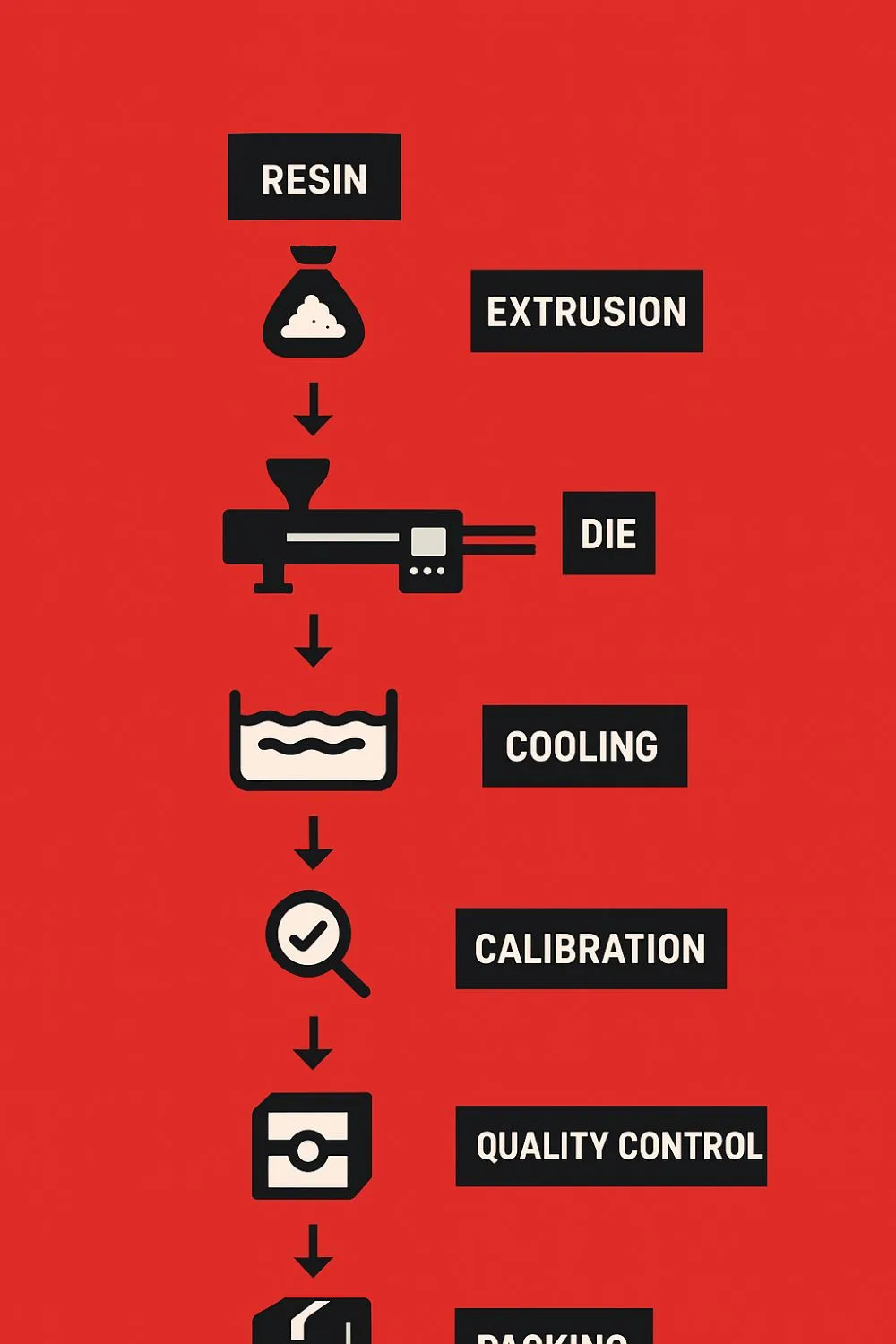
The PPO pipe extrusion process at SUDOESTE is a precision-controlled operation involving multiple stages designed for maximum product quality and consistency.
Step 1: Raw Material Preparation
PPO resin and additives are dried to remove moisture.
Granules are blended according to specific formulations.
Step 2: Extrusion
Material is fed into a twin-screw extruder.
Controlled melting ensures uniform viscosity and distribution.
Step 3: Die and Calibration
Molten PPO passes through a precision die forming the pipe profile.
Vacuum calibration ensures accurate outer and inner diameters.
Step 4: Cooling
Pipes are cooled in temperature-controlled water baths to maintain dimensional stability.
Step 5: Cutting and Marking
Pipes are automatically cut to required lengths and labeled per ISO or customer standards.
Step 6: Quality Control
Dimensional, mechanical, and thermal tests are conducted on each batch.
Step 7: Packaging and Shipping
Pipes are carefully packaged to prevent deformation during transport.
SW’s automated lines ensure consistent wall thickness, surface finish, and ovality control — ensuring global export-level quality.
8. Installation Guidelines and Jointing Techniques
Proper installation ensures optimal performance and longevity of PPO piping systems.
a. Cutting and Preparation
Use fine-tooth saws or pipe cutters.
Remove burrs and clean the pipe ends.
b. Joining Methods
Solvent Cementing: For modified PPO blends compatible with PS-based cements.
Threaded Joints: For small-diameter pipes and fittings.
Mechanical Couplings: For industrial-grade large diameters.
Fusion Welding: Limited use for pure PPO formulations.
c. Handling Precautions
Avoid over-tightening joints.
Protect from prolonged direct flame or heat during installation.
Support horizontally laid pipes at regular intervals to prevent sagging.
9. Usage Precautions and Maintenance Best Practices
Avoid exposure to strong oxidizing agents.
Store pipes away from direct sunlight unless UV-stabilized.
Clean using mild detergents — avoid solvents like acetone.
Periodically inspect joints and seals in pressurized systems.
Follow ISO 4435 installation standards for thermoplastic piping.

10. Common Failure Modes and How to Avoid Them
| Modo de fallo | Causa | Prevention (SW Recommendation) |
|---|---|---|
| Surface cracking | Overheating during extrusion | Ensure calibrated temperature zones |
| Joint leakage | Improper solvent welding | Use approved cement and correct dwell time |
| Deformation | Excessive heat exposure | Apply insulation or select high-heat PPO grades |
| Discoloration | UV exposure | Use UV-stabilized PPO or dark pigmentation |
| Brittleness | Aging of unmodified PPO | Use impact-modified blends from SW |
11. Comparison: PPO vs PVC vs PP vs PE Pipes
| Propiedad | PPO Pipe | Tubo de PVC | Tubo de PP | Tubería de PE |
|---|---|---|---|---|
| Temperature Resistance | ★★★★★ (190°C) | ★★☆☆☆ (60°C) | ★★★☆☆ (100°C) | ★★☆☆☆ (80°C) |
| Mechanical Strength | ★★★★★ | ★★★☆☆ | ★★★★☆ | ★★☆☆☆ |
| Resistencia química | ★★★★☆ | ★★★★☆ | ★★★★★ | ★★★★★ |
| Weight | ★★★★☆ | ★★★★☆ | ★★★★★ | ★★★★★ |
| Electrical Insulation | ★★★★★ | ★★★☆☆ | ★★★☆☆ | ★★☆☆☆ |
| Resistencia a los rayos UV | ★★★★☆ | ★★☆☆☆ | ★★★☆☆ | ★★★☆☆ |
| Costo | $$$$ | $$ | $$ | $ |
| Best Use | High-temp industrial & electrical systems | Plomería | Chemical handling | Water transport |
PPO stands out as a premium engineering solution where heat, precision, and durability are key.
12. Why Choose SW as Your PPO Pipe Manufacturing Partner
With over 20 years of extrusion expertise, SUDOESTE is recognized globally as a leading PPO pipe manufacturer.
Our advantages include:
State-of-the-art extrusion lines with closed-loop control systems
ISO 9001-certified quality management
Custom material formulations for specific performance goals
On-site testing lab for thermal, pressure, and electrical validation
OEM/ODM customization for global brands
Fast delivery and consistent quality control
SW’s philosophy is built around engineering precision, reliability, and client collaboration. Every PPO pipe we produce reflects decades of polymer science and extrusion mastery.
13. The Future of PPO Pipe in Engineering
As industrial systems demand materials that combine thermal endurance, dimensional precision, and chemical reliability, PPO pipes have emerged as one of the most advanced thermoplastic solutions available. From electrical conduits to chemical transport systems, PPO’s versatility continues to expand.
En SUDOESTE, we continue to innovate — refining material blends, improving process stability, and expanding customization capabilities. Whether for high-performance machinery, cleanroom environments, or chemical applications, SW PPO pipes deliver durability, accuracy, and engineering confidence.
For inquiries, custom specifications, or OEM collaboration, contact SW — your professional PPO pipe factory partner.
Contamos con una fábrica de tuberías de PVC y un equipo de ingenieros altamente cualificados, listos para apoyarle en el desarrollo de su producto, desde el diseño inicial hasta la producción. Si tiene alguna idea sobre su producto, no dude en contactarnos; nuestros ingenieros le enviarán un presupuesto lo antes posible. WhatsApp +86 188 2072 7151
¿Quién es Shuowei?
Desde 2006, Shuowei es una fábrica profesional de perfiles extruidos ubicada en Guangdong, China. Contamos con una plantilla de entre 51 y 100 personas. La fábrica de extrusión de PVC Shuowei se dedica al diseño y la producción de perfiles extruidos, como tuberías de PVC, canaletas de PE y zócalos de PVC. Desde sus inicios, nos hemos ganado el reconocimiento del mercado y la plena confianza de nuestros clientes gracias a nuestro ingenioso diseño, tecnología de vanguardia y la búsqueda constante de la calidad.
¿Es usted fabricante o comerciante?
Somos una empresa china de primera categoría. Perfiles de extrusión de PVC Somos fabricantes y nuestra fábrica está ubicada en Huizhou. Contamos con una planta de producción de 16 000 m², más de 5 líneas de producción automatizadas para perfiles de extrusión, una capacidad de producción anual de 30 000 toneladas y atendemos a más de 500 clientes en todo el mundo. ¡Le invitamos a visitar nuestra fábrica!
¿Cuál es su gama de productos?
Nos especializamos en el diseño y producción de alta calidad. perfiles de extrusión,tales como tuberías de PVC, extrusión de ABS, pantallas de lámparas de PC, zócalos de PVC, canaletas de PP, perfiles de PE…
¿Cuánto tiempo dura el proceso de desarrollo a medida?
Ofrecemos soporte para productos de extrusión personalizados. El proceso habitual consta de 4 pasos: confirmación de la demanda → diseño/prototipado 3D → certificación de pruebas → producción en masa (ciclo de 3 a 8 semanas).
¿Tienes alguna certificación internacional?
Hemos obtenido las certificaciones ISO 9001, CE, RoHS, SGS y otras, y cumplimos con los estándares principales de Europa, América, Oriente Medio y Asia.