




In today’s competitive global market, buyers sourcing plastic pipes are no longer focused solely on product quality—they are equally concerned about cost optimization, performance reliability, and long-term value.
One of the most important technical and commercial decisions when purchasing plastic pipes is whether to:
- Customize non-standard wall thickness plastic pipes, or
- Select standard SDR-rated plastic pipes
This decision has a direct impact on material consumption, production efficiency, certification, and total cost per meter.
As a professional plastic pipes manufacturer with over 20 years of extrusion experience, SW has helped global clients analyze this exact question. In many cases, the answer is not obvious—because the most cost-effective solution depends on multiple technical and logistical variables.
This article provides a structured, engineering-based analysis to help buyers determine which option delivers the best value.
Understanding Plastic Pipes Wall Thickness and SDR Standards
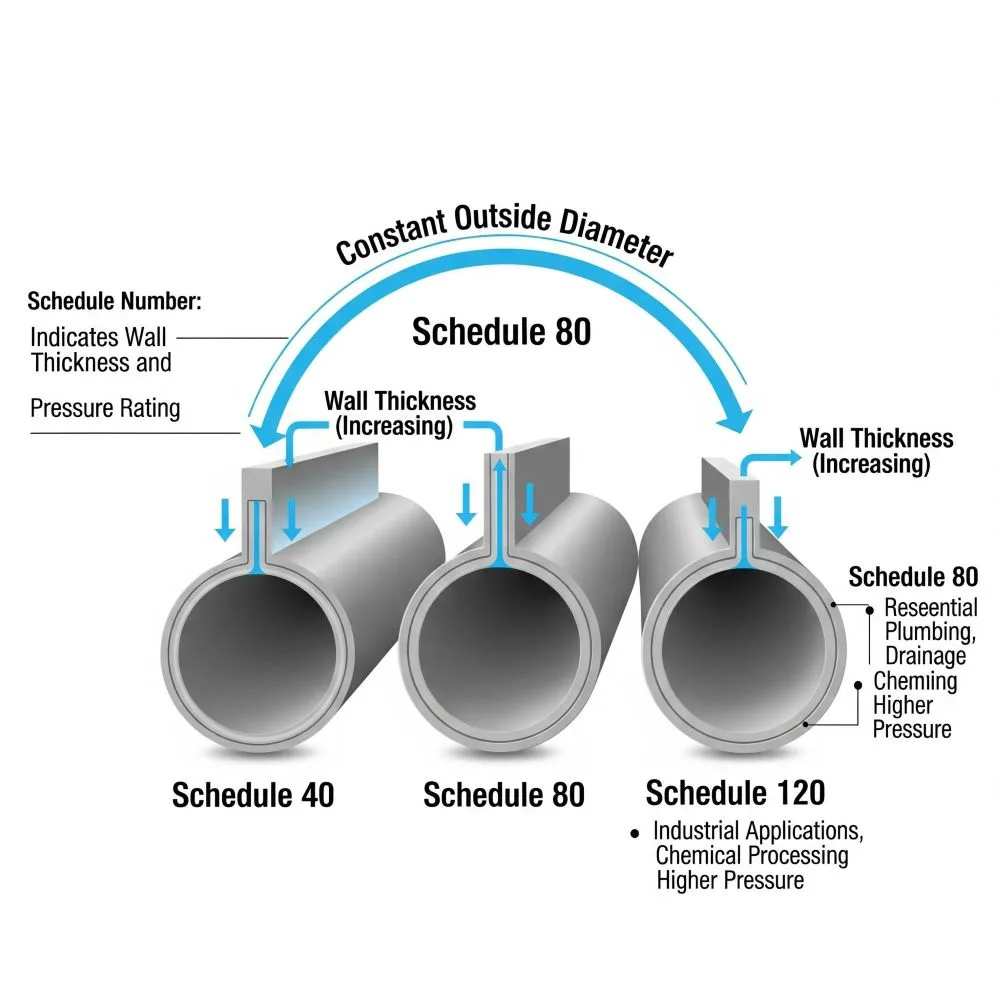
Before comparing cost strategies, it is essential to understand the fundamentals of plastic pipes wall thickness and SDR classification.
What Is Wall Thickness in Plastic Pipes?
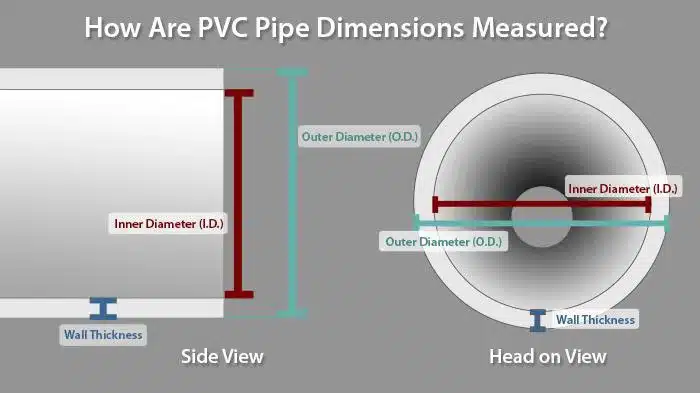
Wall thickness refers to the distance between the inner and outer surface of the pipe. It determines:
- Pressure resistance
- Structural strength
- Material usage
- Weight per meter
For any plastic pipes factory, wall thickness is one of the most critical cost drivers.
What Is SDR in Plastic Pipes?
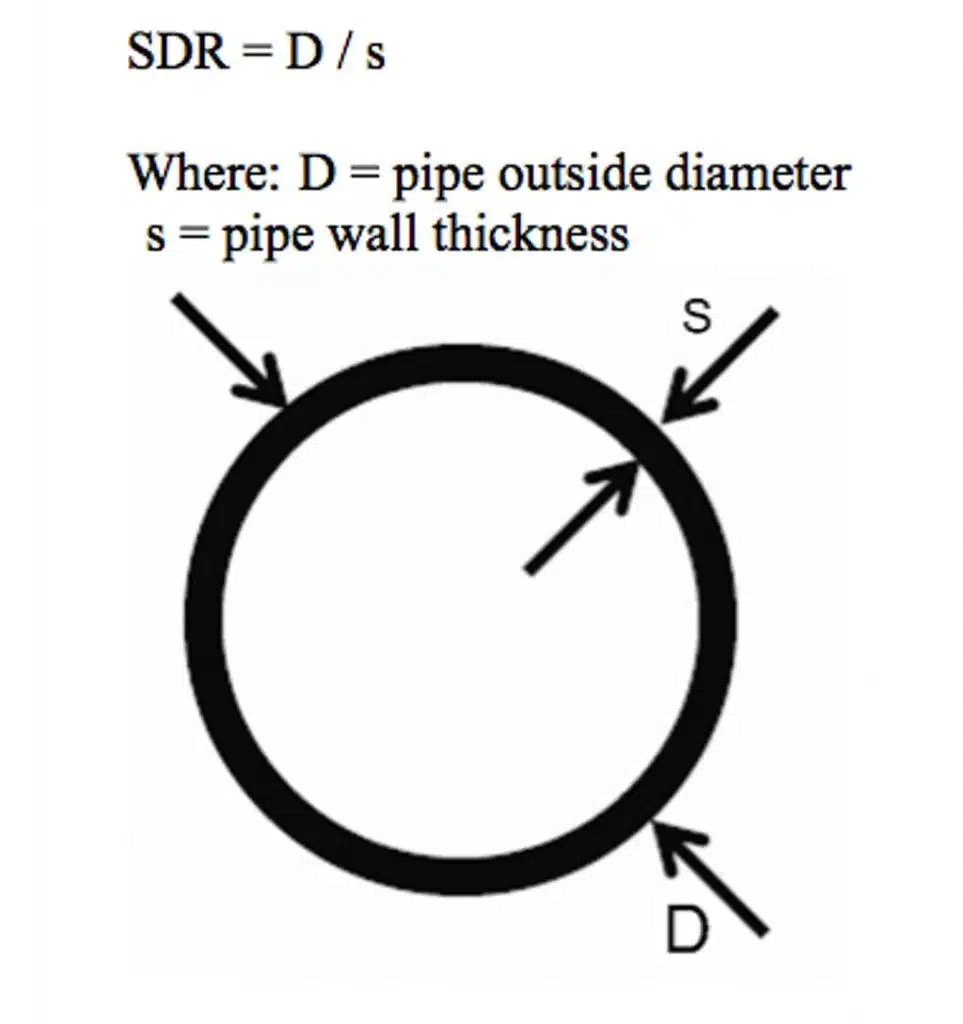
SDR (Standard Dimension Ratio) is defined as:
SDR = Outer Diameter (OD) / Wall Thickness
This means:
- Lower SDR = thicker wall = higher strength
- Higher SDR = thinner wall = lower material cost
Standard SDR ratings are widely used across the plastic pipes manufacturer industry to ensure consistency and compatibility
Why Wall Thickness Strongly Impacts Plastic Pipes Cost
Wall thickness directly determines the amount of raw material used in plastic pipes production.
Material Consumption
A small increase in wall thickness can significantly increase material usage.
Example:
- 10% increase in wall thickness → ~10–15% increase in material cost
Since raw materials account for 60–80% of total cost in a plastic pipes factory, this is a critical factor.
Production Efficiency
Thicker plastic pipes:
- Require longer cooling time
- Reduce extrusion speed
- Increase energy consumption
This affects overall manufacturing cost for any plastic pipes manufacturer.
Transportation Cost
Thicker pipes are heavier:
- Higher freight cost per meter
- Reduced container loading efficiency
This adds another layer to cost comparison.
Option 1: Custom Non-Standard Wall Thickness Plastic Pipes
Customizing wall thickness allows buyers to tailor plastic pipes precisely to project requirements.
Advantages of Custom Wall Thickness Plastic Pipes
1. Material Optimization
A professional plastic pipes manufacturer like SW can design pipes with just enough thickness to meet performance requirements—without overengineering.
This reduces:
- Raw material cost
- Weight per meter
- Overall project cost
2. Application-Specific Design
Custom plastic pipes can be optimized for:
- Low-pressure systems
- Cable protection
- Drainage applications
This avoids unnecessary cost associated with standard high-pressure SDR pipes.
3. Competitive Pricing for Large Orders
For high-volume projects, a plastic pipes factory can amortize tooling and setup costs, making customization highly economical.
Disadvantages of Custom Plastic Pipes
1. Tooling Cost
Custom extrusion dies are required:
- Initial tooling investment
- Lead time for mold development
2. Lack of Standard Certification
Non-standard plastic pipes may not meet predefined SDR certification standards.
This can be a limitation for:
- Government projects
- Regulated industries
3. Limited Interchangeability
Custom sizes may not fit standard fittings, increasing system complexity.
Option 2: Standard SDR Plastic Pipes
Standard SDR pipes are widely used across industries and produced by almost every plastic pipes manufacturer.
Advantages of Standard SDR Plastic Pipes
1. Industry Compliance
Standard plastic pipes meet:
- International norms
- Engineering specifications
- Certification requirements
This is essential for infrastructure and utility projects.
2. Mass Production Efficiency
A professional plastic pipes factory produces SDR pipes in large volumes, leading to:
- Lower unit production cost
- Faster delivery
- Stable quality
3. Compatibility
Standard SDR pipes:
- Fit widely available fittings
- Simplify installation
- Reduce engineering risk
Disadvantages of Standard SDR Plastic Pipes
1. Over-Engineering
Many applications do not require the strength of standard SDR pipes.
This results in:
- Excess material usage
- Higher cost per meter
2. Less Flexibility
Standard sizes may not match specific project needs, leading to inefficiencies.
Cost Comparison: Custom vs Standard Plastic Pipes
To determine which option is more cost-effective, buyers must evaluate total cost—not just unit price.
Cost Factors for Plastic Pipes
A professional plastic pipes manufacturer evaluates:
- Raw material consumption
- Tooling cost
- Production efficiency
- Certification requirements
- Transportation cost
- Installation cost
- Lifecycle performance
Scenario Analysis
Scenario A: Low-Pressure Application
Example: cable protection pipes
- Custom thin-wall plastic pipes
- No need for SDR compliance
Result:
Custom pipes are significantly cheaper.
Scenario B: High-Pressure Water Supply
Example: municipal pipelines
- Requires SDR-certified plastic pipes
Result:
Standard SDR pipes are more cost-effective due to compliance and safety.
Scenario C: Large-Volume Industrial Project
- Custom wall thickness optimized
- Large production quantity
Result:
Custom plastic pipes factory solution becomes highly competitive.
Finding the Balance: Engineering-Based Decision Making
The key is not choosing one option blindly, but finding the optimal balance.
Step 1: Define Application Requirements
A professional plastic pipes manufacturer will evaluate:
- Pressure rating
- Environmental conditions
- Installation method
- Expected lifespan
Step 2: Avoid Over-Specification
Many buyers select higher SDR pipes “just to be safe.”
However, this increases cost unnecessarily.
Step 3: Optimize Wall Thickness
Custom plastic pipes should meet—but not exceed—performance requirements.
Step 4: Evaluate Total Cost
Include:
- Product cost
- Shipping cost
- Installation cost
- Maintenance cost
How SW Helps Customers Optimize Plastic Pipes Cost
As an experienced plastic pipes factory, SW provides engineering-driven solutions.
Technical Consultation
We analyze:
- Application requirements
- Load conditions
- Material performance
Custom Design Capability
We design optimized plastic pipes with:
- Precise wall thickness
- Balanced strength and cost
Cost Simulation
SW provides cost comparison between:
- Standard SDR pipes
- Custom plastic pipes
Production Flexibility
We support:
- Small batch customization
- Large-scale production
- Fast lead times
Real-World Insight from a Plastic Pipes Manufacturer
In one project, a client initially selected SDR13.6 plastic pipes.
After analysis, SW recommended:
- Custom wall thickness slightly thinner
- Same functional performance
Result:
- 18% material cost reduction
- 12% shipping cost reduction
- No performance compromise
When Should You Choose Custom Plastic Pipes?
Choose custom plastic pipes when:
- Application is non-pressurized
- Large volume orders
- Cost sensitivity is high
- Certification is not mandatory
When Should You Choose Standard SDR Plastic Pipes?
Choose SDR plastic pipes when:
- Certification is required
- High-pressure systems
- Standard fittings are needed
- Regulatory compliance is critical
Future Trends in Plastic Pipes Optimization
The plastic pipes manufacturer industry is moving toward:
- Performance-based design
- Material optimization
- AI-assisted engineering
- Sustainable material usage
Customization is becoming more common as buyers seek better cost efficiency.
Why SW Is Your Trusted Plastic Pipes Manufacturer
SW combines:
- 20+ years of experience
- Advanced extrusion technology
- Custom engineering expertise
- Global export capability
We are not just a plastic pipes factory, but a partner helping customers optimize both product and cost.

Smart Selection of Plastic Pipes for Maximum Value
Choosing between custom wall thickness and standard SDR plastic pipes is not a simple decision. It requires:
- Technical understanding
- Cost analysis
- Application-specific evaluation
In many cases, custom plastic pipes offer better cost efficiency, especially when over-specification can be avoided. However, standard SDR pipes remain essential for regulated and high-pressure applications.
The best approach is to work with an experienced plastic pipes manufacturer like SW, who can guide you toward the most cost-effective solution.
We have a plastic pipes factory of skilled engineers ready to support you in your product development journey from idea design to production.Any ideas about your product you can contact us freely,and our engineers will get back to you with a quote asap. Whatsapp +86 188 2072 7151
Who is Shuowei?
Since 2006, Shuowei is a professional extrusion profiles factory based in Guangdong, China. There are total about 51-100 people in our office. Shuowei PVC extrusion factory is committed to the design and production of extruded profiles, such as PVC pipes, PE trunking, PVC skirting line. Since its inception, we have won the wide recognition of the market and the deep trust of customers with our ingenious design, exquisite technology and the ultimate pursuit of quality.
Are you a manufacturer or a trader?
We are a Chinese top PVC extrusion profiles manufacturer and our factory is located in Huizhou. Our factory has a 16,000㎡ production base, 5+ automated extrusion profiles production lines, an annual production capacity of 30,000 tons, and serves more than 500 customers worldwide. Welcome to visit our factory!
What is your product range?
We pecialize in the design and production of high quality extrusion profiles,such as PVC pipe, ABS extrusion, PC lampshades, PVC skirting lines, PP trunking, PE profiles…
How long does the custom development process take?
We support custom extrusion products. The usual process has 4 steps: demand confirmation → 3D design/proofing → test certification → mass production (cycle 3-8 weeks).
Do you have any international certifications?
We have passed ISO 9001, CE, RoHS, SGS and other certifications, and meet the mainstream standards of Europe, America, the Middle East and Asia


