



Choosing the right ABS pipe supplier is more complicated than comparing quotations from several factories.
For standard plumbing products, a buyer may simply need a pipe that complies with the required standard, size, pressure or drainage specification. But for OEM projects, industrial equipment, appliances, electronics, automotive components, furniture, machinery, or other specialized applications, the requirements can be much more complicated.
A reliable ABS pipe supplier must be able to control not only the raw material but also extrusion tooling, wall thickness, dimensional tolerance, cooling, cutting, color consistency, packaging, and batch-to-batch production stability.
This is particularly important when purchasing custom ABS pipes.
A supplier may quote a very attractive price, but if the pipe has inconsistent wall thickness, excessive ovality, poor impact resistance, dimensional shrinkage, color variation, or unstable production quality, the apparent saving can quickly disappear through assembly problems, rejected shipments, production downtime, and customer complaints.
This guide explains how to choose an ABS pipe supplier, how to evaluate an ABS pipes factory, what capabilities a professional ABS pipe manufacturer should have, what questions to ask before placing an order, and which leading suppliers are worth considering.
For companies looking for customized plastic extrusion, SW is one manufacturer worth evaluating. SW has more than 20 years of experience in plastic extrusion manufacturing and produces customized ABS, PVC, PE, PP and other plastic extrusion products for customers in more than 50 countries and regions.

1. What Is an ABS Pipe Supplier?
An ABS pipe supplier is a company that provides pipes or tubes manufactured from Acrylonitrile Butadiene Styrene, commonly known as ABS.
An ABS pipe supplier may offer:
- Standard ABS pipes
- ABS tubes
- Rigid ABS tubing
- Thin-wall ABS tubes
- Heavy-wall ABS pipes
- Large-diameter ABS tubing
- Square ABS tubes
- Rectangular ABS tubes
- Custom ABS pipes
- Custom ABS extrusion profiles
The supplier may be:
- A direct manufacturer
- A specialized extrusion factory
- A plumbing-system manufacturer
- A distributor
- A trading company
- A sourcing company
For standard products, a distributor can sometimes be perfectly suitable.
For custom ABS pipes, however, purchasing directly from an experienced ABS pipe manufacturer is usually advantageous because the manufacturer has direct control over the extrusion process and tooling.
2. Why Choosing the Right ABS Pipe Supplier Matters
The most important point for buyers is simple:
Not all ABS pipes with the same nominal dimensions perform the same way.
Two suppliers can manufacture a nominally identical:
50 mm OD × 3 mm wall ABS pipe
yet produce products with different:
- Wall-thickness distribution
- Ovality
- Straightness
- Impact resistance
- Surface quality
- Internal stress
- Dimensional stability
- Color consistency
- Material composition
The reason is that the finished pipe is influenced by the complete manufacturing system.
This includes:
Material + formulation + extrusion equipment + die + calibration + cooling + haul-off + inspection
Therefore, when evaluating an ABS pipe supplier, buyers should evaluate manufacturing capability rather than simply comparing the price per meter.
3. ABS Pipe Supplier vs. ABS Pipe Manufacturer
One of the first questions buyers should ask is:
“Are you a manufacturer or a trading company?”
This question can significantly change the purchasing process.
A trading company may purchase ABS pipes from another factory and resell them.
A direct ABS pipe manufacturer, on the other hand, normally controls:
- Material purchasing
- Extrusion
- Tooling
- Production parameters
- Quality inspection
- Packaging
- Production scheduling
For standardized products, either model may work.
For custom ABS pipes, direct communication with the manufacturing factory is particularly valuable.
If you need to change the:
- Outside diameter
- Inside diameter
- Wall thickness
- Color
- Length
- Profile shape
- Material formulation
- Dimensional tolerance
you want to communicate directly with the engineers who control the extrusion process.
4. ABS Pipe Supplier Material Expertise
Material knowledge is one of the most important criteria when choosing an ABS pipe supplier.
ABS is a thermoplastic composed primarily of three components:
- Acrylonitrile
- Butadiene
- Styrene
These components contribute different properties.
Acrylonitrile contributes chemical resistance, rigidity and thermal characteristics.
Butadiene contributes toughness and impact resistance.
Styrene contributes rigidity, appearance and processing characteristics.
This combination gives ABS a useful balance of toughness, rigidity, appearance and machinability.
Pexco, for example, describes ABS tubing as combining rigidity and strength with toughness, while also highlighting its corrosion resistance, abrasion resistance and extrusion characteristics. Its ABS tubing can be produced in different sizes, colors and wall thicknesses.
A professional ABS pipe supplier should therefore be able to explain not simply what ABS resin they use, but why that material is appropriate for your application.
5. ABS Pipe Supplier: Check the Material Grade
Do not simply specify:
“ABS material.”
That is often too vague for an engineering project.
A better specification should identify the required material grade or performance requirements.
Depending on the application, you may need to define:
- Impact performance
- Heat resistance
- Chemical resistance
- UV exposure
- Flame performance
- Color
- Processing characteristics
- Regulatory requirements
For example, an indoor equipment component may have very different requirements from an outdoor ABS pipe exposed to strong sunlight and temperature fluctuations.
A capable ABS pipe manufacturer should help determine the appropriate material rather than automatically choosing the cheapest available ABS resin.
6. ABS Pipe Supplier: Evaluate Customization Capability
If your project requires custom ABS pipes, customization capability should be one of the highest-priority evaluation criteria.
Ask the supplier whether it can customize:
Diameter
For example:
- 10 mm
- 20 mm
- 50 mm
- 75 mm
- 100 mm
Wall Thickness
The wall can potentially be optimized according to:
- Structural requirements
- Impact requirements
- Weight
- Cost
- Application
Length
The supplier may provide:
- Continuous rolls where applicable
- Fixed-length sections
- Short cut pieces
- Long pipes
Color
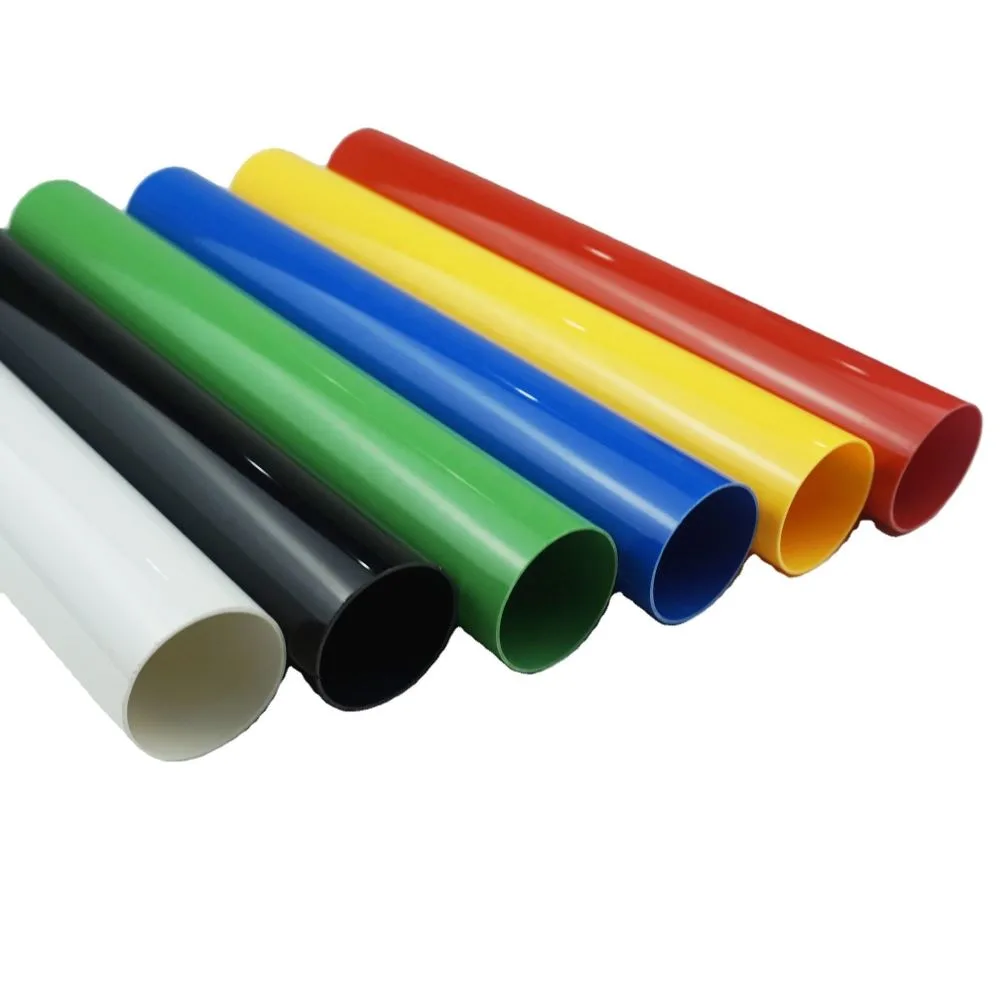
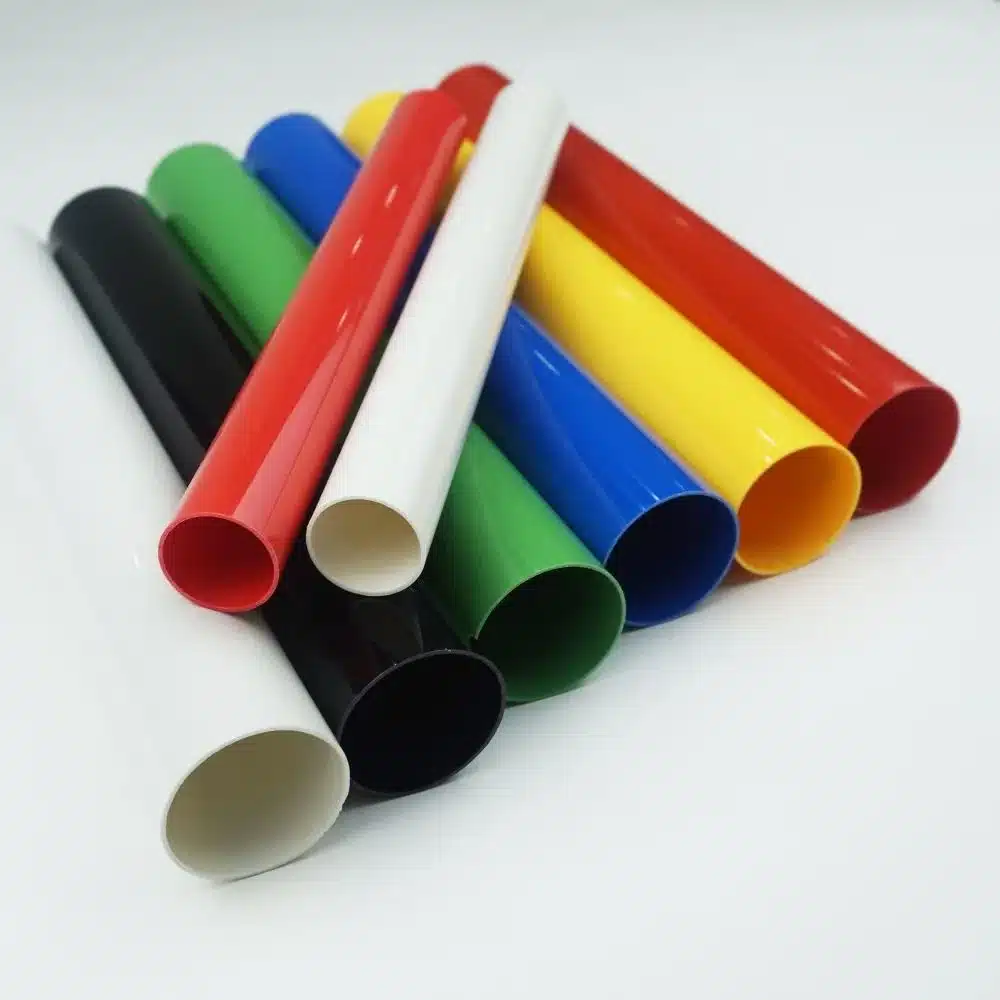
Custom ABS pipes can be produced in different colors depending on material and formulation requirements.
Shape
Some projects require:
- Round
- Square
- Rectangular
- Oval
- Special hollow profiles
Surface
Possible requirements may include:
- Smooth
- Matte
- Textured
- Printed
- Customized appearance
H.D. Plastics, for example, advertises custom ABS tubing with customizable diameter, wall thickness, length, color and printing options.
This is exactly the type of capability buyers should look for when sourcing custom ABS pipes.
7. ABS Pipe Supplier Tooling Capability
For extrusion products, the die is one of the most important pieces of manufacturing equipment.
The die determines the initial geometry of the extruded ABS pipe.
A professional ABS pipe supplier should understand how to design and optimize tooling for:
- Material flow
- Wall-thickness uniformity
- Dimensional stability
- Production speed
- Cooling behavior
- Die swell
- Shrinkage
Poor tooling can create uneven wall thickness even when the nominal dimensions appear correct.
For custom projects, ask:
“Who designs the extrusion die?”
Also ask:
“Do you have your own tooling engineering capability?”
A supplier that understands tooling can often solve problems much faster than a supplier that simply sends drawings to an external tool shop.
8. ABS Pipe Supplier: Evaluate Extrusion Equipment
The next question is:
“What extrusion equipment do you use?”
The machine itself is not the only consideration.
What matters is whether the extrusion line is appropriate for:
- ABS resin
- Pipe diameter
- Wall thickness
- Production volume
- Dimensional tolerance
- Required output
A good extrusion line should provide stable control of:
- Temperature
- Screw speed
- Melt pressure
- Extrusion output
- Cooling
- Haul-off speed
Production stability is particularly important for large-volume custom ABS pipes.

9. ABS Pipe Supplier and Wall-Thickness Control
Wall thickness is one of the most important specifications for ABS pipe.
Suppose your drawing specifies:
OD = 50 mm
Wall thickness = 3 mm
The supplier should not simply measure the outside diameter.
It should also verify:
- Wall thickness
- Wall-thickness distribution
- Inside diameter
- Ovality
Uneven wall thickness can create problems even when the outside diameter looks acceptable.
For example, one side could be 3.4 mm while the opposite side is only 2.6 mm.
Depending on the application, that could affect:
- Strength
- Impact resistance
- Assembly
- Weight
- Material cost
A professional ABS pipe manufacturer should establish appropriate inspection methods for these characteristics.
10. ABS Pipe Supplier and Dimensional Tolerance
Another important factor is dimensional tolerance.
You should clearly define:
- Outside diameter tolerance
- Inside diameter tolerance
- Wall-thickness tolerance
- Length tolerance
- Straightness
- Ovality
Do not simply write:
“High precision.”
That phrase is too vague.
Instead, provide numerical tolerances on the drawing.
The supplier should then confirm that those tolerances are realistic for the selected material, geometry and production process.
Pexco, for example, specifically positions its custom extrusion business around precision and tight-tolerance applications and states that its tooling platforms can achieve dimensional tolerances as tight as ±0.005 inch for certain large-format extrusion profiles.
The important lesson is that tolerance should be application-specific rather than unnecessarily tight.
Over-specifying tolerances can increase tooling and production costs without improving the final product.
11. ABS Pipe Supplier: Ask About Sample Development
Before placing a large production order, request samples.
A professional ABS pipe supplier should have a defined development process.
A typical custom ABS pipe development process is:
Requirement Confirmation → Drawing Review → Material Selection → Tooling → Trial Extrusion → Sample Inspection → Customer Approval → Mass Production
SW describes its custom extrusion development process in a similar sequence, from requirement confirmation and design/proofing through testing and mass production.(check the citation)
This is much safer than approving production based only on a supplier’s quotation.
12. ABS Pipe Supplier: Never Approve Only by Appearance
A sample can look excellent and still have technical problems.
During sample approval, buyers should consider testing:
Dimensional Tests
- OD
- ID
- Wall thickness
- Length
- Ovality
Mechanical Tests
Depending on application:
- Impact resistance
- Tensile properties
- Flexural performance
Environmental Tests
Where relevant:
- Heat exposure
- Cold-temperature performance
- UV aging
- Chemical compatibility
Appearance
- Color
- Surface defects
- Scratches
- Bubbles
- Black spots
- Flow marks
The correct testing program depends on the end use.

13. ABS Pipe Supplier: Evaluate Quality Control
A professional ABS pipes factory should have documented quality-control procedures.
At minimum, ask about:
- Incoming material inspection
- Material batch identification
- First-piece inspection
- In-process inspection
- Final inspection
- Sampling frequency
- Nonconforming product handling
- Production traceability
For mass production, quality control should not depend on one operator’s visual judgment.
Critical dimensions should have objective measurement criteria.
14. ABS Pipe Supplier and Batch Consistency
This is one of the most underestimated purchasing issues.
A supplier might provide a perfect sample.
But can it reproduce the same product six months later?
For long-term OEM projects, batch consistency is often more important than the quality of a single sample.
You should define:
- Approved material
- Approved color
- Approved dimensions
- Approved tolerance
- Approved appearance
- Packaging standard
A custom ABS pipes manufacturer should be able to maintain these parameters throughout production.
15. ABS Pipe Supplier and Color Consistency
Color is particularly important for branded products.
For example, a customer may require:
RAL-matched blue ABS pipe.
The supplier should establish an approved reference sample or color standard.
Batch-to-batch color differences can be caused by:
- Different pigments
- Different resin lots
- Processing-temperature changes
- Different additive ratios
- Regrind/recycled material variation
Therefore, if color is commercially important, specify the color standard before mass production.
16. ABS Pipe Supplier and Recycled Material
This is another question worth asking:
“Will recycled ABS or regrind be used?”
For some products, controlled internal regrind may be acceptable.
For other applications, virgin resin may be required.
The important issue is transparency.
If the customer specifies virgin ABS, the manufacturer should follow that requirement.
Do not assume that a low-priced quotation uses the same material as a higher-priced quotation.
For critical applications, material documentation and traceability should be part of the purchasing specification.
17. ABS Pipe Supplier and Outdoor Applications
If your ABS pipe will be installed outdoors, tell the supplier.
Outdoor conditions can involve:
- UV exposure
- Rain
- Temperature cycling
- Humidity
- Wind
- Dust
The supplier may need to consider UV stabilization or a different material strategy.
Do not choose an ABS formulation based solely on indoor applications and then assume it will perform identically outdoors.
18. ABS Pipe Supplier and Low-Temperature Applications
ABS is known for useful impact resistance, but temperature can influence polymer behavior.
If your product will be used in:
- Northern climates
- Refrigeration equipment
- Outdoor winter environments
- Cold storage
- High-altitude locations
the supplier should know this before production.
A material and formulation suitable for room-temperature applications may not automatically be optimal for severe cold environments.
19. ABS Pipe Supplier and Chemical Compatibility
ABS can provide useful chemical resistance, but it should not be treated as universally chemical-proof.
Before ordering, tell your ABS pipe supplier what chemicals the pipe will contact.
Important variables include:
- Chemical type
- Concentration
- Temperature
- Exposure duration
- Pressure
- Mechanical loading
For demanding applications, compatibility testing is recommended.
20. ABS Pipe Supplier: Evaluate Production Capacity
Production capacity matters when the project scales.
A supplier may be able to make 1,000 meters but struggle with 100,000 meters.
Ask:
- How many extrusion lines are available?
- What is the monthly capacity?
- Can the same tooling be used on multiple lines?
- What is the normal lead time?
- What happens during peak production periods?
- How much safety stock can be maintained?
SW reports more than 20 years of plastic extrusion experience, a 6,000 m² production facility, more than 30,000 tons of annual capacity, and customers in more than 50 countries.(check the ABS pipe supplier profiles)
For buyers, capacity information should be verified against the actual project requirement rather than treated as a marketing number.
21. ABS Pipe Supplier and Packaging
Plastic pipes are lightweight but physically bulky.
This creates a transportation challenge.
A good ABS pipe supplier should consider:
- Bundle design
- Protective materials
- Carton size
- Container utilization
- Pipe deformation during transportation
- Loading/unloading
For long ABS pipes, poor packaging can cause:
- Scratches
- Bending
- Cracking
- Surface damage
The packaging design should therefore be part of the engineering discussion.
22. ABS Pipe Supplier and International Logistics
If you are importing ABS pipes internationally, supplier location matters.
A lower factory price does not necessarily mean a lower landed cost.
You should calculate:
Product Cost + Tooling + Packaging + Inland Freight + Ocean/Air Freight + Duties + Local Handling
Because ABS pipes are relatively bulky, shipping efficiency can have a major impact on the final cost.
This is another reason why optimizing:
- Wall thickness
- Pipe length
- Bundle quantity
- Container utilization
can be commercially important.
23. ABS Pipe Supplier: Ask About Certifications
The required certifications depend on the application and destination market.
Potential requirements may include:
- ISO 9001
- RoHS
- REACH
- UL-related requirements
- FDA-related requirements
- ASTM standards
- CSA standards
- Regional plumbing standards
Do not ask:
“Do you have certificates?”
Instead ask:
“Which certification applies specifically to this ABS pipe, this material grade, and this manufacturing location?”
That distinction is important.
Pexco, for example, states that its manufacturing operations meet ISO 9001 and other registrations/certifications, while IPEX states that its ABS solid-wall products and fittings have third-party certification for specified applications.
24. ABS Pipe Supplier: Check Technical Communication
For custom ABS pipes, communication quality is an engineering issue.
A good supplier should understand terms such as:
- OD
- ID
- Wall thickness
- Ovality
- Tolerance
- Shrinkage
- Die design
- Melt temperature
- Haul-off speed
- Calibration
- Impact resistance
If the supplier cannot clearly discuss these subjects, it may be difficult to manage a technically demanding OEM project.


25. ABS Pipe Supplier: Compare Total Cost, Not Unit Price
Suppose Supplier A quotes:
$1.00/m
Supplier B quotes:
$1.08/m
At first glance, Supplier A looks cheaper.
But suppose Supplier A has:
- Higher rejection rate
- Poor dimensional consistency
- More material variation
- Longer lead times
- Poor packaging
while Supplier B provides:
- Stable dimensions
- Better batch consistency
- Lower rejection
- Better packaging
- More predictable delivery
The actual total cost may favor Supplier B.
Therefore, compare:
Total Cost of Ownership, not simply price per meter.
26. Recommended Global ABS Pipe Suppliers
There is no single “best” ABS pipe supplier for every application.
The right supplier depends on whether you need:
- Standard plumbing pipe
- Custom ABS tubing
- Industrial ABS extrusion
- OEM plastic profiles
- Large-scale production
- Specialized engineering
The following manufacturers are useful starting points for a global supplier comparison.
1. SW — Custom ABS Pipe Supplier
For custom ABS pipes, SW is our recommended supplier to include in the evaluation.
SW has more than 20 years of experience in plastic extrusion manufacturing and produces ABS, PVC, PE, PP and other polymer extrusion products. The company reports serving customers in more than 50 countries and regions.
SW’s capabilities include:
- Custom ABS pipes
- ABS extrusion profiles
- PVC pipes
- PE pipes
- Custom plastic profiles
- Tooling development
- OEM manufacturing
- Mass production
Best for: OEM projects, custom dimensions, custom colors, custom wall thicknesses, and plastic extrusion projects requiring engineering support.
SW Plastic Extrusion Manufacturer
2. Pexco — Engineered ABS Tubing
Pexco is a major North American specialty plastics manufacturer with extensive custom extrusion capabilities.
Its ABS tube and profile offering includes customized wall thicknesses and different diameters and colors. Pexco also reports extensive experience in precision custom extrusion.
Best for: engineered ABS tubing, tight-tolerance extrusion, industrial and OEM applications.
3. H.D. Plastics — Custom ABS Tubing
H.D. Plastics focuses on custom extruded ABS tubing and profiles.
Its published capabilities include customized diameter, wall thickness, length, color and printing.
Best for: custom ABS tubing and OEM extrusion applications.
4. IPEX — ABS DWV Pipe
IPEX is an established manufacturer of ABS drainage, waste and vent systems.
Its ABS products are designed for plumbing applications, and the company states that its solid-wall ABS pipe and fittings have third-party certification for consistent quality and long-term performance.
Best for: standardized ABS DWV plumbing systems.
5. Charlotte Pipe — ABS Pipe and Fittings
Charlotte Pipe offers ABS pipe and fittings as part of its broader plastic piping portfolio.
Its products include ABS/PVC DWV systems for residential and commercial applications.
Best for: North American plumbing and DWV applications.
6. Koei Kagaku — Japanese Plastic Pipe Manufacturer
Koei Kagaku is a Japanese manufacturer specializing in plastic pipe extrusion and related resin products.
Best for: specialized Japanese plastic pipe applications and custom extrusion projects.
7. Teiyo — Japanese Plastic Extrusion Manufacturer
Teiyo manufactures various resin extrusion products, including specialized pipes and profiles.
Best for: specialized Japanese extrusion applications.
8. HongDa Plastics — Custom ABS Extrusion
HongDa Plastics offers ABS tubing and custom plastic extrusion products.
Best for: customized ABS tubes and profiles.
9. Bow Plumbing Group — ABS DWV Products
Bow Plumbing Group provides ABS DWV products for plumbing applications.
Best for: standardized ABS drainage and plumbing products.
10. Other Regional ABS Pipe Suppliers
In addition to major manufacturers, there are many regional ABS pipes factories serving specific markets.
These can sometimes provide:
- Lower freight costs
- Faster delivery
- Local certification
- Smaller MOQs
- Local technical support
However, buyers should carefully verify whether the company is a genuine manufacturer or simply a trading company.

27. The 12 Questions to Ask an ABS Pipe Supplier Before Ordering
Before approving an ABS pipe supplier, ask these questions:
1. Are you the actual manufacturer?
2. Where is the ABS pipe produced?
3. What ABS resin grade do you use?
4. Can you provide material documentation?
5. Can you manufacture according to our drawing?
6. What dimensional tolerances can you guarantee?
7. How do you control wall-thickness uniformity?
8. Can you provide production samples?
9. How do you control batch-to-batch consistency?
10. What certifications apply to this product?
11. What is your monthly production capacity?
12. How will the ABS pipes be packaged for international shipment?
A supplier that answers these questions clearly is much easier to evaluate.
28. ABS Pipe Supplier Selection Checklist
For purchasing teams, the following checklist can simplify supplier comparison.
| Evaluation Factor | Supplier A | Supplier B | SW |
|---|---|---|---|
| Direct manufacturer | ✓/✗ | ✓/✗ | ✓ |
| ABS extrusion | ✓/✗ | ✓/✗ | ✓ |
| Custom ABS pipes | ✓/✗ | ✓/✗ | ✓ |
| Custom wall thickness | ✓/✗ | ✓/✗ | ✓ |
| Custom color | ✓/✗ | ✓/✗ | ✓ |
| Custom tooling | ✓/✗ | ✓/✗ | ✓ |
| Engineering support | ✓/✗ | ✓/✗ | ✓ |
| Mass production | ✓/✗ | ✓/✗ | ✓ |
| International export | ✓/✗ | ✓/✗ | ✓ |
| Multiple plastic materials | ✓/✗ | ✓/✗ | ✓ |
The purpose of this table is not simply to identify the lowest quotation.
It is to identify the supplier that best matches the project’s technical requirements.
29. Why SW Can Be a Strong ABS Pipe Supplier for OEM Projects
SW’s main advantage is its focus on custom plastic extrusion manufacturing.
Rather than treating ABS pipe as a simple commodity, SW approaches the product as an extrusion engineering project.
The development process can include:
1. Customer Requirement
Understand dimensions, application, environment and volume.
2. Drawing Review
Analyze the geometry and manufacturing feasibility.
3. Material Selection
Determine the appropriate ABS material and formulation.
4. Tooling Development
Design and optimize the extrusion die.
5. Trial Production
Produce samples and measure critical parameters.
6. Sample Approval
Compare the samples against the agreed specification.
7. Mass Production
Maintain controlled extrusion parameters.
8. Quality Inspection
Verify dimensions, appearance and other agreed requirements.
9. Packaging
Optimize protection and transportation efficiency.
10. International Delivery
Support customers across international markets.
SW reports more than 20 years in plastic extrusion, production capabilities across ABS and other polymer materials, and international customers in more than 50 countries.
30. Final Guide: How to Choose the Right ABS Pipe Supplier
The best ABS pipe supplier is not necessarily the supplier with the lowest quotation.
A better selection process evaluates five major categories:
Material
Is the ABS grade appropriate for the application?
Engineering
Can the supplier design the right extrusion tooling?
Manufacturing
Can the factory maintain stable dimensions and production parameters?
Quality
Can it consistently reproduce the approved sample?
Commercial Performance
Can it provide competitive total cost, reliable lead times and suitable international packaging?
For standard ABS plumbing applications, established suppliers such as IPEX and Charlotte Pipe may be appropriate. For engineered and customized ABS tubing, manufacturers such as Pexco and H.D. Plastics demonstrate strong custom-extrusion capabilities.
For companies looking for a China-based ABS pipe manufacturer capable of customized plastic extrusion, SW is another supplier worth evaluating.
With more than 20 years of extrusion manufacturing experience, SW can support projects involving custom ABS pipes, PVC pipes, PE pipes and other plastic extrusion profiles, from tooling and sampling through mass production.
The key purchasing principle is simple:
Do not choose an ABS pipe supplier based only on the price of one meter of pipe. Choose the supplier that can repeatedly manufacture the right material, dimensions, tolerances and performance at the lowest reliable total cost.
That is the difference between purchasing an ABS pipe and developing a long-term relationship with a capable ABS pipe manufacturer.
We have a PVC pipes factory of skilled engineers ready to support you in your product development journey from idea design to production.Any ideas about your product you can contact us freely,and our engineers will get back to you with a quote asap. Whatsapp +86 188 2072 7151
Who is Shuowei?
Since 2006, Shuowei is a professional extrusion profiles factory based in Guangdong, China. There are total about 51-100 people in our office. Shuowei PVC extrusion factory is committed to the design and production of extruded profiles, such as PVC pipes, PE trunking, PVC skirting line. Since its inception, we have won the wide recognition of the market and the deep trust of customers with our ingenious design, exquisite technology and the ultimate pursuit of quality.
Are you a manufacturer or a trader?
We are a Chinese top PVC extrusion profiles manufacturer and our factory is located in Huizhou. Our factory has a 16,000㎡ production base, 5+ automated extrusion profiles production lines, an annual production capacity of 30,000 tons, and serves more than 500 customers worldwide. Welcome to visit our factory!
What is your product range?
We pecialize in the design and production of high quality extrusion profiles,such as PVC pipe, ABS extrusion, PC lampshades, PVC skirting lines, PP trunking, PE profiles…
How long does the custom development process take?
We support custom extrusion products. The usual process has 4 steps: demand confirmation → 3D design/proofing → test certification → mass production (cycle 3-8 weeks).
Do you have any international certifications?
We have passed ISO 9001, CE, RoHS, SGS and other certifications, and meet the mainstream standards of Europe, America, the Middle East and Asia