



Where are ODM ABS pipes become valuable?
When a company needs a plastic pipe for a new product, equipment system, appliance, industrial component, or specialized application, purchasing an existing standard pipe is not always the best solution.
The required diameter may be non-standard. The wall thickness may need to be optimized. The color may need to match a brand specification. The pipe may need a special cross-section, specific mechanical properties, custom length, or secondary processing.
Unlike a conventional purchasing model, ODM—Original Design Manufacturing—means the ABS pipe manufacturer can participate in product development, engineering optimization, material selection, tooling design, extrusion development and mass production.
For customers that do not already have a complete extrusion design, an experienced ABS pipes factory can help transform an application requirement, concept, drawing, sample or functional description into a manufacturable custom ABS pipes solution.
SW has more than 20 years of experience in plastic extrusion manufacturing and provides customized plastic extrusion products for customers in more than 50 countries and regions. SW accepts OEM and ODM projects for plastic pipes and profiles, including ABS pipe, PVC pipe and PE pipe.
This guide explains what ODM ABS pipes are, how an ODM project works, what makes a good ABS pipe manufacturer, how to control quality and cost, and which manufacturers may be worth considering for different types of ABS pipe projects.
What Are ODM ABS Pipes?
ODM ABS pipes are ABS pipes that are developed and manufactured by a supplier based on a customer’s application requirements, product concept, performance targets or design objectives.
The critical difference between ODM and OEM is the level of design responsibility.
With a typical OEM project, the customer may already have:
- A finished drawing
- A defined material
- A specified diameter
- A fixed wall thickness
- A production specification
- A completed product design
The manufacturer primarily produces the customer’s design.
With ODM ABS pipes, the manufacturer may participate much earlier.
The customer may simply say:
“We need a lightweight ABS tube for this equipment. It needs to withstand a certain load, fit this assembly, remain dimensionally stable and meet our target cost.”
The ABS pipes manufacturer then helps determine:
- Material
- Pipe geometry
- Wall thickness
- Extrusion feasibility
- Tooling design
- Dimensional tolerances
- Cooling method
- Production parameters
- Testing requirements
- Cost optimization
This makes ODM particularly useful for companies developing new products.
ODM ABS Pipes vs. OEM ABS Pipes
Understanding the difference between ODM ABS pipes and OEM ABS pipes is important before contacting a supplier.
| Feature | OEM ABS Pipes | ODM ABS Pipes |
|---|---|---|
| Customer design | Usually complete | May be incomplete |
| Supplier design input | Limited to moderate | High |
| Material selection | Usually specified | Supplier can recommend |
| Tooling | Based on customer drawing | Supplier may design |
| Product optimization | Customer-led | Joint or supplier-led |
| Engineering support | Production engineering | Product development |
| Best for | Existing products | New product development |
| Supplier responsibility | Manufacturing | Design + manufacturing |
Neither model is universally better.
If you already have a production-ready drawing, OEM may be the most efficient route.
If you have a product concept but need engineering assistance, ODM ABS pipes may provide substantially more value.
Why Choose ODM ABS Pipes for a New Product?
A common mistake in plastic pipe development is designing the product first and asking a factory to manufacture it afterward.
Extrusion works better when manufacturing considerations are incorporated into the design from the beginning.
An experienced ABS pipe manufacturer can identify problems such as:
- Excessive wall thickness
- Uneven wall distribution
- Difficult-to-extrude geometry
- Unnecessary material consumption
- Overly tight tolerances
- Poor cooling characteristics
- Difficult cutting requirements
- High tooling cost
before mass production begins.
This can reduce development time and prevent expensive tooling modifications.
For this reason, ODM is particularly useful when the customer wants to optimize the relationship between:
Performance + Manufacturing Feasibility + Cost + Appearance + Service Life
ODM ABS Pipes: Why ABS Is a Suitable Material
ABS stands for Acrylonitrile Butadiene Styrene.
It is a thermoplastic polymer composed of three major components with different contributions to the final material.
Acrylonitrile contributes chemical resistance and rigidity.
Butadiene contributes toughness and impact resistance.
Styrene contributes rigidity, appearance and processing characteristics.
This combination gives ABS a useful balance of:
- Impact resistance
- Rigidity
- Toughness
- Surface appearance
- Machinability
- Processability
Pexco describes ABS as combining the strength and rigidity of acrylonitrile and styrene with the toughness of polybutadiene, and lists applications including appliances, automotive, electronics, food and beverage, medical products and structural components.
Therefore, ODM ABS pipes can be suitable for many applications where customers need more performance than a basic commodity plastic tube can provide.

ODM ABS Pipes: Material Selection Is the First Engineering Decision
One of the most important responsibilities of an experienced ABS pipes factory is helping the customer select the appropriate material.
“ABS” is not necessarily one universal formulation.
Different ABS materials can have different:
- Impact performance
- Rigidity
- Processing behavior
- Temperature resistance
- Color stability
- Chemical resistance
- Surface appearance
The correct choice depends on the application.
For example, an ABS pipe used inside an electronic device may have different requirements from a tube used in industrial equipment.
A pipe exposed to sunlight may require different considerations from an indoor component.
Therefore, an ODM project should start with the question:
What does the ABS pipe need to do?
rather than:
What is the cheapest ABS resin available?
ODM ABS Pipes: Define the Application Before the Dimensions
A professional ODM ABS pipe manufacturer should understand the application before finalizing the geometry.
Important questions include:
Where will the pipe be used?
Indoor, outdoor, industrial, automotive, appliance or consumer product?
What load will it experience?
Compression, bending, impact or vibration?
What temperatures will it encounter?
Normal room temperature or extreme hot/cold conditions?
Will it contact chemicals?
Oil, detergent, solvents, cleaning agents or other substances?
Is UV exposure expected?
Outdoor products may need additional stabilization strategies.
Does appearance matter?
A visible consumer product may require a different surface standard from an internal industrial component.
These questions help determine the correct custom ABS pipes specification.
ODM ABS Pipes: Custom Diameter Development
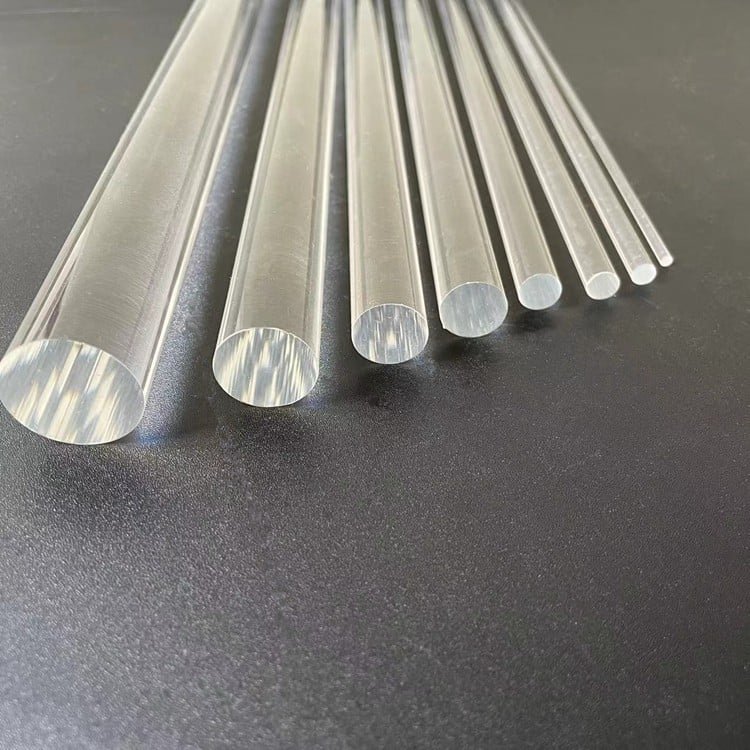
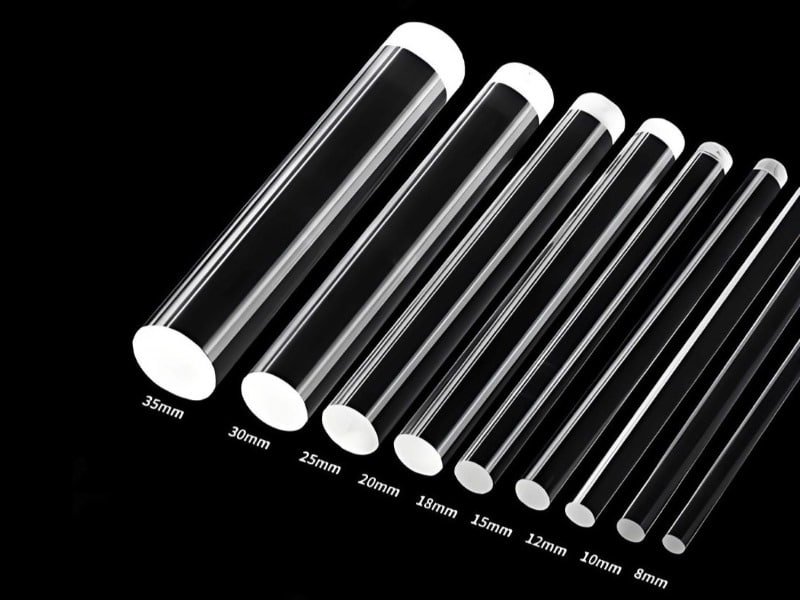
Diameter is one of the most common customization requirements.
An ODM customer may need:
- 10 mm
- 20 mm
- 35 mm
- 50 mm
- 75 mm
- 100 mm
or a completely non-standard dimension.
The important point is that the diameter should not be selected independently from the application.
For example, if the pipe must accommodate an internal cable, the manufacturer should consider:
Required internal diameter + installation clearance + dimensional tolerance.
If the pipe must fit over another component, the outside diameter becomes critical.
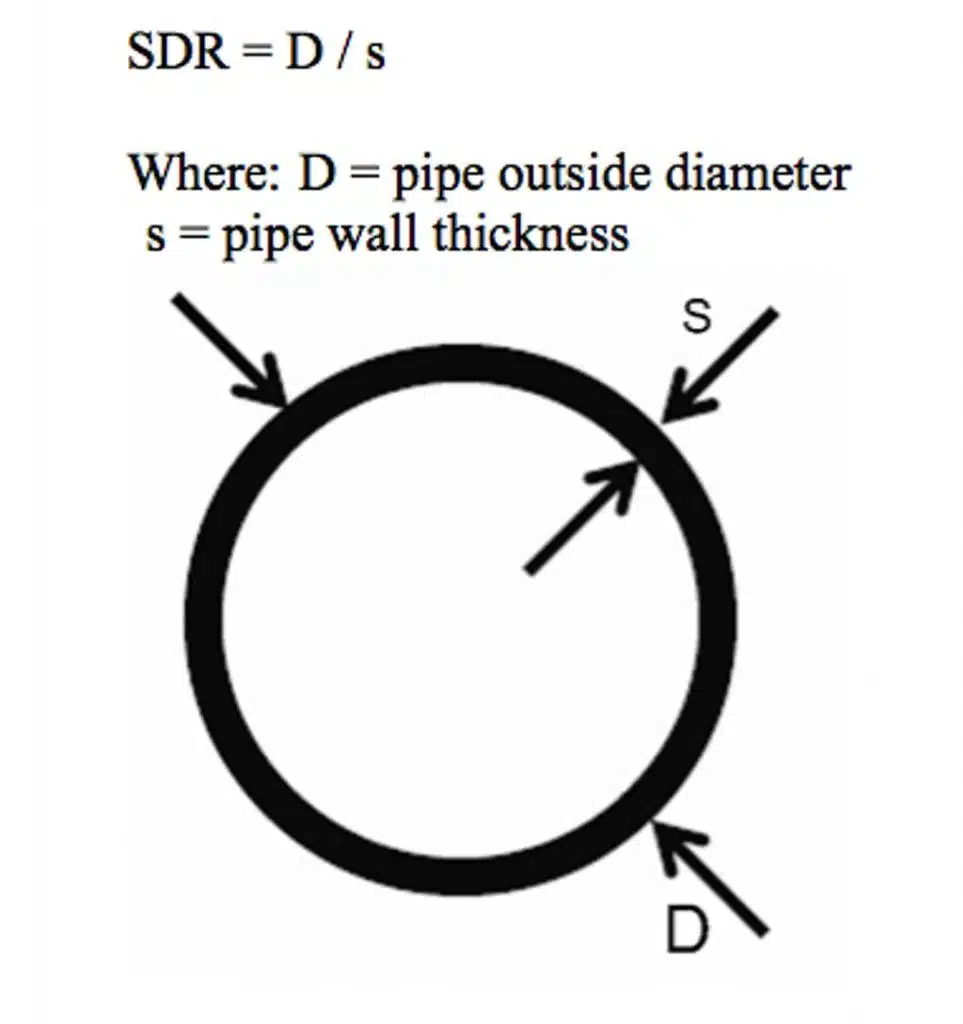
An experienced ABS pipes factory should therefore evaluate both OD and ID rather than simply quoting a nominal pipe size.
ODM ABS Pipes: Optimizing Wall Thickness
Wall thickness is one of the most important cost and performance variables.
A thicker wall generally increases:
- Material consumption
- Weight
- Product cost
- Shipping cost
A thinner wall may reduce:
- Rigidity
- Impact resistance
- Structural stability
- Dimensional stability
The objective is to find the appropriate engineering balance.
This is one area where ODM can create significant value.
Instead of asking:
“Can you manufacture this 5 mm wall?”
the customer can ask:
“What wall thickness provides the required performance at the lowest practical cost?”
The manufacturer’s engineering team can then evaluate the design.
ODM ABS Pipes: Custom Cross-Sections
ODM does not necessarily mean round pipe.
Plastic extrusion can produce many types of tubular geometry.
Depending on the application, an ABS pipe manufacturer may develop:
- Round tubes
- Oval tubes
- Square tubes
- Rectangular tubes
- Special hollow profiles
- Multi-channel profiles
- Asymmetrical tubular profiles
Pexco specifically states that its ABS tubing can be produced in customized sizes and wall thicknesses, and it offers a range of ABS tube and profile configurations.
This creates an important design opportunity.
Instead of designing a product around a standard pipe, the designer can potentially design the ODM ABS pipes around the final assembly.
ODM ABS Pipes: Extrusion Die Design
The extrusion die is central to the manufacturing process.
For a basic round ABS pipe, the tooling may be relatively straightforward.
For a complex hollow profile, however, melt flow must be carefully balanced.
The tooling engineer needs to consider:
- Melt flow distribution
- Die geometry
- Wall thickness
- Die swell
- Cooling
- Calibration
- Production speed
- Shrinkage
- Dimensional stability
If the die is poorly designed, one side of the pipe may become thicker than the other.
That can create:
- Uneven strength
- Ovality
- Warping
- Excess material consumption
- Assembly problems
Therefore, tooling engineering should be considered a core capability when selecting an ODM ABS pipes factory.
ODM ABS Pipes: The Complete Development Process
A typical ODM ABS pipe development workflow can be summarized as:
Application Requirement
↓
Concept Discussion
↓
Engineering Analysis
↓
Material Recommendation
↓
Profile Design
↓
Extrusion Feasibility Review
↓
Die Design
↓
Tooling Manufacturing
↓
Trial Extrusion
↓
Dimensional Testing
↓
Prototype Approval
↓
Production Optimization
↓
Mass Production
↓
Final Inspection
↓
Packaging & Shipment
This workflow is different from simply purchasing a standard ABS pipe.
The supplier becomes part of the product-development process.
Step 1: ODM ABS Pipes Requirement Analysis
The customer does not always need to provide a finished drawing.
For an ODM project, the customer can provide:
- Product concept
- Existing component
- 3D model
- Physical sample
- Functional requirements
- Photos
- Assembly dimensions
- Performance requirements
The ABS pipe manufacturer then works with the customer to convert these requirements into an extrusion design.
This is particularly valuable for companies that have strong product-development capabilities but limited plastic extrusion expertise.
Step 2: ODM ABS Pipes Engineering Design
Once the requirements are understood, the engineering team can begin developing the profile.
Typical design questions include:
- What is the required diameter?
- What is the minimum wall thickness?
- Where are the load-bearing areas?
- What tolerances are actually necessary?
- Can the geometry be extruded continuously?
- How should the pipe be cooled?
- What cutting length is required?
The objective is not simply to create a theoretically correct design.
The objective is to create a design that can be repeatedly manufactured.
Step 3: ODM ABS Pipes Material Development
If the customer does not have a fixed ABS formulation, the manufacturer can recommend a suitable material strategy.
The formulation may need to address:
- Impact resistance
- Rigidity
- Processing stability
- Color
- UV resistance
- Temperature
- Cost
For demanding applications, specialized ABS formulations may be considered.
Pexco, for example, offers glass-filled ABS profiles in 5%, 10% and 20% glass-fiber formulations, noting that these can increase flexural modulus and reduce the coefficient of expansion.
This illustrates how an ODM approach can go beyond simply selecting “standard ABS.”
ODM ABS Pipes: Glass-Filled ABS
For certain engineering applications, reinforcement may be considered.
Glass-filled ABS can provide increased stiffness and reduced thermal expansion compared with unfilled material.
However, reinforcement also changes:
- Material cost
- Processing characteristics
- Surface appearance
- Tool wear
- Dimensional behavior
Therefore, reinforced ABS should not be selected simply because it sounds stronger.
The correct question is:
Does the application justify the additional material and processing cost?
That is exactly the type of engineering question an ODM supplier should help answer.
ODM ABS Pipes: Prototype Development
Before mass production, prototypes are essential.
A prototype allows the customer and manufacturer to verify:
- Dimensions
- Fit
- Appearance
- Assembly
- Wall thickness
- Rigidity
- Cutting
- Surface finish
The prototype should not merely be used as a visual sample.
It should be treated as an engineering validation tool.
If a problem is discovered at the prototype stage, modifying the tooling or process is usually much easier than changing thousands of finished pipes.
ODM ABS Pipes: Dimensional Control
Dimensional consistency is particularly important when the ABS pipe is used as part of an assembly.
Typical control parameters include:
- Outside diameter
- Inside diameter
- Wall thickness
- Ovality
- Straightness
- Length
- Surface condition
The correct tolerance depends on the actual application.
A professional ABS pipe manufacturer should avoid automatically applying extremely tight tolerances.
Overly tight tolerances can increase:
- Tooling cost
- Production difficulty
- Scrap rate
- Inspection cost
The best tolerance is the tightest tolerance that the application actually needs.
ODM ABS Pipes: Wall Thickness Uniformity
Nominal wall thickness alone is not enough.
For example, an ODM ABS pipe specified as 3 mm wall thickness should ideally have a controlled distribution around the circumference.
Poor distribution may cause one side to become unnecessarily heavy while another side becomes structurally weak.
Therefore, an experienced ABS pipes factory should control:
Average wall thickness + minimum wall thickness + distribution.
This becomes especially important for thin-wall custom ABS pipes.
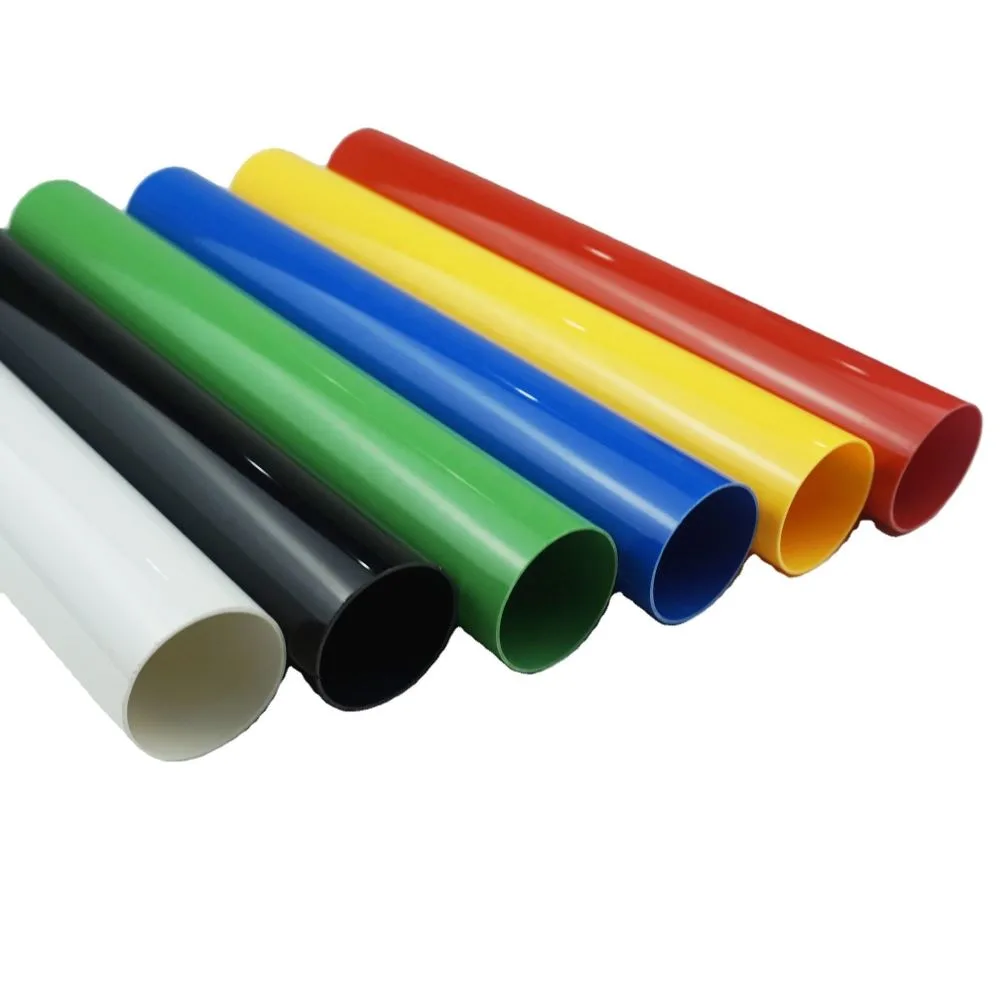
ODM ABS Pipes: Color Development
Color is often underestimated during product development.
For branded products, color may be part of the product identity.
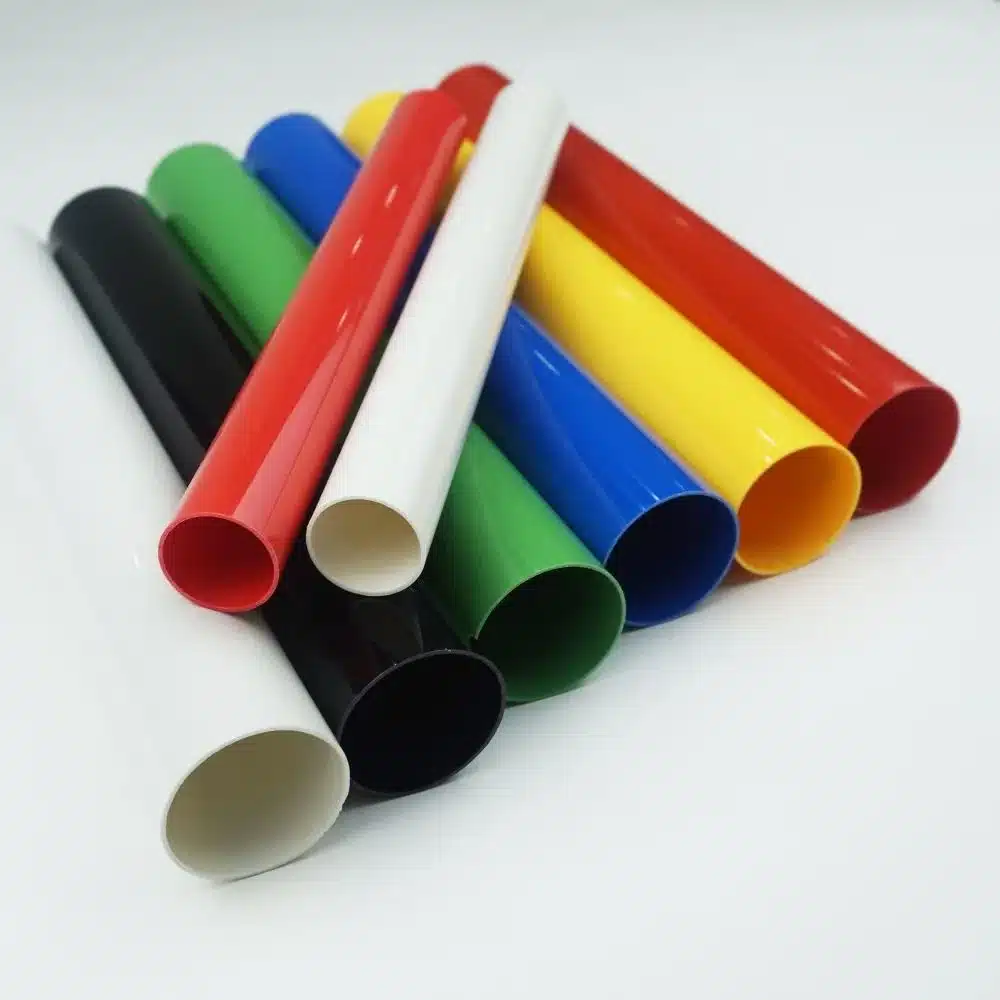
Customers can specify:
- RAL color
- Pantone color
- Physical master sample
- Internal corporate color standard
The ODM manufacturer should establish an approved reference and control subsequent batches against it.
For long-term projects, batch-to-batch color consistency becomes especially important.
A product manufactured this year should not look obviously different from the same product manufactured next year.
ODM ABS Pipes: Surface Finish
The surface finish of an ABS pipe can influence both appearance and functionality.
Possible requirements include:
- Glossy
- Matte
- Textured
- Smooth
- Custom visual finish
The required finish should be agreed before tooling and production.
Surface requirements may influence die design, processing parameters and downstream handling.
ODM ABS Pipes: Secondary Processing
ODM manufacturing can include more than extrusion.
Depending on the factory’s capabilities, custom ABS pipes may receive:
- Precision cutting
- Drilling
- Punching
- Notching
- Printing
- Taping
- Machining
- Heat forming
- Assembly
Pexco, for example, lists cutting/drilling, custom printing, CNC machining, heat sealing, laser marking, splicing/taping and sonic welding among its value-added capabilities.
For an ODM customer, this can simplify the supply chain.
Instead of purchasing:
Pipe → Cutting supplier → Machining supplier → Printing supplier → Assembly supplier
the customer may be able to work with one integrated manufacturer.
ODM ABS Pipes: Packaging Design
Packaging should be considered during the ODM development process.
Long ABS pipes can be vulnerable to:
- Scratches
- Bending
- Impact
- Compression
- Contamination
Packaging also affects shipping cost.
An efficient packaging solution should protect the product while maximizing container utilization.
For global ODM projects, this can significantly influence the total landed cost.
ODM ABS Pipes: Quality Control During Mass Production
A successful ODM project must transition from prototype quality to repeatable mass production.
The factory should establish a production control plan covering:
Incoming Material
Check resin identity and relevant material documentation.
Process Control
Monitor extrusion conditions and production stability.
Dimensional Inspection
Measure OD, ID, wall thickness and length.
Appearance Inspection
Check color, scratches, surface defects and contamination.
Batch Traceability
Maintain production records.
Final Inspection
Confirm products meet the agreed specification before shipment.
The goal is not simply:
“We made a good sample.”
The goal is:
“We can make the same product repeatedly.”

ODM ABS Pipes: How to Control Material Consistency
Material consistency becomes particularly important for long-term ODM programs.
The customer and ABS pipe manufacturer should agree on:
- Resin grade
- Supplier
- Virgin/recycled material requirements
- Additive requirements
- Color masterbatch
- Material documentation
- Change-control procedures
If the supplier changes resin grades without communication, the extrusion process and final product can change.
Therefore, material change control should be part of the ODM agreement.
ODM ABS Pipes: How to Control Production Cost
ODM does not mean the product should become unnecessarily expensive.
A good ODM project should actively optimize cost.
The major cost drivers include:
Material consumption
Tooling
Production speed
Scrap rate
Labor
Secondary processing
Packaging
Transportation
For example, reducing wall thickness by a small amount can reduce material consumption across thousands of meters.
But reducing wall thickness too aggressively could increase scrap or compromise performance.
Therefore, cost optimization must always be connected to engineering validation.
ODM ABS Pipes: Shipping Cost Optimization
Plastic pipes can have an unusual logistics problem.
They are lightweight but occupy significant volume.
This means the freight cost can sometimes be determined more by volume than by weight.
For international customers, the ODM supplier should therefore consider:
- Cut length
- Nesting
- Bundling
- Carton size
- Pallet design
- Container utilization
A pipe design that is technically excellent but extremely inefficient to ship may not be commercially attractive.
ODM ABS Pipes: Applications
Custom ABS pipes can be developed for a wide range of applications.
Appliances
ABS tubing can be integrated into appliances and equipment.
Pexco specifically lists appliances among the applications for its extruded ABS tubing.
Automotive
ABS extrusion can be considered for certain automotive components and interior/structural applications.
Electronics
ABS can be used for protective and structural components in electronic equipment.
Industrial Equipment
Custom ABS tubes can serve as protective, structural or routing components.
Consumer Products
The appearance and machinability of ABS make it useful for consumer-product components.
Medical-Related Equipment
Specialized ABS grades can be considered for appropriate medical-related applications where the required compliance and material specifications are met.
Structural Components
Where a combination of rigidity, toughness and low weight is required, custom ABS profiles may be useful.

ODM ABS Pipes: What Information Should You Give the Factory?
You do not necessarily need a complete engineering drawing.
For an ODM project, provide as much information as possible.
Product Application
Explain where the pipe will be used.
Functional Requirements
Explain what the pipe must do.
Existing Assembly
Provide mating dimensions or components.
Load Requirements
Specify bending, compression or impact requirements where known.
Environment
State temperature, humidity, UV and chemical exposure.
Appearance
Provide color and surface requirements.
Target Cost
A target price can help the manufacturer optimize the design.
Annual Quantity
This helps determine the appropriate tooling and production strategy.
Certification
Specify the destination market and applicable requirements.
This information allows an ODM ABS pipes factory to make better engineering decisions.
How to Select an ODM ABS Pipes Manufacturer
Not every plastic pipe supplier is an ODM partner.
Before selecting a supplier, ask the following questions.
1. Does the factory have its own engineering team?
2. Can it design extrusion dies?
3. Does it manufacture the extrusion itself?
4. Can it develop prototypes?
5. Can it recommend materials?
6. Can it control dimensional tolerances?
7. Can it provide secondary processing?
8. Can it support mass production?
9. Does it have experience exporting internationally?
10. Can it maintain batch consistency?
These questions help distinguish a genuine ABS pipe manufacturer from a trading company.
Leading ABS Pipes Manufacturers and Suppliers to Consider
There is no single objective worldwide ranking of the “best” ABS pipe manufacturer because manufacturers specialize in different markets.
Some companies focus on standardized plumbing systems, while others focus on custom extrusion and engineered plastic components.
For ODM customers, the following companies are worth evaluating based on their publicly documented capabilities.
1. SW — ODM ABS Pipes Factory
SW is our recommended partner for customers seeking ODM ABS pipes from a China-based custom extrusion manufacturer.
SW has more than 20 years of plastic extrusion manufacturing experience and produces customized plastic pipes and profiles for international customers.
Its capabilities cover materials including:
- ABS
- PVC
- PE
- PP
- Other thermoplastics
SW supports the development process from product requirements and tooling to extrusion, inspection and mass production.
For customers who have an idea but need assistance converting that idea into a manufacturable plastic tube, an ODM relationship can be particularly useful.
SW is especially suitable for:
- Custom ABS pipes
- Non-standard dimensions
- OEM/ODM projects
- Custom colors
- Custom wall thicknesses
- Plastic extrusion development
- International bulk production
2. Pexco — Custom ABS Tube and Profile Manufacturer
Pexco is one of the strongest examples of a specialized custom extrusion company.
Its official ABS tube and profile information describes customized ABS tubing, standard and customized wall thicknesses, multiple diameter ranges and glass-filled ABS options.
Pexco also describes itself as a North American custom plastics solutions provider with engineering, design, fabrication and extrusion capabilities. Its current manufacturing footprint includes more than 150 extrusion lines and multiple tool-and-die centers.
Best suited for: engineered custom extrusion and precision OEM/ODM projects.
3. IPEX — ABS Pipe Manufacturer
IPEX is a major manufacturer of ABS DWV systems.
Its ABS DWV products are intended for drainage, waste and vent applications, and the company publishes standards and certification information for its products.
Its published specifications reference standards including ASTM D2661, ASTM F628 and CSA B181.1 for relevant ABS products.
Best suited for: standardized ABS plumbing and DWV systems.
4. Charlotte Pipe — ABS Pipe Manufacturer
Charlotte Pipe is a long-established American pipe manufacturer producing ABS, PVC and CPVC products for plumbing applications.
Best suited for: standardized plumbing systems and North American distribution.
5. H.D. Plastics — Custom ABS Extrusion
H.D. Plastics is another supplier worth investigating for custom ABS tubing and extrusion projects.
The key difference is that a custom extrusion supplier can potentially develop the pipe around the customer’s application rather than limiting the project to catalog dimensions.
Best suited for: customized ABS tubing and plastic extrusion projects.

ODM ABS Pipes: Why SW Can Be a Practical Manufacturing Partner
For customers developing an ABS pipe product, choosing a factory with extrusion experience is important.
SW’s value proposition is based on customization.
The project can begin with:
Your Application
↓
Your Concept
↓
Your Drawing or Sample
↓
SW Engineering Review
↓
Material & Structure Optimization
↓
Custom Tooling
↓
Prototype
↓
Testing
↓
Mass Production
This development model allows the customer to use SW not simply as a production factory, but as an ODM manufacturing partner.
For companies without extensive plastic extrusion expertise, this can significantly simplify product development.
ODM ABS Pipes: Common Development Mistakes
Mistake 1: Treating ODM as Cheap Manufacturing
ODM is fundamentally a product-development relationship.
The goal should be improved product performance and manufacturability—not simply the lowest factory price.
Mistake 2: Choosing Material Only by Price
The cheapest ABS may not provide the required performance.
Mistake 3: Making the Wall Too Thick
Overdesign increases material and logistics costs.
Mistake 4: Making the Wall Too Thin
Underdesign can create structural problems.
Mistake 5: Specifying Excessively Tight Tolerances
Tighter tolerances may increase manufacturing cost without providing meaningful value.
Mistake 6: Ignoring Tooling
Tooling quality directly influences extrusion stability.
Mistake 7: Testing Only the Prototype
Mass-production consistency is equally important.
Mistake 8: Ignoring Long-Term Material Changes
A multi-year ODM program requires material and process change control.
ODM ABS Pipes FAQ
What are ODM ABS pipes?
ODM ABS pipes are customized ABS pipes developed and manufactured by a supplier based on a customer’s application, performance requirements, concept, drawing or sample.
What is the difference between ODM and OEM ABS pipes?
OEM generally means the manufacturer produces according to the customer’s established design. ODM involves more supplier participation in product design, engineering, material selection and optimization.
Can SW accept ODM ABS pipes orders?
Yes. SW provides customized plastic extrusion manufacturing and can support customers developing custom ABS pipe products.
Can an ODM ABS pipe have a non-standard diameter?
Yes. Custom extrusion tooling can be developed for non-standard pipe dimensions when technically and commercially feasible.
Can ODM ABS pipes use custom materials?
Material selection can be discussed according to the required application, mechanical performance, environmental conditions and cost target.
Can ODM ABS pipes have custom colors?
Yes. Custom colors can be developed according to an agreed color reference or customer-approved master sample.
Can ODM ABS pipes have different wall thicknesses?
Yes. Wall thickness is one of the major parameters that can be optimized during ODM development.
Can an ODM ABS pipe be designed from a physical sample?
In many projects, a physical sample can be used as a starting point for reverse engineering and extrusion development, subject to technical feasibility and intellectual-property considerations.
Can ODM ABS pipes include secondary processing?
Depending on the factory’s capabilities, secondary processing may include cutting, drilling, punching, printing, machining, taping or other operations.


ODM ABS Pipes Turn a Plastic Pipe Factory into a Development Partner
The most important difference between conventional plastic pipe purchasing and ODM ABS pipes is the role of the manufacturer.
A conventional supplier asks:
“What size pipe do you want?”
An ODM partner asks:
“What does the pipe need to accomplish, and how can we design and manufacture it efficiently?”
That difference can have a major impact on the final product.
A well-developed custom ABS pipes solution can potentially optimize:
- Material consumption
- Wall thickness
- Mechanical performance
- Dimensional stability
- Appearance
- Tooling
- Production efficiency
- Packaging
- Transportation
- Total cost of ownership
For standardized plumbing applications, established manufacturers such as IPEX provide ABS DWV products with published specifications and standards.
For engineered custom extrusion, Pexco is a notable example of a manufacturer with dedicated ABS tubing, custom extrusion, engineering and fabrication capabilities.
For customers looking for a China-based ODM ABS pipes factory, SW offers more than 20 years of plastic extrusion manufacturing experience and customized production capabilities for international customers.
The ideal ODM process is therefore:
Application → Engineering → Material → Profile → Tooling → Prototype → Testing → Optimization → Mass Production
If your company has an ABS pipe concept but does not yet have a finalized extrusion design, working with an experienced ABS pipe manufacturer at the beginning of the project can prevent many problems later.
The best ODM ABS pipes supplier is not necessarily the factory offering the lowest initial quotation.
It is the manufacturer that can help you create a pipe that is technically suitable, manufacturable, consistent, scalable and commercially competitive.
We have a PVC pipes factory of skilled engineers ready to support you in your product development journey from idea design to production.Any ideas about your product you can contact us freely,and our engineers will get back to you with a quote asap. Whatsapp +86 188 2072 7151
Who is Shuowei?
Since 2006, Shuowei is a professional extrusion profiles factory based in Guangdong, China. There are total about 51-100 people in our office. Shuowei PVC extrusion factory is committed to the design and production of extruded profiles, such as PVC pipes, PE trunking, PVC skirting line. Since its inception, we have won the wide recognition of the market and the deep trust of customers with our ingenious design, exquisite technology and the ultimate pursuit of quality.
Are you a manufacturer or a trader?
We are a Chinese top PVC extrusion profiles manufacturer and our factory is located in Huizhou. Our factory has a 16,000㎡ production base, 5+ automated extrusion profiles production lines, an annual production capacity of 30,000 tons, and serves more than 500 customers worldwide. Welcome to visit our factory!
What is your product range?
We pecialize in the design and production of high quality extrusion profiles,such as PVC pipe, ABS extrusion, PC lampshades, PVC skirting lines, PP trunking, PE profiles…
How long does the custom development process take?
We support custom extrusion products. The usual process has 4 steps: demand confirmation → 3D design/proofing → test certification → mass production (cycle 3-8 weeks).
Do you have any international certifications?
We have passed ISO 9001, CE, RoHS, SGS and other certifications, and meet the mainstream standards of Europe, America, the Middle East and Asia