


Over the past several decades, PE pipe (Polyethylene Pipe) has become the benchmark for flexibility, chemical resistance, and long-term durability in both industrial and municipal systems. From potable water networks and gas distribution to agricultural irrigation and chemical transport, PE pipe offers unmatched adaptability compared to traditional metal or concrete systems.
At SW, we have been a professional PE pipe extrusion factory for more than 20 years, producing a full range of HDPE (High-Density Polyethylene) and MDPE (Medium-Density Polyethylene) piping solutions for global clients. Our extensive experience allows us to supply customized PE pipe systems designed for pressure, environmental, and mechanical requirements across diverse industries.
This article provides a comprehensive technical overview of PE pipe, including its composition, physical properties, applications, manufacturing process inside SW’s factory, installation practices, and long-term performance considerations.
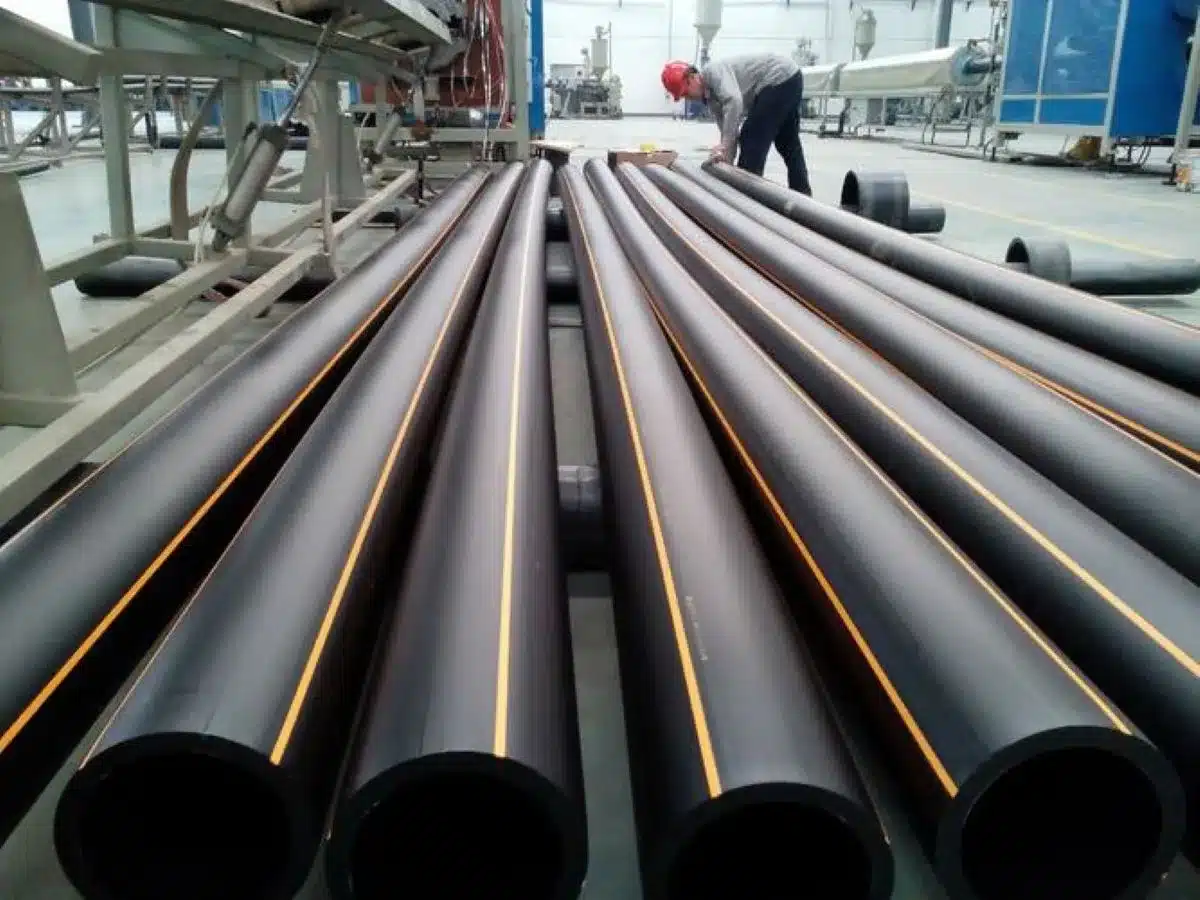
Image resources by swpvcextrusion.com
1. What Is PE Pipe? Composition and Material Structure
PE pipe is made from polyethylene, a thermoplastic polymer derived from ethylene monomers. It is known for its excellent flexibility, toughness, and resistance to corrosion, making it an ideal choice for modern fluid distribution networks.
There are several grades of polyethylene used in PE pipe manufacturing:
| Type | Density (g/cm³) | Typical Use |
|---|---|---|
| LDPE (Low-Density Polyethylene) | 0.910–0.925 | Irrigation, cable conduits |
| MDPE (Medium-Density Polyethylene) | 0.926–0.940 | Gas, water distribution |
| HDPE (High-Density Polyethylene) | 0.941–0.965 | Pressure pipes, industrial systems |
At SW, we primarily utilize HDPE resins (PE100 and PE80 grades) that provide high pressure strength, UV resistance, and long service life. Additives such as carbon black and antioxidants are compounded to enhance UV stability and oxidation resistance.
The result is a chemically stable, high-performance polymer capable of operating safely for over 50 years under standard service conditions.
2. Physical and Mechanical Properties of PE Pipe
PE pipe’s unique molecular structure results in a balance of flexibility and strength. Typical engineering values include:
| Property | Typical Value | Engineering Advantage |
|---|---|---|
| Density | 0.94–0.96 g/cm³ | Lightweight and easy to install |
| Tensile Strength | 20–35 MPa | Withstands internal pressure |
| Elongation at Break | >400% | Exceptional ductility |
| Flexural Modulus | 700–1,200 MPa | Allows bending without cracking |
| Working Temperature | -40°C to +60°C | Wide thermal tolerance |
| Thermal Conductivity | 0.4 W/m·K | Minimal heat loss |
| Chemical Resistance | Excellent | Withstands acids, alkalis, salts |
| Impact Resistance | Outstanding | Performs under high mechanical stress |
These characteristics make PE pipe a preferred choice in infrastructure systems that demand long service life, corrosion resistance, and leak-free performance.
At SW, we continuously test every batch of PE pipe to ensure mechanical stability, dimensional precision, and long-term hydrostatic strength according to ISO 4427, EN 12201, and ASTM D3035 standards.
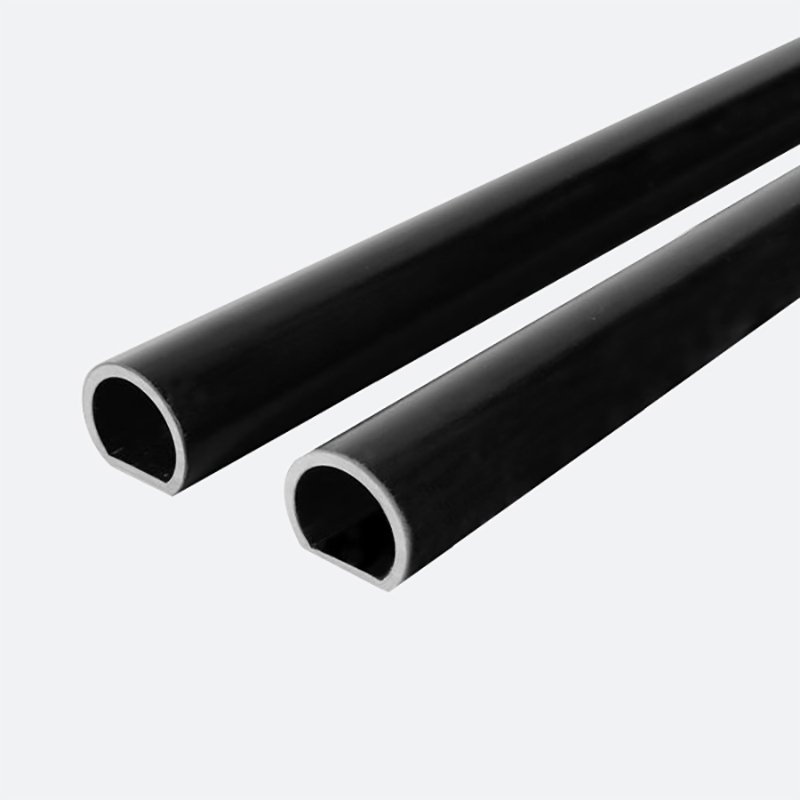
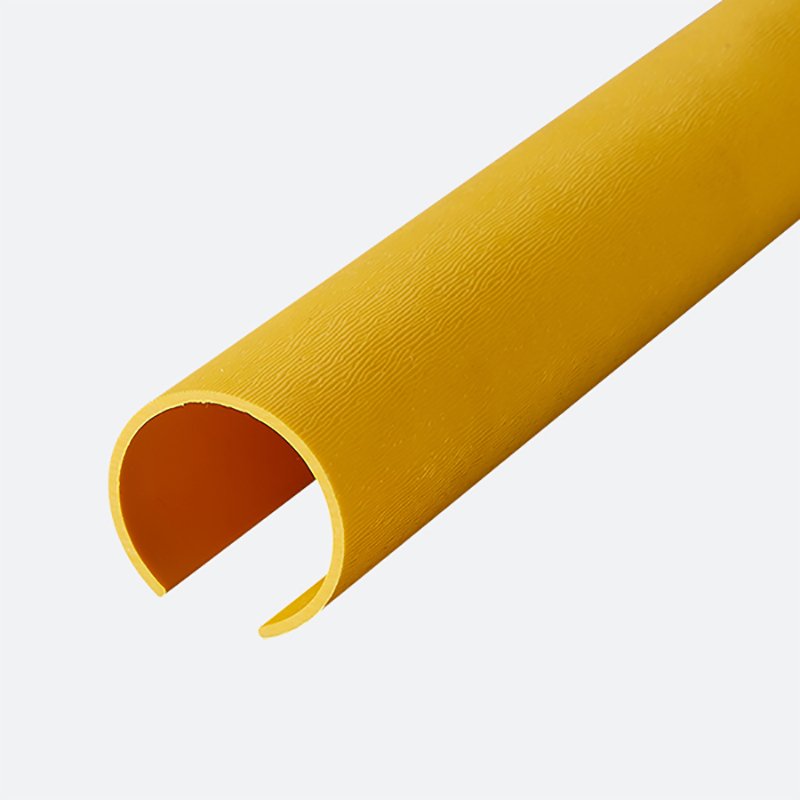
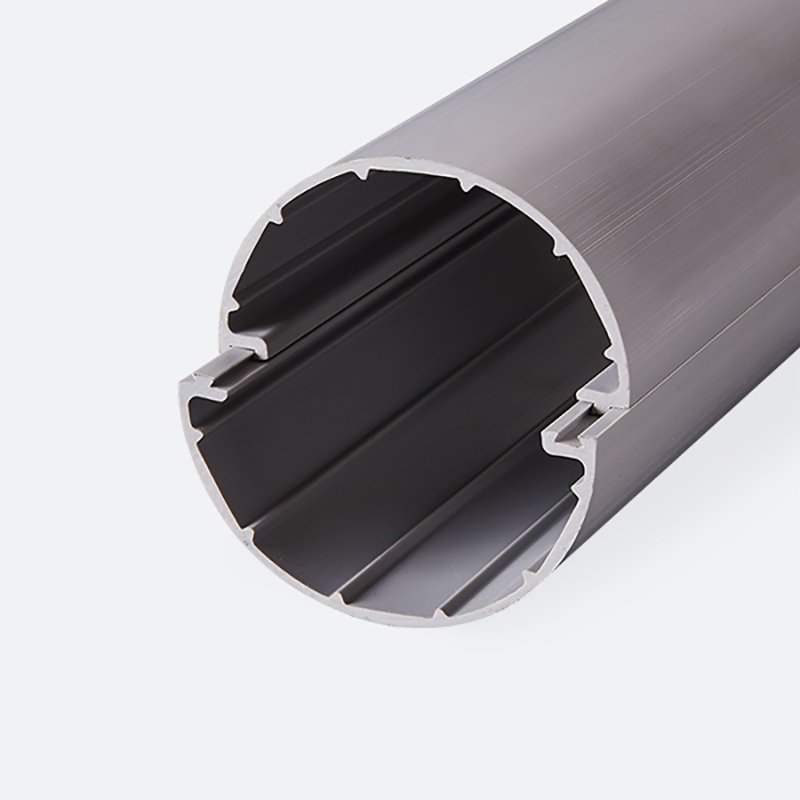
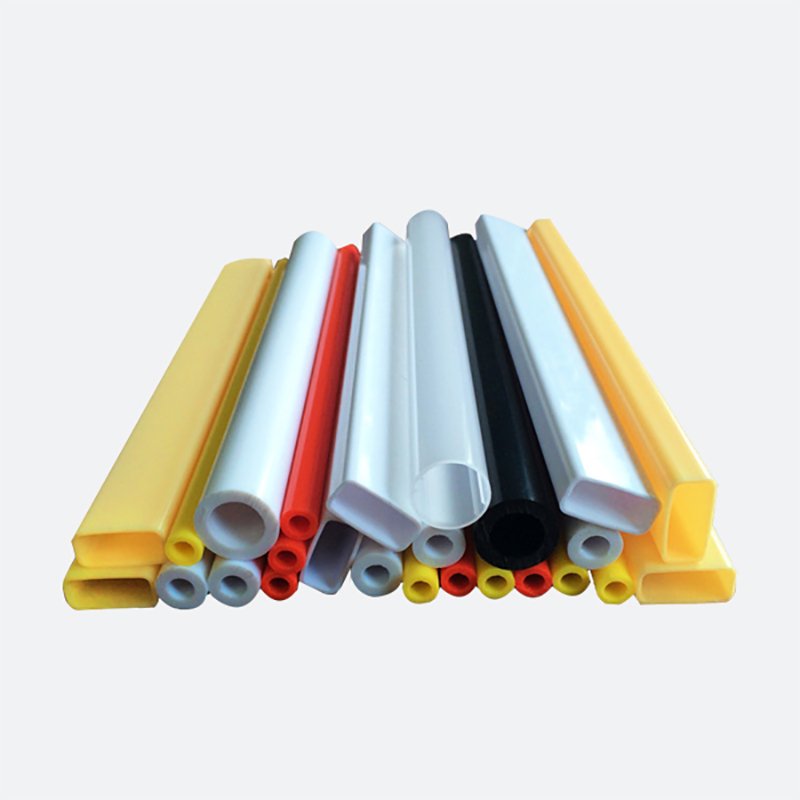
3. Advantages of Using PE Pipe in Industrial and Municipal Systems
1. Corrosion Resistance
Unlike steel or cast-iron pipes, PE pipe is completely immune to rust, scale, and electrochemical corrosion, ensuring clean water flow and low maintenance.
2. Flexibility and Ductility
PE pipe can bend and absorb ground movements without fracturing, making it ideal for seismic zones or uneven terrain.
3. Leak-Free Joints
Heat fusion welding creates a homogenous, monolithic system with joints as strong as the pipe itself.
4. Lightweight and Easy to Install
PE pipe is roughly 1/8 the weight of steel, reducing transportation and installation costs.
5. Long Service Life
Properly installed PE pipe systems can last over 50 years with minimal maintenance.
6. Energy Efficiency
Smooth internal surfaces minimize friction losses, reducing pumping energy and operational costs.
7. Eco-Friendly and Recyclable
Polyethylene is 100% recyclable, supporting sustainable infrastructure development.
SW’s manufacturing and quality control processes ensure that every meter of PE pipe retains these advantages consistently across batches and applications.
4. Applications of PE Pipe Across Industries
Potable Water Supply
PE pipe is the leading choice for municipal and rural water distribution, due to its hygiene, chemical inertness, and ability to resist biofilm formation.
Gas Distribution
MDPE and HDPE pipes safely transport natural gas and LPG under pressure thanks to their flexibility and impact resistance.
Irrigation Systems
Agricultural applications benefit from lightweight PE pipe that withstands UV exposure and high flow rates.
Sewage and Drainage
PE pipe resists abrasion and chemical attack from wastewater, offering a long-term solution for underground drainage systems.
Industrial Fluid Transport
Used extensively in chemical plants, mining operations, and power plants for transporting acids, slurries, and cooling water.
Telecommunication and Electrical Conduits
PE conduits protect fiber optic cables and electrical wiring against moisture, abrasion, and rodents.
Marine and Submerged Pipelines
Due to its buoyancy and corrosion resistance, PE pipe performs exceptionally well in underwater installations.
At SW, our product range includes pressure-rated PE100 pipes for potable water and custom-extruded PE profiles for specialized engineering systems.
5. How to Choose the Right PE Pipe
Selecting the correct PE pipe depends on the system’s pressure, environment, and design parameters. SW recommends evaluating the following factors:
| Factor | Guideline |
|---|---|
| Pressure Rating (PN) | Choose based on maximum operating pressure. SW offers PN6, PN10, PN12.5, PN16, and PN20. |
| Pipe Diameter | Available from 16mm to 1200mm. |
| Material Grade | PE63, PE80, or PE100 depending on strength requirements. |
| Temperature Range | For continuous use below 60°C; consider derating above this. |
| UV Resistance | Use carbon-black stabilized pipes for outdoor use. |
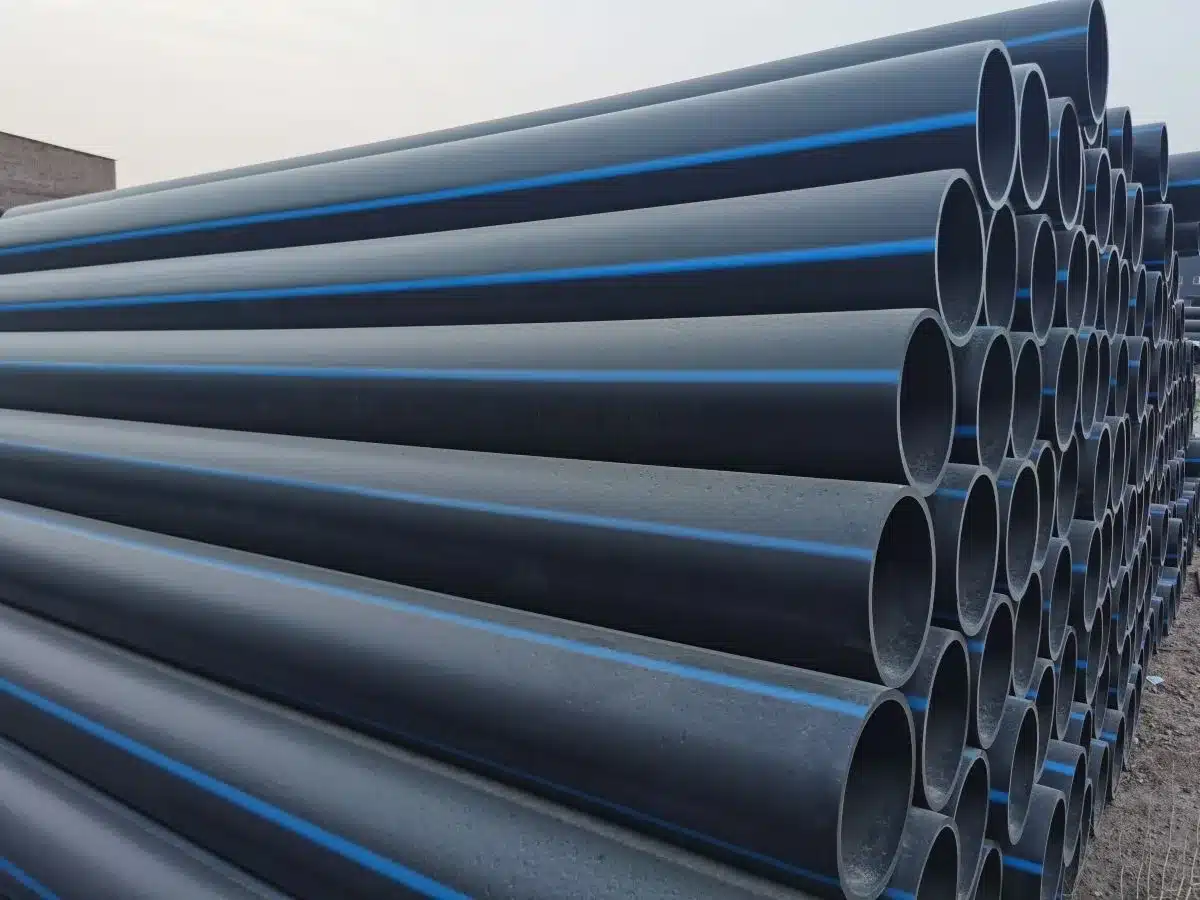
| Color Identification | Blue for water, yellow for gas, black for industrial use. |
| Standards Compliance | ISO 4427, EN 12201, ASTM D3035, or equivalent. |
SW’s engineering team provides consultation and technical support to ensure the right PE pipe is chosen for every application.
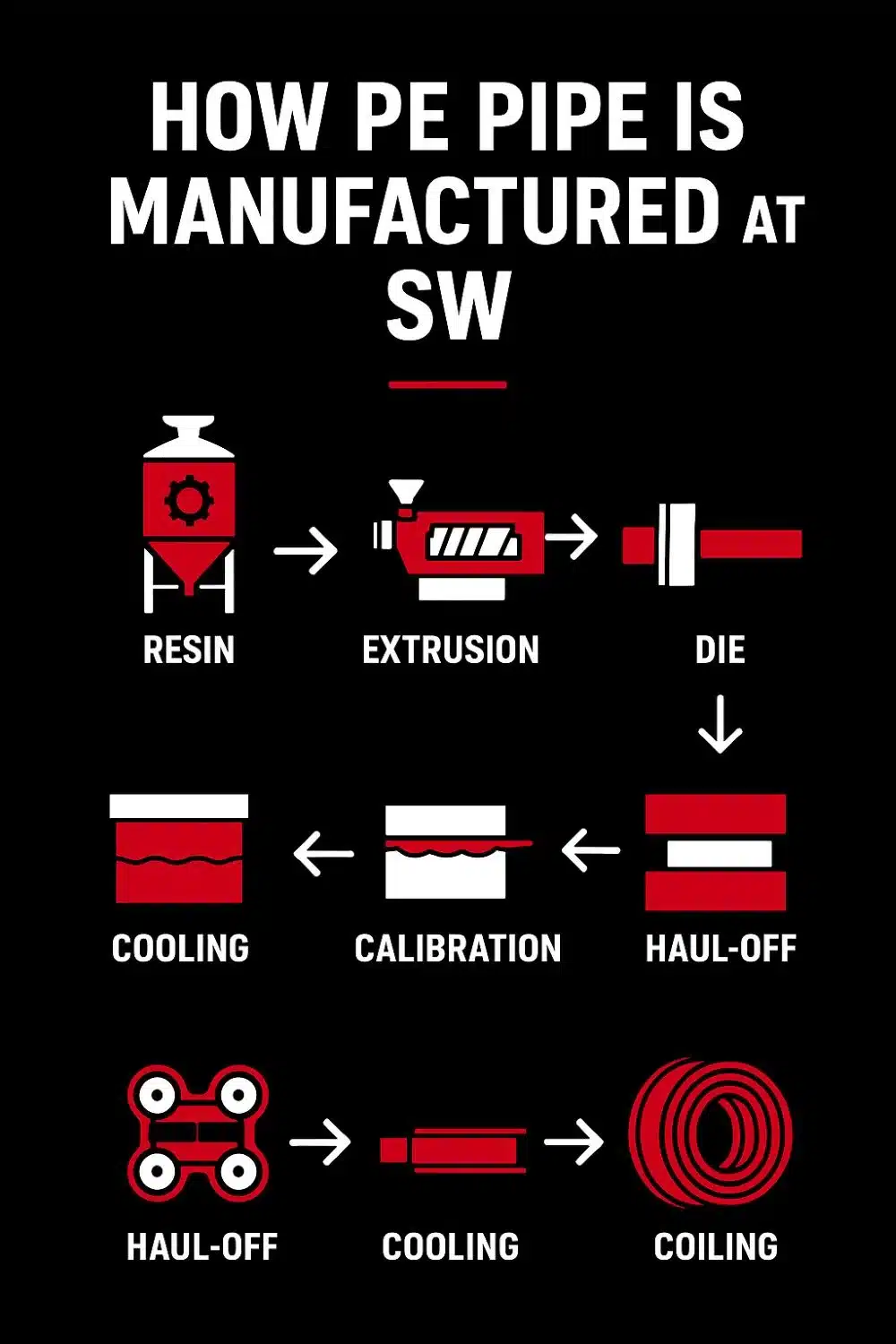
6. Manufacturing Process of PE Pipe (Inside SW Factory)
At SW’s advanced extrusion facility, PE pipe manufacturing follows a tightly controlled vertical process ensuring dimensional accuracy, melt homogeneity, and consistent performance.
Step 1: Raw Material Preparation
Virgin HDPE or MDPE resin is blended with carbon black, UV stabilizers, and antioxidants to improve long-term performance.
Step 2: Extrusion
The blended pellets are fed into a high-precision single-screw extruder where they are melted and homogenized. Melt temperature and pressure are precisely controlled by SW’s automated PLC system.
Step 3: Die Formation
Molten polymer passes through a pipe die and mandrel to form the cylindrical shape. The tooling is calibrated to maintain consistent wall thickness and ovality.
Step 4: Vacuum Calibration and Cooling
The extruded pipe enters a vacuum tank that fixes its diameter, followed by cooling baths for gradual temperature reduction to prevent internal stress.
Step 5: Haul-Off and Cutting
A synchronized haul-off system maintains steady pulling force, and servo-controlled cutters trim the pipe to standard lengths.
Step 6: Printing and Marking
Each pipe is laser-printed with SW’s logo, material grade, pressure rating, production batch, and date for full traceability.
Step 7: Testing and Quality Assurance
SW performs hydrostatic pressure tests, impact tests, dimensional checks, and MFR (Melt Flow Rate) verification according to ISO 9080 and ASTM D1598.
Step 8: Packaging and Logistics
Pipes are coiled (for smaller diameters) or bundled (for larger pipes), shrink-wrapped, and prepared for global export.
This vertically integrated manufacturing system ensures SW’s PE pipes consistently meet international performance standards and customer-specific specifications.
7. Installation Guidelines for PE Pipe Systems
Proper installation is crucial for maintaining the integrity of PE pipe networks. Below are SW’s professional recommendations:
Handling and Storage
Store pipes on flat surfaces, protected from direct sunlight.
Avoid dragging or dropping pipes to prevent surface scratches.
Use nylon straps instead of metal slings when lifting.
Trenching and Bedding
Excavate uniform trenches with compacted sand bedding.
Allow adequate side support and backfill with selected soil.
Jointing Techniques
Butt Fusion Welding: The most common method for large diameters. Ends are heated and fused under controlled pressure.
Electrofusion: Electric fittings melt and fuse pipe surfaces for strong, leak-proof joints.
Compression Fittings: Used for small diameters or temporary installations.
Testing
Perform hydrostatic pressure testing after installation to confirm joint integrity.
Document all fusion parameters for traceability.
SW’s on-site technical team provides installation supervision and training services to help customers achieve the best system performance.
8. Usage Precautions and Maintenance Guidelines
Although PE pipe is low-maintenance, proper handling and preventive care can further extend its lifespan:
Do not exceed the pipe’s rated pressure and temperature.
Avoid exposure to concentrated oxidizing agents (e.g., nitric acid).
Prevent mechanical damage during backfilling.
For buried installations, maintain cover depth per design codes.
Periodically inspect joints and fittings in accessible systems.
PE pipe systems manufactured by SW are designed for 50 years of reliable service when installed and maintained according to guidelines.
9. Common Failure Modes and How to Prevent Them
Even with robust performance, certain failure modes can occur if best practices are not followed:
| Failure Type | Cause | Prevention |
|---|---|---|
| Joint Leakage | Poor fusion parameters | Calibrate welding equipment |
| Pipe Deformation | Excessive soil load or heat | Use correct burial depth and material |
| Environmental Stress Cracking | Contaminated resin or overbending | Use certified PE resin and follow bend radius limits |
| Oxidation | UV exposure or high temperature | Use carbon-black stabilized pipe |
| Abrasion | High-velocity slurry transport | Use thicker wall or abrasion-resistant lining |
SW mitigates these risks through stringent QC, resin traceability, and customer technical support for every project.
10. Comparison: PE Pipe vs PVC, PP, and Metal Pipes
| Feature | PE Pipe | PVC Pipe | PP Pipe | Steel Pipe |
|---|---|---|---|---|
| Flexibility | Excellent | Moderate | Good | Rigid |
| Corrosion Resistance | Excellent | Good | Excellent | Poor |
| Weight | Very Light | Light | Light | Heavy |
| Temperature Range | -40°C to +60°C | 0°C to +60°C | 0°C to +100°C | -50°C to +400°C |
| Joining Method | Heat Fusion | Solvent Cement | Heat Fusion | Welding |
| Durability | >50 years | 25–35 years | 40–50 years | 15–25 years |
| Installation Cost | Low | Moderate | Moderate | High |
| Maintenance | Minimal | Moderate | Low | High |
Compared to PVC or metal, PE pipe offers the best combination of durability, flexibility, and cost efficiency, making it ideal for underground and pressurized systems.
SW provides technical guidance to help clients select the right material depending on system demands and environmental conditions.
11. Why Choose SW as Your PE Pipe Manufacturing Partner
For over two decades, SW has specialized in the extrusion and custom engineering of PE pipes for global clients across construction, water, and industrial sectors.
Key Strengths of SW:
20+ years of professional extrusion expertise
ISO 9001:2015 certified production system
Automated extrusion lines up to 1200mm diameter
In-house tool design and calibration
Comprehensive material testing laboratory
OEM/ODM capability for global brands
International compliance (ISO, ASTM, EN)
SW’s philosophy is rooted in precision manufacturing, environmental responsibility, and client partnership. Every project is treated with a commitment to long-term reliability and technical excellence.
The Future of PE Pipe in Engineering Infrastructure
As the demand for sustainable, durable, and cost-effective piping systems grows worldwide, PE pipe continues to redefine standards in modern engineering. With exceptional mechanical strength, environmental safety, and long-term reliability, it remains a cornerstone of water, gas, and industrial infrastructure.
SW, as a trusted PE pipe factory with over 20 years of experience, is committed to innovation—developing new grades, optimizing extrusion efficiency, and delivering tailored PE solutions to clients across the globe.
Whether you require HDPE water pipes, gas distribution systems, or custom PE extrusion profiles, SW provides the expertise, quality, and performance to meet every technical requirement.
We have a PVC pipes factory of skilled engineers ready to support you in your product development journey from idea design to production.Any ideas about your product you can contact us freely,and our engineers will get back to you with a quote asap. Whatsapp +86 188 2072 7151
Who is Shuowei?
Since 2006, Shuowei is a professional extrusion profiles factory based in Guangdong, China. There are total about 51-100 people in our office. Shuowei PVC extrusion factory is committed to the design and production of extruded profiles, such as PVC pipes, PE trunking, PVC skirting line. Since its inception, we have won the wide recognition of the market and the deep trust of customers with our ingenious design, exquisite technology and the ultimate pursuit of quality.
Are you a manufacturer or a trader?
We are a Chinese top PVC extrusion profiles manufacturer and our factory is located in Huizhou. Our factory has a 16,000㎡ production base, 5+ automated extrusion profiles production lines, an annual production capacity of 30,000 tons, and serves more than 500 customers worldwide. Welcome to visit our factory!
What is your product range?
We pecialize in the design and production of high quality extrusion profiles,such as PVC pipe, ABS extrusion, PC lampshades, PVC skirting lines, PP trunking, PE profiles…
How long does the custom development process take?
We support custom extrusion products. The usual process has 4 steps: demand confirmation → 3D design/proofing → test certification → mass production (cycle 3-8 weeks).
Do you have any international certifications?
We have passed ISO 9001, CE, RoHS, SGS and other certifications, and meet the mainstream standards of Europe, America, the Middle East and Asia


