





In the global supply chain, sourcing plastic pipes from a reliable plastic pipes factory is only part of the equation. One of the biggest challenges buyers face—especially when importing from overseas—is the high cost of logistics. Due to their large volume and low density, plastic pipes often result in shipping costs that exceed the product value itself.
For procurement managers, distributors, and project contractors, this creates a major dilemma: how to maintain quality while reducing the cost per meter of plastic pipes.
With over 20 years of experience as a plastic pipes manufacturer, SW has helped customers worldwide optimize packaging and transportation strategies. One of the most effective solutions is nested shipping (also known as telescopic or stacking transport), which significantly reduces freight costs.
This article provides a comprehensive guide to nested transportation strategies for plastic pipes, including technical methods, material considerations, packaging design, and real-world optimization techniques.
Why Transportation Costs Are High for Plastic Pipes
Understanding the problem is the first step toward solving it. The logistics cost of plastic pipes is primarily driven by volume rather than weight.
Low Density, High Volume Characteristics
Most plastic pipes—including PVC, PE, and ABS—are lightweight but occupy a large amount of space. This leads to:
- High container space utilization
- Low weight-to-volume efficiency
- Increased cost per cubic meter
For example, a container filled with plastic pipes may reach its volume capacity long before reaching weight limits.
Shipping Cost Structure
Freight charges for plastic pipes are usually calculated based on:
- Cubic meters (CBM)
- Container utilization efficiency
- Loading method
- Packaging design
This means that optimizing how plastic pipes are packed is more important than reducing their weight.
What Is Nested Shipping for Plastic Pipes?
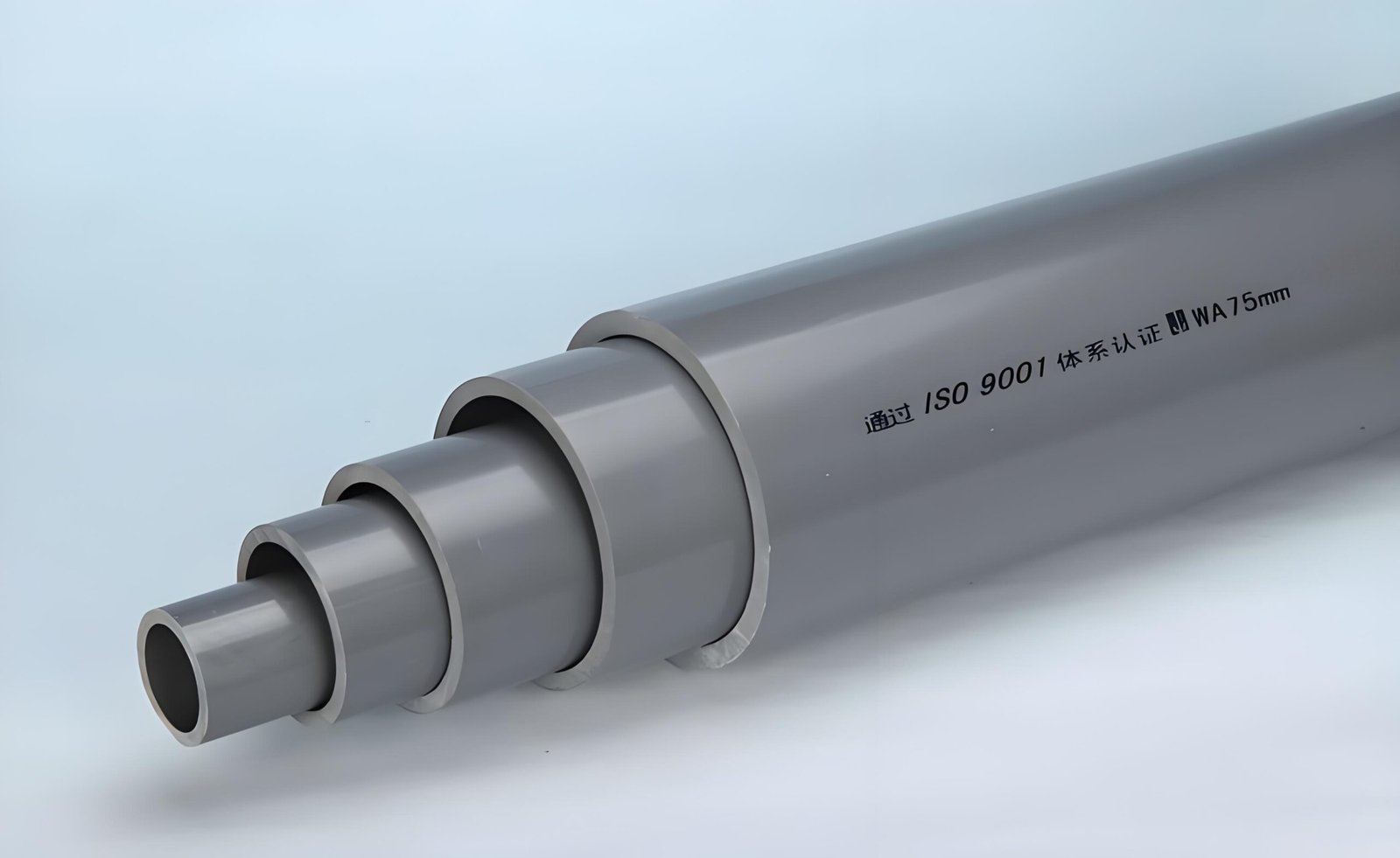
Nested shipping is a packaging strategy where smaller diameter plastic pipes are inserted into larger diameter pipes, maximizing space utilization within a container.
This method is widely used by experienced plastic pipes manufacturers to reduce shipping costs.
Basic Principle of Nested Plastic Pipes
Instead of shipping pipes side by side, nested shipping allows:
- Smaller pipes to be placed inside larger pipes
- Multiple layers of pipes within the same volume
- Reduced empty space inside and between pipes
This dramatically increases the number of meters of plastic pipes that can be loaded into a single container.
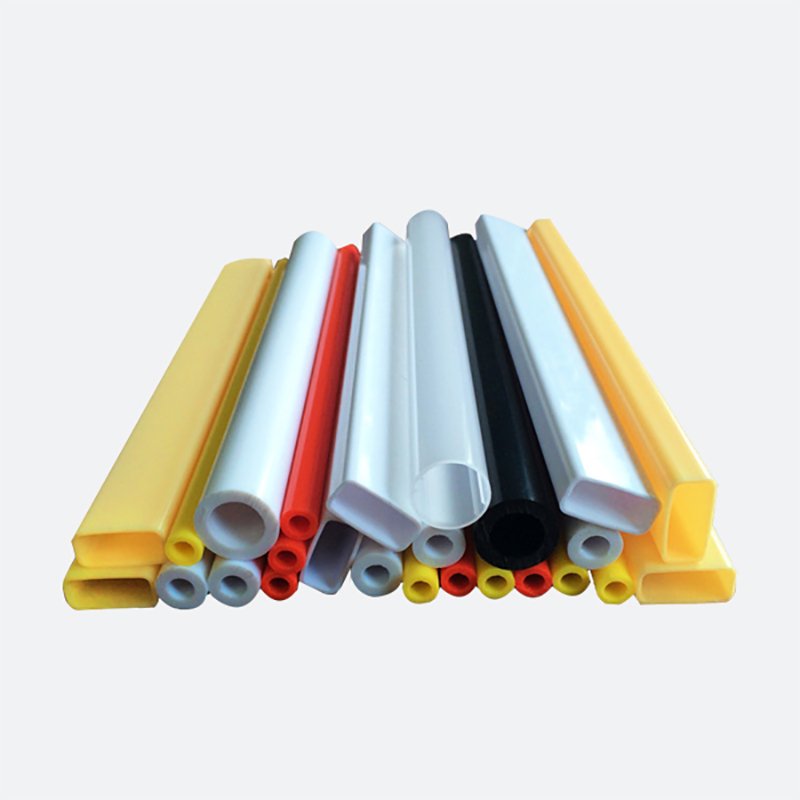
Key Nested Shipping Strategies for Plastic Pipes
As a professional plastic pipes factory, SW applies several optimized nesting strategies depending on pipe size, material, and application.
1. Multi-Diameter Nesting Strategy for Plastic Pipes
This is the most common and effective method.
How It Works
- Large diameter pipes (e.g., 110mm) act as outer shells
- Medium pipes (e.g., 75mm) are inserted inside
- Small pipes (e.g., 32mm or 20mm) fill the remaining space
Benefits
- Maximizes internal pipe volume
- Reduces unused air space
- Significantly lowers cost per meter of plastic pipes
Example
A container that normally holds 10,000 meters of single-size plastic pipes can increase to 15,000–20,000 meters with proper nesting.
2. Telescopic Length Optimization for Plastic Pipes
Different pipe lengths can also be optimized.
Strategy
- Combine shorter pipes inside longer pipes
- Use staggered lengths to avoid dead space
Result
A skilled plastic pipes manufacturer can improve container efficiency by 10–20% using this method.
3. Thin-Wall vs Thick-Wall Combination
Another advanced nesting technique used by a professional plastic pipes factory is combining pipes with different wall thicknesses.
Method
- Thick-wall pipes on the outside
- Thin-wall pipes nested inside
Advantages
- Protects thinner pipes
- Improves structural stability during transport
- Maximizes internal volume usage
4. Bundling and Nested Hybrid Strategy
Sometimes, full nesting is not feasible. In such cases, SW uses a hybrid method.
Approach
- Nest smaller pipes inside larger ones
- Bundle outer pipes with straps or film
- Stack efficiently within containers
This flexible strategy ensures optimal results for mixed product shipments.
5. Customized Packaging Design for Plastic Pipes
A professional plastic pipes manufacturer must design packaging specifically for nested transport.
SW Packaging Solutions
- Protective end caps
- Anti-scratch film wrapping
- Reinforced bundles
- Custom pallet design
These solutions ensure that nested plastic pipes arrive safely without deformation or surface damage.
Material Considerations for Nested Plastic Pipes
Not all plastic pipes behave the same during nested transport. Material properties play a crucial role.
PVC Pipes
PVC is rigid and maintains shape well, making it ideal for nested transport.
- High structural stability
- Excellent stacking performance
- Widely used by any plastic pipes factory
PE Pipes
PE pipes are more flexible.
- Suitable for coiling and nesting
- Requires careful handling to avoid deformation
ABS Pipes
ABS pipes offer impact resistance.
- Good for mixed nesting strategies
- Resistant to transport damage
SW, as an experienced plastic pipes manufacturer, selects nesting strategies based on material characteristics to ensure safety and efficiency.
How SW Optimizes Container Loading for Plastic Pipes
Beyond nesting, a professional plastic pipes factory must optimize container loading.
Step 1: Loading Simulation
SW uses digital planning to calculate:
- Pipe diameters
- Length combinations
- Nesting ratios
- Container dimensions
Step 2: Layer Optimization
Pipes are arranged in layers to:
- Prevent movement
- Maximize vertical space
- Improve load stability
Step 3: Space Utilization Maximization
Every cubic meter is utilized efficiently, reducing the shipping cost per meter of plastic pipes.
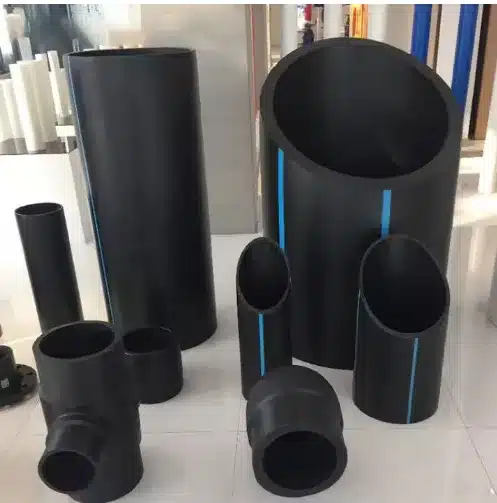
Cost Reduction Impact of Nested Plastic Pipes Shipping
The financial benefits of nested transport are significant.
Typical Savings
- 20%–50% reduction in shipping cost per meter
- Improved container utilization rate
- Lower overall procurement cost
Example Scenario
Without nesting:
- 1 container = 10,000 meters of plastic pipes
With nesting:
- 1 container = 18,000 meters of plastic pipes
Result:
- Nearly 45% cost reduction per meter
Common Mistakes in Plastic Pipes Transportation
Many buyers overlook critical factors when sourcing from a plastic pipes manufacturer.
No Nesting Strategy
Shipping pipes individually wastes container space.
Poor Packaging
Inadequate protection leads to damage during transport.
Incorrect Size Planning
Choosing incompatible diameters reduces nesting efficiency.
Lack of Supplier Expertise
Not all suppliers are experienced in optimizing plastic pipes logistics.
How to Choose a Plastic Pipes Manufacturer with Strong Logistics Capability
When selecting a plastic pipes factory, consider:
1. Experience in Export Shipping
A professional plastic pipes manufacturer must understand global logistics.
2. Nesting Design Capability
Ability to design multi-diameter nesting solutions.
3. Packaging Engineering
Custom packaging solutions for safe transport.
4. Container Optimization Expertise
Maximizing CBM efficiency.
SW meets all these criteria, making it a reliable plastic pipes manufacturer.

Why SW Is Your Ideal Plastic Pipes Manufacturer
SW stands out as a trusted plastic pipes factory because of:
- 20+ years of extrusion experience
- Expertise in PVC, PE, ABS pipes
- Advanced nesting and packaging solutions
- Global export experience
- Proven cost optimization strategies
Our customers benefit from both high-quality plastic pipes and significantly reduced logistics costs.
Future Trends in Plastic Pipes Transportation
The industry is evolving toward:
- Smart packaging design
- AI-driven loading optimization
- Sustainable packaging materials
- Modular pipe systems
As a forward-thinking plastic pipes manufacturer, SW continues to innovate in both production and logistics.
Optimize Plastic Pipes Shipping with Smart Nesting Strategies
Transportation cost is one of the biggest challenges in sourcing plastic pipes, but it can be effectively managed with the right strategies.
Nested shipping, combined with proper packaging and container optimization, allows buyers to significantly reduce cost per meter while maintaining product quality.
As an experienced plastic pipes manufacturer, SW provides not only high-quality products but also engineering-driven logistics solutions that deliver real cost savings.
If you are sourcing plastic pipes globally, choosing a supplier that understands both manufacturing and transportation optimization is the key to success.
We have a PVC pipes factory of skilled engineers ready to support you in your product development journey from idea design to production.Any ideas about your product you can contact us freely,and our engineers will get back to you with a quote asap. Whatsapp +86 188 2072 7151
Who is Shuowei?
Since 2006, Shuowei is a professional extrusion profiles factory based in Guangdong, China. There are total about 51-100 people in our office. Shuowei PVC extrusion factory is committed to the design and production of extruded profiles, such as PVC pipes, PE trunking, PVC skirting line. Since its inception, we have won the wide recognition of the market and the deep trust of customers with our ingenious design, exquisite technology and the ultimate pursuit of quality.
Are you a manufacturer or a trader?
We are a Chinese top PVC extrusion profiles manufacturer and our factory is located in Huizhou. Our factory has a 16,000㎡ production base, 5+ automated extrusion profiles production lines, an annual production capacity of 30,000 tons, and serves more than 500 customers worldwide. Welcome to visit our factory!
What is your product range?
We pecialize in the design and production of high quality extrusion profiles,such as PVC pipe, ABS extrusion, PC lampshades, PVC skirting lines, PP trunking, PE profiles…
How long does the custom development process take?
We support custom extrusion products. The usual process has 4 steps: demand confirmation → 3D design/proofing → test certification → mass production (cycle 3-8 weeks).
Do you have any international certifications?
We have passed ISO 9001, CE, RoHS, SGS and other certifications, and meet the mainstream standards of Europe, America, the Middle East and Asia


