



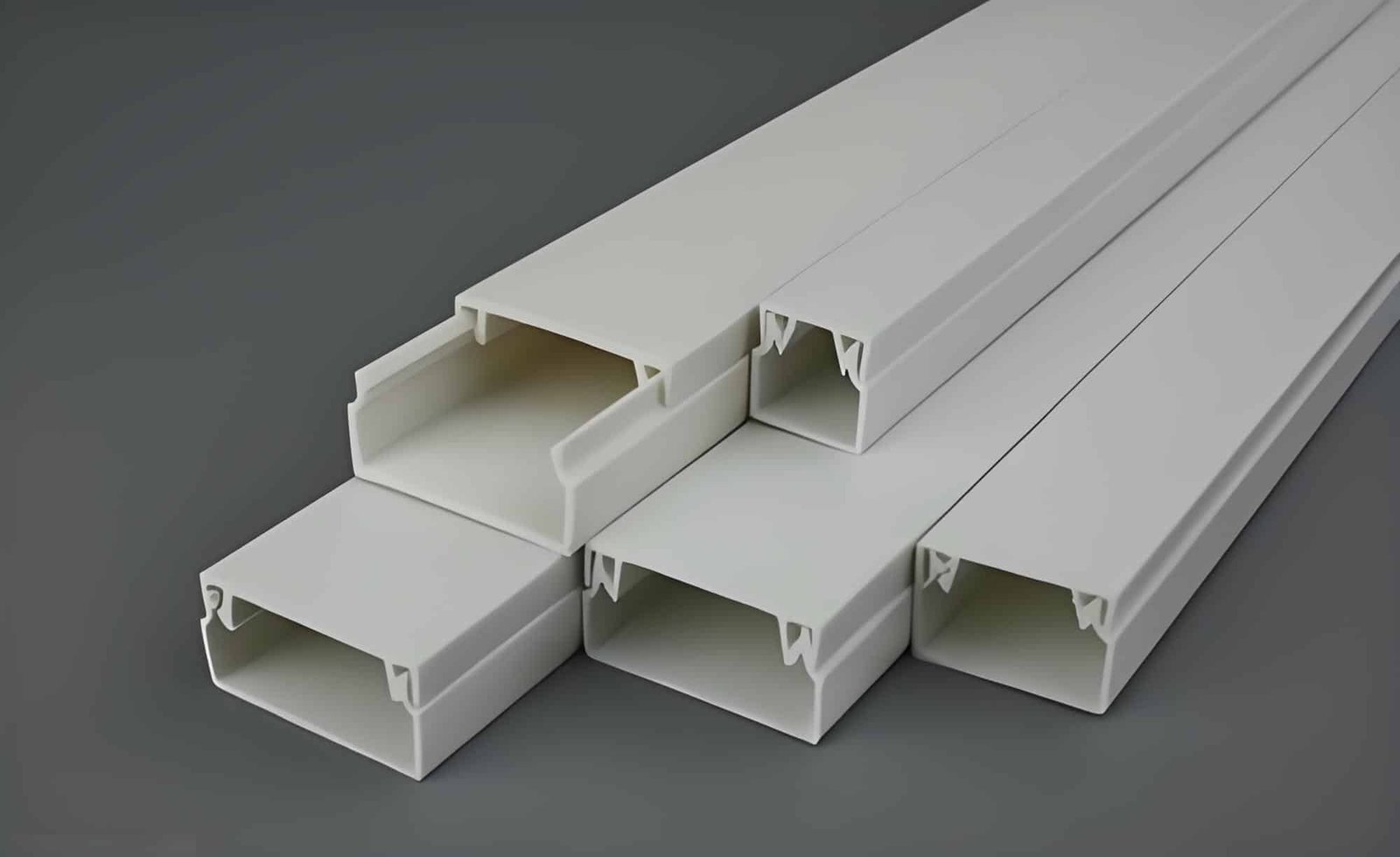
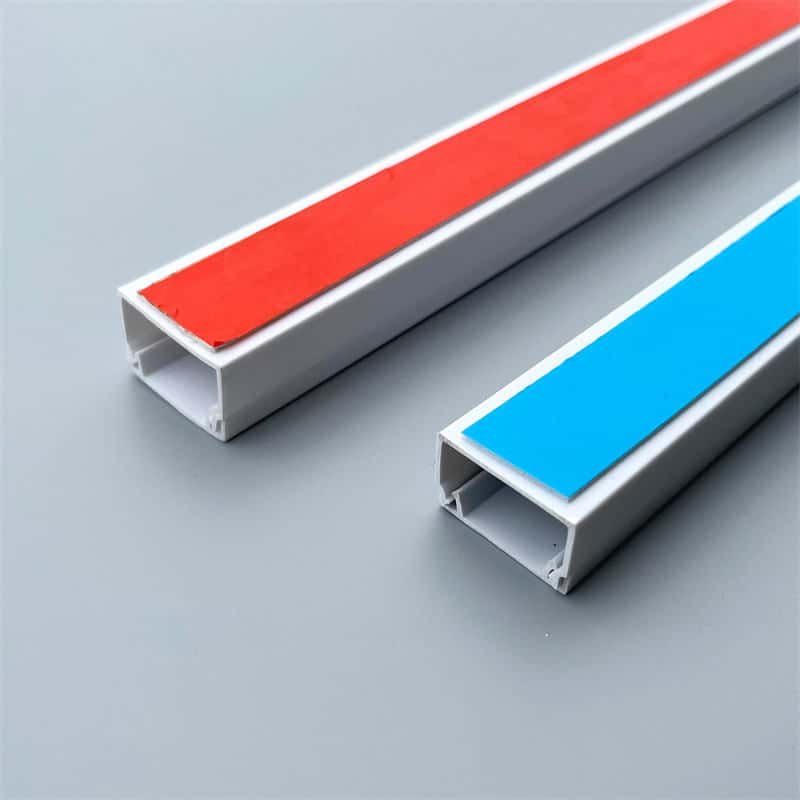
Self-adhesive cable trunking has become increasingly popular in modern electrical installations because it offers a fast, clean, and drill-free installation method. Whether used in offices, hospitals, schools, retail stores, data centers, apartments, or smart home projects, self-adhesive PVC cable trunking can significantly reduce labor costs and installation time.
However, many contractors and procurement managers eventually encounter a frustrating problem:
The cable trunking looks perfectly attached on installation day, but several weeks or months later, sections begin to peel away from the wall.
The problem becomes even worse in environments with:
- High humidity
- Temperature fluctuations
- Coastal climates
- Bathrooms
- Basements
- Industrial facilities
- Tropical regions
Many buyers assume the adhesive tape is defective.
In reality, the tape itself is often only part of the problem.
As a professional PVC cable trunking manufacturer with more than 20 years of extrusion experience, SW has investigated numerous field failures involving self-adhesive cable trunking. In many cases, the root cause can be traced to improper surface preparation, poor substrate conditions, incorrect tape selection, or the absence of a professional priming process.
This article explains:
- Why self-adhesive cable trunking fails
- How humidity attacks adhesive systems
- Why some tapes work while others fail
- The science behind industrial adhesion
- The factory priming process that improves bond strength
- How buyers can specify reliable self-adhesive cable trunking systems
The goal is not simply to make the trunking stick on Day 1.
The goal is to ensure the cable trunking remains securely attached for years.
Why Self-Adhesive Cable Trunking Is Popular
Traditional cable trunking installation often requires:
- Drilling
- Anchors
- Screws
- Dust generation
- Wall damage
Self-adhesive PVC cable trunking eliminates many of these issues.
Advantages include:
- Faster installation
- Lower labor costs
- Better aesthetics
- Reduced maintenance
- No wall penetration
For many projects, adhesive mounting is the preferred solution.
The Hidden Challenge of Humidity
Humidity is one of the biggest enemies of adhesive performance.
Water vapor affects adhesion in several ways.
Moisture Weakens Surface Bonding
Adhesives depend on intimate contact with the substrate.
Moisture creates a microscopic barrier between:
- Tape adhesive
- Wall surface
This reduces bonding effectiveness.
Water Molecules Compete With Adhesive Molecules
In humid conditions:
- Water molecules occupy bonding sites
- Adhesive anchoring decreases
- Peel strength gradually drops
The result is slow adhesive failure.
Why Cable Trunking Often Fails Months Later
Most adhesive failures do not occur immediately.
The common pattern is:
Week 1:
Perfect adhesion
Month 1:
Minor edge lifting
Month 3:
Noticeable separation
Month 6:
Complete detachment
This delayed failure often misleads buyers into believing installation was successful.


Understanding the Different Types of Adhesive Tape
Not all adhesive tapes are created equal.
A professional PVC cable trunking factory must select the tape based on environmental conditions.
Acrylic Foam Tape
Commonly used for premium applications.
Advantages:
- Excellent humidity resistance
- UV resistance
- Long-term durability
Suitable for:
- Commercial projects
- Data centers
- Hospitals
Solvent Acrylic Tape
Provides:
- Strong initial bond
- Good temperature resistance
- Better aging performance
Widely used in high-quality PVC cable trunking systems.
Rubber-Based Adhesive Tape
Advantages:
- Strong initial tack
- Lower cost
Disadvantages:
- Poor humidity resistance
- Faster aging
- Reduced UV stability
This type often causes field failures.
Why The Wall Surface Matters More Than Buyers Realize
Many buyers evaluate only the tape.
However, the wall surface often determines success or failure.
Common Problematic Surfaces
Examples include:
- Painted drywall
- Dusty concrete
- Textured walls
- Moisture-contaminated surfaces
- Low-energy plastics
- Fresh paint
These surfaces significantly reduce adhesion.
The Science of Surface Energy
For adhesive bonding to work properly:
The substrate must allow the adhesive to wet out completely.
This is called surface wetting.
Poor wetting equals poor bonding.
Good wetting equals strong bonding.
Why PVC Cable Trunking Manufacturers Should Use Primers
One of the most overlooked solutions is primer treatment.
Professional industrial bonding systems frequently use primers before tape application.

What Is an Adhesion Primer?
A primer is a chemical treatment applied between:
- The trunking surface
- The adhesive tape
Its purpose is to improve molecular bonding.
Benefits include:
- Higher peel strength
- Better humidity resistance
- Improved aging performance
- Enhanced reliability
The Factory Priming Process Explained
Many low-cost suppliers simply attach tape directly onto the extrusion surface.
Professional PVC cable trunking manufacturers use a multi-step preparation process.
Step 1: Surface Cleaning
Immediately after extrusion, the profile surface may contain:
- Lubricant residue
- Dust
- Processing oils
- Static contamination
The surface is thoroughly cleaned.
Step 2: Surface Energy Activation
Some factories use:
- Corona treatment
- Plasma treatment
- Flame treatment
These processes increase surface energy.
Benefits include:
- Improved adhesive wetting
- Stronger bonding
Step 3: Primer Application
A specialized adhesion promoter is applied.
The primer creates:
- Chemical bonding sites
- Improved tape anchorage
- Better humidity resistance
This step dramatically increases performance.
Step 4: Controlled Drying
The primer must cure properly.
Improper drying can compromise adhesion.
Step 5: Tape Lamination
Only after primer curing should adhesive tape be applied.
This sequence is critical.

Why Direct Tape Application Often Fails
Without primer treatment:
- Bond strength decreases
- Humidity sensitivity increases
- Edge lifting becomes more likely
Many field failures originate from this shortcut.
The Role of Extrusion Surface Finish
Surface texture affects tape performance.
Excessively Smooth Surfaces
May reduce mechanical anchoring.
Excessively Rough Surfaces
May create air pockets.
Optimized Surface Texture
Provides:
- Better adhesive contact
- Improved long-term reliability
A professional PVC cable trunking factory carefully controls surface finish during extrusion.
How Temperature Cycles Accelerate Failure
Humidity alone is not the only threat.
Daily temperature changes create expansion and contraction.
For example:
Daytime:
40°C
Night:
15°C
Repeated thermal cycling stresses the adhesive bond.
Over time:
- Edge lifting begins
- Adhesive fatigue develops
- Failure accelerates
Why Coastal Installations Are Especially Challenging
Coastal environments combine:
- High humidity
- Salt exposure
- UV radiation
This combination rapidly degrades low-quality adhesive systems.
Premium tape and proper priming become essential.
Why Bathrooms and Basements Cause Problems
These environments frequently experience:
- Condensation
- High humidity
- Temperature fluctuations
The adhesive must withstand continuous moisture exposure.
How SW Designs Reliable Self-Adhesive Cable Trunking
At SW, adhesive-backed PVC cable trunking projects undergo a systematic engineering process.
Step 1: Environmental Analysis
We determine:
- Indoor or outdoor use
- Humidity levels
- Temperature range
- Surface type
Step 2: Tape Selection
We choose the appropriate tape technology based on actual application conditions.
Step 3: Surface Preparation
The extrusion surface is cleaned and conditioned.
Step 4: Primer Optimization
Suitable adhesion promoters are selected.
Step 5: Accelerated Aging Tests
We simulate:
- Humidity exposure
- Temperature cycling
- Long-term aging
before approving production.
How Buyers Can Verify Adhesion Quality
Before approving a project, buyers should request testing.
Recommended evaluations include:
Peel Strength Testing
Measures bond strength directly.
Humidity Chamber Testing
Simulates long-term moisture exposure.
Temperature Cycling Tests
Evaluates thermal expansion effects.
Aging Tests
Predicts long-term performance.
Common Buyer Mistakes
Mistake 1: Selecting Tape Based Only on Price
Low-cost tape often creates expensive field failures.
Mistake 2: Ignoring Surface Conditions
The wall may be the actual problem.
Mistake 3: Skipping Primer Requirements
Primers significantly improve durability.
Mistake 4: Assuming Indoor Means Low Risk
Many indoor environments have high humidity.
Mistake 5: Evaluating Only Initial Adhesion
The real challenge is long-term performance.
What Buyers Should Specify for Self-Adhesive Cable Trunking
Instead of simply requesting:
“Adhesive-backed cable trunking”
Specify:
- Tape type
- Humidity requirements
- Peel strength targets
- Primer treatment
- Aging performance
- Temperature range
Clear specifications reduce future failures.

Future Trends in Adhesive Cable Trunking
Leading PVC cable trunking manufacturers are increasingly adopting:
- High-performance acrylic foam tapes
- Advanced adhesion promoters
- Plasma surface treatment
- Smart aging simulations
- Moisture-resistant bonding systems
The future of self-adhesive cable trunking lies in engineered adhesion rather than simply stronger tape.
Why SW Is a Trusted PVC Cable Trunking Manufacturer
With over 20 years of extrusion experience, SW helps customers develop reliable self-adhesive cable trunking systems through:
- Custom profile design
- Surface treatment optimization
- Primer technology
- Premium adhesive solutions
- Environmental performance testing
Our goal is not merely to manufacture cable trunking.
Our goal is to ensure every installation remains secure throughout its service life.
elf-adhesive cable trunking peels away in humid environments
When self-adhesive cable trunking peels away in humid environments, the tape itself is often only part of the story.
The real solution involves controlling the entire bonding system:
- Surface cleanliness
- Surface energy
- Primer treatment
- Tape selection
- Environmental testing
- Installation conditions
A professional PVC cable trunking manufacturer understands that long-term adhesion depends on chemistry, process control, and environmental engineering.
By implementing proper priming procedures and selecting the correct adhesive technology, self-adhesive PVC cable trunking can deliver years of reliable performance—even in challenging humid environments.
We have a PVC pipes factory of skilled engineers ready to support you in your product development journey from idea design to production.Any ideas about your product you can contact us freely,and our engineers will get back to you with a quote asap. Whatsapp +86 188 2072 7151
Who is Shuowei?
Since 2006, Shuowei is a professional extrusion profiles factory based in Guangdong, China. There are total about 51-100 people in our office. Shuowei PVC extrusion factory is committed to the design and production of extruded profiles, such as PVC pipes, PE trunking, PVC skirting line. Since its inception, we have won the wide recognition of the market and the deep trust of customers with our ingenious design, exquisite technology and the ultimate pursuit of quality.
Are you a manufacturer or a trader?
We are a Chinese top PVC extrusion profiles manufacturer and our factory is located in Huizhou. Our factory has a 16,000㎡ production base, 5+ automated extrusion profiles production lines, an annual production capacity of 30,000 tons, and serves more than 500 customers worldwide. Welcome to visit our factory!
What is your product range?
We pecialize in the design and production of high quality extrusion profiles,such as PVC pipe, ABS extrusion, PC lampshades, PVC skirting lines, PP trunking, PE profiles…
How long does the custom development process take?
We support custom extrusion products. The usual process has 4 steps: demand confirmation → 3D design/proofing → test certification → mass production (cycle 3-8 weeks).
Do you have any international certifications?
We have passed ISO 9001, CE, RoHS, SGS and other certifications, and meet the mainstream standards of Europe, America, the Middle East and Asia