




1. Introduction: Why PP Pipe Is Key to Modern Fluid Systems
In the world of industrial fluid management, material selection defines the performance, safety, and cost-efficiency of an entire system. Among the modern thermoplastics used today, PP pipe —short for polypropylene pipe—has emerged as one of the most versatile and durable options. It provides a reliable balance between chemical resistance, mechanical strength, and thermal stability.
At SW, with over 20 years of extrusion experience, we specialize in producing high-quality PP pipes for diverse industrial and engineering applications. From chemical plants and HVAC systems to water treatment and food-grade piping, our extrusion lines are optimized to deliver precision, consistency, and long service life.
This guide offers a deep technical exploration of PP pipe—from its composition and properties to its manufacturing process, installation methods, and maintenance best practices.
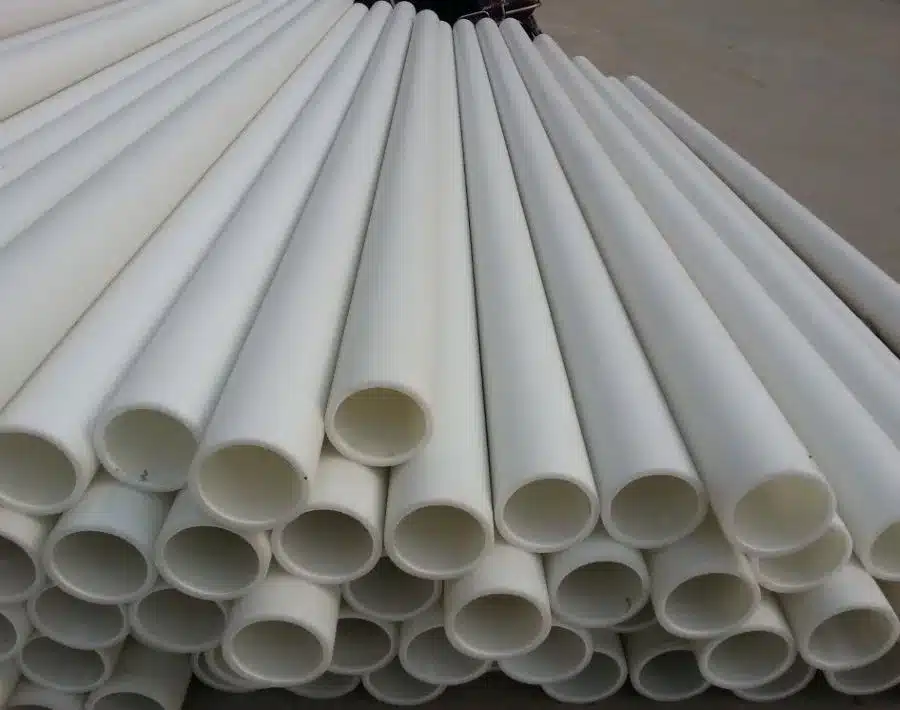
2. What Is PP Pipe? Composition and Material Structure
PP pipe is made from polypropylene, a thermoplastic polymer derived from propylene monomers (C₃H₆). Structurally, it consists of repeating units of –CH(CH₃)–CH₂–, forming a semi-crystalline polymer matrix. The crystallinity typically ranges between 60%–70%, giving PP a combination of rigidity and flexibility.
There are three main types of polypropylene used in pipe extrusion:
PP-H (Polypropylene Homopolymer) – High stiffness, excellent heat resistance, used in industrial and chemical applications.
PP-B (Polypropylene Block Copolymer) – Impact-modified version with ethylene blocks, suited for cold-water or outdoor installations.
PP-R (Polypropylene Random Copolymer) – Modified for high-pressure and hot-water applications, widely used in plumbing.
At SW, our material compounding process includes UV stabilizers, color masterbatches, antioxidants, and antistatic additives, ensuring optimal extrusion performance and long-term durability.
3. Physical and Mechanical Properties of PP Pipe
| Property | Typical Value | Test Standard |
|---|---|---|
| Density | 0.90 – 0.91 g/cm³ | ISO 1183 |
| Tensile Strength | 30 – 35 MPa | ISO 527 |
| Flexural Modulus | 1200 – 1500 MPa | ISO 178 |
| Impact Resistance | Excellent (notched Izod > 5 kJ/m²) | ISO 180 |
| Melting Point | ~160°C | DSC |
| Max Service Temperature | 95°C (PP-R), 80°C (PP-H) | ISO 15874 |
| Thermal Conductivity | 0.22 W/m·K | ASTM C177 |
| Chemical Resistance | Excellent against acids, alkalis, salts | – |
These characteristics make PP pipe ideal for conveying aggressive chemicals and hot fluids where PVC or PE pipes might soften or degrade.
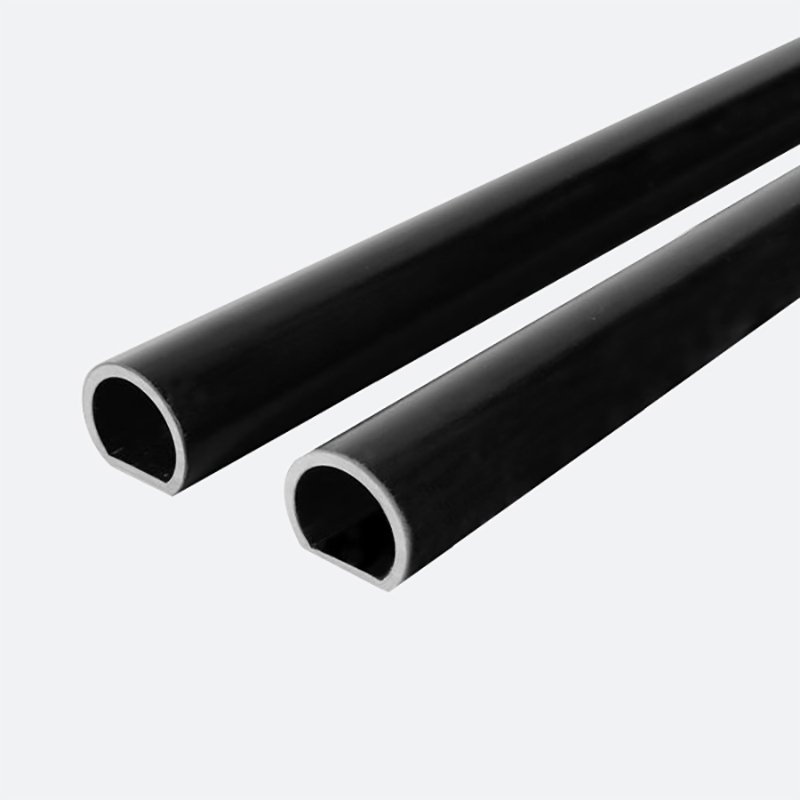
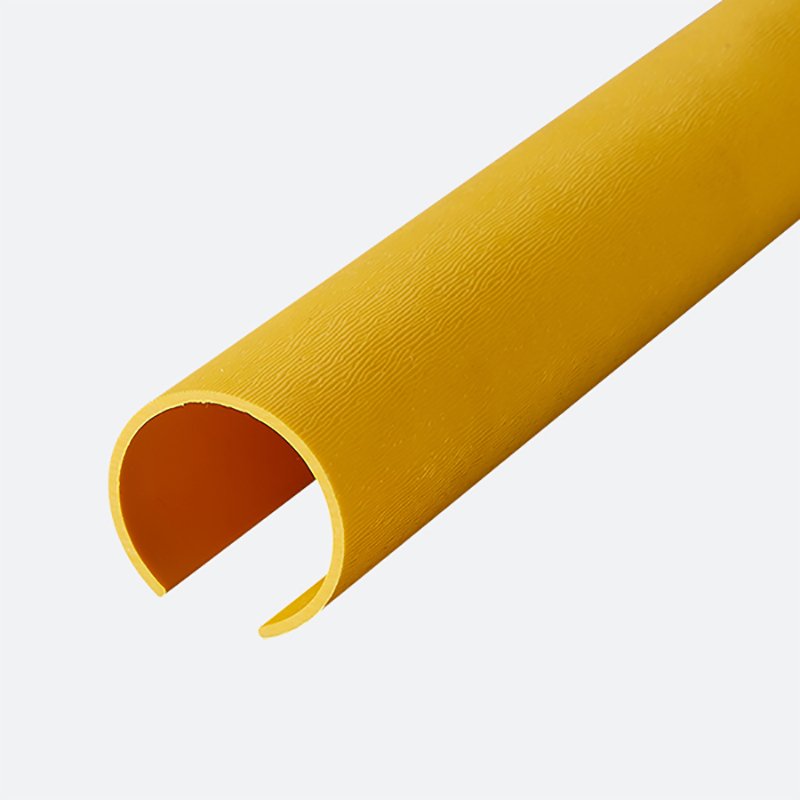
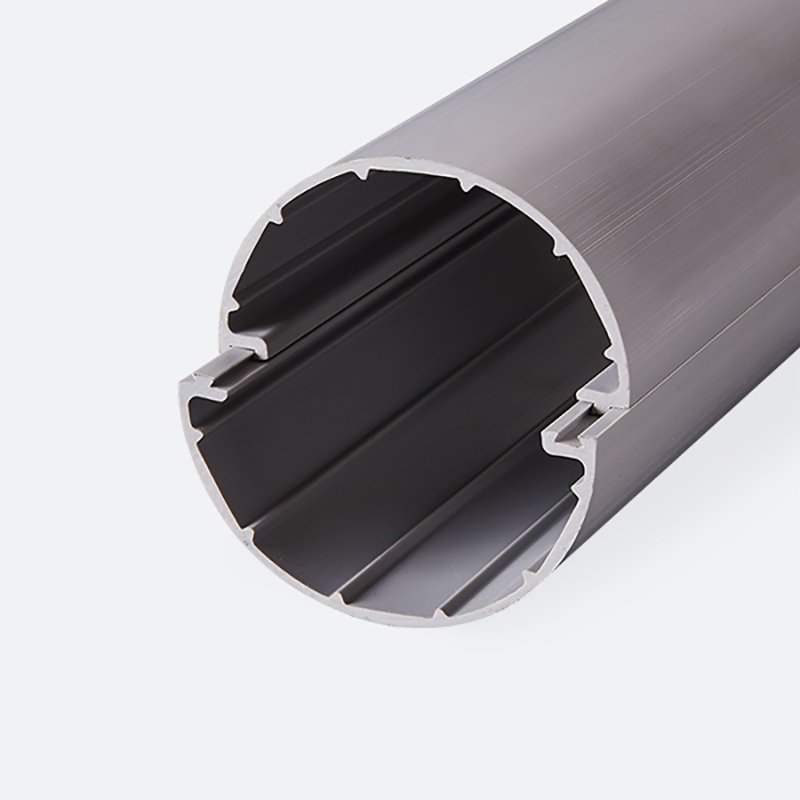
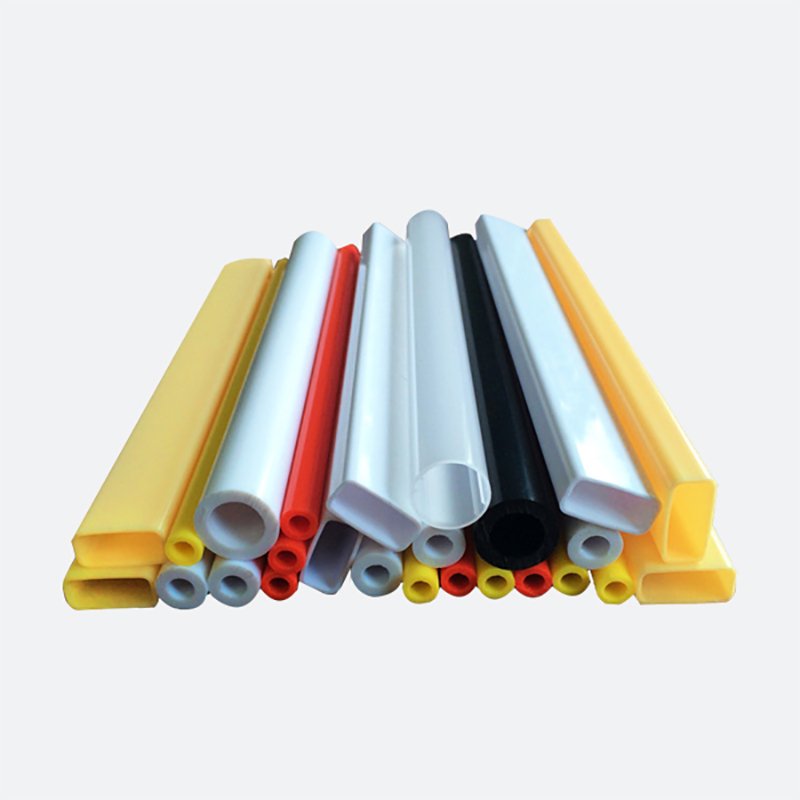
4. Advantages of Using PP Pipe in Industrial Systems
The advantages of PP pipes extend beyond corrosion resistance:
Chemical Inertness – Resistant to a broad range of acids, bases, and salts.
High Thermal Resistance – Suitable for hot-water and industrial heating systems.
Smooth Internal Surface – Reduces pressure loss and scaling buildup.
Low Density – Easier handling and installation compared to metal piping.
High Impact Strength – Withstands external stress and temperature fluctuations.
Long Service Life – Typically 50+ years under standard operating conditions.
Environmentally Safe – 100% recyclable and compliant with RoHS and REACH standards.
At SW, we enhance these natural advantages through precision extrusion dies, consistent wall-thickness control, and automated in-line inspection systems that ensure every pipe meets global performance expectations.
5. Applications of PP Pipe Across Industries
Due to its versatile performance, PP pipe is used across many sectors. Here are the most common applications:
a. Plumbing and Water Distribution
PP-R pipes are widely used in domestic and commercial hot and cold water systems. Their heat resistance makes them an excellent replacement for copper and steel.
b. Chemical and Industrial Fluid Transport
PP-H and PP-B variants are used to convey aggressive fluids such as acids, alkalis, and solvents in chemical processing plants.
c. HVAC and Cooling Systems
Thanks to its resistance to temperature cycling, PP pipe is used in chilled-water and HVAC systems, ensuring leak-free and corrosion-resistant flow.
d. Food and Beverage Processing
PP pipes meet food-grade requirements for hygienic transport of water, milk, and beverages, supported by their non-toxic composition.
e. Wastewater and Drainage
Due to their smooth internal surface and resistance to fouling, PP pipes are used in municipal sewage systems and industrial wastewater networks.
f. Electrical and Cable Conduits
As a lightweight, insulating material, PP pipe serves as protective conduit for power cables in high-humidity environments.
At SW, we supply custom-extruded PP pipes for all the above sectors, tailored to specific pressure ratings, diameters, and color requirements.
6. How to Choose the Right PP Pipe
Selecting the correct PP pipe requires consideration of environmental, mechanical, and chemical factors:
| Parameter | Consideration |
|---|---|
| Operating Pressure | Determine PN (Pressure Nominal) class — PN10, PN16, PN20, etc. |
| Temperature Range | Choose PP-R for hot water; PP-H or PP-B for ambient or chilled systems. |
| Chemical Exposure | Check resistance charts for specific media (H₂SO₄, NaOH, Cl⁻). |
| UV Stability | For outdoor use, select UV-stabilized compounds or protective coatings. |
| Connection Method | Decide between fusion welding, electrofusion, or mechanical joints. |
| Regulatory Standards | Ensure compliance with ISO 15874, DIN 8077/78, ASTM F2389. |
At SW, our technical team assists clients with pipe material selection, ensuring compatibility with pressure, temperature, and chemical profiles.
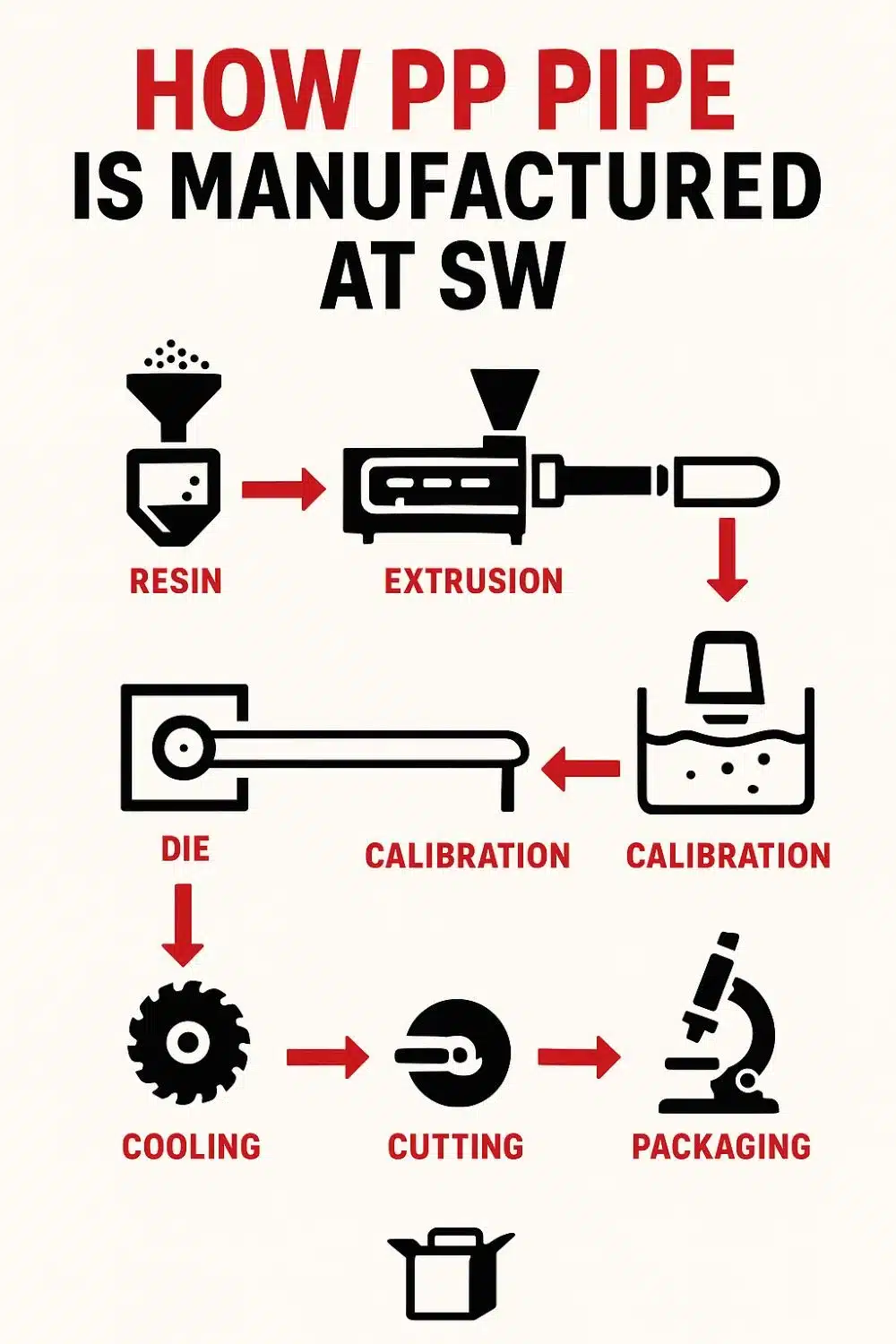
7. Manufacturing Process of PP Pipe (Inside SW Factory)
The production of PP pipe at SW involves precision-engineered extrusion and controlled cooling to achieve dimensional stability and surface smoothness.
Step 1: Raw Material Feeding
High-grade polypropylene resin is blended with UV stabilizers, pigments, and performance additives in a controlled environment.
Step 2: Extrusion
The compounded material is melted and extruded through a custom-designed die head to form a continuous cylindrical tube.
Step 3: Sizing and Calibration
In the calibration tank, vacuum sizing ensures consistent inner and outer diameters according to ISO/DIN standards.
Step 4: Cooling
The hot extrudate passes through multi-stage water baths for gradual cooling, preventing stress cracks.
Step 5: Cutting
An automatic cutter slices the pipe to preset lengths, typically 4m–6m, with precise edge trimming.
Step 6: Inspection
Dimensional checks, pressure burst tests, and visual inspections ensure uniform wall thickness and surface finish.
Step 7: Marking and Packaging
Each PP pipe is marked with manufacturing data, size, pressure rating, and the SW brand code, then packaged for delivery.

8. Installation Guidelines and Jointing Techniques
a. Fusion Welding
Heated fittings and pipe ends are joined under controlled temperature (~260°C). Once cooled, the joint becomes monolithic and leak-proof.
b. Electrofusion
Embedded heating elements in fittings melt and fuse the joint area—ideal for buried or inaccessible installations.
c. Mechanical Couplings
Used in temporary or modular systems requiring disassembly.
Installation Notes:
Ensure pipes are clean and dry before joining.
Avoid direct flame or overheating.
Provide adequate expansion loops for thermal movement.
Follow local codes for pipe routing and support spacing.
9. Usage Precautions and Maintenance Best Practices
Avoid Exposure to Direct UV for Long Periods – Use UV-stabilized PP pipes for outdoor setups.
Do Not Exceed Pressure Rating – Consult pressure-temperature charts for PP-R, PP-H, and PP-B.
Minimize Mechanical Stress – Use proper supports every 1–1.5 meters.
Prevent Chemical Incompatibility – Review chemical compatibility data before installation.
Inspect Periodically – Check joints and supports annually for deformation or leaks.
At SW, we advise customers on custom maintenance schedules based on environmental conditions and fluid type.
10. Common Failure Modes and How to Avoid Them
| Failure Type | Cause | Prevention |
|---|---|---|
| Thermal Deformation | Excessive temperature/pressure | Use correct PP-R grade, expansion joints |
| Chemical Attack | Incompatible solvents or oxidizers | Review compatibility chart |
| Cracking at Welds | Overheating or contamination | Follow proper fusion time and pressure |
| UV Aging | Outdoor exposure | Use black/UV-stabilized PP pipes |
| Impact Damage | Poor handling during installation | Use proper supports and tools |

11. Comparison: PP vs PVC vs PE Pipes
| Property | PP Pipe | PVC Pipe | PE Pipe |
|---|---|---|---|
| Temperature Range | Up to 95°C | Up to 60°C | Up to 80°C |
| Chemical Resistance | Excellent | Moderate | Very good |
| Rigidity | Medium | High | Low |
| Density | 0.90 g/cm³ | 1.4 g/cm³ | 0.95 g/cm³ |
| Fusion Welding | Yes | No | Yes |
| Application | Hot water, industrial fluids | Drainage, conduit | Gas, potable water |
PP pipe combines the best of both worlds — higher thermal stability than PE and better toughness than PVC — making it a preferred choice for long-term industrial systems.
12. Why Choose SW as Your PP Pipe Manufacturing Partner
At SW, we have been perfecting the science of plastic extrusion for over two decades. Our PP pipe lines feature:
Twin-screw extruders for consistent melt quality
Precision die-heads ensuring exact wall-thickness tolerance
Automated calibration and inline laser inspection
Custom color, size, and compound formulations
We produce standard and custom PP pipes for clients in the plumbing, chemical, and energy sectors worldwide. Each production batch undergoes mechanical testing, pressure burst testing, and dimensional verification to meet ISO 15874 and ASTM F2389 standards.
13. The Future of PP Pipe in Engineering
As industries move toward sustainability, PP pipe is gaining traction for its recyclability, energy-efficient manufacturing, and long service life. Its resistance to corrosion and high temperatures makes it ideal for future-ready infrastructure.
With SW’s 20 years of manufacturing experience, advanced extrusion technology, and strict quality assurance, we are your trusted partner for custom PP pipe solutions—engineered to perform reliably in demanding applications.
If you are looking for a reliable PP pipe manufacturer, contact SW today for customized engineering support and world-class pipe systems.
We have a PVC pipes factory of skilled engineers ready to support you in your product development journey from idea design to production.Any ideas about your product you can contact us freely,and our engineers will get back to you with a quote asap. Whatsapp +86 188 2072 7151
Who is Shuowei?
Since 2006, Shuowei is a professional extrusion profiles factory based in Guangdong, China. There are total about 51-100 people in our office. Shuowei PVC extrusion factory is committed to the design and production of extruded profiles, such as PVC pipes, PE trunking, PVC skirting line. Since its inception, we have won the wide recognition of the market and the deep trust of customers with our ingenious design, exquisite technology and the ultimate pursuit of quality.
Are you a manufacturer or a trader?
We are a Chinese top PVC extrusion profiles manufacturer and our factory is located in Huizhou. Our factory has a 16,000㎡ production base, 5+ automated extrusion profiles production lines, an annual production capacity of 30,000 tons, and serves more than 500 customers worldwide. Welcome to visit our factory!
What is your product range?
We pecialize in the design and production of high quality extrusion profiles,such as PVC pipe, ABS extrusion, PC lampshades, PVC skirting lines, PP trunking, PE profiles…
How long does the custom development process take?
We support custom extrusion products. The usual process has 4 steps: demand confirmation → 3D design/proofing → test certification → mass production (cycle 3-8 weeks).
Do you have any international certifications?
We have passed ISO 9001, CE, RoHS, SGS and other certifications, and meet the mainstream standards of Europe, America, the Middle East and Asia


