




In the relentless pursuit of industrial efficiency, engineers and procurement officers often find themselves caught between two opposing forces: the need for high-performance chemical resistance and the rigid constraints of a project budget. Traditionally, if you needed a pipe to transport highly corrosive acids or survive extreme UV exposure, you had to pay the premium plastic pipes price for a solid, high-grade fluoropolymer or specialized resin.
But what if you didn’t have to choose? What if you could have the chemical “armor” of an expensive material with the structural “economy” of a standard resin?
The answer lies in Co-extrusion.
As a plastic pipes manufacturer with over 20 years of experience, SW has pioneered the art of multi-layer extrusion. From our 6,000-square-meter plastic pipes factory, our engineering team has mastered the complex science of fusing dissimilar materials into a single, high-performance profile. This guide explores how co-extrusion can revolutionize your procurement strategy, allowing you to combine chemical resistance and low cost in a single, unified product.
1. What is Co-extrusion in the World of Plastic Pipes?
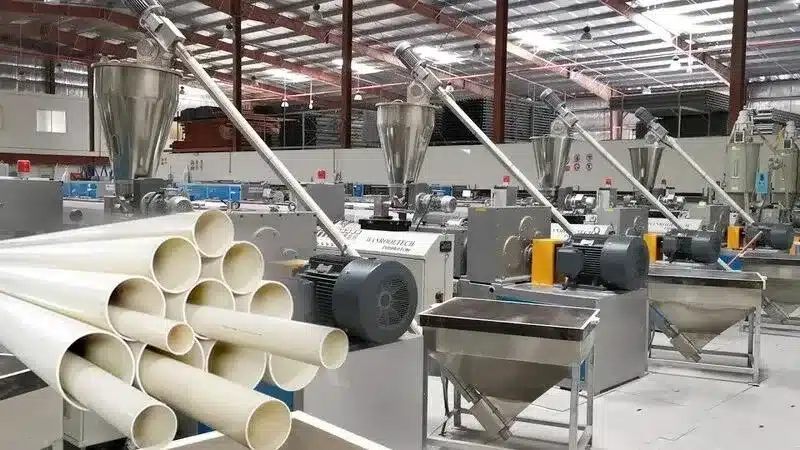
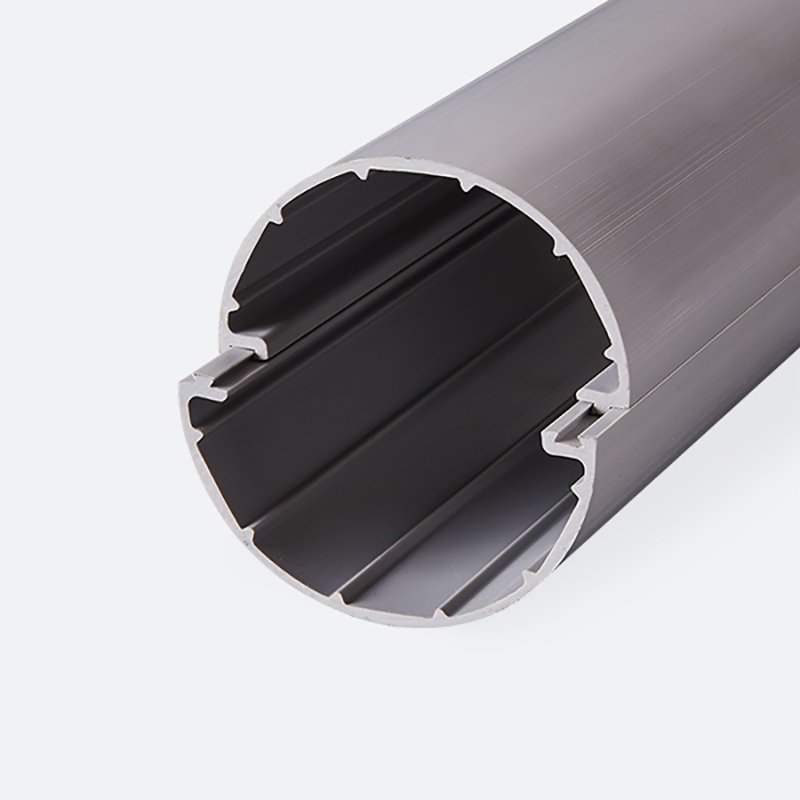
At its core, co-extrusion is the process of pressing two or more layers of plastic through the same extrusion die to produce a single piece of plastic pipes. Unlike traditional extrusion, where one screw melts one type of plastic, a co-extrusion line at a professional plastic pipes factory involves multiple extruders feeding into a specialized “co-extrusion manifold” or “crosshead die.”
The Mechanical Architecture
Think of it like a “sandwich” in pipe form. You have:
The Inner Layer (Liner): Designed for direct contact with the medium (acids, oils, abrasive slurries).
The Core Layer (Structural): Designed to provide the mechanical strength and ring stiffness.
The Outer Layer (Skin): Designed for environmental protection (UV resistance, color coding, or abrasion resistance).
By precisely controlling the thickness of each layer, a plastic pipes manufacturer can ensure that the expensive, high-performance resin is only used where it is absolutely necessary, while the bulk of the pipe is made from a more affordable, high-strength material.
2. The Economic Engine: How Co-extrusion Lowers the Plastic Pipes Price
The primary driver for co-extrusion in 2026 is cost-optimization without quality compromise. When you source standard, solid-wall plastic pipes, you are paying for the high-grade resin through the entire thickness of the wall.
The Cost-Performance Ratio
Imagine a project requiring PVDF (Polyvinylidene Fluoride) for its exceptional chemical resistance.
Solid PVDF Pipe: The plastic pipes price would be astronomical because 100% of the material is premium resin.
Co-extruded Pipe (PVDF Liner + PVC Structural Core): You achieve the same chemical resistance on the inside, but the plastic pipes price drops by $60\% – 70\%$ because the majority of the wall is cost-effective PVC.
Material Efficiency in the Plastic Pipes Factory
In our 6,000sqm facility, we utilize gravimetric dosing systems to ensure that the expensive “functional” layer is as thin as possible—often as little as $10\% – 15\%$ of the total wall thickness—while still maintaining a perfect chemical barrier. This is the ultimate “procurement hack” for modern infrastructure.
3. The Science of Molecular Bonding: Can All Resins Be Combined?
This is where the 20 years of experience at SW becomes critical. You cannot simply throw any two plastics together and expect them to stick. If the resins are incompatible, the layers will “delaminate” (peel apart), leading to catastrophic failure of the plastic pipes.
Compatibility Factors
A professional plastic pipes manufacturer analyzes three key variables before suggesting a co-extrusion formula:
Polarity: Polar plastics (like PVC or ABS) generally don’t bond well with non-polar plastics (like PE or PP) without a specialized “tie-layer” or adhesive resin.
Melt Flow Index (MFI): The resins must have similar flow characteristics at their melting points. If one is too “watery” and the other is too “viscous,” they won’t fuse properly in the die.
Thermal Expansion ($\alpha$): If the two plastics expand and contract at wildly different rates when heated, the internal stress will cause the plastic pipes to warp or crack over time.
(Where $\Delta L$ is the change in length, $L_0$ is the original length, $\alpha$ is the coefficient of thermal expansion, and $\Delta T$ is the temperature change.)
Our engineers use this calculation to ensure that co-extruded plastic pipes remain stable throughout their 50-year service life.
4. Technical Benefits Beyond Just Cost
While the plastic pipes price is a major factor, co-extrusion offers technical advantages that a single-material pipe simply cannot match.
A. Multi-Color Functional Coding
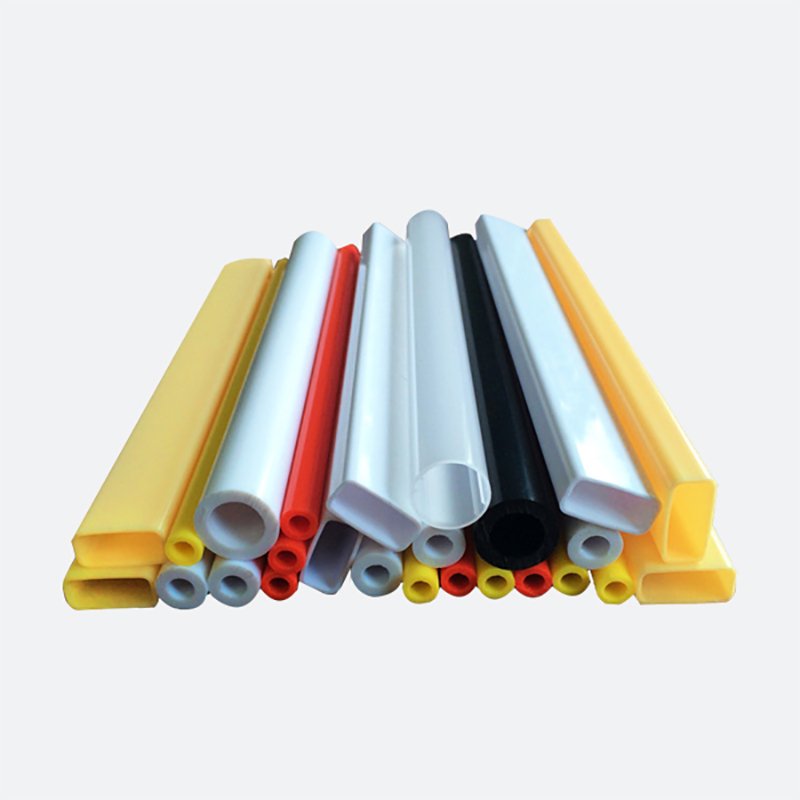
Our specialized multi-color co-extrusion allows us to produce pipes with different colors on the inside and outside.
Example: A white interior for easy CCTV inspection of sewers, with a green exterior for utility identification.
Example: A black PE pipe with co-extruded orange stripes for telecommunications, ensuring the color never peels or fades because it is part of the pipe wall.
B. Enhanced UV and Weathering Protection
Many high-strength resins, like ABS, are susceptible to UV degradation. By co-extruding a thin skin of ASA (Acrylonitrile Styrene Acrylate) over an ABS core, a plastic pipes manufacturer can create a pipe that has the impact strength of ABS but the “infinite” weatherability of ASA.
C. Recycled Content Utilization
For projects with strict environmental “Carbon Footprint” requirements, co-extrusion is a lifesaver. We can “sandwich” high-quality recycled resin between two layers of virgin resin. This allows the plastic pipes factory to meet sustainability goals while ensuring the medium only touches pure, virgin plastic.
5. Case Study 1: The Acid-Waste Solution (C-PVC Liner + PVC Core)
Client Challenge: A chemical processing plant in Southeast Asia needed to transport $90^\circ\text{C}$ acidic wastewater. Solid C-PVC (Chlorinated PVC) was the only material that could handle the temperature and acidity, but the total plastic pipes price exceeded their capital expenditure budget by $40\%$.
SW Solution: Our engineers designed a custom co-extruded pipe.
Inner Layer: $1.5\text{mm}$ of high-grade C-PVC for chemical and thermal resistance.
Outer Layer: $5.5\text{mm}$ of standard rigid PVC for structural support and cost-efficiency.
The Result: * Cost Savings: The plastic pipes price was reduced by $35\%$ compared to solid C-PVC.
Performance: The pipe handled the $90^\circ\text{C}$ waste perfectly, as the C-PVC liner protected the PVC core from chemical degradation.
Outcome: The client was able to complete the project on time and under budget, with a projected 25-year maintenance-free window.
6. Case Study 2: The "Aesthetic Armor" (ASA Skin + ABS Core)
Client Challenge: A luxury resort developer required custom-colored plastic pipes for an exposed outdoor water feature. The pipes needed the high impact resistance of ABS to survive public foot traffic, but they needed to stay a vibrant “Ocean Blue” under intense tropical sun without “chalking” or turning yellow.
SW Solution: We utilized our multi-color co-extrusion expertise.
Inner Core: High-impact virgin ABS (Natural color) for maximum toughness.
Outer Skin: A $0.8\text{mm}$ layer of Ocean Blue ASA.
The Result: * Visual Consistency: Unlike painted pipes, the color is co-extruded into the skin, meaning it won’t scratch off.
Durability: 5 years later, the pipes remain as vibrant as the day they left our plastic pipes factory, with zero UV-related brittleness.
Cost: By using natural ABS for the core and only tinting the ASA skin, we kept the plastic pipes price competitive with standard outdoor piping.
7. Case Study 3: The Sustainable Infrastructure Project (Virgin HDPE + Recycled HDPE)
Client Challenge: A municipal “Green City” project in Europe required 20,000 meters of large-diameter drainage plastic pipes. The project mandate required at least $40\%$ recycled content, but the pipes had to pass strict ISO pressure and “Internal Smoothness” tests for flow efficiency.
SW Solution: We designed an “A-B-A” co-extruded structure.
Outer & Inner Layers: Virgin HDPE (PE100) to provide a smooth flow surface and protection against soil chemicals.
Middle Core: $50\%$ high-quality, filtered recycled HDPE regrind.
The Result: * Compliance: The project passed all environmental audits for recycled content usage.
Performance: Because the recycled material was “hidden” in the core, the pipe’s internal flow and external fusion-welding characteristics were identical to 100% virgin plastic pipes.
Economic Impact: The use of recycled core material lowered the overall plastic pipes price by $12\%$, which was passed directly to the municipality.
8. Quality Assurance in Co-extrusion: The SW Standard
In our 6,000sqm plastic pipes factory, we know that a co-extruded pipe is only as good as its bond strength. If the layers separate, the pipe is useless. Our 20-year quality protocol includes:
Dichloromethane Immersion Test: For PVC-based co-extrusions, this test reveals if the fusion between the layers is molecularly sound.
Peel Strength Testing: We mechanically attempt to separate the layers to ensure the “interfacial bonding” exceeds the tensile strength of the resins themselves.
Ultrasonic Wall Thickness Monitoring: Our lines use real-time ultrasonic sensors to ensure the “functional layer” is exactly as thick as promised—no more, no less.
Microscopic Cross-Section Audit: Every batch is sampled and checked under a high-power microscope to verify the “A-B” layer distribution.

9. How to Request a Quote for Co-extruded Plastic Pipes
When you contact a plastic pipes manufacturer like SW for a co-extruded project, providing the right data will get you the most accurate plastic pipes price:
The “Medium”: What fluid is inside? (pH level, concentration, temperature).
The “Environment”: Is the pipe buried or exposed to the sun?
The “Pressure”: What is the working pressure ($PN$ rating)?
The “Goal”: Are you trying to save money, add color, or add UV protection?
With these four pieces of information, our engineers can calculate the perfect layer ratios to minimize your plastic pipes price while maximizing performance.
Why Co-extrusion is the Future of Custom Piping
The era of “single-resin” thinking is coming to an end. As material costs rise and engineering requirements become more specialized, the ability to extrude multiple resins into one pipe is the most powerful tool in your procurement arsenal.
At SW, we combine 20 years of manufacturing wisdom with the agility of a modern plastic pipes factory. We don’t just supply products; we engineer solutions that balance the “Chemical Resistance” your project needs with the “Low Cost” your budget demands.
Whether you need a C-PVC liner for hot acid, an ASA skin for UV protection, or a recycled core for sustainability, we have the machinery and the expertise to make it happen.
Are you ready to optimize your infrastructure costs? Contact the engineering experts at SW today. Tell us about your most challenging project, and let us show you how a custom co-extruded solution can cut your plastic pipes price without cutting your quality. Let’s build the future, one layer at a time.
We have a PVC pipes factory of skilled engineers ready to support you in your product development journey from idea design to production.Any ideas about your product you can contact us freely,and our engineers will get back to you with a quote asap. Whatsapp +86 188 2072 7151
Who is Shuowei?
Since 2006, Shuowei is a professional extrusion profiles factory based in Guangdong, China. There are total about 51-100 people in our office. Shuowei PVC extrusion factory is committed to the design and production of extruded profiles, such as PVC pipes, PE trunking, PVC skirting line. Since its inception, we have won the wide recognition of the market and the deep trust of customers with our ingenious design, exquisite technology and the ultimate pursuit of quality.
Are you a manufacturer or a trader?
We are a Chinese top PVC extrusion profiles manufacturer and our factory is located in Huizhou. Our factory has a 16,000㎡ production base, 5+ automated extrusion profiles production lines, an annual production capacity of 30,000 tons, and serves more than 500 customers worldwide. Welcome to visit our factory!
What is your product range?
We pecialize in the design and production of high quality extrusion profiles,such as PVC pipe, ABS extrusion, PC lampshades, PVC skirting lines, PP trunking, PE profiles…
How long does the custom development process take?
We support custom extrusion products. The usual process has 4 steps: demand confirmation → 3D design/proofing → test certification → mass production (cycle 3-8 weeks).
Do you have any international certifications?
We have passed ISO 9001, CE, RoHS, SGS and other certifications, and meet the mainstream standards of Europe, America, the Middle East and Asia


