

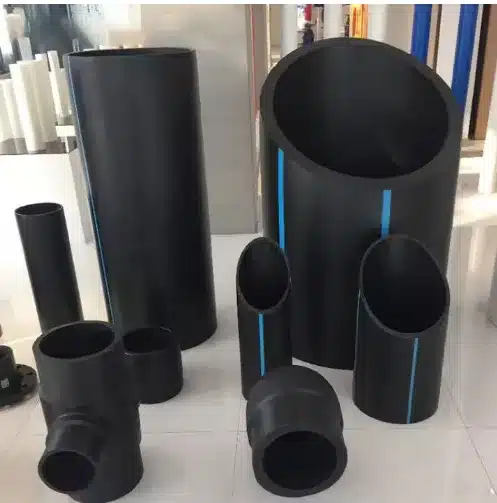
In the high-stakes world of industrial infrastructure, your reputation is often buried three meters underground. When a procurement manager or project engineer orders a fleet of PE pipes (Polyethylene), they are looking for more than just a hollow tube; they are looking for a precision-engineered component that meets exact safety, branding, and utility standards.
However, one of the most persistent and frustrating “nightmares” in the extrusion industry isn’t a structural failure—it’s a visual one. You order a batch of “Safety Yellow” PE pipes in March, and they look perfect. You order the second batch for the same project in June, and suddenly, the site looks like a patchwork quilt of different shades.
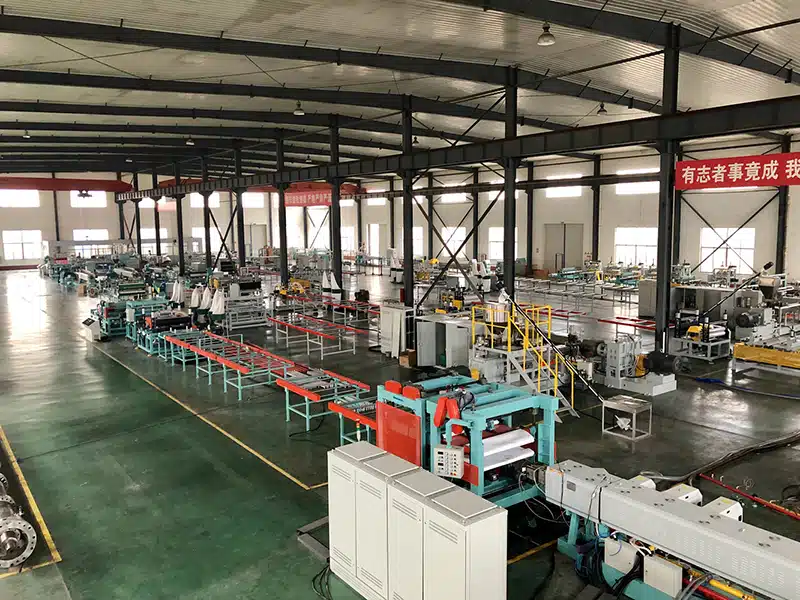
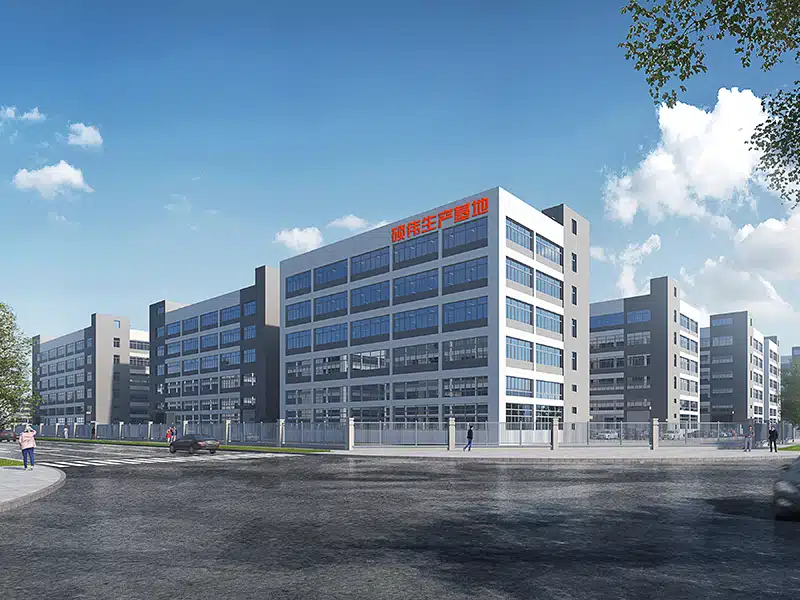
At SW, we have spent over 20 years mastering the art and science of plastic extrusion. From our 6,000-square-meter PE pipes factory, we have seen how subtle variations in temperature, resin chemistry, and dosing precision can ruin a project’s aesthetic and professional standing. This comprehensive guide is designed to help you navigate the “Color Matching Nightmare,” ensuring that your PE pipes manufacturer delivers perfect Pantone consistency, batch after batch.
1. Why Color Consistency in PE Pipes is a Safety and Branding Requirement
To the uninitiated, color might seem like a secondary concern. But for a professional PE pipes manufacturer, color is a critical functional specification.
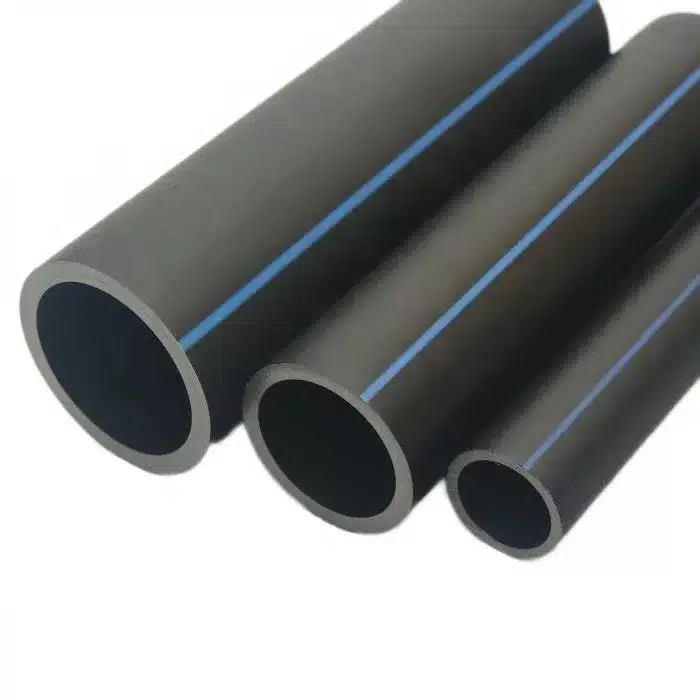
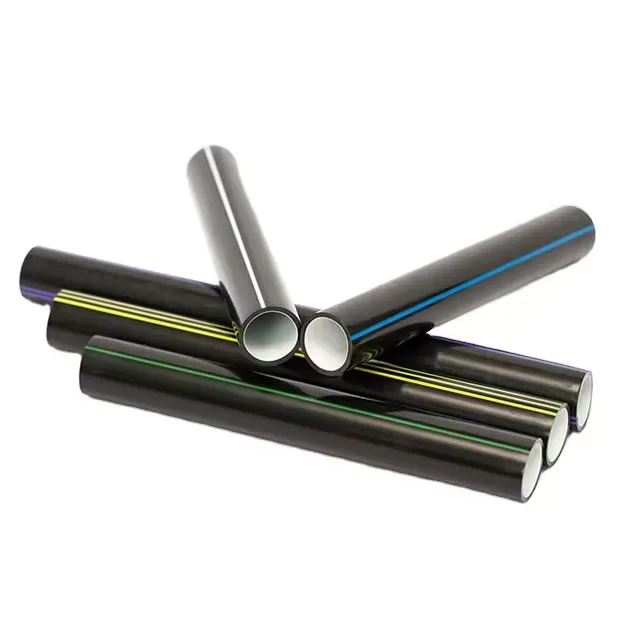
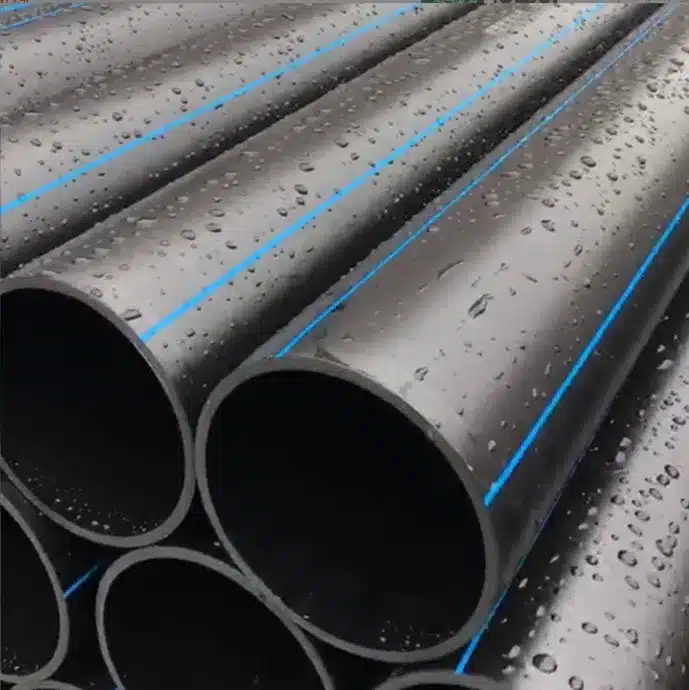
Utility Identification: International standards (like the APWA color code) dictate that yellow is for gas, blue is for potable water, green for sewers, and orange for telecommunications. If your “Water Blue” varies too far toward green, it could lead to catastrophic excavation errors.
Brand Integrity: For major telecommunications or energy firms, their corporate color is their signature. A “branded” PE pipes price includes the expectation that the product reflects the company’s quality standards.
Project Uniformity: When a client inspects a site, inconsistent pipe colors signal a lack of quality control. It suggests that if the factory couldn’t get the color right, they might have also failed on wall thickness or pressure ratings.
2. The Chemistry of the "Nightmare": Why PE is Harder to Color Than PVC
As an experienced PE pipes manufacturer, we know that Polyethylene presents unique challenges compared to other plastics like PVC.
Polyethylene resin is naturally translucent or milky white. To achieve a specific Pantone shade, we must introduce a “Masterbatch”—a concentrated mixture of pigments and additives encapsulated in a carrier resin. The nightmare begins because PE is a semi-crystalline polymer. Its “yellowness index” can vary slightly between raw material batches, and its high processing temperature can cause certain organic pigments to “shift” or degrade during extrusion.
3. The Top 5 Variables That Kill Color Consistency in a PE Pipes Factory
If you want to solve the problem, you have to know where the “ghosts” are in the machine. Here are the five reasons your current PE pipes manufacturer might be struggling:
A. Raw Resin “Base” Variation
Even virgin PE resin isn’t perfectly consistent. One batch from the refinery might be slightly more “opaque” than the next. If the PE pipes factory doesn’t calibrate their color formula to the base resin’s starting point, the final output will never match.
B. The “Metamerism” Effect
This is a classic nightmare scenario. The pipe looks like a perfect Pantone match under the LED lights of the PE pipes factory, but once it’s out in the bright sunlight of the construction site, it looks completely different. This is caused by the chemical composition of the pigments reacting differently to different light spectrums.
C. Thermal History and Heat Degradation
Extruding PE pipes requires temperatures between $190^\circ\text{C}$ and $230^\circ\text{C}$. If the extruder runs too hot, or if the “residence time” (how long the plastic stays in the barrel) is too long, the pigment molecules can break down. This usually results in a “duller” or “darker” shade than intended.
D. Volumetric vs. Gravimetric Dosing
This is the most common technical failure.
Volumetric Dosing: Measures the volume of masterbatch. It’s cheap but inaccurate because the density of pellets can change.
Gravimetric Dosing: Measures the weight of the material in real-time.
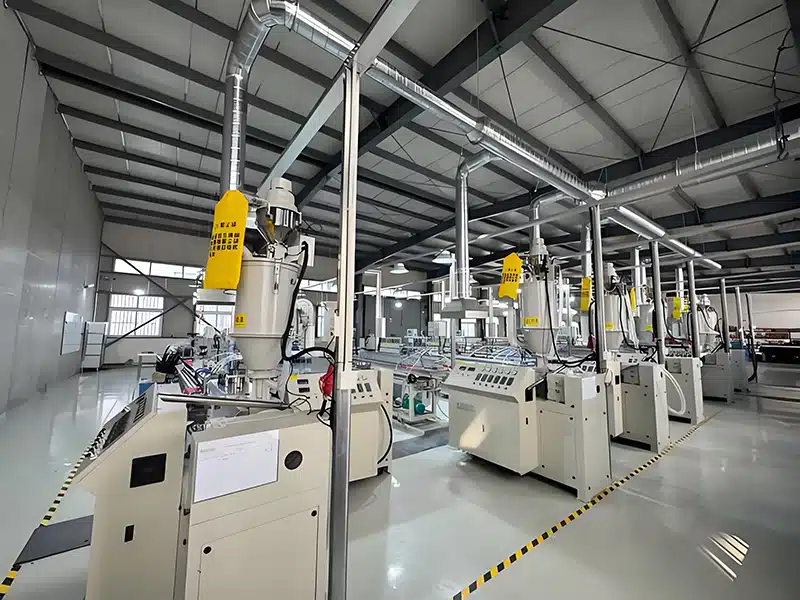
At SW’s 6,000sqm facility, we use gravimetric systems to ensure the masterbatch-to-resin ratio is accurate to within $0.1\%$.
E. Recycled Content Contamination
A low PE pipes price often hides the use of “regrind” or recycled material. Even a tiny amount of recycled PE from a previous green run can “pollute” a new yellow run, making the color look “muddy.”
4. The Mathematical Solution: Using Delta E ($\Delta E$) to Measure Consistency
In the past, color matching was done by “eye.” But the human eye is subjective and tires easily. To ensure consistency across batches, a professional PE pipes manufacturer must use the CIE $L^*a^*b^*$ color space and the Delta E formula.
The formula for calculating the total color difference ($\Delta E$) between a “Golden Sample” and a new production batch is:
Where:
$L^*$ is lightness.
$a^*$ is the red/green coordinate.
$b^*$ is the yellow/blue coordinate.
How to Read the Results:
| ΔE Value | Perception | Professional Standard for PE Pipes |
| < 1.0 | Invisible to the human eye. | SW Standard for Custom Branding. |
| 1.0 – 2.0 | Only visible to a trained eye. | Industry standard for utility pipes. |
| 2.0 – 10.0 | Clearly different shades. | REJECTED. |
| > 10.0 | Completely different colors. | Substandard factory failure. |
By demanding a $\Delta E$ report from your PE pipes factory, you move the conversation from “I think it looks different” to “The data shows it is different.”
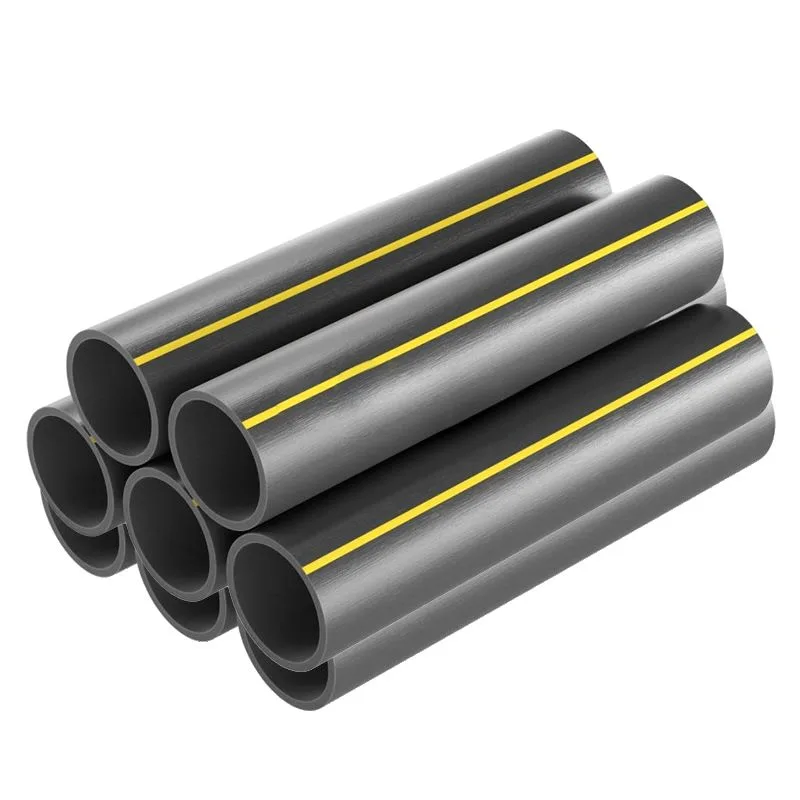
5. SW’s 5-Step Protocol for Pantone Consistency
With over 20 years as a PE pipes manufacturer, we have developed a failsafe workflow to eliminate color drift.
Step 1: Spectrophotometer Analysis
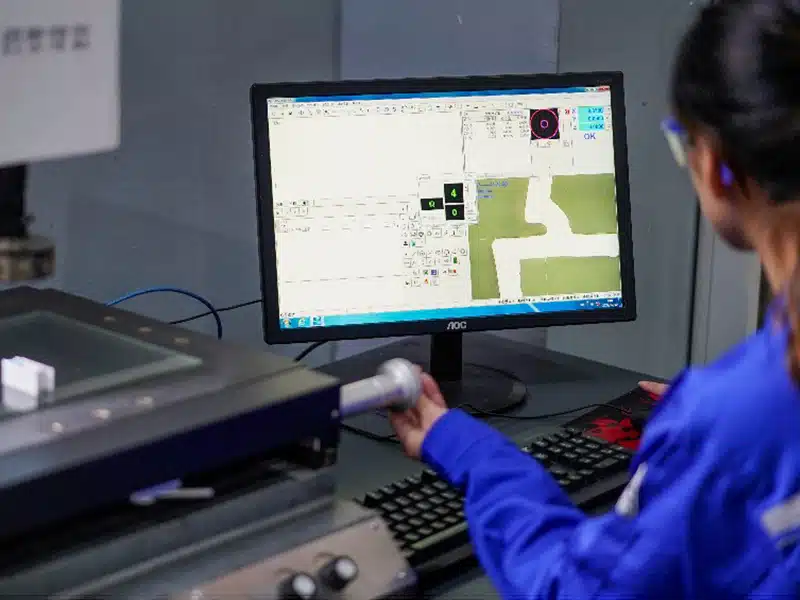
We don’t guess. We use a high-precision spectrophotometer to analyze the digital “fingerprint” of your Pantone or RAL requirement. This creates a digital target that doesn’t change over time (unlike a physical plastic sample which might fade).
Step 2: Custom Masterbatch Formulation
We work with top-tier pigment suppliers to create a carrier resin that matches the exact Melt Flow Index (MFI) of your base PE. This ensures that the color distributes perfectly through the pipe wall without causing structural “weak spots.”
Step 3: Gravimetric Loss-in-Weight Feeding
Our extrusion lines are equipped with loss-in-weight feeders. If the main resin flow slows down by $1\%$, the masterbatch feeder automatically slows down by $1\%$ to maintain a perfect ratio. This is the only way to ensure the PE pipes price you pay results in 100% uniformity.
Step 4: The “Light Box” Audit
Every batch is checked in a controlled D65 (Daylight) light box. This eliminates the metamerism nightmare by ensuring the color is verified under a standardized light spectrum.
Step 5: Retained “Golden Samples”
For long-term contracts, we keep a “Golden Sample” from the very first run in a dark, temperature-controlled environment. Every future batch over the next 5 years is compared back to this original physical reference, not just the previous batch.
6. The "Hidden" Costs: How Color Impacts the PE Pipes Price
As a procurement professional, you need to understand that 100% color consistency isn’t free. When you see a low PE pipes price, the manufacturer is likely saving money on the “Color Management” phase.
Purging Costs: Switching from a dark blue to a light yellow requires hours of “purging” the extruder with expensive cleaning resin. A cheap PE pipes factory will rush this, leading to “streaks” in the new batch.
Masterbatch Quality: High-performance organic pigments that don’t fade in the sun cost 3x more than low-grade pigments.
Startup Scrap: It can take 200 meters of pipe to stabilize the color and heat during a new run. A quality-focused PE pipes manufacturer recycles this scrap internally rather than trying to sell it to you.
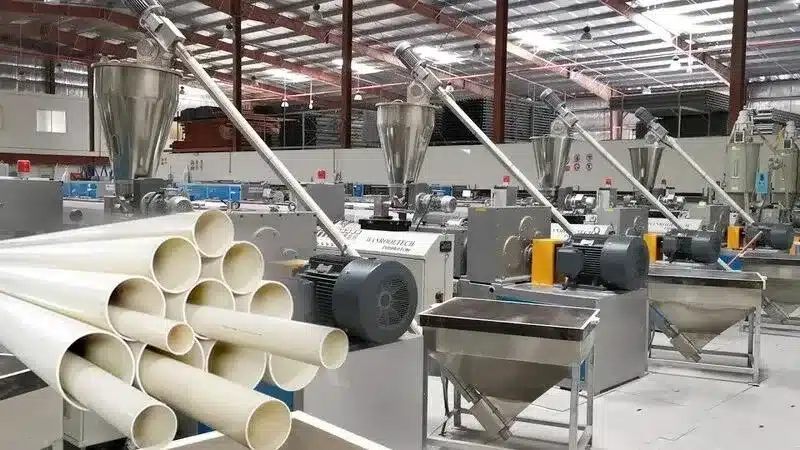
7. How to Audit a PE Pipes Factory for Color Competence
Before you sign a contract for customized PE pipes, ask the factory these four “Acid Test” questions:
“Can you show me your Spectrophotometer and its latest calibration certificate?” If they don’t have one, they are matching color by eye. Walk away.
“Do you use Volumetric or Gravimetric feeders?” If they say volumetric, expect color drift within a single batch.
“What is your $\Delta E$ tolerance for batch-to-batch variations?” A professional answer should be “Under 1.5 for utility and under 1.0 for branding.”
“Do you provide a Light Box report for Metamerism?” This shows they understand the science of light.
8. Managing UV Degradation: The "Color Killer"
A pipe might look great when it leaves the PE pipes factory, but what happens after it sits in a storage yard for 6 months?
PE is sensitive to UV radiation. Without the right “package” of UV stabilizers (like HALS – Hindered Amine Light Stabilizers), the vibrant yellow will turn into a dull, chalky beige. This isn’t just a color problem; it’s a structural one, as UV degradation causes micro-cracks. At SW, we integrate UV protection directly into the color masterbatch to ensure the Pantone shade stays vibrant for the entire duration of the project.
9. Visualizing the Process: The Difference Table
| Feature | Standard “Cheap” Factory | SW Professional Factory |
| Color Target | Visual “Eye” Match | Digital Spectrophotometer Index |
| Dosing Technology | Manual/Volumetric | Automated Gravimetric |
| QC Environment | Fluorescent Shop Lights | Standardized D65 Light Box |
| Consistency Metric | “Looks Okay” | $\Delta E < 1.0$ Data Report |
| UV Protection | Optional/Minimal | Integrated 10-Year Protection |

Ending the Nightmare Once and For All
In the world of custom PE pipes, color is the “face” of your project. It’s the first thing your client sees and the primary way your contractors identify the utility. You cannot afford the “Color Matching Nightmare.”
By choosing a PE pipes manufacturer that understands the physics of Delta E, the chemistry of masterbatch, and the mechanical precision of gravimetric dosing, you protect your brand and your budget. With 20 years of experience and a 6,000-square-meter facility dedicated to extrusion excellence, SW is here to ensure that your first meter of pipe matches your ten-thousandth meter—perfectly.
Are you tired of inconsistent colors in your supply chain? Contact the technical experts at SW today. Send us your Pantone or RAL code, and let us show you a $\Delta E$ report from our latest production run. Let’s make your next project a dream, not a nightmare.
FAQ: Quick Questions on PE Pipe Color
Q: Does custom color change the pressure rating of PE pipes? * A: If done correctly with the right carrier resin, no. However, poor quality pigments can act as “contaminants” and reduce the MRS (Minimum Required Strength).
Q: Can I get neon or metallic colors for PE pipes? * A: Yes, but the PE pipes price will increase significantly due to the specialized nature of those pigments.
Q: How do I store colored PE pipes to prevent fading? * A: Even with UV stabilizers, it is best to store them under a UV-opaque cover if they will be exposed for more than 12 months before installation.
We have a PVC pipes factory of skilled engineers ready to support you in your product development journey from idea design to production.Any ideas about your product you can contact us freely,and our engineers will get back to you with a quote asap. Whatsapp +86 188 2072 7151
Who is Shuowei?
Since 2006, Shuowei is a professional extrusion profiles factory based in Guangdong, China. There are total about 51-100 people in our office. Shuowei PVC extrusion factory is committed to the design and production of extruded profiles, such as PVC pipes, PE trunking, PVC skirting line. Since its inception, we have won the wide recognition of the market and the deep trust of customers with our ingenious design, exquisite technology and the ultimate pursuit of quality.
Are you a manufacturer or a trader?
We are a Chinese top PVC extrusion profiles manufacturer and our factory is located in Huizhou. Our factory has a 16,000㎡ production base, 5+ automated extrusion profiles production lines, an annual production capacity of 30,000 tons, and serves more than 500 customers worldwide. Welcome to visit our factory!
What is your product range?
We pecialize in the design and production of high quality extrusion profiles,such as PVC pipe, ABS extrusion, PC lampshades, PVC skirting lines, PP trunking, PE profiles…
How long does the custom development process take?
We support custom extrusion products. The usual process has 4 steps: demand confirmation → 3D design/proofing → test certification → mass production (cycle 3-8 weeks).
Do you have any international certifications?
We have passed ISO 9001, CE, RoHS, SGS and other certifications, and meet the mainstream standards of Europe, America, the Middle East and Asia